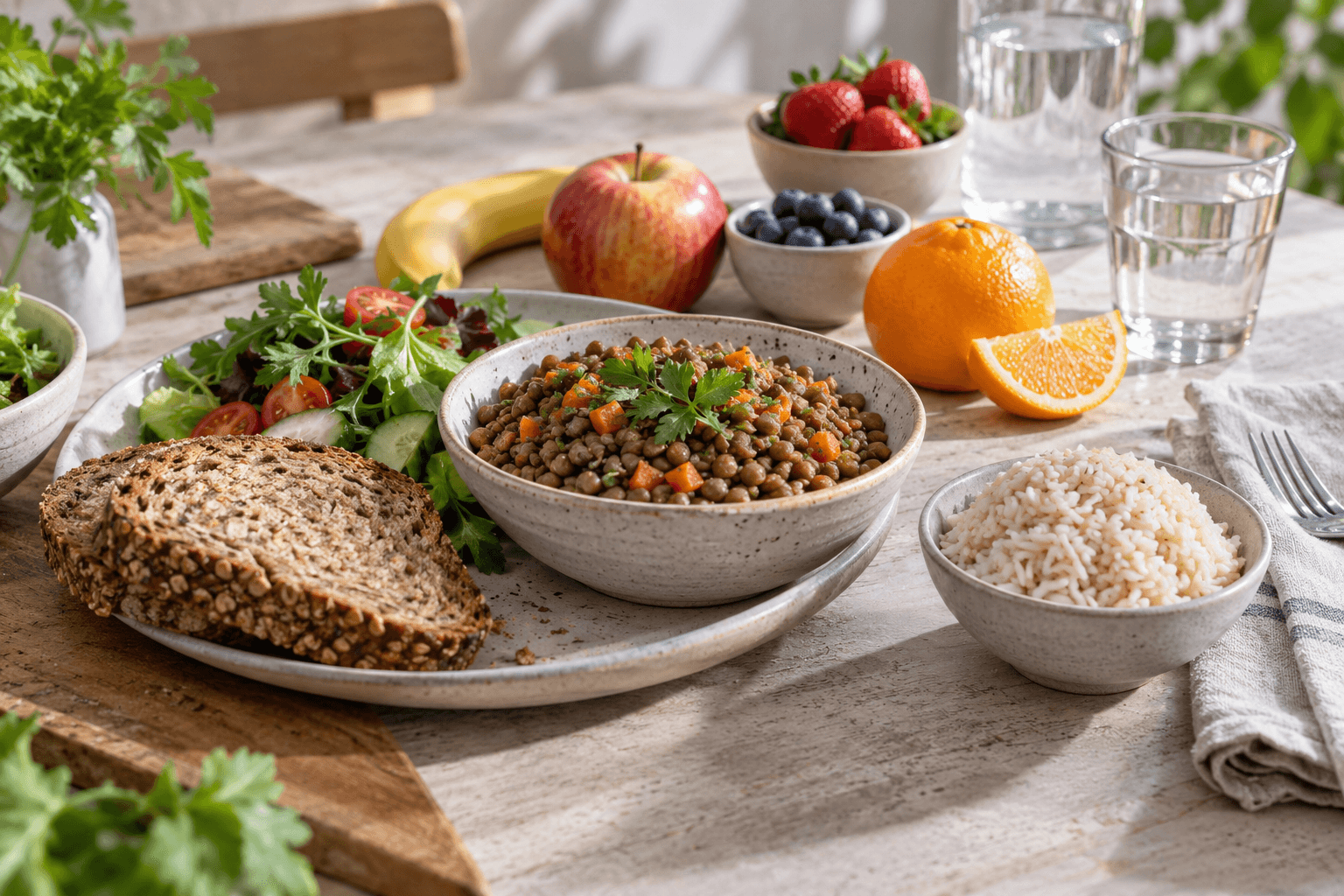
The same food can have several descriptions: the label composition, serving size, preparation method, and the body’s reaction. The glycemic index adds another to this list—how pronounced a glucose response is, on average, induced by an equal amount of available carbohydrates from different foods. This is a useful question, especially when planning a diet for diabetes. Problems begin when this response is turned into a universal utility score or a promise to accurately predict a sensor reading for any individual.
In casual explanations, the GI is often referred to as "sugar speed," but the method is more subtle. It accounts for the integral response over a specific time, not just the height of the peak or the minute it occurred. Therefore, a value from a table must be read in conjunction with the serving size and the circumstances of the meal. The glycemic load helps to take the first step toward such an interpretation, although it also does not describe all nutrition or all the peculiarities of metabolism.
For a specialist, both indicators can become a working tool if their boundaries are maintained. For the average reader, they help compare options without a long list of forbidden foods. It is much more useful to understand why whole legumes and finely ground raw materials differ in carbohydrate availability than to memorize one digit for each plant. The competent use of the index begins with this distinction between measurement, mechanism, and practical solution.
What exactly the glycemic index measures

In a standard experiment, participants are given a portion of a product containing a specific amount of available carbohydrates, usually 50 g. Afterward, the change in blood glucose is assessed over two hours, and the increase in the area under the curve relative to the baseline level is calculated. On another day, the same individuals receive a comparable amount of glucose as a reference. Individual response ratios are averaged to obtain the value for the product; the official resource of the University of Sydney describes measurement in ten or more healthy participants.
Consequently, the GI is a ratio of areas expressed on a scale where reference glucose has a value of 100. Two products can have a similar area with different curve shapes: one will yield an earlier peak, while the other will result in a more drawn-out rise. It is impossible to reconstruct the exact maximum concentration or predict the moment of its attainment from the value. This is especially significant when advertising explanations replace laboratory characteristics with words about an inevitable "sharp spike."
Threshold groups on the glucose scale are familiar: low GI—55 and under, medium—56–69, high—70 and above. These are convenient categories, not biological boundaries upon crossing which food suddenly becomes dangerous. Values of 54 and 56 may differ less than natural and analytical variability allows. A list without specifying the reference is also unreliable: historically, white bread was also used, so numbers from different scales cannot be mixed without recalculation.
Fifty grams of available carbohydrates does not mean fifty grams of the finished product. For bread or rice, one mass will be required; for a juicy fruit, another; and for a low-carb vegetable, the test portion may be impractically large. Therefore, the index by definition separates the quality of the carbohydrate portion from the quantity of food. An ordinary person rarely eats all foods in portions with the same 50 g of carbohydrates, and this is where the need for an additional load indicator arises.
The GI cannot be calculated solely from the grams of sugar, fiber, or fat on the packaging. Two products with similar numbers on the label can have different food structures, whereas processing changes starch availability without radically altering the overall composition. For a specific commercial product, the result of testing that formulation is more reliable than an assigned value for a similar product. A tabular index of a general name like "bread" should be perceived as a guideline, not as an exact passport for every loaf.
For products with a very small amount of available carbohydrates, the GI is usually not the primary method of description. Calling butter or meat a "zero GI" food is possible only in a limited, everyday sense, but this does not make them universally healthy and does not turn the indicator into a full-fledged rating. The index answers the question of the glucose response to a carbohydrate portion. The quality of fats, salt intake, energy density, and food safety remain independent characteristics.
When reading research, the question of what exactly was averaged is also important. The index of a single tested product, the calculated average index of a diet, and the response after a full mixed meal are different quantities. In a cohort, a diet can be described by food categories, whereas in a laboratory, a precise portion of a specific formulation is tested. If this distinction disappears in the retelling, a false impression is created as if the result of a long-term observation was directly assigned to every bun or every apple. Therefore, it is useful to maintain both the object of measurement and the method of obtaining the number in the formulation.
Why the structure of food is more important than the word "complex"

For starch to turn into absorbable glucose, enzymes need to reach its chains. In relatively intact plant tissue, cell walls and dense packing can limit this access. Grinding increases the surface area, and cooking with water changes the organization of the granules. Therefore, the concept of a "complex carbohydrate" describes a chemical chain, but it does not guarantee a slow or low glycemic response for a specific dish.
Amylose and amylopectin differ in their chain organization; however, their proportions are only one of several factors. Moisture, temperature, processing duration, and interactions with other food components also matter. One cannot assign the same GI to all rice varieties, all pasta products, or all potato dishes. Even a useful general pattern requires refinement of the formulation if it is to be used for making a clinical decision.
Some dietary fibers increase the viscosity of the intestinal contents and may alter the contact between enzymes and the substrate or the absorption processes. But solubility, viscosity, and fermentability are different properties, so all types of fiber do not necessarily act the same way. In a whole food, the physical structure may make its own contribution, while an added isolated fiber has a different characteristic. A "contains fiber" label without specifying the amount and form does not allow for a reliable reconstruction of the GI.
Cooling certain cooked starchy products can increase the proportion of retrograded resistant starch. This fraction is less accessible to the enzymes of the small intestine, but it usually does not encompass all the starch in the portion. Therefore, a chilled side dish remains a carbohydrate food and does not receive a universal new index without testing. Safe storage and reheating are also important: a culinary attempt to change carbohydrate availability should not increase the risk of foodborne infection.
Sugars also have different pathways. Fructose causes a lower immediate glucose response than glucose because its uptake and metabolism are structured differently. However, the low GI of fructose does not mean that a large amount of a product sweetened with it is beneficial for the liver, teeth, or energy control. The physiological metric of one response does not negate other pathways of nutritional impact.
From this follows a practical sequence for selection. First, it is worth evaluating the product itself: how well it fits into the diet, what its structure is, what it contains besides carbohydrates, and in what quantities it is typically consumed. Then, the GI can help compare available options within a single category, especially if their values have been truly measured. This order preserves the meaning of the metric and reduces the risk of buying a complex formulation just because the manufacturer achieved an attractive number.
The term "whole grain" also does not imply a single method of manufacture. A product may retain the composition of the grain but be made from finely ground flour; another may contain larger particles and behave differently during cooking. Both names may be correct, while the availability of carbohydrates may differ. This is not a reason to devalue whole grains: their selection is supported by a broader dietary context. Simply put, the explanation based on preserved structure and the explanation based on the complete composition of the grain must be distinguished so as not to promise the same glycemic reaction for all products.
Load brings the actual portion back into the calculation
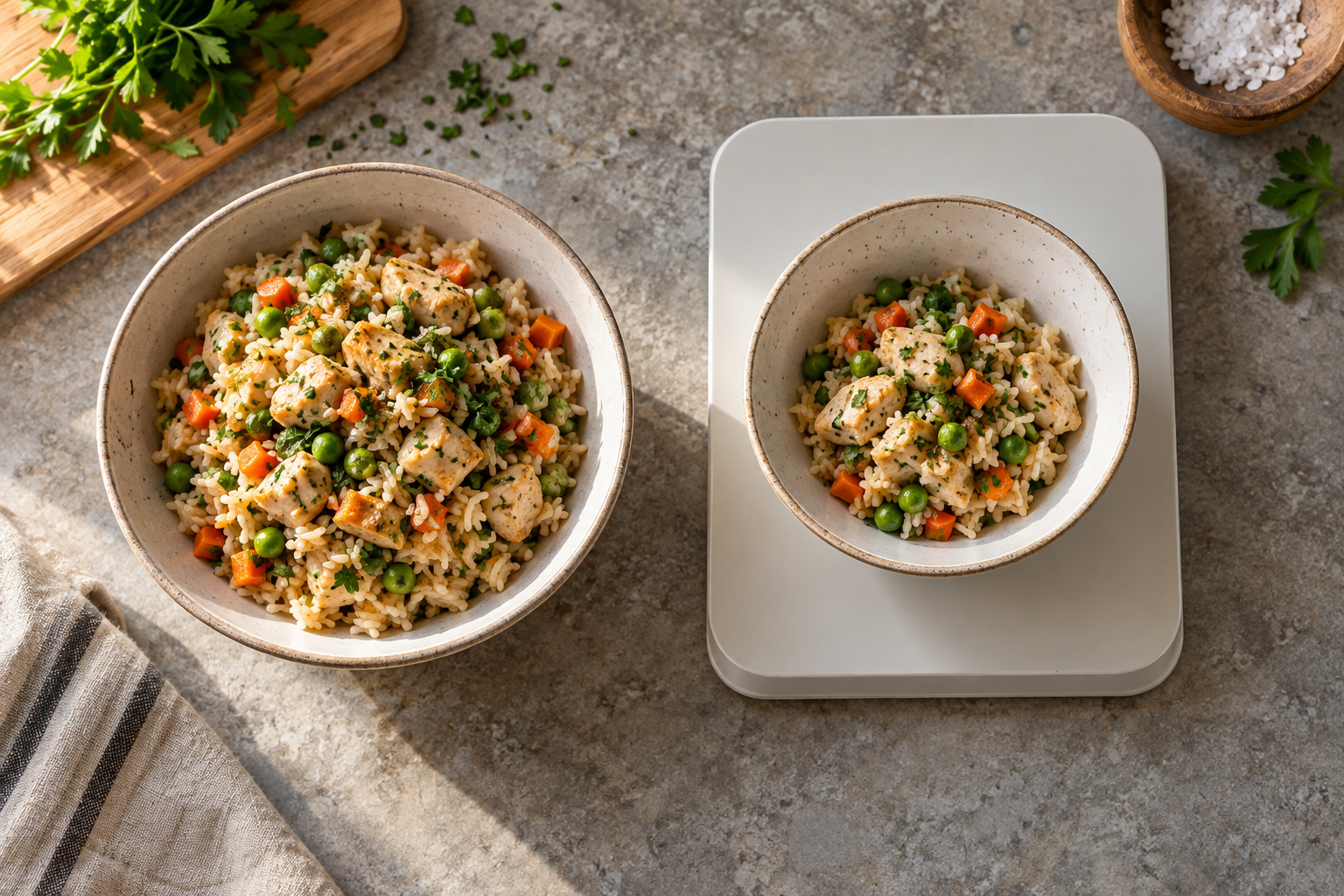
Glycemic load is calculated as the GI multiplied by the amount of available carbohydrates in a portion and divided by 100. The formula does not create a new laboratory response but combines the characteristic of the carbohydrates with their amount. For example, for a hypothetical product with a GI of 60, a portion with 20 g of available carbohydrates will give a load of 12. If the portion is increased to 40 g of carbohydrates, the load will become 24 at the same index — this is a textbook calculation, not a measurement of a specific dish.
For a single portion, categories are usually used: low load — 10 or less, medium — 11–19, high — 20 or more. The University of Sydney resource explains them precisely through the combination of the index and the amount of carbohydrates. These boundaries should not be turned into a universal personal norm for the entire day. The number depends on the chosen portion, so a table without its mass can be misleading even with a correct GI.
This makes a well-known paradox easier to understand: a product with a relatively high index in a small portion can have a low load. Conversely, a large portion of a product with a moderate index can provide a significant amount of available carbohydrates. This is not a reason to endlessly reduce any food, but a way to see a realistic comparison. If two breakfasts are being compared, it is important to match not only the name of the cereal, but also the quantity, additives, and overall composition.
For a mixed meal, the impact of several components is more complex than simple addition. Fat and protein can alter gastric emptying and the hormonal response, while viscous fibers can change the properties of intestinal contents. Therefore, a mathematical estimation of load does not guarantee an accurate curve after a multi-course dinner. Nevertheless, the amount of carbohydrates remains important, and the complexity of a mixed meal does not make portion calculation useless.
When working with a label, one must understand how carbohydrates and fiber are indicated in that specific system. In some regulations, dietary fiber has already been subtracted from the stated amount of carbohydrates; in others, it is included in a broader sum. Mechanically subtracting fiber from any packaging can lead to double subtraction and an incorrect calculation. For professional recommendations, it is useful to agree on the source of the nutritional composition and the units in advance, especially if an individual is calculating an insulin dose.
The load is also not equal to caloric content or guaranteed satiety. By adding a lot of fat, one can sometimes make an early glucose response less noticeable while simultaneously increasing the energy density of the meal. A low figure on a graph does not describe the intake of saturated fats and does not prove an improvement in nutrition. It is better to use GL (Glycemic Load) to answer a specific carbohydrate-related question while retaining other criteria for food selection.
Stating the mass must also refer to the state in which the product is consumed. Dry cereal and cooked porridge have different water content, so one hundred grams of one is not equal to one hundred grams of the other in terms of carbohydrates. An error at this stage can outweigh a small difference in the indices of two varieties. In a consultation, it is convenient to first agree on an understandable household portion and then convert it into grams of available carbohydrates. Thus, the load indicator helps to discuss a real lunch rather than compare incomparable reference book entries.
Why an average value is not a personal prediction

Even with the same portion, the response depends on baseline glucose, insulin sensitivity, previous meals, and physical activity. Measurement conditions also have an impact: blood and interstitial fluid are not the same sample, and a sensor has its own lag and margin of error. These differences are especially noticeable when people compare screenshots of graphs from different days. Similar food does not mean identical circumstances, and one high point does not establish the cause of the entire response.
In a study by Matthan et al., 63 healthy volunteers underwent repeated trials of white bread and glucose. The authors found significant variability: the mean intra-individual coefficient of variation was about 20%, and the inter-individual coefficient was about 25%. This does not mean that the index of each product is random or always incorrect by a fixed amount. The result demonstrates the limitations of attempting to turn a group number into an accurate personal prediction.
At the same time, there is data in favor of the reproducibility of the method itself when properly organized. In a 2019 inter-laboratory study, products differed by their mean values, but no significant overall difference was found between the laboratories. Individual variability and the possibility of obtaining a useful average characteristic do not contradict each other. Precisely repetition, reference standards, and averaging are needed to separate the dietary signal from the fluctuations of an individual participant.
A different scale of observations is presented in the work by Zeevi et al.. 800 people had their glucose monitored continuously for a week, and responses to 46,898 meals, including standardized options, were analyzed. Responses to the same food differed, and a prediction model that took into account several characteristics was evaluated in an independent group of 100 people. This study supports interest in personalization but does not prove that every healthy person needs a sensor and a microbiome test.
Predicting a curve and proving health improvement are different tasks. An algorithm may better predict a short-term response without having sufficient data on long-term risk of complications or sustainable weight loss. Furthermore, a diet built solely for the sake of the flattest line may turn out to be poor in variety and fiber. For clinical use, not only prediction accuracy is required, but also the verification of a specific intervention, its tolerability, and significant outcomes.
If monitoring is prescribed for medical reasons, it is better to interpret it according to agreed-upon goals and sufficiently repetitive observations. Comparing approximately identical portions under similar conditions is more informative than evaluating any dish based on a single random peak. For a healthy person, a physiological rise after carbohydrates is not equivalent to tissue damage. If symptoms or unusual values are of concern, the issue should be resolved through medical assessment rather than by banning all foods after which the line rises.
What changes with diabetes and what cannot be promised

In type 2 diabetes, the ability to maintain glucose within the target range is impaired, which is why the properties of carbohydrate-containing foods take on additional significance. However, nutrition acts simultaneously through carbohydrate quantity, energy, body mass, food quality, and the ease of adhering to a regimen. A single index does not describe the effect of all these factors. Its role is to help select options within a comprehensive plan that accounts for treatment and individual preferences.
In a randomized study by Jenkins et al., 210 adults with type 2 diabetes taking glucose-lowering medications were given recommendations for one of two diets for six months. A low-GI diet was compared to an option high in cereal fiber. HbA1c decreased by 0.50 percentage points in the first group and by 0.18 in the second. A difference of about 0.32 percentage points demonstrates a moderate advantage of a specific strategy in this population.
The units are important here. A decrease in HbA1c of 0.50 percentage points does not mean a 50% drop in the indicator, the disappearance of diabetes, or an equal reduction in the probability of complications. HbA1c reflects the average effect of glucose over the preceding period and does not reveal every individual hypoglycemia or spike. Clinical interpretation depends on the baseline level, target values, and treatment, rather than just a relative comparison of two menus.
At the same time, OmniCarb did not confirm a universal metabolic benefit of a lower index. In a controlled crossover study, 163 adults with excess body weight and elevated blood pressure, but without diabetes, received full diets with varying amounts of carbohydrates and varying GI. Each feeding period lasted five weeks, and weight was kept stable. Against the background of an already high-quality menu, a reduction in GI did not improve insulin sensitivity, lipids, or blood pressure in the expected manner.
Such results help avoid two extremes. It is impossible to promise that any low GI will improve metabolism in all people, but a negative experience in people without diabetes does not negate a moderate result in another clinical group. The baseline condition, composition of diets, control conditions, and timelines differ. A practical decision should be based on the alignment of the studied situation with the patient's task, rather than on choosing only one convenient study.
In type 1 diabetes, pregnancy, or when using medications with a risk of hypoglycemia, nutritional calculation requires additional individualization. Replacing foods and changing portion sizes can alter insulin requirements and response time; therefore, treatment cannot be adjusted based solely on a table of indices. The GI does not serve as a dosage coefficient for medication. It is useful for a specialist to explain which changes can be evaluated independently and which require the adjustment of the regimen and supervision.
Nutrition research rarely changes only one abstract number. When people are offered dishes with a lower index, the types of grains, amount of legumes, preparation methods, and satiety levels may change simultaneously. The control diet also has its own advantages and limitations. Therefore, the result refers to the entire studied strategy and comparison, even if the authors attempted to isolate the role of the GI. For practice, this means that a successful substitution can be maintained as part of a healthy menu without attributing its entire effect exclusively to a single indicator.
Cardiovascular risk, satiety, and the limits of a single number

Long-term outcomes are studied differently than the response after a single meal. In the PURE cohort, researchers analyzed the diets of 137,851 people aged 35–70 across five continents, with a median follow-up of 9.5 years. A higher calculated dietary GI was associated with a higher probability of a composite outcome — a major cardiovascular event or death from any cause. Between the extreme quintiles of the distribution, the hazard ratio was 1.51 in people with baseline cardiovascular disease and 1.21 in others.
These are important human data, but the study was observational. Nutrition was assessed via questionnaires, and the index was calculated based on food categories; therefore, it is impossible to completely eliminate reporting errors and confounding lifestyle differences. The hazard ratio does not provide a personal absolute prognosis for a specific breakfast. A higher calculated index may also accompany other characteristics of diet quality that cannot be perfectly separated statistically.
Therefore, one cannot connect all results into a direct chain of "high peak — damage — heart attack." Mechanistic models discuss possible consequences of chronically impaired metabolism, but the normal physiological response to food and prolonged pathological hyperglycemia are different states. Clinical outcomes require appropriate studies, not just an attractive scheme. Cohort associations support the focus on carbohydrate quality without turning every portion of a high-GI product into an independent disaster factor.
Satiety is also composed of several signals: food volume, protein, food structure, energy, taste, and expectations. A low index does not guarantee that a person will stay full longer or eat less throughout the day. In everyday experience, replacing a sugary drink with a full meal changes much more than just a single glucose curve. Therefore, explaining any improvement in appetite exclusively by GI is usually too simplistic.
For general prevention, the dietary context described in the 2023 WHO carbohydrate guidelines is important. Preferred sources include whole grains, vegetables, fruits, and legumes, and for adults, it is recommended to consume at least 25 g of naturally occurring dietary fiber per day. Such an approach evaluates products more broadly than an individual glucose response. A low index may coincide with a quality choice, but it does not replace it.
It is practically useful to compare options without using labels like "ideal" or "harmful." One can choose a denser grain product or add legumes if it improves the diet and suits the individual, without requiring the exclusion of all familiar side dishes. Sometimes the key change is to reduce an excessively large portion or stop consuming a regular sugary drink. The index helps refine the choice once the basic issues of composition and regimen have already been addressed.
In prevention, it is convenient to view the index as an additional criterion within an already suitable category. If both breakfasts provide the required amount of energy, protein, and fiber, the GI value can help make a choice with the glucose goal in mind. If, however, one compares a full meal and a small dessert, a single number hides too many differences. The same applies to a drink and a whole fruit: their consumption, satiety, and food structure are not reduced to an index. A good comparison begins with comparable nutritional functions and is then refined by a number.
How to apply the index and load in daily life

One should start with the objective: why is the indicator needed in the given case at all? In diabetes, it may be the search for a tolerable breakfast and a more predictable reaction, while in general planning — comparing carbohydrate options without unnecessary restrictions. If the goal is not defined, a table quickly becomes a catalog of alarming numbers. A good solution should improve actual nutrition, not just reduce an indicator in an app.
The next step is to choose a reliable value for a comparable product and a real portion. The recipe, the state of preparation, and how carbohydrates are expressed in the source of the composition are all important. If an averaged number is used for a broad label, it is worth preserving this uncertainty and not calculating the load with false precision to the tenths. For most everyday comparisons, it is enough to understand the direction and scale of the difference rather than imitating laboratory accuracy.
A mixed meal is best assembled around quality products: a suitable source of protein, vegetables, tolerable fiber, and a reasonable carbohydrate portion. Fat may be present for nutritional and taste reasons, but adding it solely to suppress an early glucose spike is a dubious goal. For a person with diabetes, the convenience of calculation and consistency with therapy are also important. A sustainable menu is usually more useful than a complex system that is impossible to follow outside the kitchen.
A special exception to the usual pursuit of a smoother response is the treatment of hypoglycemia. The American Diabetes Association describes the 15-gram rule of fast-acting carbohydrates with re-evaluation after 15 minutes for most adults. Fatty, fiber-rich, or specifically low-glycemic food is not the preferred way to raise glucose quickly. For children, the amount is individualized, and in cases of severe impairment of consciousness, emergency help and an appropriate treatment plan are required, not an attempt to feed the person.
It is equally important not to turn observation into an endless exclusion of food. If the choice becomes increasingly narrow, fear of fruits and whole foods or a desire to achieve a completely motionless line appears, and the tool ceases to serve its original purpose. For a person without medical indications, the significance of every peak has not been established as an independent therapeutic goal. Quality of nutrition includes adequacy, variety, tolerability, and a normal relationship with food.
The glycemic index and load are useful precisely because of their limited precision: the former standardizes the comparison of the carbohydrate component, while the latter adds serving size. They help in asking good questions, but they do not serve as a substitute for clinical assessment and an overall characterization of the diet. When the form of the product, the quantity, and the circumstances are maintained, the numbers become clearer and more manageable. Then, food choices can be based on an understanding of physiology and human data, while still leaving room for taste, habits, and real life.
For a professional knowledge base, it is useful to store the origin of a number alongside the figure itself. This includes the name of the formulation, the reference scale, the test portion, and a reference to the study, and for a calculated diet—a description of the model. Then, the next specialist understands what can be replicated and what remains an approximate estimate. For the user, a short explanation of the boundaries is sufficient, without overloading them with laboratory details. Such transparency allows the GI to be used confidently while simultaneously not demanding a level of precision for which it was not intended.