Sugar is rarely discussed calmly: one spoonful is often equated with immediate obesity, diabetes, and liver damage. Such a perception is unhelpful for choosing food because it merges different substances, doses, and outcomes into a single accusation. Sugars have a clear physiology and valid grounds for limiting specific sources. However, the same grounds do not necessitate fearing fruit, considering honey a medicinal alternative, or promising a metabolic reset after a week of complete abstinence.
The question begins with which sugars are being discussed. The chemical sum of sugars on a label, substances added during manufacturing, and free sugars as defined by the WHO are overlapping but not identical categories. They serve different purposes: describing composition, aiding in reading a recipe, or setting prevention benchmarks. If these meanings are not distinguished, ordinary milk and a sweetened beverage could erroneously end up on the same list.
For a professional decision, three additional circumstances are important: what the sugar was replaced with, whether the energy intake changed, and what outcome was measured. Studying a large dose of fructose over two weeks is not a trial of apples, and replacing a sugary drink with a non-sugary one does not test the effect of all carbohydrates. By breaking down these distinctions, a practical strategy can be built without fantastic mechanisms or unnecessary prohibitions.
Total, Added, and Free Sugars

From a chemical perspective, sugars are small carbohydrate molecules. Glucose, fructose, and galactose are monosaccharides; sucrose and lactose contain two connected parts each. Common table sugar consists mainly of sucrose, which is broken down into glucose and fructose during digestion. The name of the origin—cane, beet, or organic—does not alter this composition.
The total amount of sugars includes both those naturally present in a product and those added. For example, unsweetened milk contains lactose, while a piece of fruit contains its own naturally occurring plant sugars. They will be included in the chemical sum even without sweetening. The FDA specifically distinguishes between total and added sugars because a single line for the total amount does not reveal what happened during the manufacturing of the product.
Added sugars are a category of recipe formulation and labeling, the rules for which depend on the jurisdiction. Free sugars, as defined by the WHO, include added mono- and disaccharides, as well as sugars in honey, syrups, fruit juices, and juice concentrates. Therefore, juice without added sugar still qualifies as a source of free sugars. The absence of sugar in a list of added ingredients does not make these two categories the same.
Sugars within whole fruits and vegetables, as well as the natural lactose in milk, are not included in this WHO category. This distinction is based on the food context and the goal of the recommendation, rather than on the existence of a "good" or "bad" fructose molecule. A piece of fruit provides water, structure, fiber, and the necessity of chewing; a glass of juice offers a different mode of consumption. In both cases, sugars are present, but the product and the typical serving affect nutrition differently.
Honey and syrup may differ in taste, moisture, and small amounts of other substances. However, when used as sweeteners, they remain sources of free sugars, and their micronutrients usually do not justify a large, sweet serving. Replacing white sugar with brown sugar or syrup does not solve the challenge of reducing this category. If such a replacement helps one use less due to a more pronounced taste, the quantity is the beneficial change.
Borderline food forms require precise definitions rather than arbitrary expansion of recommendations. For example, regulations for purées and complex mixed beverages may be more detailed in national definitions than the WHO's brief formulation regarding juices. A specialist should indicate exactly which regulatory approach is being used for calculation. For an ordinary choice, it is sufficient not to equate a liquid sweet product with a whole fruit just because a plant is depicted on the package.
This vocabulary helps avoid another mistake—excluding all products with a number in the "sugars" line. Unsweetened yogurt can fit into a diet regardless of its inherent lactose, while a sweetened version will require an assessment of the added portion. It is useful to compare similar products and real serving sizes. Then, the label shows what can be changed without forcing the removal of an entire chemical category from the diet.
What Happens After Absorption
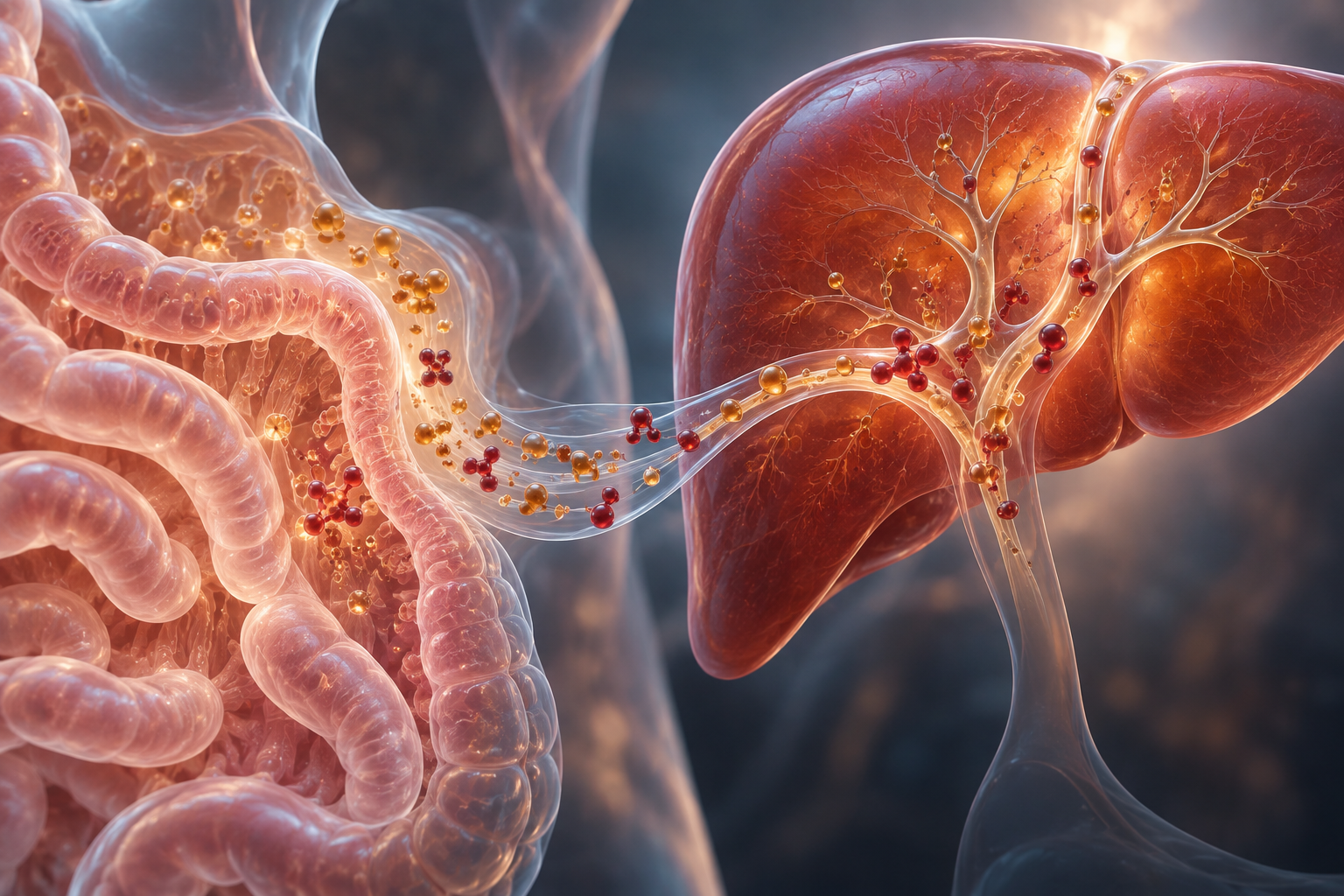
For absorption to occur, disaccharides must first be broken down by enzymes in the small intestine. Sucrose yields glucose and fructose, while lactose yields glucose and galactose; insufficient activity of a specific enzyme may alter tolerance. The resulting monosaccharides enter the bloodstream through the intestinal cells. The digestive path also depends on gastric emptying and the composition of the meal, which is why a pure solution and a mixed lunch do not provide the same temporal profile.
Glucose is used by tissues as an energy substrate and participates in replenishing glycogen stores. Insulin helps organize fuel distribution and maintain glucose concentration, but the very rise of insulin after a meal is normal physiology. From this rise, one cannot directly deduce future body mass or a clinical diagnosis. Chronic dysregulation and a normal response to ingested carbohydrates require different explanations.
Fructose metabolism largely begins in the intestine and the liver. It can yield intermediate products and be used to form glucose, lactate, and other metabolites. Under certain conditions, part of the carbon participates in fatty acid synthesis. This pathway exists, but the phrase "all fructose is immediately converted into fat" incorrectly describes the distribution of the substance and ignores dosage, energy balance, and other metabolic possibilities.
To measure de novo lipogenesis, researchers use special methods, including labeled substrates. The presence of such synthesis does not mean an equal accumulation of fat in the liver, because the tissue simultaneously receives, oxidizes, and exports lipids. Biochemical flux and final stores are different values. To discuss a disease, one needs changes in the relevant tissue marker and a clinical context, not just a reaction scheme from a textbook.
The low immediate glucose response to fructose is also not proof of its universal benefit. The glycemic index evaluates a specific glucose curve and does not describe all lipid pathways, calories, or effects on teeth. Therefore, a fructose-sweetened beverage cannot be declared suitable without limits just because of a lower index. At the same time, this mechanistic caution does not provide a basis for fearing a normal serving of whole fruit.
Animal and cell studies allow for the creation of concentrations and conditions that humans do not encounter under normal nutrition. They are useful for testing individual metabolic links, but in themselves, they do not define a safe serving or the magnitude of human risk. For example, a pronounced effect in the context of experimental overfeeding must be read together with the proportion of energy and duration. A mechanism becomes a clinical argument when the corresponding intervention has been studied in humans.
Therefore, in the discussion of sugars, it is useful to maintain two lines simultaneously. Molecules do indeed differ in their metabolic pathways, but total excess energy can also change mass and lipid stores regardless of a single label. Denying any role for dose simplifies physiology just as much as blaming a single molecule. The next question is what differences controlled human trials show.
Fructose: calorie replacement and excess energy

An isocaloric comparison means that the component under study replaces another at a comparable energy intake. A hypercaloric intervention adds energy beyond requirements or previous dietary intake. These designs answer different questions, and the word "sugar" in both protocols does not make them equal. If the body has received more fuel, the result cannot be automatically attributed to the unique toxicity of one variety of carbohydrate.
In a study by Johnston et al., 32 men with central excess body mass received fructose or glucose in an amount of 25% of energy. First, a two-week isocaloric period was conducted, followed by a two-week hypercaloric period after a washout. At comparable energy, no significant change in liver triglycerides was detected; with excess energy, they increased in both groups without a convincing difference between the sugars. The experiment is short, refers to a selected group of men, and does not prove the harmlessness of any dose over years.
Other human experience has shown differences between the molecules. In a study by Stanhope et al., adults with excess body mass or obesity consumed beverages with glucose or fructose for ten weeks, providing 25% of energy requirements. Both groups gained mass, but the fructose variant was accompanied by more unfavorable changes in a number of lipid markers, visceral fat, and insulin sensitivity. This is a high proportion of energy from specially sweetened beverages, not a trial of regular fruits.
Together, the studies do not create a contradiction of the type "fructose is dangerous" or "fructose is completely indifferent." They show that the energy context and the features of the substrate can have independent significance. One short experiment measured the accumulation of liver lipids, the other measured several metabolic outcomes in a different regimen. The practical conclusion concerns primarily regular large liquid doses, not the need to exclude every fructose molecule from food.
Particular caution should be exercised with the 25% energy share. For a reference diet of 2000 kcal, this is 500 kcal, which is approximately 125 g of sugar, assuming the entire substrate under consideration provides 4 kcal per gram. This academic conversion helps visualize the scale, but it is not an individual prescription or a safety limit. It also explains why a research dose cannot be indiscriminately transferred to a piece of fruit eaten after dinner.
In the presence of existing liver disease or metabolic disorders, the decision depends on the diagnosis, overall nutrition, and treatment. Reducing regular sugar-sweetened beverages may be a practical part of a plan, but the promise to "cleanse the liver" does not describe a measurable clinical outcome. None of these studies tested weekly detoxes, special syrups, or universal tissue restoration. It is sufficient to speak about specific dietary changes and observed indicators.
For the scientific knowledge base, it is useful to explicitly preserve the form of sugar, the energy share, the duration, and the subject of measurement. If the outcome is liver fat, it cannot be replaced by wording about all cardiovascular events; if men with excess body weight were studied, extrapolation to children requires different data. This helps the professional learn from the study, and the reader see the actual content of the promises. Dosage and design are often more important than a substance's catchy name.
What the substitution of sugary drinks showed

A liquid product allows for a quick intake of a significant amount of energy and usually does not require chewing. However, the claim of insufficient compensation for this energy is better supported by human results than by explaining it with a single universal satiety formula. Some participants change other food intake, others less so, and the outcome depends on the circumstances. Therefore, a beverage substitution trial is particularly useful: it tests a behavioral intervention close to everyday life.
In the trial by de Ruyter et al., 641 predominantly normal-weight children received 250 ml of a beverage daily for 18 months. One option contained sugar and 104 kcal, while the other was non-energetic and sweetened. In the primary assessment, weight gain was 7.37 vs. 6.35 kg, which differed by approximately one kilogram. This is less weight gain during a growth period, not a recommendation for all children to lose weight.
The study also had limitations: some children stopped drinking the assigned beverages, and an assessment using available data from those who dropped out yielded a less convincing difference in some indicators. Therefore, a correct summary preserves both the direction of the effect and questions regarding adherence to the intervention. The work shows that substituting a regular source of energy can make a difference. It does not establish the necessity of sweeteners or an identical result for every family.
The Ebbeling study involved 224 adolescents with overweight or obesity who regularly consumed sugar-sweetened beverages. A one-year intervention reduced their intake and was accompanied by a weight difference of approximately 1.9 kg and a BMI difference of 0.57 in favor of the experimental group. At the two-year mark, the primary outcome did not show a convincing sustained difference. This serves as a reminder that the effect of a regimen and its maintenance after support ends are separate challenges.
In adults, Raben et al. compared ten weeks of additional products containing sucrose versus sweeteners in 41 individuals with overweight. In the sucrose group, weight increased by approximately 1.6 kg, while in the control group, it decreased by approximately 1.0 kg. The amount of sugar was high, and the intervention changed total energy intake, so the result does not isolate the effect of the molecule at equal calories. It supports a practical focus on regular sugary additives in a standard diet.
Unsweetened water and other suitable non-sweetened beverages allow for the reduction of such a source without the need to adopt the entire intervention from a study. The choice depends on habits, availability, and tolerability; an individual does not necessarily need to change all beverages in one day. A more sustainable approach might be a gradual reduction in sweetness or replacing one recurring episode. The goal is to reduce the regular load while keeping nutrition convenient.
At the same time, it is impossible to promise kilograms based on the formula "remove 104 kcal — get a strictly defined weight loss." Energy expenditure, appetite, and other food intake change, and the body is not a static arithmetic system. Especially in children, the decision must account for growth and nutritional adequacy. Trial results help estimate the direction, but a personal trajectory requires its own context.
Teeth: quantity and repeated exposures matter

It is not just energy that matters for dental caries. Plaque microorganisms utilize available carbohydrates and produce acids that contribute to the loss of enamel minerals. Between such exposures, saliva and fluorides help restore the mineral balance. The NIDCR explains why repeated contacts with sugar and starchy foods can sustain damage.
This mechanism helps to understand the difference between a single sweet episode and slowly sipping a sweet beverage all day long. In the latter case, exposures are renewed multiple times, even if the glass does not seem large. However, the risk also depends on plaque, salivation, hygiene, fluorides, and the condition of the teeth. Therefore, frequency does not negate the importance of the total amount, and a small portion does not provide a universal guarantee of safety.
A sweet taste is not the only sign of a dental problem. Starchy foods can also participate in acid formation, and the acidity of a beverage can influence enamel in a separate way. Caries and acid erosion have different mechanisms, although they can coexist. Dental prevention cannot be reduced to searching for a single "sugar-free" label while ignoring composition, consumption patterns, and oral hygiene.
The WHO recommendation on free sugars is based significantly on caries prevention. Unlike some weight-related outcomes, the restriction here cannot be explained solely by a reduction in calories. This is an important response to the argument, "if weight is not increasing, any amount of sweet is irrelevant." Body mass is one indicator, while dental health answers a different question.
For a family, a practical plan includes not only buying different food but also habits. One can reduce the constant presence of sweet drinks between meals and avoid turning a beverage into a background habit that accompanies the entire day. This is combined with regular oral hygiene and a dental risk assessment. In cases of dry mouth, frequent caries, or special needs, the plan should be more individualized.
At the same time, sweets should not be used as a cause for shame or punishment. A conversation about frequency and quantity is more effective when it is linked to understandable actions rather than the label of "teeth ruined by bad behavior." It is important to consider the availability of dental care and family routine. The real risk consists of several factors, and nutrition is a manageable part of this system.
The presence of pain, a tooth lesion, or other symptoms requires dental care, not just a reduction in sugar. Changing the diet can support prevention, but it does not close an already formed cavity. Likewise, it is incorrect to consider honey a prophylactic agent against caries due to its origin or the laboratory properties of individual components. A culinary sweetener remains a contact with sugars.
How to understand WHO guidelines and read labels

The WHO recommends that adults and children reduce their intake of free sugars to less than 10% of total energy; this is a strong recommendation. A further reduction to less than 5% has a conditional status and suggests additional benefits, primarily for teeth. The two levels cannot be described as equally mandatory or equally substantiated. A conditional status implies a more cautious assessment of the rationale and application, rather than a lack of meaning.
For a conditional diet of 2000 kcal, the 10% and 5% limits correspond to 50 and 25 g of free sugars, respectively, since a gram provides about 4 kcal. The recommendation is formulated as "less than," so these numbers indicate an estimated boundary, not a target that must be reached daily. With different energy requirements, the number of grams also changes. Therefore, the common "25 g for everyone" is not a universal retelling of the percentages.
The calculation should include all relevant sources, not just the sugar in a cup of tea. Beverages, sweet dairy products, sauces, pastries, honey, and juices can all contribute simultaneously. It is not necessary to draw up a precise balance every day: one can start by identifying recurring large sources. Reducing one habitual beverage is often more practical than complex tracking of tiny amounts in every product.
On the packaging, it is useful to look at the amount per 100 g or 100 ml and then recalculate for the actual portion. If a bottle contains two stated servings and a person drinks the whole thing, the contribution must be doubled. A separate line for added sugars facilitates assessment but is not available in all labeling systems. Based on the total amount alone, one cannot always distinguish intrinsic lactose from added sucrose without information on the recipe.
The list of ingredients helps identify sources but does not always provide the exact number of grams of free sugars. Sugar, syrup, and concentrate may be listed separately, and the order of components usually reflects the weight at the time of manufacture. This allows for the comparison of similar options while maintaining calculation limitations. The variety of names does not create different statuses for "healthy" sweeteners.
Labels such as "natural," "no refined sugar," and "no added sugar" answer different marketing or regulatory questions. A product with juice or honey may still contain free sugars, even if table sugar was not used. Another product with low sweetness may remain very energy-dense due to fat. To make a choice, one needs to consider the content, serving size, and nutritional role rather than a single front-of-package label.
It is important for a professional not to conflate the WHO target indicator with the total amount of carbohydrates in diabetes. Free sugars are a prevention category, whereas therapy and nutrition calculations also account for starch and other available carbohydrates. A product without added sugar does not necessarily have no effect on blood glucose. This is precisely why a competent limitation of free sugars is combined with an overall plan rather than replacing it.
Practical changes and clinical safety

One can start by observing habitual sources over the course of a normal day. Sweet drinks, frequent small additions to beverages, and recurring sweetened snacks often provide a clearer point of action than an occasional dessert. There is no need to eliminate all favorite products at once. Choosing a smaller portion, a less sweet option, or an unsweetened drink helps reduce the quantity without total restructuring.
Whole fruit should not be automatically removed for the sake of limiting free sugars. It is part of a different dietary context and can support diet diversity. In diabetes, quantity and individual response are still considered, and specific restrictions apply for certain diagnoses. However, the general WHO rule does not require replacing all fruits with carbohydrate-free products.
Giving up sugar does not necessarily mean a healthy substitution. If a person consumes a lot of fat instead of a moderate sweet portion or constantly uses products they tolerate poorly, the result must be evaluated more broadly. Sweeteners and sugar alcohols have their own properties and are not a universal solution; these issues require separate consideration. For a primary strategy, it is often sufficient to reduce the habitual sweetness and the frequency of its consumption.
A special exception is hypoglycemia in a person with a corresponding disease or treatment. The ADA describes 15 g of fast-acting carbohydrates for most adults, with reassessment after 15 minutes. Prophylactic limitation of free sugars does not prohibit necessary treatment for low blood glucose. For children, the dose is individualized, and in case of loss of consciousness, emergency help according to an agreed-upon plan is needed.
When significantly changing the menu while on insulin or drugs with a risk of hypoglycemia, therapy must be considered. Reducing carbohydrates without appropriate supervision can change the safety of the regimen, even if the intention to improve nutrition is reasonable. One cannot adjust medication based on general advice from an article. A specialist helps coordinate the nutritional goal with specific treatment and life circumstances.
Unusual intolerance, pronounced intestinal symptoms, or confirmed hereditary metabolic disorders require separate diagnostics and tactics. They cannot be explained by the general term "sugar addiction" and treated by random food elimination. Food preferences, habits, and clinical disorders are different issues. If restrictions become increasingly strict and interfere with adequate nutrition, it is useful to evaluate not only the menu composition but also the approach to it.
A reasonable strategy is quite clear: fewer regular free sugars, especially in drinks, preservation of whole foods, and attention to dental health. At the same time, sugar does not become the sole culprit for all diseases, and one sweet episode does not nullify the quality of the diet. Strong and conditional recommendations, high research doses, and regular serving sizes must remain distinguishable. Then, knowledge helps in making decisions that can be maintained, rather than creating yet another system of food-related anxiety.