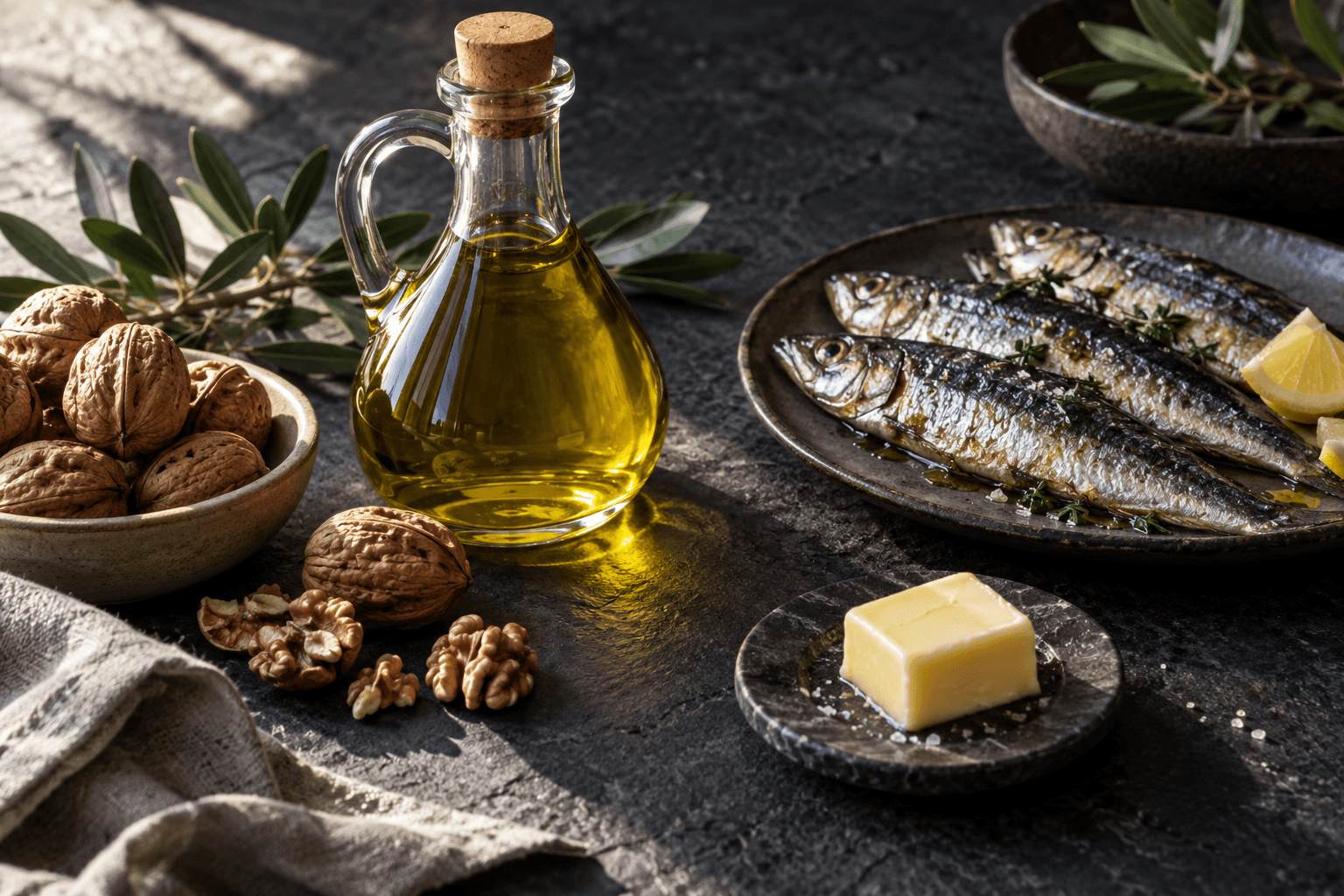
Fats are simultaneously essential to the body and require a thoughtful selection. They provide energy, are components of membranes, and aid in the absorption of fat-soluble substances; however, different sources and substitutes affect blood lipids and health in unequal ways. The simple "all fats are harmful" scheme has long since ceased to describe this physiology. Yet, the reverse idea—that natural oil can be added without restriction, and that the only dietary problem is omega-6—works just as poorly.
The main question is often not "how much was removed," but "what was it replaced with." Replacing butter with a suitable vegetable oil, replacing it with sweet pastries, and simply adding oil to one's previous menu are three different interventions. They differ in composition, energy, and potential consequences. Therefore, clinical studies and recommendations must be read in the context of one's entire diet rather than turning the name of a fatty acid into a universal product rating.
For professionals, the boundaries between changes in LDL, insulin sensitivity, and the number of cardiovascular events are particularly important here. For the general reader, it is the ability to choose convenient products without constantly calculating an "ideal ratio." A proper explanation makes it possible to maintain necessary fats, reduce less suitable sources, and understand why medicinal omega-3s are not equivalent to any fish oil capsule.
Structure of fatty acids and the path of dietary fat

Most dietary fat exists in triglycerides: three fatty acids attached to a glycerol molecule. During digestion, enzymes break down these compounds, and bile helps organize the interaction of fats with the aqueous environment. In intestinal cells, the components are reassembled and packaged into transport particles. Therefore, post-meal fat does not simply float in the blood as the oil that was on the plate.
Saturated acids have no carbon double bonds, monounsaturated have one, and polyunsaturated have several. The position and spatial shape of the bonds influence the properties of the molecule and its involvement in tissue processes. However, any dietary fat usually contains a mixture of acids, not one pure category. Olive oil does not consist only of monounsaturated fats, and butter does not consist only of saturated ones; this mixture must be taken into account when describing a product.
The designations omega-3 and omega-6 refer to the position of the first double bond from the methyl end. They are not degrees of "healthiness" and do not describe the entire family in the same way. Among omega-3s, a distinction is made between plant-based alpha-linolenic acid (ALA) and the long-chain EPA and DHA. The NIH ODS emphasizes these differences because the sources and data for individual molecules are not entirely interchangeable.
Linoleic acid and ALA are classified as essential: the body must obtain the starting molecules through diet. The possibility of further conversions exists, but it does not allow one to consider a serving of plant-based ALA as an exact replacement for the same mass of EPA or DHA. In tissues, acids can be incorporated into membrane phospholipids and participate in the formation of signaling substances. It does not follow that increasing any one of them automatically improves every cellular function.
LDL and HDL are transport particles, and the cholesterol measured within them is one of the characteristics of metabolism. Calling LDL a "bad fat" is inaccurate: it is not a type of dietary fat, nor is it an individual oil molecule. Some dietary changes affect the formation and removal of such particles, but the effect depends on the substitution and the baseline state. This is precisely why lipid results cannot be translated into the effect of every product without context.
Dietary fat also has a high energy density: approximately 9 kcal per gram. This characteristic is retained by both high-quality vegetable oil and other fatty products. A small volume can noticeably increase the energy of a meal, which is sometimes useful in cases of malnutrition and not always desirable for other tasks. A "healthy source" does not mean "unlimited quantity."
Finally, chemical composition and a food product are different levels. Nuts provide a cellular structure, protein, and fiber; oil represents an isolated fat portion, and pastries combine several components. Studying one fatty acid helps understand the direction, but a standard menu consists of products. Practical choices become more accurate when these levels are connected rather than substituted for one another.
Saturated fats: replacement matters

In the 2023 WHO recommendations, the target for saturated fatty acids is no more than 10% of total energy intake. This refers to a share of energy, not a percentage of food mass, and does not require the complete elimination of all products containing saturated acids. For a conventional 2000 kcal diet, 10% corresponds to approximately 22 g if using 9 kcal per gram. Such a conversion helps to understand the order of magnitude, but it does not replace individual needs and clinical goals.
The most informative part of the recommendation is the description of the preferred replacement. The WHO points to polyunsaturated fatty acids, monounsaturated fatty acids primarily from plant sources, and carbohydrates from fiber-rich foods, including whole grains, vegetables, fruits, and legumes. This is not a recommendation to replace fat with any product labeled "fat-free." If a large, sugary portion takes the place of fat, the dietary comparison changes.
Some saturated fatty acids raise LDL more than others, and the dietary context influences the magnitude of the response. Therefore, not all molecules and all products can be considered chemically identical. However, this level of detail does not negate the general direction of the dietary recommendation. It helps the specialist evaluate specific choices rather than turning a single product into an explanation for all lipid disorders.
In the KANWU study, 162 healthy adults received controlled, isocaloric diets with a higher proportion of saturated or monounsaturated fatty acids for three months. Insulin sensitivity deteriorated by approximately 10% in the saturated group and did not change significantly in the monounsaturated group. This is a physiological outcome in a short-term trial, not a direct measure of future diabetes. The result supports the importance of fat quality while maintaining the role of the total proportion and other nutritional conditions.
A practical replacement can be modest: using suitable vegetable oil instead of a portion of solid fat or choosing a dish where nuts and seeds replace another energy component. Simply adding nuts on top of a previous diet does not reproduce an isocaloric comparison. For a person who needs to manage body weight, this nuance is particularly significant. A beneficial replacement improves the composition without an unnoticeable, constant increase in energy intake.
Coconut and palm oils remain sources of saturated fatty acids despite their plant origin. The word "plant-based" does not describe the profile, and the word "natural" does not predict the effect on LDL. On the other hand, not every technologically processed fat contains a significant amount of trans-isomers. Decisions require knowledge of composition and formulation, rather than a juxtaposition of natural versus industrial origin.
If LDL is significantly elevated or cardiovascular disease is already present, diet becomes part of a broader treatment plan. Fat replacement can support this, but it does not provide grounds for independently discontinuing prescribed medications. Even a noticeable improvement in laboratory results does not mean that individual risk has been completely eliminated. In consultation, it is important to link dietary action to a specific goal and time frame for assessment while maintaining the medical context.
Trans fats: spatial form changes the response

Trans fatty acids are classified as unsaturated but differ in the spatial configuration of their double bond. As a result, the name "unsaturated" does not in itself imply superiority. Some trans-isomers occur naturally in ruminants, and historically, high amounts were derived from partially hydrogenated oils. The modern composition of products depends on technology and regulation; therefore, one cannot automatically attribute the old profile to every margarine.
In a controlled study by Mensink and Katan, 59 healthy participants received diets with different fatty acids over three-week periods. Compared to oleic acid, the trans-variant raised LDL by approximately 0.37 mmol/L and simultaneously impaired HDL. The doses in the study were high, so the result is not a linear personal risk calculator. However, it clearly showed that spatial configuration is capable of producing an unfavorable lipid profile.
The WHO recommends no more than 1% of energy from trans fatty acids for individuals aged two and older, including both industrial and animal sources. For a conventional 2,000 kcal diet, this is about 2.2 g. This number is not a target dose to be reached. The purpose of the limit is to reduce intake while maintaining adequate nutrition, not to seek out a mandatory daily portion.
Partially and fully hydrogenated oils differ in their chemistry, so the single word "hydrogenation" is insufficient for an accurate conclusion. One also cannot assume that all solid fats are trans fats: hardness may be related to saturated fatty acids or other technological properties. A product's profile cannot be determined by its appearance. Professional analysis requires specific composition data and current labeling regulations.
At a practical, everyday level, it is convenient to choose products with transparent ingredient lists and avoid making items with unfavorable profiles a regular staple of one's diet. A separate line for trans fats is useful, but rounding rules and mandatory disclosure requirements vary. Therefore, a zero value for a small declared serving does not always mean the absolute absence of these molecules. If multiple servings are consumed, the actual contribution also changes.
When replacing trans fats, it is important to keep the question of what replaces them in mind. Preferred unsaturated sources provide a different profile, while a larger share of saturated fats does not necessarily solve all quality issues. The manufacturing capability to create a product without trans isomers does not guarantee good nutrition as a whole. Salt content, sugars, energy density, and frequency of consumption remain significant.
This section should not turn into anxiety over trace amounts in every dairy product. The reference applies to the diet, and the practical gain depends on recurring sources. It makes sense to reduce significant contributions rather than complicate life with an impossible search for an absolute zero in all food. A proportional approach better preserves the adequacy and sustainability of nutrition.
Omega-6 and inflammation: a pathway is not a substitute for a trial
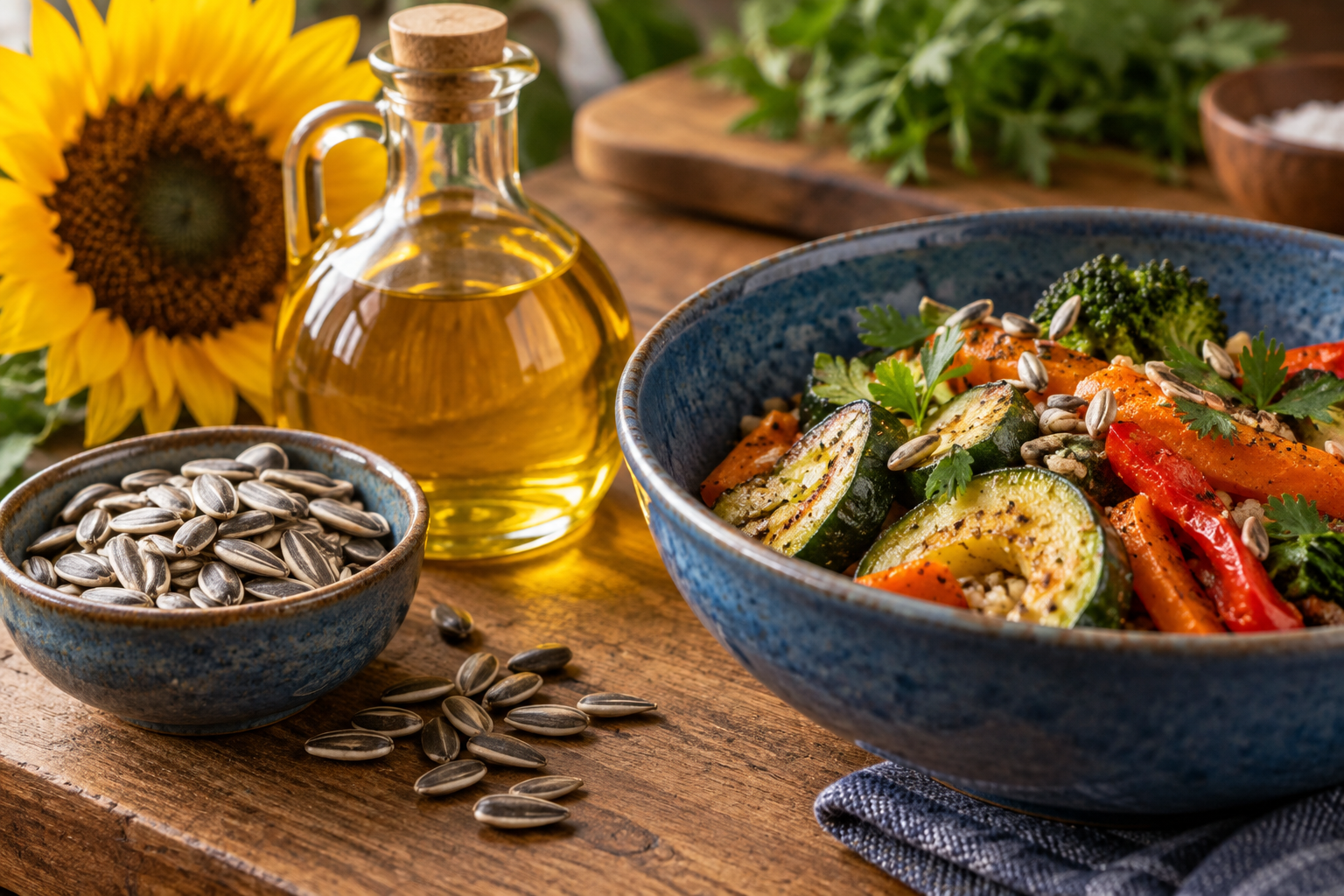
Omega-6 linoleic acid is involved in tissue metabolism and can serve as a precursor to other molecules. Among the derivatives of arachidonic acid are substances associated with inflammatory signals, vascular tone, and platelet function. However, the signaling family is heterogeneous, and its formation is regulated by enzymes and tissue status. One cannot automatically deduce an increase in systemic inflammation from the presence of a precursor following the intake of a typical amount of vegetable oil.
For a clinical question, it is useful to look at what happens with dietary replacement in humans. In a study by Bjermo and colleagues, 67 adults with abdominal obesity were assigned to ten weeks of a diet with a higher proportion of vegetable omega-6 or saturated acids, primarily from butter. The diets were isocaloric and did not change the overall proportion of macronutrients. The variant with polyunsaturated acids did not cause the increase in inflammatory markers expected by the popular hypothesis.
Liver fat in this experiment was lower in the polyunsaturated group according to two assessment methods, and some metabolic indicators also improved. The study is small and short-term, so it cannot be turned into a promise of curing the liver with any oil. But it directly contradicts the idea that an increase in omega-6 is necessarily inflammatory in every situation. It is important to maintain the replacement of the saturated source and the studied population.
The ratio of omega-6 to omega-3 seems like a convenient number, yet it conceals absolute amounts. The same ratio can be obtained with insufficient intake of both groups or with sufficient amounts at a completely different total energy level. The NIH ODS notes that the optimal ratio has not been defined and the indicator may be too non-specific. Therefore, there is no basis for imposing a single target proportion on everyone.
More practical questions are: are there suitable sources of essential fatty acids, what is the overall fat structure, and are products containing EPA and DHA present, provided they fit the diet? One can improve their intake without the goal of reducing linoleic acid at any cost. Cooking oil is chosen with consideration for replacement, quantity, and method of use. The presence of omega-6 is not an independent reason to declare a product poisonous.
In vitro and animal experiments are useful for studying receptors, oxidation, and individual lipid pathways. However, the introduced concentration, tissue, and composition of the experimental diet can differ significantly from human food. Clinical recommendations require an understanding of this transition. If a paper confirms only the formation of a specific mediator in a cell, it does not confirm the magnitude of heart attack risk in a human.
Finally, "not necessarily pro-inflammatory" does not mean that any amount of oil and any cooking regimen are inconsequential. Energy, storage, and the properties of a specific blend still matter. A proper rebuttal of exaggeration should preserve these questions. It frees choice from a false label rather than creating a new category of products without boundaries.
Omega-3: food, supplement, and medicinal product

EPA and DHA have been studied in various forms and doses, so the results cannot be combined into a promise for any capsule. Fish contains a whole dietary package; a supplement may have different ratios and quality, while a medicinal product has a specific molecule and a verified dose. On the packaging, the mass of fish oil is also not equal to the sum of EPA and DHA. To compare with a study, the active composition itself is needed.
In the REDUCE-IT study, 8,179 patients on statins with elevated triglycerides and high risk received 2 g of icosapent ethyl twice daily or a placebo. Over a median of 4.9 years, the primary composite endpoint occurred in 17.2% versus 22.0%; the hazard ratio was 0.75. This is a difference of 4.8 percentage points in the studied population. The result applies to the EPA drug and the clinical situation given.
At the same time, hospitalizations for atrial fibrillation or flutter were more frequent: 3.1% versus 2.1%. Serious bleeding accounted for 2.7% and 2.1%, although this difference did not reach the conventional threshold of statistical significance. Benefits and adverse events must be described together, without turning high-dose treatment into casual advice. When choosing a drug, baseline risk and concomitant therapy are taken into account.
In STRENGTH, 13,078 high-risk participants on statins received 4 g of a mixture of EPA and DHA in carboxylic acid form or corn oil. No convincing reduction in major adverse cardiovascular events was found: 12.0% versus 12.2%, with a hazard ratio of 0.99. This is not proof that all omega-3s are useless. It shows that molecular composition, form, control, and clinical objective significantly influence the translation of results.
Differences between these trials continue to be debated, including the role of the drug and the placebo. They cannot be explained by a single concocted reason, nor can the issue be declared entirely resolved. However, they already clearly distinguish medical intervention from a general dietary label. No "heart-healthy" claim automatically reproduces REDUCE-IT.
For a regular diet, appropriate sources of fish or other products should be chosen taking into account preferences and dietary restrictions. High doses of supplements require individual assessment, especially in the presence of arrhythmias, anticoagulants, and other medications; the NIH ODS reviews interactions and monitoring. This does not mean that regular food carries a risk equal to 4 g of the drug. Form and dosage remain the central distinctions.
Special conditions, including pregnancy and various diseases, may change the requirements for source and safety. In such cases, the choice of fish should consider applicable guidelines on contaminants, and supplements should be evaluated for composition and medical necessity. A general article on fats does not establish an individual therapeutic dose. Its purpose is to provide an accurate vocabulary for meaningful discussion.
Dietary Patterns and Cardiovascular Events

Lipid data are important, but clinical endpoints are studied in longer and larger trials. PREDIMED, in a revised 2018 publication, included 7,447 adults aged 55–80 years with high cardiovascular risk and no established disease at enrollment. The study compared a Mediterranean diet supplemented with olive oil, a similar diet with nuts, and advice on fat reduction for the control group. The median follow-up was 4.8 years.
The primary outcome occurred in 3.8% of the oil group, 3.4% of the nut group, and 4.4% of the control group. Adjusted hazard ratios were 0.69 and 0.72, respectively. These figures relate to a complex dietary strategy, education, and the provision of food products. They do not measure the isolated effect of a spoonful of oil and do not imply the same absolute benefit for a young, healthy individual.
The history of the methodology is also important: the original report was retracted and republished after deviations from the randomization procedure were identified. Revised analyses accounted for these issues, including specific checks for the robustness of the results. Therefore, the cited database should be used with the new publication, and this limitation should be maintained. It does not nullify the observation, but it affects the level of confidence and the description of the study design.
A Mediterranean strategy includes more than just one type of fat. Dishes, plant-based products, cooking methods, and dietary habits change, so one cannot attribute the entire result to the polyphenols in oil or a single monounsaturated acid. An individual can adopt suitable elements without purchasing a special product for the sake of a medical promise. Substitution and menu structure are practically useful, not a ritual daily supplement taken on top of an existing diet.
This context helps in reading general fat intake recommendations. The WHO considers fat quantity in conjunction with the prevention of unhealthy weight gain, and clinical diets may vary in their proportion depending on the objective. One cannot conclude from a single experience that quantity is not important at all. Conversely, a low overall proportion by itself does not guarantee a good composition or nutritional adequacy.
Professional comparison requires data on baseline risk, age, concomitant therapy, and control diet. A more pronounced relative difference in a high-risk group may result in a different absolute effect in the general population. One should not promise a specific reduction in the probability of myocardial infarction by prescription without corresponding data. The research supports the direction of a dietary strategy while maintaining medical personalization.
For the reader, this means the possibility of improving the menu gradually. Suitable oil, nuts in a tolerable portion, fish when permissible, and a variety of plant-based dishes can work together. It is not required to turn the diet into a strict set of "superfoods." It is enough to choose changes that replace less suitable repetitive sources and are maintained in everyday life.
Portions, preparation and safe practice

It is useful to start with a few main fat sources during a normal week. This allows one to see where solid fats are used most often, how much oil is added unnoticed, and which dishes simultaneously provide a lot of salt or sugar. Such an overview is more informative than searching for one "best oil." After that, one can choose a specific replacement without restructuring all meals.
A portion should be linked to the task. If there is a need to reduce energy, one can measure the oil being added and use flavor in such a way that a smaller amount remains sufficient. In cases of malnutrition or increased demand, energy density, on the contrary, can be useful. The same rule of volume restriction does not suit all people and all clinical conditions.
Nuts and seeds are considered along with allergies, tolerance, and convenience of consumption. They are not mandatory if they cause a reaction or do not comply with medical restrictions. For small children, a safe form of food is important, and for a patient with swallowing disorders, an individual texture is required. The general benefit of a category does not override the requirements of a specific person.
The method of preparation also matters, but the smoke point should not be used as the sole health rating. It depends on the composition and condition of the oil and does not describe all the processes of change during heating. It is reasonable to follow instructions, avoid overheating, and avoid long-term repeated use of one material. There is no need to explain ordinary home cooking with fantastic toxic mechanisms for which no human dose or outcome has been provided.
Storage must protect the fat from unnecessary contact with air, light, and heat in accordance with the product. A changed smell or taste is a reason to evaluate suitability, not proof of a new beneficial fermented property. Large packaging is not always more convenient if the consumption rate is slow. Here, the task of food safety and quality differs from the question of the omega-6 to omega-3 ratio.
In diseases of the biliary tract, pancreas, malabsorption, and other clinical situations, the composition and distribution of fat may require a separate plan. The universal advice to "add more oil for hormones" does not take these circumstances into account. High doses of omega-3 also cannot be prescribed independently instead of established therapy. The medical goal, form, and risk must be clear before intervention.
A working strategy remains simple in action and precise in its foundations: prefer suitable unsaturated sources, reduce trans fats, keep saturated fats within the recommended proportion, and evaluate the replacement. Omega-6 does not require a universal ban, and an "ideal ratio" is not a mandatory numerical goal. Clinical effects relate to specific trials, products to a real menu. Such an understanding allows one to use fats as a necessary part of nutrition without fear and without promises of unlimited benefit.