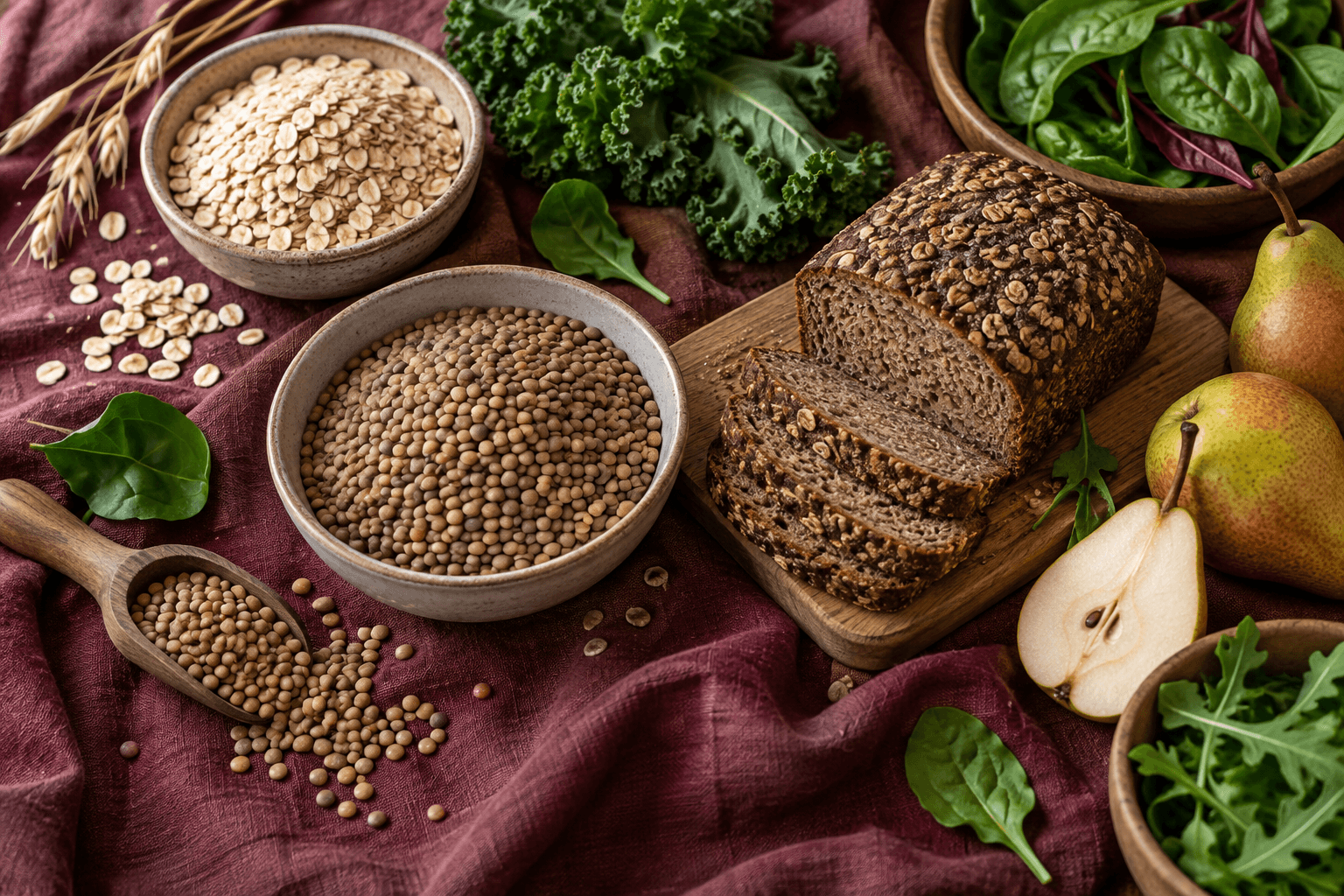
Dietary fiber is often described as a single beneficial supplement that one simply needs to consume in sufficient grams. While grams are indeed important, a variety of substances with different physical and biological properties are hidden under the general category of composition. Some retain water and assist in stool formation, others create a viscous environment, and others are actively fermented by the microbiota. Therefore, an identical amount of two different powders can result in unequal tolerability and divergent clinical outcomes.
Ordinary food additionally provides structure: the shells and cells of the plant, water, protein, minerals, and other components. A supplement allows one to study a specific fiber or provide support in a particular situation, but it does not reproduce the entire complex composition of legumes, vegetables, or whole grains. This is precisely why the recommendation to eat more plant-based foods and the trial of psyllium are related, but independent, issues. They cannot be reduced to a single formula stating that "all fiber heals the gut."
For a specialist, the key factors become form, viscosity, fermentability, dose, and the chosen outcome. For the general reader, the key is the gradual increase of suitable foods and an understanding of why bloating is not necessarily a sign of health benefits. Furthermore, the term "prebiotic" requires an additional condition: not just a change in bacterial composition, but a confirmed beneficial effect. This precision helps in utilizing fibers meaningfully while maintaining a sufficient and tolerable diet.
What is considered fiber and why properties differ
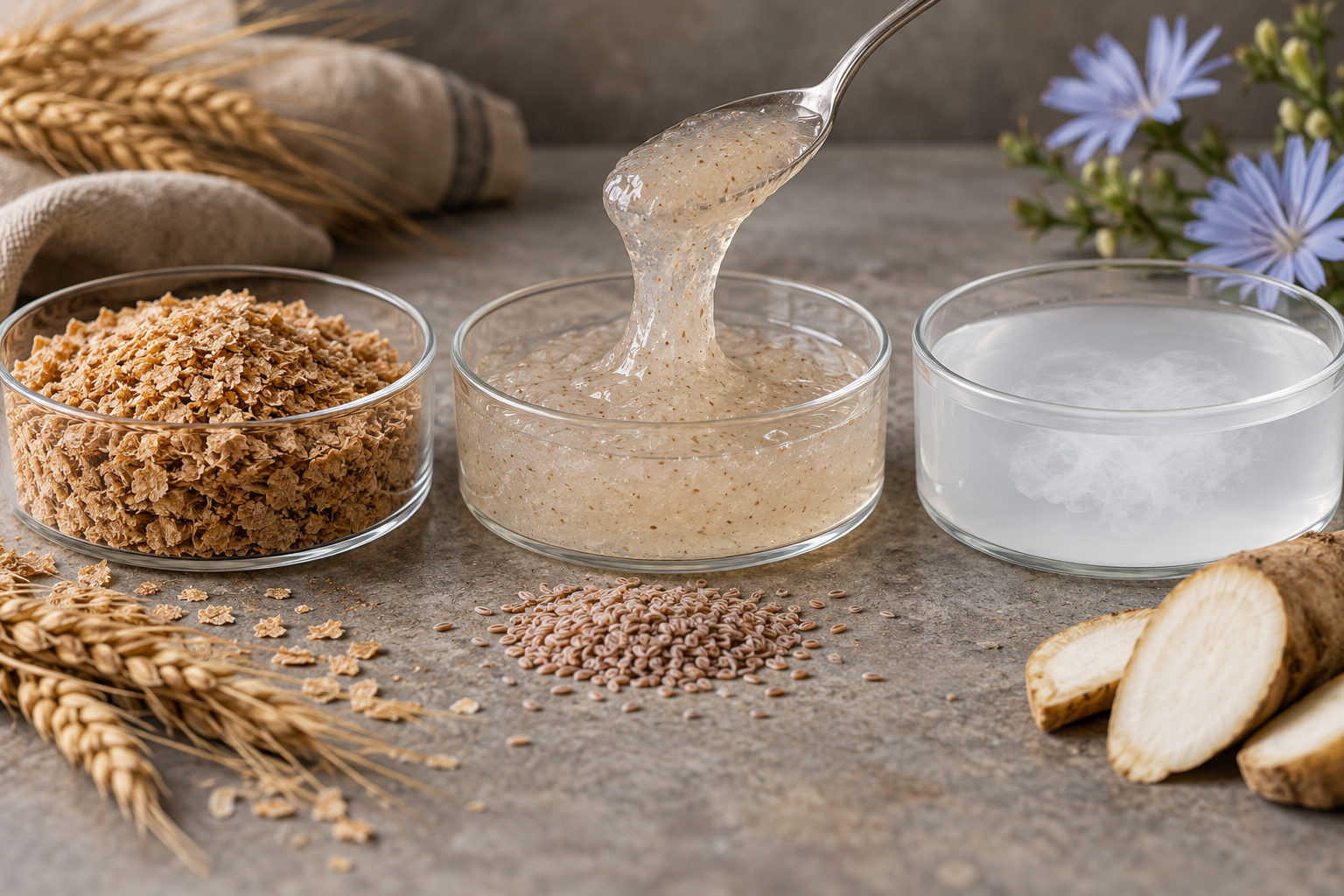
Dietary fiber includes several groups of substances that are not fully broken down by the standard enzymes of the small intestine. Most of these are carbohydrate polymers that are inaccessible at this stage, but nutritional definitions may also include other components, such as lignin. Regulatory rules for naturally occurring, isolated, and synthetic substances vary. Therefore, chemical properties and the legal right to label an ingredient as fiber are not always the same issue.
The traditional division into soluble and insoluble is useful, but insufficient. Solubility describes behavior under specific aqueous conditions, rather than automatically indicating an ability to lower LDL or relieve constipation. A soluble substance may have low viscosity but be highly fermentable. An insoluble component may play a physical role in food structure without creating a large amount of a specific microbial metabolite.
Viscosity is a separate characteristic. Long molecules capable of creating a thick environment can alter the movement of contents, enzyme access, and contact with the intestinal surface. Quantity, degree of dissolution, and retained molecular weight are important for this. A small label stating "with soluble fiber" does not disclose these conditions and does not allow for predicting the magnitude of the effect.
Fermentability describes the potential for microbial utilization. Inulin and certain oligosaccharides typically serve as active substrates, whereas other fibers are processed differently or to a lesser extent. The rate of the process and the site of fermentation also matter. High fermentation does not necessarily mean a better effect on stool and may cause more gas in a sensitive individual.
Particle size and the physical structure of the product add another dimension. Whole grains, coarse bran, and finely ground material may differ in their contact with water and tissues, even if the source plant is the same. Technological processing also changes the properties of isolated polymers. Therefore, a clinical recommendation should describe the specific form studied, rather than just the botanical origin.
A good working example is the difference between inulin and psyllium. Both may appear in discussions about soluble fiber, but inulin is primarily associated with fermentation, while psyllium is capable of retaining water and forming a gel. Substituting one for the other gram-for-gram without considering the goal is incorrect. If the task is stool consistency, it is precisely the property that was tested for this task that matters.
These categories do not create a complex examination for the user. It is enough to understand that the word "fiber" does not guarantee the same effect for every ingredient. For a specialist, these properties help explain a choice and revise it if the result is unsatisfactory. This approach is more precise than simply recommending an increase in quantity until symptoms disappear.
How fiber changes intestinal contents and stool

Stool formation depends on water, undigested components, microbial mass, and transit time. Fiber can retain water, add bulk, or alter fermentation, but the contribution of these pathways is not uniform. Very dry stools and frequent liquid stools require different approaches. Therefore, the phrase "speeds up the gut" does not adequately describe the action of the entire category.
Gel-forming fibers help bind water in a specific structure. Such an effect can support a more comfortable consistency without acting as a simple irritant to the intestinal wall. However, dilution and the ability to safely swallow the material are important for application. A dry powder is not the same form that was studied in a prepared suspension.
In the 2023 AGA–ACG guideline, fiber supplementation is conditionally suggested for chronic idiopathic constipation in adults, with low confidence in the evidence. Among the evaluated forms, psyllium appears the most convincing, while data on bran and inulin are limited. In a summary of trials, psyllium increased the number of complete spontaneous bowel movements by approximately 2.3 per week, with a wide confidence interval. This is not a promise of the same personal result, nor is it a recommendation to treat every cause of constipation identically.
Frequency is only one outcome. For a patient, straining, the sensation of incomplete evacuation, pain, and the ability to function normally may be more important. An improvement in the number of bowel movements does not necessarily mean the resolution of all symptoms. For monitoring, it is useful to pre-select exactly what is being assessed and not to change the criteria retroactively to whatever is convenient.
Constipation can also occur against a background of medications, diseases, or pelvic floor discoordination. In such situations, increasing fiber does not always resolve the underlying cause and sometimes increases discomfort. Guidelines for idiopathic constipation should not be applied without confirming the diagnosis. This is especially important in the presence of new symptoms or when standard measures are ineffective.
Sufficient fluid intake supports the use of bulk-forming agents, but forced excessive water consumption is not a standalone universal treatment. If water intake is already adequate, additional liters will not necessarily provide the desired effect. In cases where fluid restriction has been prescribed, the strategy requires coordination. The formulation should link water to the safe use of a specific product rather than prescribing the same large volume to everyone.
It is practically reasonable to increase common dietary sources gradually and evaluate the supplement separately if there is a relevant goal. A sudden, simultaneous change in several products makes it difficult to understand tolerability. There is no need to strive for a maximum stool output or to consider the absence of a daily bowel movement a diagnosis out of context. What matters are consistent well-being, consistency, and the clinical situation.
Viscosity, glucose, and lipids: where human results exist

Some viscous fibers influence the interaction of intestinal contents with enzymes and the absorptive surface. With the same meal, this is capable of altering the temporal profile of glucose absorption. For lipids, the metabolism of bile acids and changes in their reabsorption are also discussed. These mechanisms are plausible, but the magnitude of the effect must be derived from trials of a specific form and dose.
In a study of oat beta-glucan, 367 adults with elevated LDL were randomized to grain product variants, and 345 completed the four-week trial. High- and medium-molecular-weight forms at doses of 3–4 g of beta-glucan per day lowered LDL by approximately 0.19–0.26 mmol/L relative to control. With a low molecular weight at 4 g, no convincing effect was obtained. This is a direct example of why the same name and quantity do not guarantee the same clinical performance.
A magnitude of about 0.2 mmol/L is a modest change in a laboratory parameter. It cannot be described as "cleansing vessels" or an equal reduction in the probability of a heart attack. The trial lasted four weeks and did not measure long-term cardiovascular outcomes. In cases of high risk, diet supports the treatment plan, but it does not replace it.
In the work of Anderson, 34 men with type 2 diabetes and hypercholesterolemia received 5.1 g of psyllium twice daily or a cellulose control for eight weeks. The post-lunch glucose response was approximately 19.2% lower in the psyllium group, and the overall daily postprandial indicator was approximately 11%. These are selected indicators in a small clinical group. They do not mean a reduction in medication dosage by the same percentage or a universal result in women, children, and healthy individuals.
Even within a single trial, indicators may vary in confidence. A 13% reduction in LDL in this work did not reach the standard threshold of statistical significance, so it cannot be presented as a reliably established effect of that magnitude. Total cholesterol and glucose outcomes had a different statistical basis. A professional knowledge base should maintain this distinction, especially if attractive percentages are presented nearby.
Adding fiber to a product also requires accounting for dietary substitution. If the portion of available carbohydrates has decreased, or if protein and energy have changed simultaneously, the glucose curve reflects multiple actions. An isolated supplement in a controlled trial and a new breakfast at home are not fully equivalent. For the user, this does not invalidate a good breakfast, but it limits the explanation of its effect to a single molecule.
In therapies capable of inducing hypoglycemia, significant dietary restructuring requires careful consideration of the treatment regimen and diligent monitoring. Viscous fiber is not a dosage coefficient for insulin. Similarly, LDL results should not be used as a basis for unilaterally discontinuing a statin. Recommendations must explain the objective, the measurable outcome, and the clinical boundaries.
Fermentation and the term "prebiotic"

Upon reaching the colon, a portion of fiber becomes food for microorganisms. Primary degraders utilize accessible structures, while other groups may acquire intermediate products through cross-feeding. Short-chain fatty acids and other metabolites are formed, but the set depends on the initial community and the substrate. There is no single uniform microbial reaction to everything labeled as fiber.
The ISAPP consensus defines a prebiotic through the selective utilization by host microorganisms and a beneficial health effect. Therefore, fermentation alone or an increase in the relative proportion of bacteria is insufficient. Data linking the studied substrate to a benefit in the appropriate organism and conditions are required. This distinguishes the term from generic advertising that claims it "nourishes the microbiota."
Not every fiber must be a prebiotic to have value. Physical water retention or a suitable food structure can be helpful without an established selective microbial pathway. Conversely, a pronounced change in the microbiota does not guarantee symptom improvement. These distinctions allow for the evaluation of substances based on their real function, rather than assigning the most fashionable label to all of them.
In an experiment with resistant starch, 20 young adults received a gradually increased dose of potato powder. Approximately 24 g of the resistant fraction in 48 g of material yielded a heterogeneous response in butyrate and microbial groups. Concentration in stool does not directly reflect the entire formation and absorption of the metabolite. The work helps in understanding ecology, but it is not a treatment algorithm based on commercial bacterial analysis.
Butyrate is involved in the metabolism of colon cells and can influence signaling pathways. However, a cellular experiment with a specific concentration does not establish that the same dose will be achieved after a spoonful of inulin. Local production, absorption, and intestinal transit alter the picture. The mechanism is useful for explaining a hypothesis, whereas disease improvement requires a relevant human outcome.
Gases are part of possible fermentation, but pronounced pain does not become beneficial simply because of a biological explanation. Tolerance depends on quantity, rate of increase, and intestinal sensitivity. There is no need to induce discomfort to prove that a prebiotic is working. For regular nutrition, an appropriate dose and variety are preferred, while for clinical application, an established goal is required.
It is useful for a professional to clarify on what basis the term is being used. Is there a specific material, dosage, population, beneficial outcome, and data on microbial utilization? If the discussion concerns only a new composition of bacteria, it is more accurate to describe this result directly. Such phrasing preserves the scientific value of the work without adding promises that have not yet been verified.
Inulin, bran, and psyllium in bowel symptoms
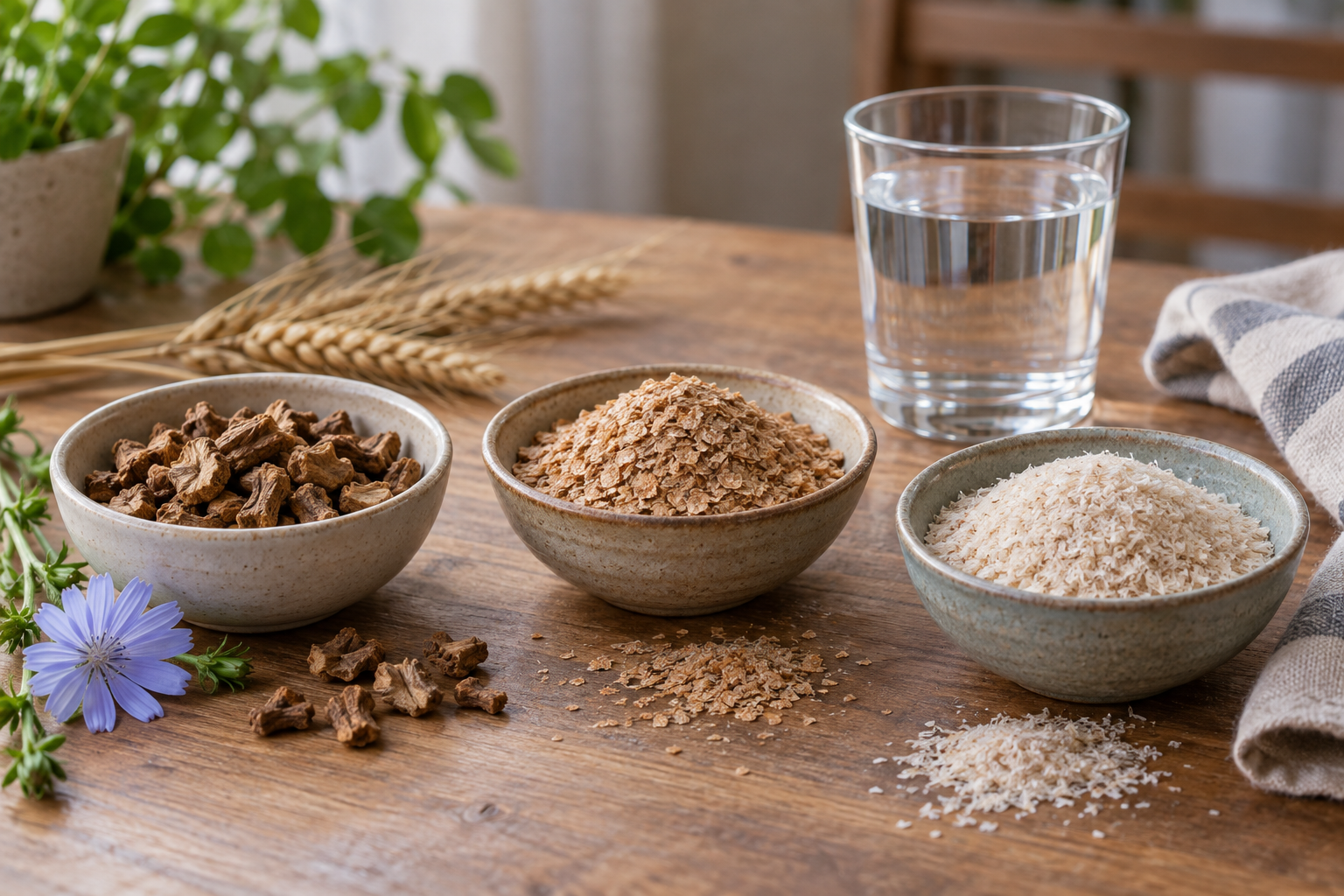
Clinical complaints make the differences in properties particularly noticeable. A person may tolerate small portions of legumes well but struggle with a rapidly added concentrate of fructans, or find relief from a gel-forming form while experiencing no effect from bran. This does not necessarily mean an allergy or that all fibers are useless. What is needed is a description of the symptom, the quantity, and the conditions, rather than a general conclusion based on a single product.
In the Micka cross-over study, 44 volunteers with constipation received 12 g of a specific chicory inulin per day for four weeks or a placebo. The median stool frequency was four times versus three times per week; the difference was statistically significant. The study supports a moderate effect of a specific material. It does not mean that any inulin treats all causes of constipation or that the positive result of one study makes the overall confidence high.
In the Bijkerk trial, 275 adults with irritable bowel syndrome (IBS) compared 10 g of psyllium, 10 g of bran, and rice flour over 12 weeks. In the first month, adequate relief was noted by 57% in the psyllium group and 35% in the control group; the relative indicator was 1.60. This is an assessment of symptomatic response based on a given criterion. It cannot be recounted as the elimination of IBS in all participants.
For bran, the result was less stable, and tolerability influenced continued participation. This experience shows the limitations of the advice that "any fiber is equally beneficial for IBS." It is also not an argument to prohibit all food sources of the insoluble fraction. The isolated supplement, dose, and clinical symptoms differed from a regular, varied diet.
Recommendations for chronic idiopathic constipation and IBS do not fully overlap because the populations and outcomes differ. For one person, the main task is frequency and consistency; for another, it is pain, bloating, and reaction to food. Therefore, results cannot be combined into a single list of "correct" powders. A good consultation begins with a diagnosis and the symptom that is actually causing distress.
Limiting certain fermentable components is sometimes used in clinical strategies, but it should not become a lifelong exclusion of all plant-based foods without assessment. Severely narrowing the diet can reduce diversity and adequacy. When necessary, restrictions must have a clear goal, duration, and plan for future adjustments. Commercial "dysbiosis analysis" does not, in itself, create such a plan.
It is useful to agree in advance on the criteria for continuation: tolerance, changes in the chosen symptom, and a reasonable evaluation period. If there is no effect or the condition worsens, the decision is reviewed rather than automatically doubling the dose. This approach allows the supplement to be used as a test of a specific strategy. It does not require enduring discomfort for the sake of a promised future "recovery."
WHO benchmark and dietary diversity
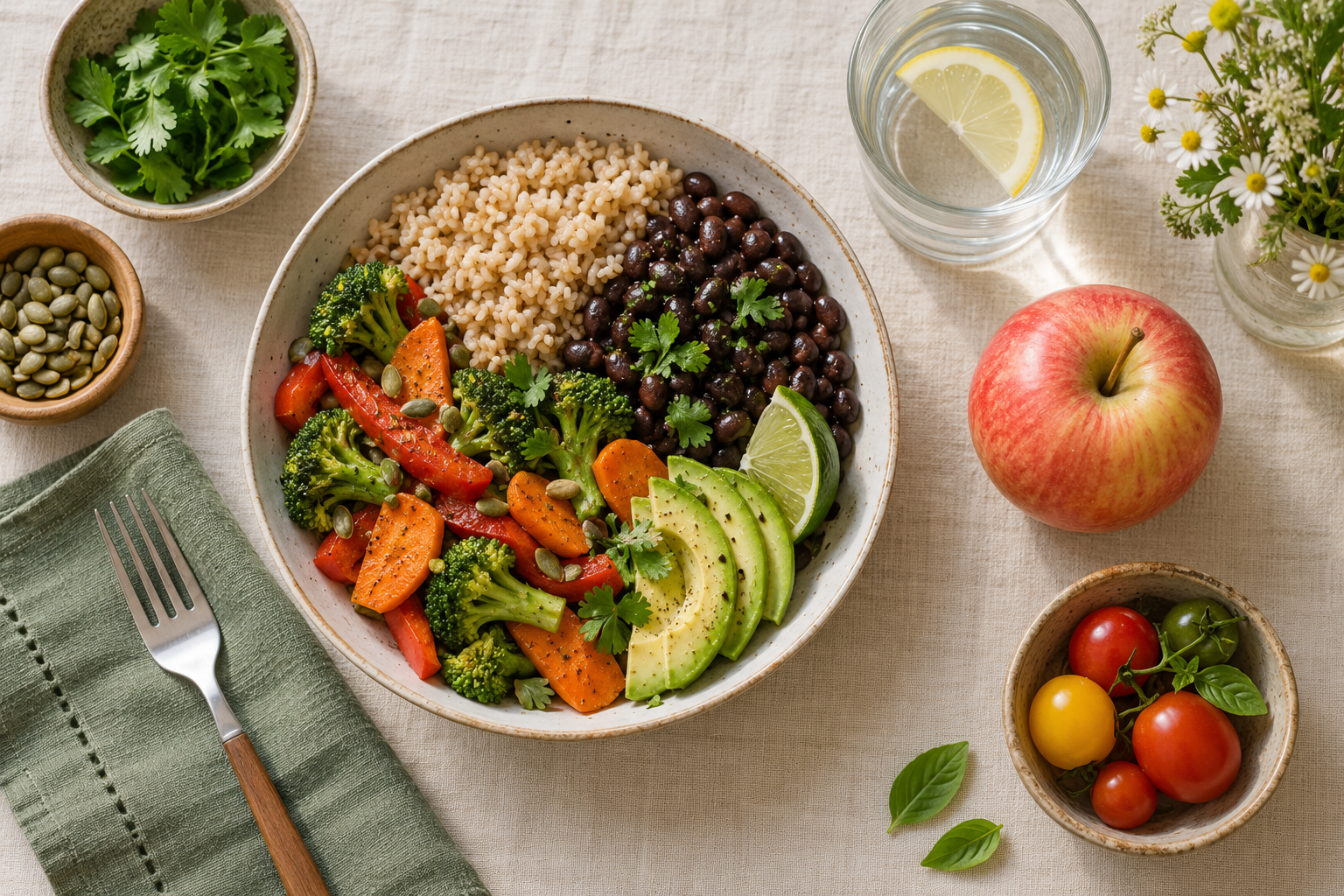
The 2023 WHO guidelines recommend that adults consume at least 25 g of naturally occurring dietary fiber per day. This is a food benchmark, not a requirement to ingest 25 g of isolated powder. Preferred sources of carbohydrates include whole grains, vegetables, fruits, and legumes. Supplements for a specific purpose may be significant, but they do not replace this dietary logic.
Meeting this quantity is more convenient through several habitual sources throughout the day. A legume dish, a suitable cereal, vegetables, and a whole fruit provide different components and do not require one mandatory product. Content depends on the serving size and formulation, so it is useful to rely on specific composition data. One should not promise that any plate of salad automatically fulfills the entire benchmark.
Diversity is not equal to a mandatory number of plants that everyone needs to reach at any cost. There is no such universal list for a precise clinical standard. The practical goal is not to depend on a single type of food or supplement and to maintain a sufficient range of products. Given restrictions, budget, and preferences, the approach can be quite simple.
Whole grain and cooked cereal differ in wet weight from dry matter. Therefore, numbers per 100 g must be read in the state to which they refer. Similarly, a small portion of bran and a full serving of bread can have different roles in a menu. The error of comparison is sometimes more important than minor differences between plants.
Juice does not retain the entire nutritional context of a whole fruit, and a product with added inulin does not automatically become an equivalent to vegetables. A package may have enough fiber but simultaneously be high in sugars or energy. Each property should be assessed separately. For selection, it is useful to compare products of the same nutritional function and real serving size.
Fiber can support satiety, but the effect depends on structure, volume, viscosity, and the rest of the composition. A blanket promise of guaranteed lower appetite for any supplement is too broad. If a person finds it difficult to eat enough, a very high-volume, low-energy menu may also be inappropriate. A diet should consider needs, not just maximize one line of the composition label.
Gradual increases allow for the preservation of tolerance and habits. One can start with a single change, then add the next, evaluating the overall level and well-being. A population benchmark is useful as a direction, but it does not override individual clinical exceptions. It is this combination of food, quantity, and tolerance that makes a recommendation work.
Safety of supplements and a practical plan

Before using a powder, one must understand the goal and form. Psyllium for a chosen symptom, inulin as a fermentable material, and a regular food mixture are not the same products. The amount of active fiber may differ from the total mass of a measuring scoop. For comparison with a trial, the composition, instructions, and final dose are important.
MedlinePlus describes the necessity of fluids when taking psyllium and recommends at least 240 ml for the specified forms. One must not swallow dry gel-forming powder like common seasoning. In cases of difficulty swallowing or suspected intestinal obstruction, self-administration is particularly inappropriate. If fluid restriction has been prescribed, the method of administration must be coordinated individually.
Drug interactions also depend on the preparation and form. The official information for psyllium specifically specifies intervals for certain medications, so a universal "take all pills an hour later" is imprecise. It is useful to inform a doctor or pharmacist of the full list and follow the specific instructions. A standard household schedule cannot be assigned without knowledge of the therapy.
A sharp increase in fermentable fibers often alters gas production. Mild temporary discomfort and severe pain are not the same thing, and worsening should not be explained away as an obligatory cleansing. In the event of noticeable symptoms, the amount should be reduced or the trial stopped, and the cause evaluated. One should not use laxatives and new powders simultaneously without understanding their cumulative effect.
New persistent symptoms, blood in the stool, unexplained weight loss, severe pain, or signs of obstruction require medical evaluation. Advice about fiber should not delay seeking help. After surgery, in cases of active bowel disease, and with specific texture regimens, the strategy may also differ. The general benefits of dietary fiber do not guarantee the suitability of every form.
For a standard diet, one can choose a small change that fits into the day: replacing a portion of a usual dish with legumes or adding a tolerable whole-food product. Then, evaluate regularity, nutritional adequacy, and well-being, without expecting an instantaneous effect. A supplement is appropriate when it has a clear purpose. The number of grams becomes a tool, not a competition.
Fibers help in understanding nutrition more precisely precisely because they do not act in the same way. Solubility, viscosity, and fermentation describe different properties, and a prebiotic requires confirmed benefits through microbial utilization. Human studies allow for the selection of specific material while maintaining dose and population limitations. The practical result is a variety of suitable foods and targeted assistance if it is truly needed.