
Fermented Foods: Microbiota, Digestion, and Safety
Fermentation alters the food matrix, but its effects depend on the product, cultures, and processing. We break down the confirmed mechanism of lactose digestion and human studies on the microbiota, immune markers, blood pressure, and glucose. We also explain histamine, medication interactions, pasteurization, and portion choices.
A jar of yogurt, a slice of sourdough bread, and sauerkraut are united by a single technological principle: microorganisms have altered the original raw material. But their similarities in terms of their effect on the body do not end there, nor do they translate into a single therapeutic power. Fermentation can alter the taste, structure, digestibility of individual components, and the microbial composition of a product. To understand its benefits, it is important to distinguish between these changes and to know which of them have actually been studied in humans.
The word "fermented" is often accompanied by promises to restore the microbiota, strengthen immunity, and regulate metabolism. Part of the interest has a scientific basis; however, different products, cultures, and processing methods yield different results. This article examines fermentation as a method of food preparation, then sequentially analyzes lactose, intestinal microorganisms, immune markers, bioactive peptides, and safety. This makes it easier for the average reader to choose a suitable product and for a specialist to see where specific research data ends and generalizations begin.
What fermentation changes in a product

Fermented products are defined as those obtained through the desired growth of microorganisms and the enzymatic conversion of food components. This definition is important: accidental souring or spoilage does not become a beneficial fermentation just because bacteria are involved. In food technology, appropriate raw materials, conditions, and cultures are selected, or the development of a natural community is controlled. The outcome is determined by a combination of microbes, temperature, time, and the composition of the medium, rather than the mere presence of the fermentation process.
Lactic acid bacteria process available sugars to produce organic acids. Acidification changes the taste and can inhibit the growth of some undesirable microorganisms, but it does not sterilize the product. In some processes, yeast produces carbon dioxide and ethanol; other microorganisms are involved in the transformation of proteins and fats. Therefore, yogurt, tempeh, cheese, bread, and kombucha are not identical carriers of a single "fermentation effect."
Structural changes are particularly noticeable in milk: acidification contributes to the formation of a curd, which determines the consistency of yogurt. In vegetables, fermentation conditions shape acidity, aroma, and texture, while in dough, gas production helps create a porous structure. These properties make the product convenient and pleasant to consume, regardless of any promises of therapeutic action. For a diet, sometimes this accessibility is more important than the assumed influence of an individual metabolite.
Microbial enzymes can break down a portion of large food molecules. Proteins are converted into shorter chains—peptides—some sugars are consumed, and the content of individual compounds changes. But "partially processed" does not mean "will be completely digested by any person." Substances that can cause allergies or require restrictions for medical reasons remain in the raw material, and the degree of conversion depends on the specific technology.
It is especially important to distinguish between a fermented product and a product with live cultures. After baking bread or heating a fermented dish, most of the original microorganisms may lose their viability, although the products of their activity remain. Heating does not negate the fact that the food has undergone fermentation, but it changes the possible pathway of its impact. Therefore, the statement that "all fermented foods deliver live bacteria to the gut" is incorrect at the production level.
Probiotic is a narrower concept. It requires live microorganisms that, when consumed in sufficient quantities, provide a proven benefit to the host; identification and specific data on the effect are what matter. The presence of multiple species in kefir or a pleasant sour taste in vegetables does not in itself create this status. Fermented food can be part of a good diet even without a proven probiotic effect.
The label, therefore, answers several different questions. What the product is made from, whether it was heated after fermentation, whether sugar and salt have been added, and whether cultures are listed—all of these relate to practical choices. A claim about live bacteria does not replace information about nutritional value. And the absence of live cultures does not make high-quality sourdough bread or prepared tempeh useless products.
For a specialist, it is more convenient to describe the impact of fermentation in separate areas: changes to the food matrix, reduction of a specific substrate, the presence of live microbes, and the formation of metabolites. Then the question "is fermentation beneficial?" becomes more precise: which product, for what task, and compared to what? This approach does not require the buyer to study the microbiology of every jar. It simply helps to avoid transferring an observation about one product to the entire diverse category.
Lactose: an example of a mechanism that helps in real life

Lactose is a milk sugar that must be broken down into simpler components for absorption. This work is performed by lactase on the surface of small intestine cells. If enzyme activity is reduced, a portion of the lactose passes further and becomes a substrate for intestinal microorganisms. Their activity and the osmotic effect of unabsorbed sugar may be accompanied by gas production, bloating, and diarrhea; the severity depends on the portion and individual circumstances.
During yogurt production, some lactose is used by cultures, but the product does not usually become lactose-free automatically. Another important mechanism involves bacterial β-galactosidase—an enzyme that is also capable of breaking down lactose. Live yogurt cultures can assist in its digestion after the product has been consumed. Here, we are talking about a specific digestive process, rather than an undefined "gut healing."
In a study by Kolars et al., people with lactase deficiency received 18 g of lactose in the form of yogurt or in other forms. After yogurt, hydrogen excretion in exhaled air was approximately one-third of the level seen after a comparable lactose load in milk or water. Hydrogen served as an indirect marker of how much substrate reached microbial fermentation. This does not mean that the absorption of all food improved threefold: a specific response to lactose was measured.
In the same experiment, diarrhea and flatulence were reported less frequently after yogurt. The observation links a clear mechanism with symptoms that are important to the individual, yet it does not make 18 g a universal tolerable dose. Products vary by cultures, processing, and composition, and symptoms vary by severity. The practical conclusion is that a specific yogurt may be better tolerated, rather than that one must consume a large serving of dairy.
EFSA has recognized a causal relationship between live yogurt cultures and improved digestion of the product's lactose in individuals who have difficulty digesting it. The wording is intentionally limited: it refers to lactose and the corresponding cultures. This is not a license to attribute the treatment of all digestive complaints to any fermented milk. Applicability depends on whether the product meets the conditions of such a claim.
Lactose intolerance should not be confused with a milk protein allergy. The former is related to the digestion of sugar, the latter to an immune reaction to protein components. Fermentation provides no grounds for considering dairy yogurt safe for a confirmed allergy. Similarly, a plant-based product with cultures may be a convenient alternative, but its protein, calcium, and other components must be evaluated separately, not based on a similarity in name.
For an individual with digestive symptoms, it is better to combine product selection with portion control. A small amount in a familiar meal allows one to observe tolerance without a drastic change to the entire diet. At the same time, a single episode of bloating does not prove that the cultures were the cause: lactose, added fiber, sugar alcohols, or the volume of food are all possible culprits. The ingredient list is often more helpful than trying to find the single "right bacteria."
If complaints persist, it is important not to explain them solely by a lack of fermented foods. Pain, persistent bowel disturbances, and other new symptoms require assessment in a clinical context. Selecting a yogurt may solve the narrow task of lactose tolerance, but it does not replace identifying the cause of ongoing malaise. It is this scale of conclusion that makes a food mechanism useful without turning it into a promise of a universal cure.
Microbiota: a temporary passenger does not always become a permanent resident
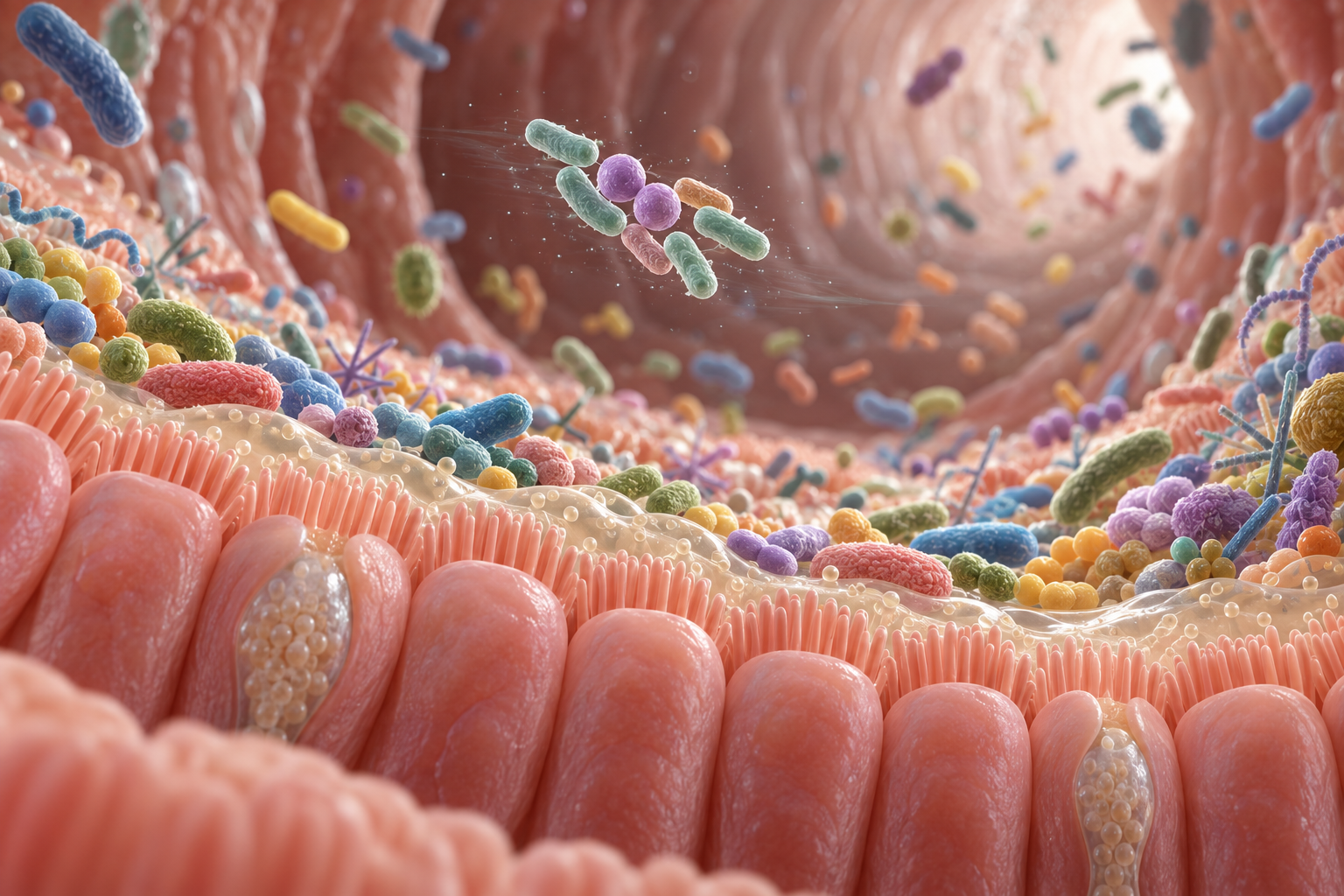
Microbiota is a community of microorganisms living in a specific environment; in the context of nutrition, this usually refers to the gut. The microbiome is the collection of their genetic material and, more broadly, the associated environmental features. This community participates in the processing of food components, and its composition depends on many conditions. Therefore, one cannot describe the intestine as an empty space that needs to be filled with "good bacteria" just once.
Microorganisms from food encounter stomach acid, bile, digestive enzymes, and competition from the already existing microbiota. Some remain viable along this path, some do not; the ability to pass through transit does not equal long-term colonization. Even finding a food-derived bacterium in a stool sample does not prove it has become a stable part of the community. This distinction is important for promises to "colonize the gut" with a regular daily portion.
Exposure is possible even without permanent colonization. During transit, microorganisms can interact with the gut contents, and fermentation products are delivered along with the food, regardless of the ultimate fate of the cultures. Furthermore, a fermented product changes the very composition of incoming dietary substances. To elucidate the mechanism, it is necessary to separate the influence of living microbes from the matrix composition and from the substituted dish.
To understand the names of cultures, it is useful to distinguish between genus, species, and strain. Genus and species describe the position of a microorganism in the classification, while the strain refers to a specific lineage within a species with its own properties. Therefore, the familiar word "Lactobacillus" on a package does not allow one to attribute the result of research on a different lineage to that product. Factors such as stability within the food matrix, enzyme activity, and the quantity of live cells at the time of consumption can be significant. For ordinary food, this is no reason to seek the longest list of cultures, but for a therapeutic claim, it is a reason to demand precise identification.
Microbiota diversity is not the only characteristic of its state. Researchers assess the number and distribution of taxa, functional genes, metabolites, and other parameters. A more diverse community in one context does not automatically mean a better result for every patient. There is no universal everyday goal that can be achieved with a specific amount of kefir and confirmed by a single digit from a home analysis.
In the study by Wastyk and colleagues, a fermented diet was indeed accompanied by an increase in gut microbiota diversity. However, the intervention included several types of products and a change in habitual diet, so the result does not highlight a single "most effective" culture. It also does not show that any individual store-bought yogurt reproduces the same effect. For interpretation, it is important to see the full diet and the duration of the intervention.
Fermented products do not eliminate the microbial community's need for dietary substrates. Fibers from legumes, whole grains, vegetables, and other products remain part of the diet, not a competitor to fermented foods. The influence of different components can be complementary, but this does not mean that there is a mandatory combination or a fixed number of servings for all people. The habitual juxtaposition of "fiber or probiotics" oversimplifies the system.
For a specialist, a change in the composition of the microbiota is interesting as an intermediate result. It may help understand the response to nutrition, but its clinical significance is determined by its relationship with symptoms, function, and health status. Increasing one genus of bacteria without a suitable context cannot automatically be called an improvement. Likewise, the absence of a large change in composition does not prove the complete absence of a dietary effect.
For the reader, this implies a calm strategy: choose tolerable products and evaluate how you feel, without trying to manage every species of microbe. Food diversity is usually easier to maintain through habitual dishes than through constant switching of trendy starters. If a product is unpalatable or causes persistent symptoms, there is no need to endure it for the sake of presumed "colonization." Scientific interest in the microbiota does not turn discomfort into a sign of an obligatory beneficial process.
Immune markers: what the study of a fermented diet showed

The immune system constantly interacts with the gut environment, but the word "immunity" hides a multitude of different processes. A study may measure circulating proteins, the activity of specific cells, the incidence of infections, or symptoms of a disease. These results cannot be considered interchangeable. A decrease in a laboratory marker does not necessarily mean that a person will get sick less often or that an existing inflammatory disease has become milder.
In the work by Wastyk and colleagues, data from 36 adults were used for a full analysis, distributed between a high-fiber diet and a fermented-food diet. The intervention included four weeks of gradual increase in intake and six weeks of maintenance; the total observation scheme was longer. Participants in the fermented group were advised to aim for six servings per day rather than starting immediately with the maximum amount. The set included different products, so the trial studied a dietary approach rather than a single standardized pill.
Against the background of a fermented diet, 19 out of 93 measured circulating proteins associated with immune and inflammatory signaling decreased. Among them were various cytokines and other factors, so it is incorrect to label them all exclusively as "harmful proinflammatory molecules." At the same time, the diversity of the microbiota increased. This combination shows a biological response to nutrition, but does not determine its sole mechanism and does not prove the prevention of a specific disease.
The size of the study limits the accuracy of practical promises. The number of participants was small, the diet changed significantly, and the main results were laboratory and microbial characteristics. The trial was not intended to prove a reduction in heart attacks, the frequency of colds, or the activity of all autoimmune diseases. Therefore, the phrase "six servings boost immunity" substitutes a clinical recommendation for a research protocol.
The difference between immune regulation and constant enhancement of immune activity is also important. The body needs a proportionate response, not maximum values for all protective indicators. Excessive activation can itself participate in tissue damage, so the universal promise to "boost immunity" poorly describes the physiological goal. It is more accurate to speak of specific changes in measured signaling in a specific population.
Cellular and animal experiments can explain how microbial components interact with receptors and the epithelial barrier. However, a cell culture does not reproduce a complex diet and real-world tolerability, and a mouse is not a human with the same disease. Such works are useful for selecting hypotheses, but should not turn into clinical instructions on ordinary food. For the reader, it is more significant whether there is a study of a specific product in humans and what result it actually measured.
A systematic review, when used for clinical recommendations, must account for differences in products and patient groups. Simply combining all studies of "fermented food" can hide mismatched interventions. In this article, key figures are taken from the primary work, and its results are not passed off as the conclusion of a meta-analysis of the entire category. This allows for maintaining interest in a promising direction while not promising an effect for which there was no suitable trial.
The practical meaning of the research lies in the possibility of considering fermented foods as part of a diverse diet, rather than as an independent immune therapy. There is no need to copy six servings if this creates an excess of salt, sugar, or discomfort. A small habitual addition can be more convenient and sustainable, although its effect should not be declared equal to the studied protocol. In the case of diseases, a nutrition plan is coordinated with treatment goals, rather than built around a single microbial hypothesis.
Bioactive peptides, pressure, and glucose

During fermentation, milk proteins can be broken down into short peptides. Some of them, in the laboratory, inhibit the angiotensin-converting enzyme, or ACE. This enzyme is involved in the pressure regulation system, including the formation of angiotensin II, which promotes vasoconstriction. But the ability to stop an enzyme in a test tube does not yet show what concentration of the peptide is reached after a meal and whether it is sufficient for a clinical effect.
For a food peptide, the path to an effect includes preservation during digestion, possible absorption, and interaction with the target. A regular analysis of a drink for peptide content does not measure all these stages. Furthermore, the decrease in pressure after consuming a product does not prove that it occurred specifically through ACE. The intervention may simultaneously change protein, mineral, and energy intake, as well as other nutritional properties.
In a double-blind randomized study by Jauhiainen and colleagues, 94 people with hypertension who were not receiving antihypertensive drugs participated. They consumed 150 ml twice daily of milk fermented with Lactobacillus helveticus LBK-16H, containing a high content of specific tripeptides, or a control product for ten weeks. The mean difference in 24-hour ambulatory blood pressure was approximately -4.1 mmHg for systolic and -1.8 mmHg for diastolic. A specific product was studied, so the numbers cannot be transferred to any kefir.
Other human trials have not always found such an effect. For example, work by Usinger and colleagues in people with prehypertension or borderline hypertension did not reveal a significant antihypertensive effect during 24-hour monitoring. Products, populations, and protocols differed, and therefore the category does not provide a single guaranteed magnitude of reduction. A positive experience is useful as a basis for further study of a specific formula, rather than for replacing medication with a fermented dairy drink.
Glucose was studied in a separate small trial that also requires an accurate description of the product. Ostadrahimi and colleagues randomized 60 adults with type 2 diabetes to either 600 ml per day of fermented milk with added cultures or the same amount of regular fermented milk for eight weeks. The article reported an improvement in some glycemic indicators in the intervention group, whereas no conclusive overall improvement in the lipid profile was obtained. The control was also fermented, so the comparison does not answer the question of total fermentation versus its absence.
The studied drink contained specified cultures, and it cannot be equated without clarification to any product sold under the name of kefir. The 600 ml volume is a significant part of the diet; it can affect energy, protein, and tolerance independently of the microbial effect. Eight weeks and a small group also do not show prevention of diabetes complications. A correct conclusion is limited to the selected indicators and the studied formula against the background of standard disease management.
Glycated hemoglobin HbA1c characterizes prior glucose exposure over a longer period than a single fasting measurement. Its change and the short-term response after a meal relate to different levels of assessment. The result is influenced by treatment, baseline status, and overall diet, so one cannot reconstruct the path of microbial action from a single changed number. An eight-week dietary trial also does not show whether the effect will persist after discontinuation of the product. For clinical discussion, one should look at baseline values and intergroup comparison, not just improvement within a single group.
For a specialist, the control product is important. If both groups receive fermented milk, the observation may relate to additional cultures or differences in composition, rather than fermentation as such. If the intervention replaces a sweet dessert with unsweetened yogurt, the dietary improvement may be explained by the substitution itself. These questions help to select applicable material and not to confuse a microbiological explanation with a simple change in nutritional value.
For daily choices, blood pressure and glucose remain a reason to look at the entire product. Salted vegetables and a sweet fermented milk dessert may bring components that do not correspond to an individual nutritional task. Fermentation does not neutralize excess salt or added sugar and does not grant permission for large portions. If treatment requires glycemic or blood pressure control, the food product is included in an agreed-upon diet while maintaining medications and monitoring.
Histamine, tyramine, and production safety

Microorganisms are capable of forming not only desirable acids and aromatic substances. Biogenic amines, including histamine and tyramine, can appear during the decarboxylation of amino acids. Their content depends on the raw materials, microorganisms, fermentation conditions, and storage. Therefore, long aging or an especially strong taste are not universal signs of a more beneficial product.
Histamine is involved in the body's own signaling processes, but the intake of a large or poorly tolerated dietary load can be accompanied by unpleasant reactions. When discussing suspected sensitivity, it is important not to confuse it with allergy and not to declare it the cause of all symptoms after a meal. Histamine content varies greatly between products and batches. It is impossible to calculate an individually safe portion from the single word "fermented".
Biogenic amines are formed from different amino acids: histamine is linked to the conversion of histidine, and tyramine to that of tyrosine. This chemistry explains why it is not only the presence of protein that is decisive, but also the ability of specific microorganisms to carry out the corresponding reactions. Two batches of similar cheese may differ in amine content, even if their energy value is almost identical. Therefore, a table with a single value for an entire category does not provide an accurate prediction of an individual response. For production control, suitable analytical methods and information about the technology are necessary, rather than evaluation by taste alone.
A special clinical context is associated with tyramine and monoamine oxidase inhibitors. These drugs can reduce the body's ability to process certain amines, so dietary restrictions depend on the specific medication. EFSA considers drug combinations separately from the general healthy population. A person taking such a drug needs instructions from a treating specialist, not a general list of "healthy fermented products".
Reliable production starts before the acidic taste appears. The quality of raw materials, the appropriate culture, hygiene, storage conditions, and technological control reduce the likelihood of unwanted microorganisms and metabolites. Home fermentation does not have to be dangerous, but the mere fact of home preparation does not confirm safety. Unusual spoilage, violation of the recipe, or improper storage cannot be corrected by assuming that all microbes in a starter culture are beneficial.
For dairy products, pasteurization of the raw milk is particularly important. The CDC warns about the risks of raw milk and identifies groups with a higher probability of severe infection: young children, the elderly, pregnant women, and people with compromised immune systems. Fermentation should not be considered a reliable substitute for pasteurization. When choosing yogurt or kefir, it is necessary to distinguish between a product made from pasteurized milk with a live culture and a product from raw milk: these are not the same situations.
Pasteurization and post-fermentation heating address different issues. In the first case, the microbial load of the raw material is reduced, after which a selected starter culture can be added; in the second, the already fermented product is processed, altering the viability of the cultures. Therefore, labels stating "made from pasteurized milk" and "with live cultures" do not contradict each other. This combination allows for the desired fermentation without assuming that safety will be ensured by the random composition of raw milk. When reading packaging, it is important to understand the sequence of technological stages.
Live cultures also do not override the rules for handling finished food. Shelf life and cooling conditions relate to the safety of the entire matrix, not just the number of desirable bacteria. If the packaging is damaged or the product has been stored improperly, the promise of a probiotic effect does not make it acceptable. Especially careful selection is needed for serious illnesses and immunosuppression, where specific products should be discussed with a medical team.
Allergies, histamine reactions, lactose intolerance, and infection risks require different solutions. Attempting to explain all possible problems with the single word "dysbiosis" hinders the choice of correct assistance. In the event of a recurring reaction, it is helpful to write down the product, portion size, time, and symptoms, and then assess the context with a specialist. Manifest acute symptoms require medical attention rather than an experiment with a new starter culture.
How to include fermented foods in a regular diet

Practical choice begins with the task of the meal: breakfast, a source of protein, a side dish, or a flavor enhancer. Unsweetened yogurt can fit into breakfast, tempeh into a main course, and fermented vegetables into a small addition. It is not necessary to include all types at once or search for the most complex microbial composition. Sustainable consumption is determined by taste, availability, tolerance, and overall nutritional value.
It is better to start a noticeable change gradually, especially if the diet previously contained few such products. This allows one to see the connection with well-being and not confuse the effect of a large portion with the effect of the fermentation itself. A small portion is not a proven therapeutic dose, but it can be a convenient way to get acquainted with a product. If persistent unpleasant symptoms arise, increasing the amount for the sake of "microbiota adaptation" is not necessarily justified.
Salty products require attention to the total sodium load. The WHO recommends that adults consume less than 2000 mg of sodium per day, which corresponds to less than 5 g of salt; this is a general dietary guideline, not a limit for a single jar. For example, if the label indicates 2 g of salt per 100 g, a 50 g portion adds 1 g of salt—a fifth of the 5 g value. This is an arithmetic example: the actual content must be read on the chosen product.
For fermented dairy products, it is useful to evaluate added sugar and portion size separately. A sweet dessert with cultures does not become equivalent to unsweetened yogurt in composition. Protein, fat, energy, and the presence of fortification can also vary, especially in plant-based alternatives. A word on the front of the packaging does not replace reading the ingredients and nutritional value.
It is also useful to consider what a new portion is replacing. If yogurt displaces a sugary snack, some components of the diet change; if it is added on top of regular food, the total intake increases. Similarly, a small portion of vegetables is not equal to a large bowl of a salty side dish, even if both are prepared by fermentation. The substitution effect and the addition effect cannot be evaluated in the same way. Such a simple question helps to choose a sustainable habit and not link any subsequent change in weight or glucose exclusively to bacteria.
For a specialist, it is convenient to compare four things when using research: the product formula, the studied group, the duration, and the endpoint. If only the category name matches, the applicability is limited. It is also important to remember that laboratory improvement does not equal a proven reduction in disease risk. This approach helps to use published figures for discussion rather than turning them into a promise to the patient.
A regular user does not need a commercial microbiota analysis to decide whether they like yogurt or if a serving of vegetables suits them. Observing symptoms, dietary diversity, and salt content is often more useful than searching for an ideal microbial signature. At the same time, feeling better after changing food can be real even without proof of a specific microbial mechanism. For further decisions, it is important to honestly describe the observation and not attribute more to the product than what was actually noticed.
Fermentation makes food more diverse and in some cases provides a confirmed functional effect, such as improved lactose digestion by live yogurt cultures. Other areas, including immune signaling and metabolic indicators, remain dependent on the product and the studied situation. Therefore, a sensible diet is not built around the maximum number of fermented servings. It uses suitable products where they are convenient, tolerable, and complement nutrition, while maintaining separate attention to treatment and safety.