Protein is discussed as if there is a single number that fits everyone: a person at an office desk, an athlete, and an elderly patient recovering from illness. However, these individuals are solving different problems, and the same number of grams can have different meanings. The body's need for amino acids, training goals, energy adequacy, and kidney function are interconnected, but they do not replace one another. Understanding this system is more useful than choosing between the slogans "more protein equals more muscle" and "protein is dangerous for the kidneys."
This article examines protein as part of a regular diet and as a tool in specific conditions. Physiology helps us understand why it is necessary, while human studies allow us to assess what additional effect can be expected. The numbers here refer to specific groups and tasks rather than serving as a universal prescription. It is especially important to separate recommendations for a healthy, training individual from nutrition during chronic kidney disease.
From Dietary Protein to Amino Acids
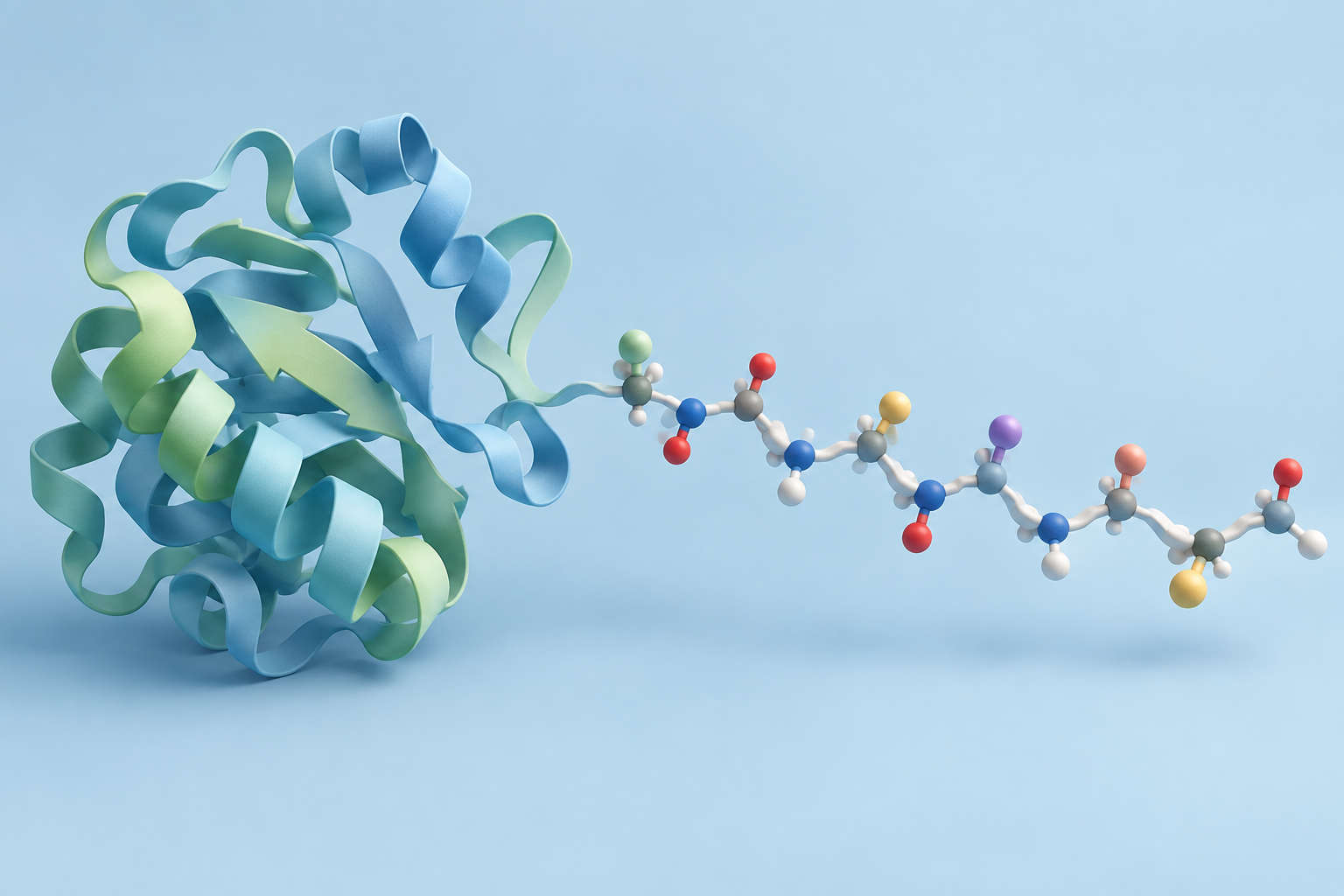
Dietary proteins are chains of amino acids connected by peptide bonds. The body uses amino acids to create its own proteins: enzymes, transporters, structural elements, and a multitude of other molecules. Therefore, protein is not needed only by muscles or only by those who exercise. Even in an outwardly calm life, tissues are constantly renewing, and metabolism requires material for synthesis.
During digestion, long chains are broken down into shorter fragments, which then become available for absorption. The acidic environment of the stomach and digestive enzymes participate in this work, but the consumed protein does not move directly from the plate into the muscle. Between the meal and new muscle tissue lie digestion, transport, metabolism in various organs, and cellular synthesis. This explains why a photograph of a steak and a diagram of muscle fibers describe different stages of the same process.
After absorption, amino acids replenish the general metabolic pool, which also receives products of the breakdown of the body's own proteins. Some are used for synthesis, some participate in other reactions, and some are oxidized. Humans do not have a special protein warehouse configured like fat stores. In the case of insufficient intake, the body may involve its own tissues, so the preservation of muscle depends on nutrition, workload, and general condition, rather than a single meal.
Synthesis requires a set of different amino acids, not just one particularly popular one. Nine amino acids in adults are classified as essential: they must be obtained through food because the body's own production is insufficient. The others are also important, although the body is capable of synthesizing many of them. In some diseases and pronounced metabolic stress, the conventional division into non-essential and essential becomes less convenient for practice; such situations require a clinical context.
Leucine is often called a signal for muscle synthesis, but a signal and building material are different things. The addition of one amino acid does not create a complete set for assembling new proteins and does not turn the absence of a training stimulus into a workout. For a regular diet, therefore, it is more important to have an adequate intake of a complete set of amino acids than to search for an individual "anabolic" ingredient. Both quantity and composition are assessed over the course of the entire day, rather than by the most eye-catching label on the packaging.
When amino acids are broken down, their nitrogen and carbon components follow different paths. Amino groups are transferred between molecules, and the resulting nitrogen is largely incorporated into urea, which is excreted by the kidneys. Carbon skeletons can be used in energy metabolism and other transformations. This normal physiology explains the appearance of nitrogenous metabolic products, but by itself does not prove organ damage in a healthy person.
Daily Requirement and Different Values of the Norm

The protein requirement is usually expressed in grams per kilogram of body weight per day. This notation links the quantity to the person's size but does not eliminate differences in age, body composition, activity, and diseases. For healthy adults, EFSA has established a population reference intake of 0.83 g/kg/day. For a 70 kg person, arithmetically, this is about 58 g of protein, not 58 g of meat or cottage cheese. This value is intended to cover the needs of the majority of people in the corresponding population; it is not a sports target or an upper limit.
Calculated requirements and outcome optimization answer different questions. The first approach asks how much is needed for nutritional adequacy; the second asks what quantity helps achieve a specific goal under given conditions. An individual engaged in resistance training may target a different intake than a sedentary adult without such an objective. This does not mean the initial population-based benchmark is "wrong": the target outcome and the conditions under which it is assessed differ.
In the position of the International Society of Sports Nutrition, for most healthy exercising individuals, a range of 1.4–2.0 g/kg/day is considered. At a body weight of 70 kg, this corresponds to approximately 98–140 g from all sources. These grams include grains, bread, legumes, and dairy products, not just meat and protein powders. This benchmark pertains to sports nutrition and should not be automatically extrapolated to a patient with kidney disease.
With age, the practical challenge often changes: the focus shifts to preserving strength, the ability to rise from a chair, and sufficient nutrition amid reduced appetite. The PROT-AGE and ESPEN expert groups discuss approximately 1.0–1.2 g/kg/day for healthy older adults. These are professional recommendations, not proof that every additional amount prevents falls or extends life. In cases of illness, malnutrition, and renal restrictions, the decision requires balancing multiple risks.
Calculations based on actual body weight are convenient in simple situations but can be misleading in cases of severe obesity, edema, amputations, or significant wasting. Additional adipose tissue and retained fluid do not generate the same requirements as a corresponding mass of actively metabolizing tissue. Therefore, in clinical practice, an appropriate weight is chosen for calculation, and nutritional status is assessed. A universal formula from an article does not replace this choice and should not be used to prescribe a complex therapeutic diet.
Energy deficiency also changes the meaning of the protein number. If a person consumes too little, a portion of amino acids is expended under conditions of general deficit, and the capacity to maintain tissues is limited. Increasing protein can be a beneficial part of a diet but does not automatically correct deficiencies in all other components. For a specialist, this is a reason to evaluate protein alongside caloric intake, weight dynamics, and food accessibility. For the reader, it is a reminder that nutrition is not reduced to meeting a single metric in an application.
Muscle synthesis: mechanism and long-term result

Muscle tissue constantly synthesizes and degrades proteins, so its change depends on the balance of processes over time. After resistance exercise, muscle sensitivity to nutrition changes, and amino acid intake helps realize the response to the stimulus. However, an increase in the rate of synthesis for several hours is not equivalent to measured muscle growth over months. In studies, it is necessary to distinguish between a brief biochemical response, changes in body composition, strength, and daily function.
Short-term experiments often use labeled amino acids and muscle tissue samples to estimate the incorporation of material into new proteins. This method allows for studying physiology more precisely than observing muscle size over a single day. At the same time, the result relates to a specific dose, product, workout, and observation period. Without additional data, it cannot be turned into a promise of specific strength gains or a universal rule regarding meal timing.
For long-term effects, studies where nutrition is combined with a training program and assessed over weeks are important. In the meta-analysis by Morton et al., 49 studies were combined with 1863 participants who performed resistance training for at least six weeks. Additional protein, on average, yielded a small increase in fat-free mass beyond the training effect—about 0.30 kg, with a 95% confidence interval of 0.09–0.52 kg. This is a useful value for understanding the scale, but not a guaranteed result for an individual.
In the same work, the model of the relationship with total protein intake estimated the point after which additional increases in fat-free mass became less noticeable, at approximately 1.6 g/kg/day. This result is often turned into a rigid "absorption limit," although the study did not determine the intestine's capacity to absorb protein. The model describes an averaged relationship in the included works and contains uncertainty. The value is useful as a benchmark, not as a switch that triggers at the same point in every person.
Strength develops not only through muscle size. Movement mastery, nervous system function, exercise programming, and consistency influence results along with nutrition. Fat-free mass, in turn, includes more than just muscle tissue, and its measurement depends on the method and fluid balance. Therefore, it is useful for a specialist to determine beforehand what counts as success: strength gains in a specific exercise, tissue preservation during weight loss, or improved function in an elderly individual.
For the average reader, the practical conclusion lies in a reasonable sequence of actions. First, one needs an exercise program that can be consistently followed and a sufficient diet; then, it makes sense to look for a real protein deficit. Protein powder helps to meet an insufficient intake or simplify eating, but it does not have an inherent advantage simply because it is sold in sports packaging. If the necessary amount is already being consumed, the supplement may primarily increase expenses and displace other foods.
Portion sizes, timing, and the myth of the absorption limit

The phrase 'only 20–30 g is absorbed at one time' confuses intestinal absorption with the muscle response measured in specific experiments. A large portion does not disappear after reaching an arbitrary limit: digestion and amino acid utilization continue. Furthermore, different tissues, different metabolic pathways, and different observation durations yield different results. Therefore, the limitation of short-term muscle protein synthesis cannot be considered the limit of the entire organism.
In a study by Areta et al., 24 trained men received a total of 80 g of whey protein over 12 hours post-exercise. Eight 10 g servings, four 20 g servings, and two 40 g servings were compared; in this protocol, intermediate distribution better supported measured myofibrillar protein synthesis. This is a small physiological study, not a trial of habitual mixed nutrition over a year. It helps to formulate a hypothesis about distribution but does not establish a mandatory regimen for everyone.
A later study by Trommelen et al. compared the intake of 25 g and 100 g of protein post-exercise while observing over 12 hours. The larger dose provided a longer and more pronounced anabolic response under the studied conditions. This shows why a short measurement window may not reflect the total effect of a portion. However, the experiment did not compare 100 g at once with the same 100 g evenly distributed throughout the day, and it did not prove the superiority of massive portions for long-term muscle growth.
In a daily diet, distribution often has simple practical value. Several meals with a protein source help to reach the total daily amount without an excessively large dinner. This can be especially convenient with a small appetite or limited time for food preparation. But the convenience of a regimen and the proven superiority of a specific schedule are different claims; a person does not need to count every minute between portions to eat sufficiently.
Timing around exercise also depends on baseline nutrition. If a full meal was consumed recently, the situation differs from a session after a long break without food. Planning an accessible protein intake near a workout is reasonable, but anxiety over missing a few minutes usually does not help consistency. When choosing a regimen, it is worth considering tolerance, the opportunity to eat, and overall daily adequacy. For most people, consistently meeting these conditions is more important than a complex schedule of drinks and capsules.
Large portions can create discomfort regardless of the ability to absorb amino acids. The composition of a mixture, lactose, sugar alcohols, added fibers, and the total volume of the drink influence tolerance. If a symptom occurs after a product, one should not automatically blame all dietary protein or conclude that it 'was not digested.' It is more useful to consider the specific composition, dose, and circumstances, and in the case of persistent complaints, a cause beyond the scope of sports nutrition.
Protein sources and the quality of the overall diet
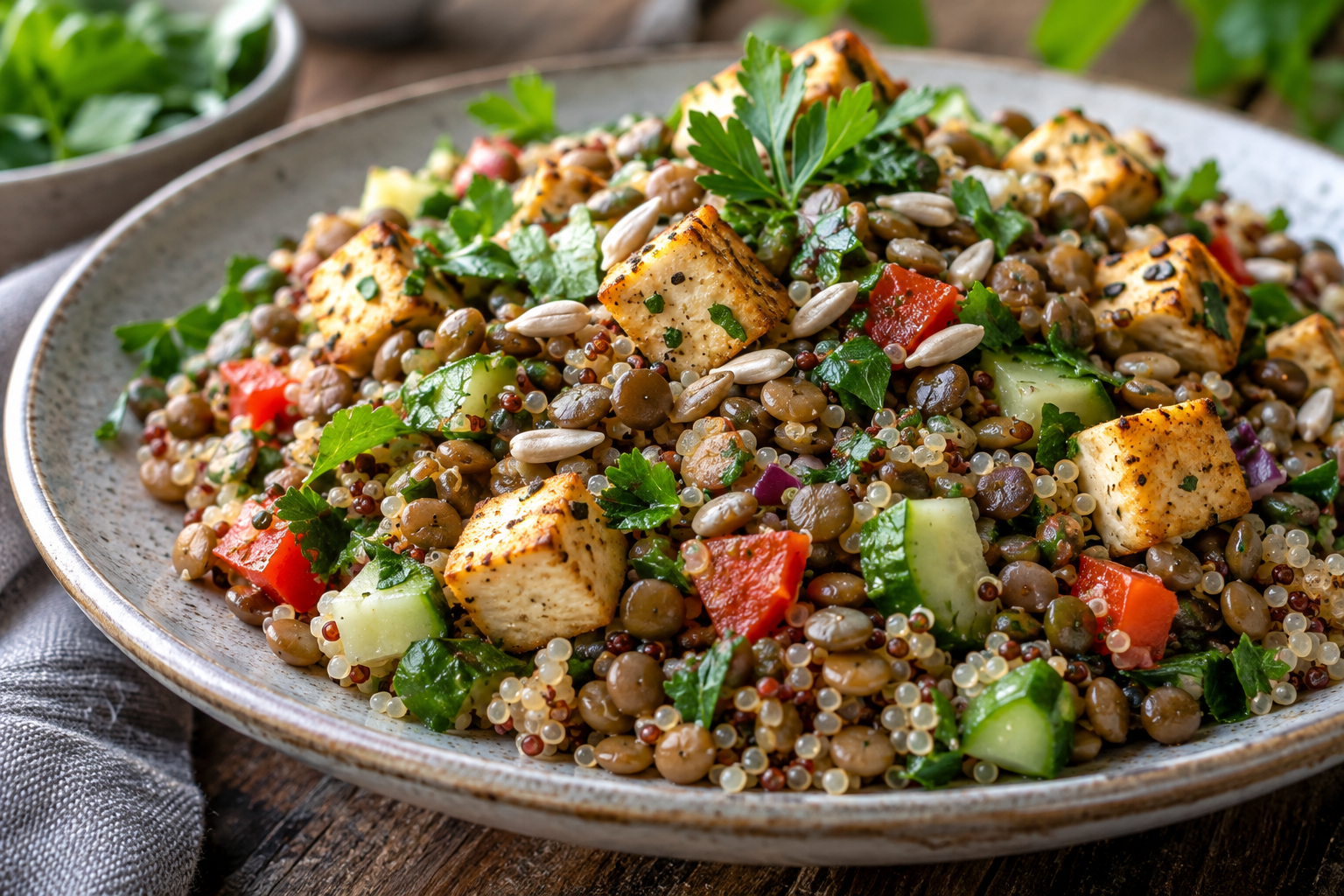
The number of grams is only one side of the choice. Different products contain different proportions of amino acids and differ in digestibility, but simultaneously provide fats, carbohydrates, fiber, and micronutrients. Therefore, the evaluation of an individual protein does not coincide with the evaluation of a product for health. A high concentration of protein on a label does not cancel out a high amount of salt, and a lower value in legumes does not negate their place in a balanced diet.
To compare protein quality, methods that take essential amino acids and their bioavailability into account are used. The FAO report proposes the DIAAS indicator, based on the digestibility of individual essential amino acids at the end of the small intestine. This approach discusses the limiting amino acid more accurately than a simple total protein number. However, the assessment of a specific product and an age-based reference is not a universal rating of health, taste, or the suitability of an entire diet.
The term "incomplete protein" sometimes creates the incorrect impression that a plant-based product does not contain a specific amino acid at all. More often, the issue lies in its quantity relative to the chosen requirement and its digestibility. In a varied diet, different sources complement each other: legumes, grains, nuts, seeds, and soy products do not have to solve the entire task individually. A practical analysis should be conducted based on the set of products and overall nutritional adequacy, rather than a single table.
Dairy products, eggs, fish, meat, and soy can be convenient, concentrated sources, but the choice depends on preferences, allergies, budget, and medical restrictions. With a plant-based diet, it is often useful to look more closely at portion sizes and the number of protein products throughout the day. This does not mean that using supplements is mandatory or that a balanced diet is impossible. If there are many restrictions, an individual assessment helps to identify the specific missing link rather than blaming the chosen type of diet as a whole.
Collagen supplements require separate understanding. Collagen has a different amino acid profile and is not an equivalent substitute for complete protein sources to cover all essential amino acids. Its presence in a drink does not automatically make that drink a suitable primary tool for muscle nutrition. When a product is purchased for a specific effect on joints or skin, studies of that exact effect and form are needed, rather than transferring the general properties of any protein to a marketing promise.
Portions are also calculated based on the product itself, not the name of the dish. 100 g of food does not contain 100 g of protein, and dry and cooked weights differ due to water content. For an accurate calculation, the label or an appropriate nutritional database entry that accounts for the form of the product is used. For general planning, consistent portion sizes and an understanding of the main sources are sufficient; high mathematical precision does not correct a systematic error when dry grains are compared with cooked ones.
Kidneys: Healthy Individuals and Chronic Disease
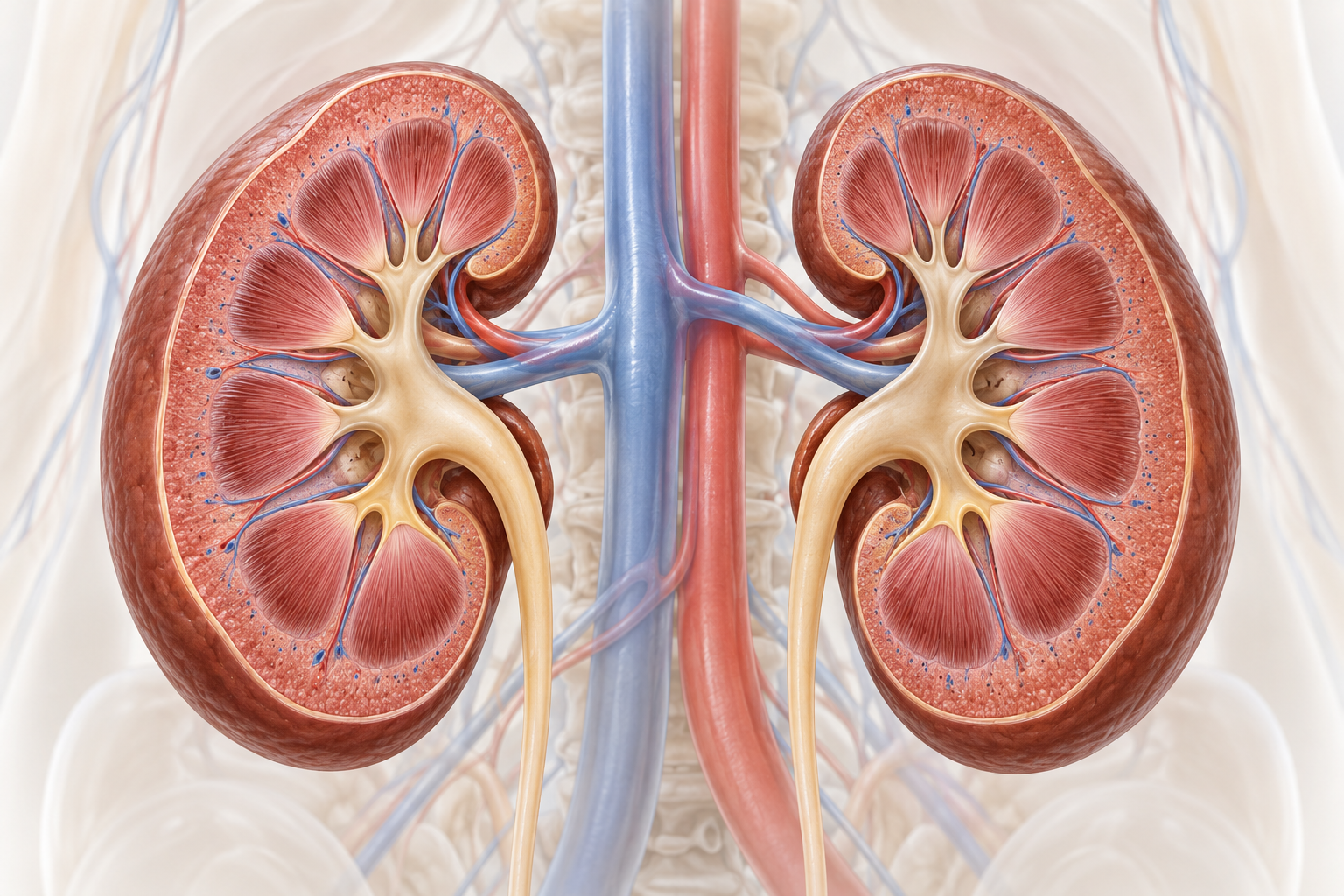
Kidneys are involved in the excretion of nitrogenous metabolic products and regulate numerous parameters of the internal environment. After a change in protein intake, filtration may change, but a physiological response is not equal to established damage. At the same time, the absence of a noticeable deterioration in a short-term study does not prove the safety of any amount over decades. Both extremes hinder the discussion of real data and the individual person.
A meta-analysis by Devries et al. combined 28 studies with 1,358 adults without chronic kidney disease. Comparing higher and usual or lower protein intake, the change in glomerular filtration rate did not show a difference that the authors would link to a decline in kidney function. Definitions of high intake and assessment methods varied. The main limitation of the conclusion is the studied population of people without CKD and the limited duration of the works; the result does not automatically apply to kidney disease or unlimited doses.
A separate systematic review of studies in healthy individuals also described an increase in filtration in some trials without the studied indicators exceeding the bounds of normal function. At the same time, most of the evidence does not allow for a confident answer to the question of long-term risk in all groups. The problem is not that "nothing is known," but that the degree of confidence should match the data. For a person with diabetes, hypertension, albuminuria, or reduced filtration, the context is already different.
In chronic kidney disease, recommendations change. KDIGO 2024 suggests approximately 0.8 g/kg/day for adults with CKD G3–G5 and advises avoiding high intake of more than 1.3 g/kg/day in patients at risk of progression. This is not a prescription for all healthy people and is not a basis for independently switching a patient to a very low-protein diet. The recommendation targets a specific population and must be combined with an assessment of nutrition, disease stability, and other needs.
For a physician, the difficulty often lies in competing tasks: reducing the adverse load while simultaneously preventing malnutrition and loss of function. In an elderly person with CKD, a sports-related protein target and a restrictive nephrological rule cannot simply be superimposed on one another. Dialysis, pronounced catabolism, and acute conditions require different solutions than stable CKD without dialysis. Choosing a diet in these situations constitutes clinical work, not an independent experiment based on an article.
Laboratory values are also read in context. Creatinine depends not only on filtration, but also on muscle mass, nutrition, and other circumstances, so a single value is not a direct measurement of protein's impact. A change in urea also does not establish the cause of a disease on its own. When a kidney problem is suspected, a specialist evaluates the history, the reproducibility of changes, and additional data; purchasing a protein product or refusing one does not replace this assessment.
Practice: how to plan a diet and evaluate the result

It is convenient to start with a description of the task and regular nutrition over several typical days. It is important to see workdays and weekends, the availability of food, periods of poor appetite, and real portion sizes. One carefully prepared day may hide chronic undersupply, while one random day may create a false alarm. The goal of such observation is to discover a consistent pattern, not to grade the diet on every single gram.
After this, a suitable guideline is chosen and linked to foods the person is willing to eat regularly. If more protein is required, changes can be small: add legumes to lunch, choose a suitable dairy product, or provide a protein source at breakfast. For another person, the main task is to return to sufficient overall food intake after dietary restriction, rather than increasing the share of one food group. A good plan considers both the quantity and the possibility of following it without constant tension.
Supplementation is appropriate when it solves a specific problem of convenience or availability. It is useful to look at how much protein is in a serving, what other ingredients are present, and whether the product is tolerated. A powder should not become a mandatory purchase for someone who finds it easier to eat regular food. If it displaces vegetables, fiber, sufficient energy, or the enjoyment of eating, the diet may become worse even with an impressive final number.
For athletes, the transparent composition and quality of the product matter, and for participation in competitions, the risk of unwanted contaminants is also significant. The label "natural" is not analytical proof of the absence of prohibited substances. Suitable independent batch testing programs can reduce individual risks but do not turn a supplement into a prerequisite for training progress. The decision about a product starts with a need, not with the number of advertising claims.
The result is evaluated based on the chosen goal and a reasonable observation period. In training, this can be the consistency of workouts, dynamics of strength, and body composition; in an elderly person, it is nutritional tolerance and daily function. A change in mass over a single day usually reflects more processes than the building of muscle tissue. If the expected effect is absent, it is useful to review the training program, total energy, initial adequacy, and health, rather than automatically doubling the protein.
A full conversation about protein combines physiology with the individual's circumstances. For a healthy adult, this is a question of dietary adequacy; for someone training, it is about supporting adaptation; for a patient with CKD, it is part of a therapeutic strategy. Each task has its own data and limitations, so one popular figure cannot be considered the final answer. Consistent nutrition and a clear goal provide more benefit than constant competition for the maximum number of grams.