GABA: BBB, gut, vagus nerve, stress and sleep — NutriFit
Exogenous GABA: the BBB, gut receptors, vagus, stress and sleep
An in-depth scientific analysis of oral GABA: chemistry, barrier transport, GABA_A/GABA_B receptors, the gut–brain axis and human trials. A practical account of mechanisms, research doses and safety limits without promises of a universal effect.
Gamma-aminobutyric acid, or GABA, is one of the main mediators of inhibitory transmission in the mature central nervous system. Taking it for relaxation or sleep therefore seems an obvious idea: if the brain uses this substance, an extra portion might appear to strengthen its natural inhibitory signal. Yet absorption, distribution, cellular barriers and receptors with different functions stand between the contents of a capsule and the activity of a particular synapse. Along this route, the simple advertising formula ceases to be a reliable explanation.
The paradox of oral GABA is that limited passage across the blood–brain barrier coexists with individual human studies reporting changes in stress or sleep measures. This makes peripheral mechanisms an interesting research direction, but does not establish the vagus nerve as the sole proven mediator. Studies of enteric neurons, probiotic experiments and trials of purified GABA answer different questions. To use this material professionally, each level needs to be traced while preserving the distinction between established physiology, a plausible hypothesis and a clinical result.
The GABA molecule: why a net zero charge does not mean free passage through a membrane
Structure, amino-group position and stereochemistry
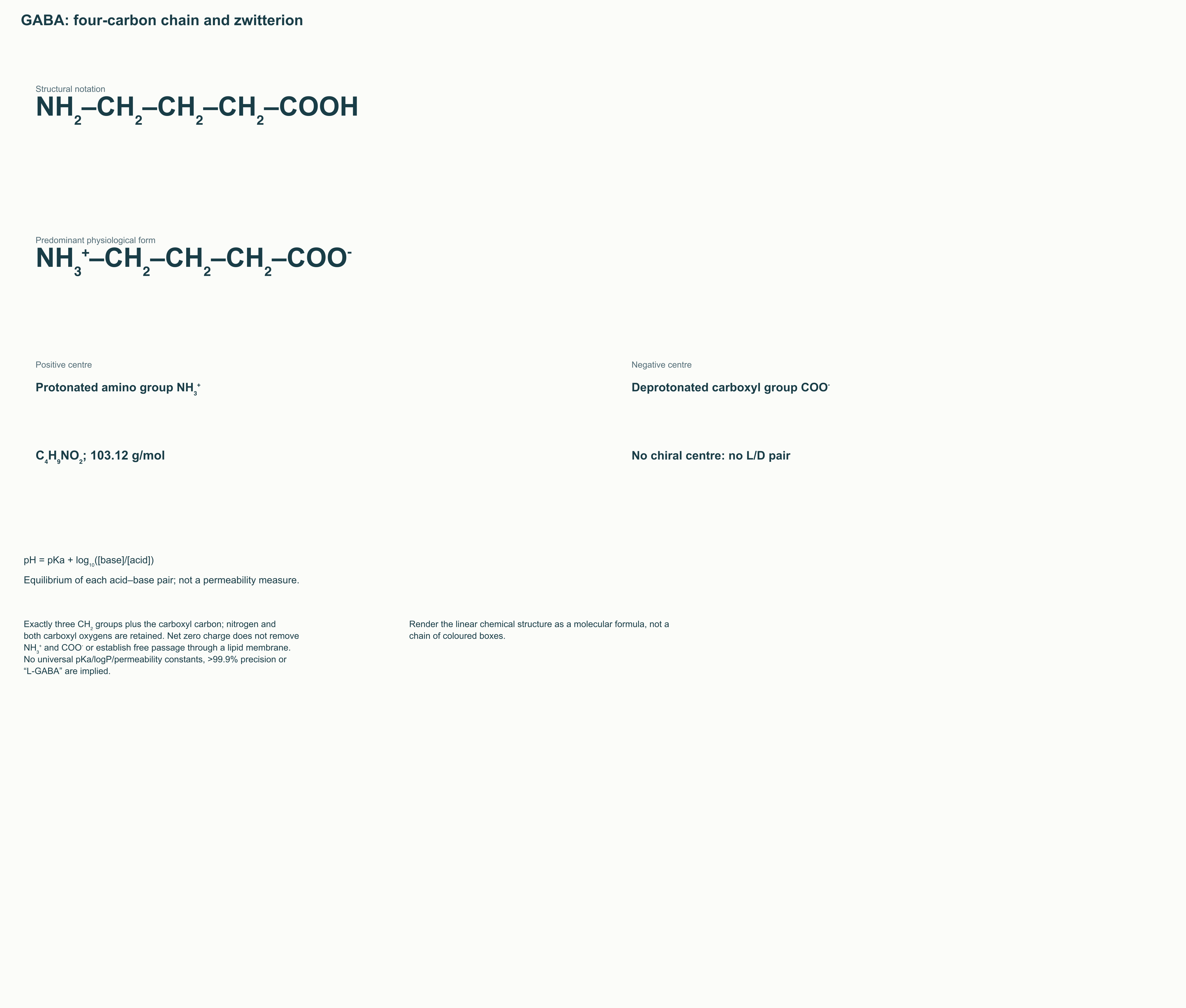
GABA is 4-aminobutanoic acid, with the formula C₄H₉NO₂ and a molar mass of approximately 103.12 g/mol. Its neutral structural notation is NH₂–CH₂–CH₂–CH₂–COOH: three methylene groups lie between nitrogen and the carboxyl carbon. “Gamma” refers to the position of the amino group relative to the carboxyl group. It is a non-proteinogenic amino acid: ordinary ribosomal synthesis does not incorporate it into proteins in place of standard amino acids.
The molecule has no chiral centre: each of the three saturated carbons in the chain bears two hydrogen atoms. Ordinary GABA therefore has no pair of L- and D-enantiomers. Expressions such as “biologically active L-GABA” or “synthetic racemic GABA” do not describe a real structural difference in this substance. Manufacturing can affect product purity, accompanying components and quality-control requirements, but does not create a special L-configuration of GABA.
In an aqueous environment, the amino group can accept a proton and the carboxyl group can release one. At a pH close to physiological values, NH₃⁺–CH₂–CH₂–CH₂–COO⁻ predominates. This zwitterion has two spatially separated charges although their sum is zero. Charged groups acquire a hydration shell, and entering the nonpolar region of a membrane requires changes in their interactions with water.
Ionisation and the limits of chemical predictions
For each acid–base pair, the ratio of forms is described by the Henderson–Hasselbalch equation: pH = pKa + log₁₀([base]/[acid]). When pH is substantially above the carboxyl group's pKa, the fraction of COO⁻ increases; below the protonated amino group's pKa, NH₃⁺ is retained. This explains zwitterion predominance without spurious precision to tenths of a percentage point. Constants depend on measurement conditions, and the isoelectric point describes acid–base equilibrium rather than the ability to cross the BBB.
Molecular size, polarity and lipophilicity help estimate the likelihood of passive transport, but do not replace experiments. For an ionisable substance, it is particularly important to distinguish the partitioning of its neutral form from the distribution of all forms at a given pH. There is no universal “correct logP for the brain”: transporters, binding, metabolism and concentration gradients can change the outcome. Specific permeability coefficients therefore need descriptions of their models rather than extrapolation to every human capillary.
The practical structural conclusion is modest: simple passive diffusion of GABA through a lipid membrane is limited. This is not equivalent to absolute impermeability of every part of the nervous system under all conditions. A damaged barrier, an animal age model, an endothelial culture and an intact human BBB represent different situations. None, on its own, shows how an ordinary dietary dose changes transmission in the human brain.
The blood–brain barrier: distinguishing cellular transport, brain influx and outward clearance
Two endothelial membranes and several substance pools
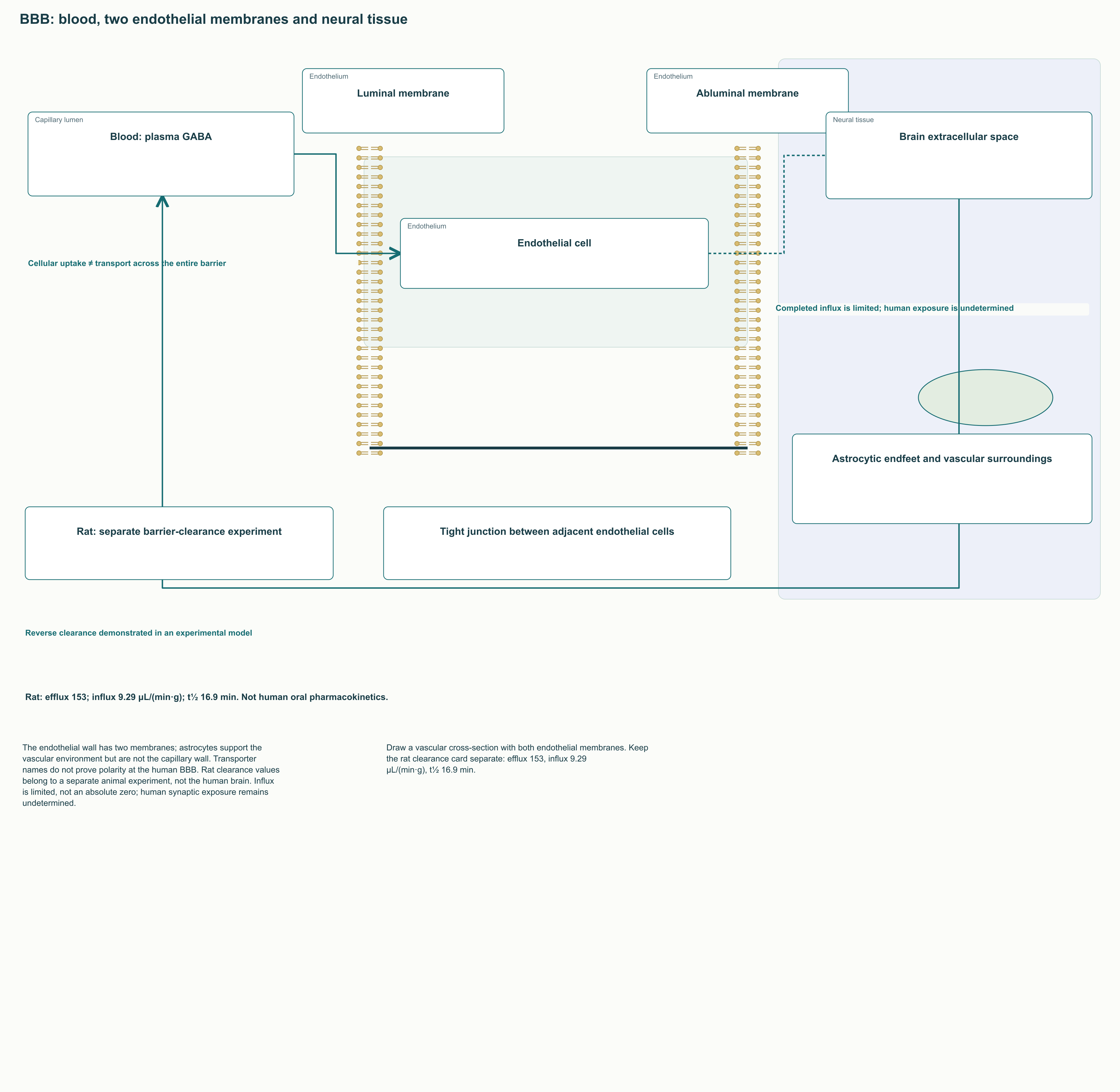
The BBB is formed primarily by brain microvascular endothelial cells connected by tight junctions. The luminal membrane faces blood, while the abluminal membrane faces neural tissue. Pericytes, the basement membrane and astrocytic endfeet belong to the vascular surroundings and help maintain the barrier. For transcellular entry into the brain, a substance must cross both sides of the endothelium; uptake at one membrane does not establish completed transport.
Plasma GABA, GABA inside an endothelial cell and extracellular brain GABA are separate pools. Within neural tissue, neuronal cytosol, synaptic vesicles and the space around receptors must also be distinguished. A higher blood concentration cannot be equated with a higher synaptic-cleft concentration. Even detection of labelled material in tissue requires accounting for whether the label lies in vascular volume, barrier cells, GABA itself or its metabolites.
This distinction explains the different methods used in transport research. Endothelial cultures demonstrate cellular uptake and sensitivity to competing substrates, while intracerebral tracer administration allows assessment of disappearance from the region studied. Intravascular administration addresses entry from blood, but requires correction for vascular space. Numbers from these experiments can only be compared with attention to species, tissue preparation and mathematical model.
GAT1, GAT2, GAT3 and BGT1: historical names matter
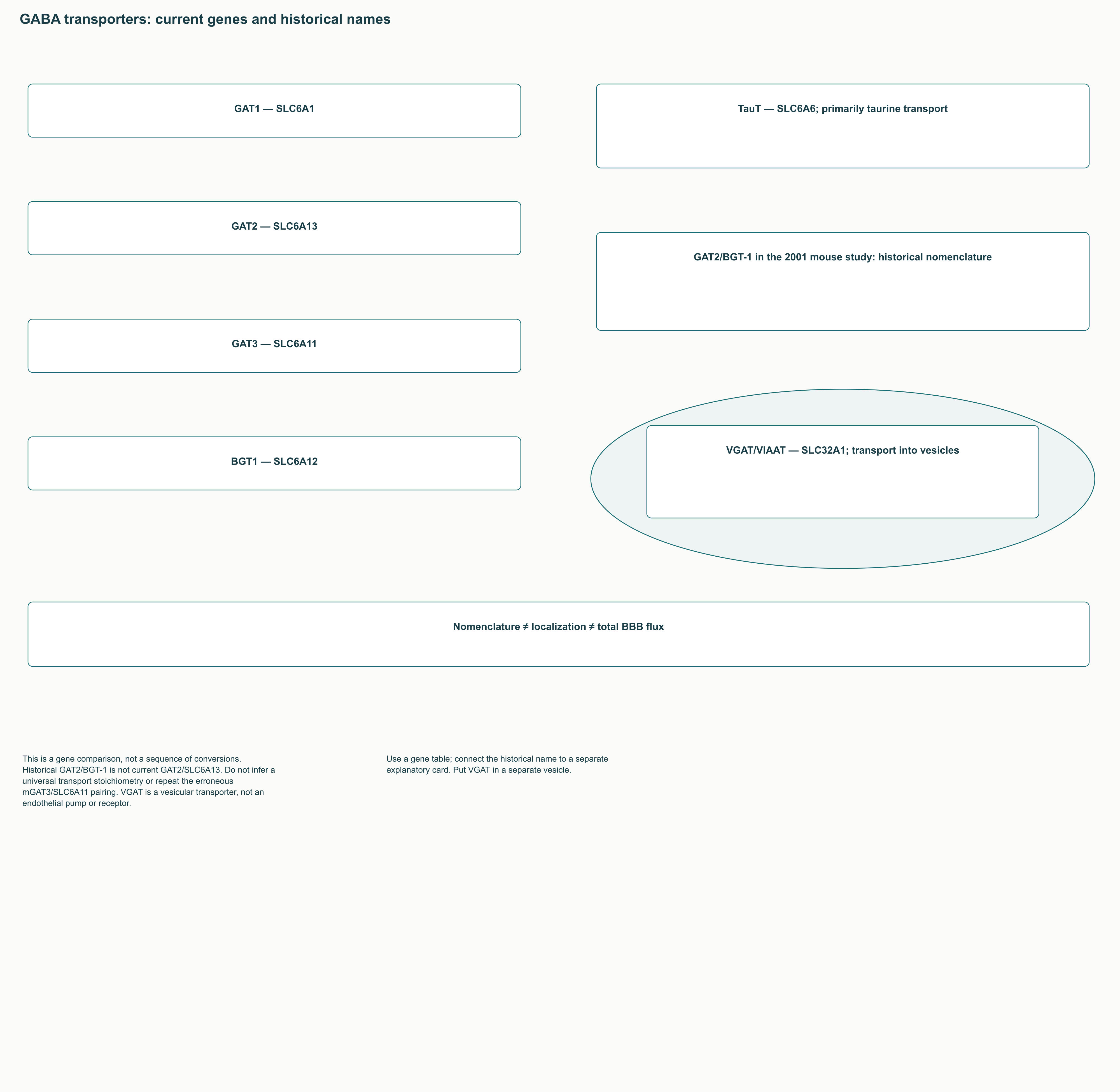
Modern nomenclature distinguishes GAT1/SLC6A1, GAT2/SLC6A13, GAT3/SLC6A11 and BGT1/SLC6A12. These are SLC6-family membrane transporters, not GABA receptors. They use ionic electrochemical gradients and help maintain extracellular transmitter concentrations. The vesicular transporter VGAT/VIAAT belongs to a different family, SLC32A1, and loads transmitter into secretory vesicles; it cannot substitute for an endothelial GAT.
Modern designation
Human gene
Reading consideration
GAT1
SLC6A1
Do not confuse uptake near a synapse with transport across the entire BBB
GAT2
SLC6A13
GAT2 in an older mouse paper may designate a different system
GAT3
SLC6A11
Historical mouse designations require attention to species and sequence
BGT1
SLC6A12
Transports betaine and GABA; the older name mGAT2 also occurs
TauT
SLC6A6
Primarily a taurine transporter; capacity to transport GABA does not make it the sole brain entry route
Takanaga and colleagues' 2001 study is particularly easy to misread because “GAT2/BGT-1” refers to historical nomenclature. In the mouse endothelial line TM-BBB, the authors studied Na⁺- and Cl⁻-dependent GABA uptake, competition by other substances and the presence of the corresponding protein. The apparent Km was 679 ± 80 μmol/L in this model. These findings cannot be retold as identification of the principal human SLC6A13 transporter on a precisely established side of all brain capillaries.
Km is the substrate concentration at which velocity reaches half of Vmax in a simple kinetic model. The equation v = Vmax × [S] / (Km + [S]) describes saturation, but applies to defined experimental conditions. Coupled transport also depends on ion gradients, membrane potential and other substrates. A cell-culture Km cannot be converted directly into capsule milligrams and does not define a dose that “breaks through the barrier”.
What the brain-efflux experiment actually showed
In Kakee and colleagues' rat study, labelled GABA administered intracerebrally was removed from the region investigated. Estimated efflux clearance was 153 μL/(min·g of tissue), while clearance of entry from blood was 9.29 μL/(min·g), giving an approximately 16-fold ratio. The tracer half-life in this system was 16.9 minutes. These are parameters of a particular animal experiment, not universal human-brain constants after supplementation.
The unit μL/(min·g) expresses apparent clearance: a volume notionally cleared per unit time and tissue mass. It is not a concentration and does not give molecular quantities without additional multiplication by the concentration of the relevant pool. The ratio of the clearances likewise cannot be interpreted as the percentage of an ingested dose reaching the brain. The study supports a role for barrier-mediated removal, but does not establish absence of every central effect under every oral regimen.
Al-Sarraf's radiolabelled-GABA study additionally illustrates the importance of age and of separating brain, cerebrospinal fluid and choroid plexus. Neonatal and adult rats do not have identical barrier characteristics. Access to cerebrospinal fluid is not access to a synapse, and choroid-plexus accumulation does not establish uniform cortical distribution. Specialists should therefore identify the anatomical compartment of a result before using it in a clinical explanation.
Oral pharmacokinetics: blood can be measured, while brain mechanisms remain a separate question
Blood GABA can rise after ingestion, so “it does not freely cross the BBB, therefore it is not absorbed at all” is incorrect. In Li and colleagues' study, 12 healthy volunteers sequentially underwent placebo, a single 2 g dose and 2 g three times daily for a week. The pharmacokinetic table reports median Tmax of 1.5 hours after the single dose and 1 hour after repeated dosing, with a terminal half-life of approximately five hours. These results concern gram doses and an open-label sequential design.
The study found no substantial accumulation over a week, although repeated dosing produced more frequent minor adverse events. The authors also measured endocrine responses, including insulin and glucagon. Peripheral pharmacodynamics establishes neither diabetes treatment nor enhancement of GABAergic transmission in the brain. It simply shows that potential effects need not be confined to the nervous system.
When discussing pharmacokinetics, CL/F and V/F must be distinguished from true clearance and distribution volume. F denotes absolute bioavailability, which remains a separate unknown without an appropriate intravenous comparison. A large apparent V/F cannot be described as a volume of tissue actually filled with GABA. Likewise, plasma t½ does not determine the duration of relaxation, an intestinal reflex or overnight sleep.
In a later trial by de Bie and colleagues, 52 people with prediabetes received 500 mg GABA three times daily or placebo for 95 days. The primary outcome, glucose response after a challenge, did not improve. After adjustment for multiple comparisons, significant between-group effects on the other measures, including sleep, did not remain either. This is an important limitation: greater doses or duration do not guarantee that early physiological observations become sustained clinical benefits.
The enteric nervous system: where potential peripheral targets lie
Mucosa, submucosal and myenteric plexuses
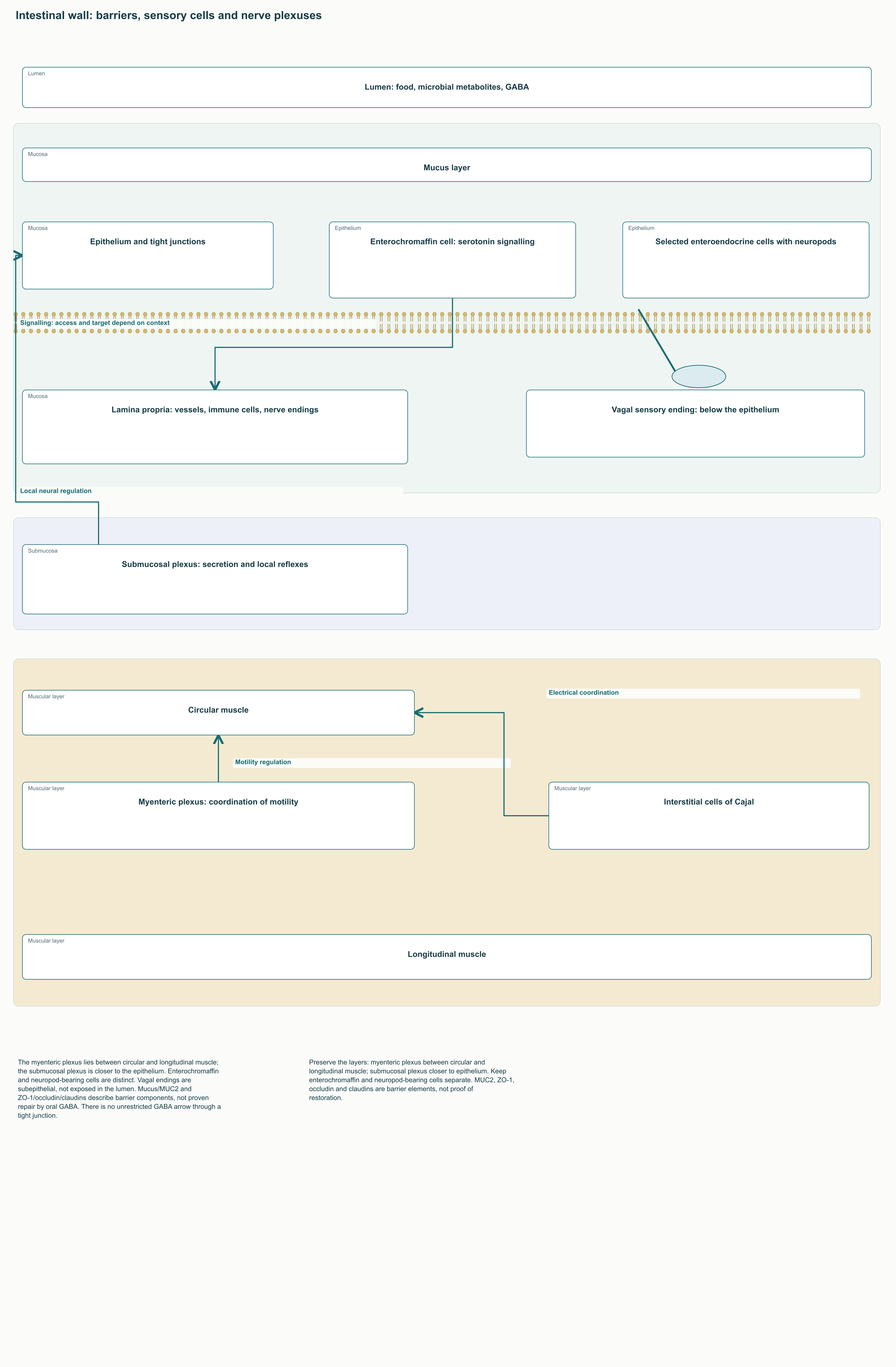
The intestine has its own neural network capable of organising local reflexes. The submucosal plexus is associated with epithelial secretion, local blood flow and sensory processing. The myenteric plexus lies between the layers of the muscular coat and helps coordinate motility. Interstitial cells of Cajal interact with nerves and smooth muscle in generating and propagating electrical activity, but are not simply another type of GABAergic neuron.
Mucus and epithelium separate the intestinal lumen from these structures. Tight junctions between epithelial cells restrict paracellular passage, while transport through a cell depends on its proteins and condition. The epithelium contains different sensory and secretory cells, including enterochromaffin cells involved in serotonin signalling. They are not equivalent to all neuropod-bearing enteroendocrine cells; conflating these categories turns an anatomical diagram into an invented unified mechanism.
GABA receptors and uptake mechanisms in intestinal tissue make local transmission possible. However, “a receptor is detected in the wall” and “capsule-derived GABA activates this receptor” are different statements. The protein's cell and membrane side, access of the substance and its concentration need to be established. A subepithelial vagal terminal is not exposed directly to the lumen and does not receive every dietary component without intermediate steps.
GABA_A: ion-current direction depends on the cell
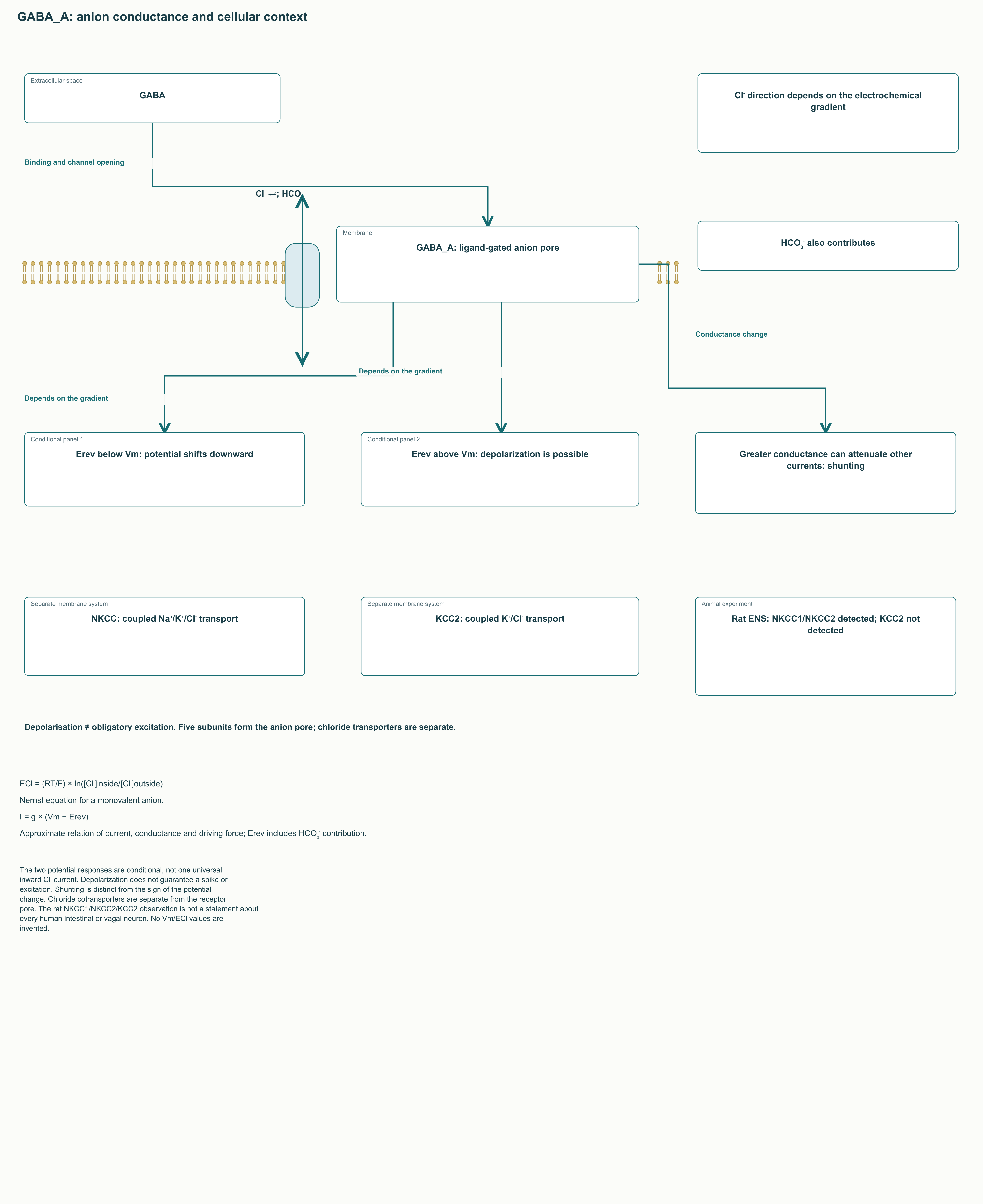
The GABA_A receptor is a pentameric ligand-gated channel conducting mainly Cl⁻, as well as HCO₃⁻. Five subunits form the central pore; the composition of α, β and other subunits affects the complex, so one studied variant does not describe every receptor. Opening changes membrane conductance, with the result depending on membrane potential and the anion current's reversal potential. In a mature central neuron this often contributes to inhibition, but a transmitter's name does not guarantee the same electrical response in every cell. In enteric tissue, applying “GABA always hyperpolarises” without cellular context is particularly inappropriate.
A simplified Nernst equation for chloride is ECl = (RT/F) × ln([Cl⁻]inside/[Cl⁻]outside). Its sign differs from that for a monovalent cation because Cl⁻ is negatively charged. Channel current is approximately I = g × (Vm − Erev), where g is conductance, Vm membrane potential and Erev reversal potential. The actual GABA_A Erev need not equal ECl exactly because bicarbonate contributes.
When Erev lies above resting potential, channel opening can depolarise the membrane. This does not automatically imply an action potential: increased conductance can attenuate other incoming currents, producing shunting inhibition. In another cell or state, depolarisation may promote excitation. The infographic must therefore show possible directions and their conditions rather than a mandatory “Cl⁻ inward — relaxation” arrow.
Transporters maintain the chloride gradient: NKCC1/SLC12A2 supports coupled Na⁺, K⁺ and Cl⁻ transport, while neuronal KCC2/SLC12A5 participates in K⁺ and Cl⁻ extrusion. These are neither GABA_A pores nor GABA transporters. An experiment in rat colonic enteric neurons detected NKCC1 and NKCC2, but not KCC2; NKCC inhibition attenuated GABA-evoked depolarisation. This explains a particular animal model without establishing identical organisation in every human intestinal or vagal neuron.
Classic experiments by Krantis and colleagues in isolated guinea-pig intestine found both contractions and relaxations, depending on the region and neural transmission. Nerve-free muscle preparations did not show the same response. This highlights the enteric network's role but does not prove clinical relief of human spasms by an oral supplement. A tissue preparation receiving substance directly differs from an intact intestine after swallowing a capsule.
GABA_B: a heterodimer, Gi/o and several signalling branches
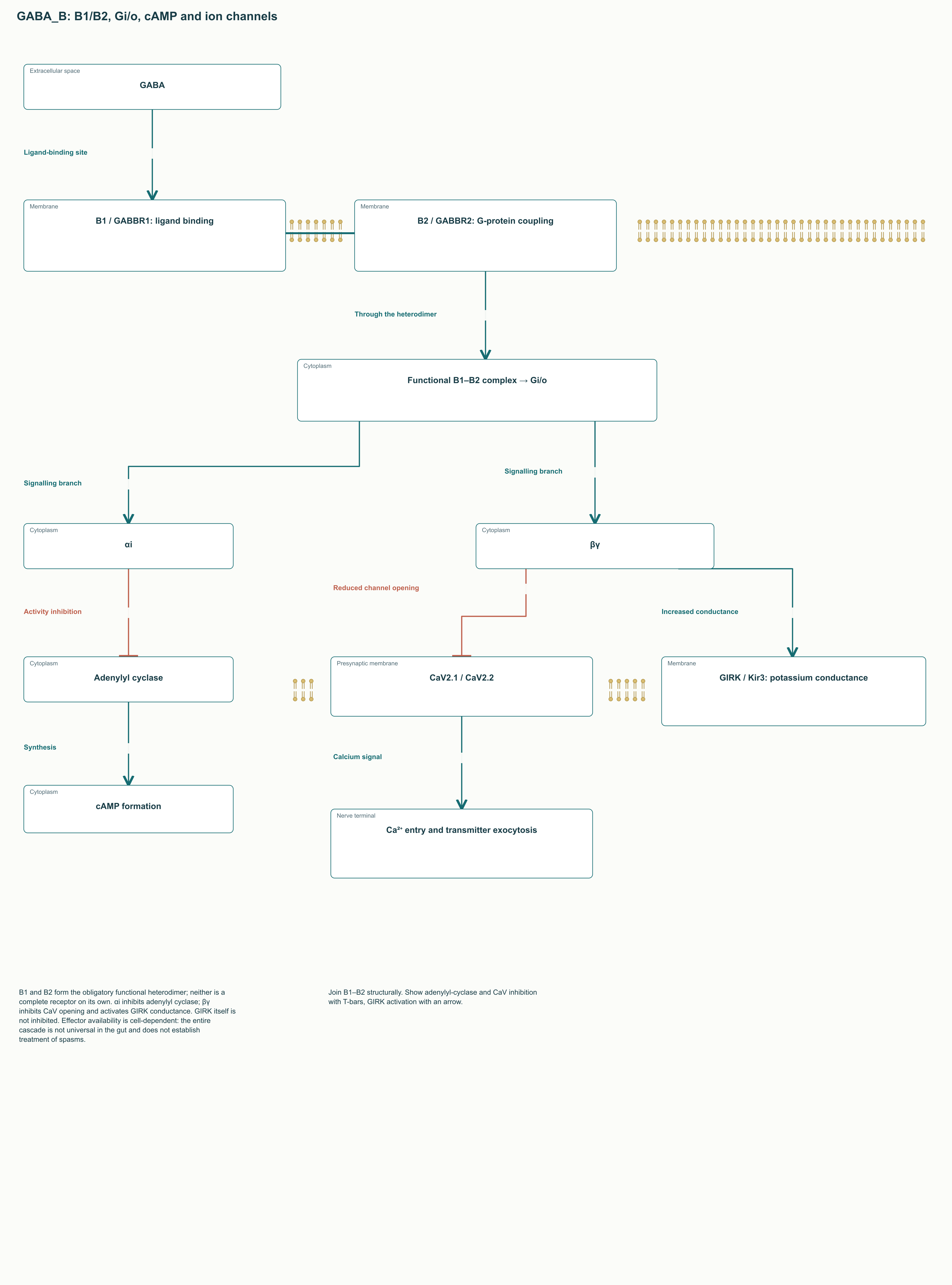
A functional GABA_B receptor includes B1 and B2 subunits encoded by GABBR1 and GABBR2. GABA binds in B1's extracellular domain, while B2 provides the complex's key connection to the G protein. This is a metabotropic receptor: it forms no chloride pore of its own and instead regulates intracellular and membrane effector systems. An isolated subunit cannot be depicted as a fully independent equivalent of the functioning receptor.
After Gi/o activation, the αi component can inhibit adenylyl cyclase, reducing cAMP formation in the relevant system. The βγ complex can regulate voltage-gated Ca²⁺ channels, particularly CaV2.1 and CaV2.2, and GIRK/Kir3 potassium channels. Reduced calcium entry into a presynaptic terminal can limit transmitter exocytosis; increased potassium conductance can change cellular excitability. These branches depend on the effectors present in a particular tissue.
In Giotti and colleagues' guinea-pig ileum experiments, GABA_A and GABA_B components produced different motor responses. The GABA_A-related response involved cholinergic-neuron excitation and contraction, while the GABA_B-related response involved presynaptic inhibition and relaxation. The work helps explain why the same ligand need not affect peristalsis identically. It does not establish a ready-made GABA treatment regimen for irritable bowel syndrome, diarrhoea or constipation.
Serotonin, the epithelial barrier and inflammation
Enterochromaffin cells and serotonin pathways participate in intestinal sensing and motility, while the epithelium interacts with neurons, immune cells and microbial metabolites. These connections explain interest in GABA within gut–brain-axis research. Yet several interacting systems do not establish a mandatory “GABA — serotonin reduction — normalised motility” sequence for every patient. Effects can differ by region, model and tissue state.
Barrier function likewise cannot be reduced to one protein. Claudins, occludin and associated proteins including ZO-1 form part of the intercellular-junction system, but an expression change in a cellular experiment does not establish restoration of a human barrier. That conclusion requires functional measurements and clinical context, not staining or mRNA alone. Promises to treat inflammatory bowel disease or “endotoxin leakage” with dietary GABA exceed the human evidence considered here.
In discussing inflammation, a signalling marker must be distinguished from barrier function. NF-κB denotes a family of transcriptional regulators involved in inflammatory responses, while LPS is bacterial lipopolysaccharide. Changes in NF-κB or an individual junction protein do not prove prevention of LPS entry into blood. Separate functional measurements, a defined model and appropriate controls are needed; a universal pathway from GABA_B to elimination of inflammation is not yet a human clinical conclusion.
The vagus nerve: anatomical possibility and an unproven causal chain
What neuropod studies showed
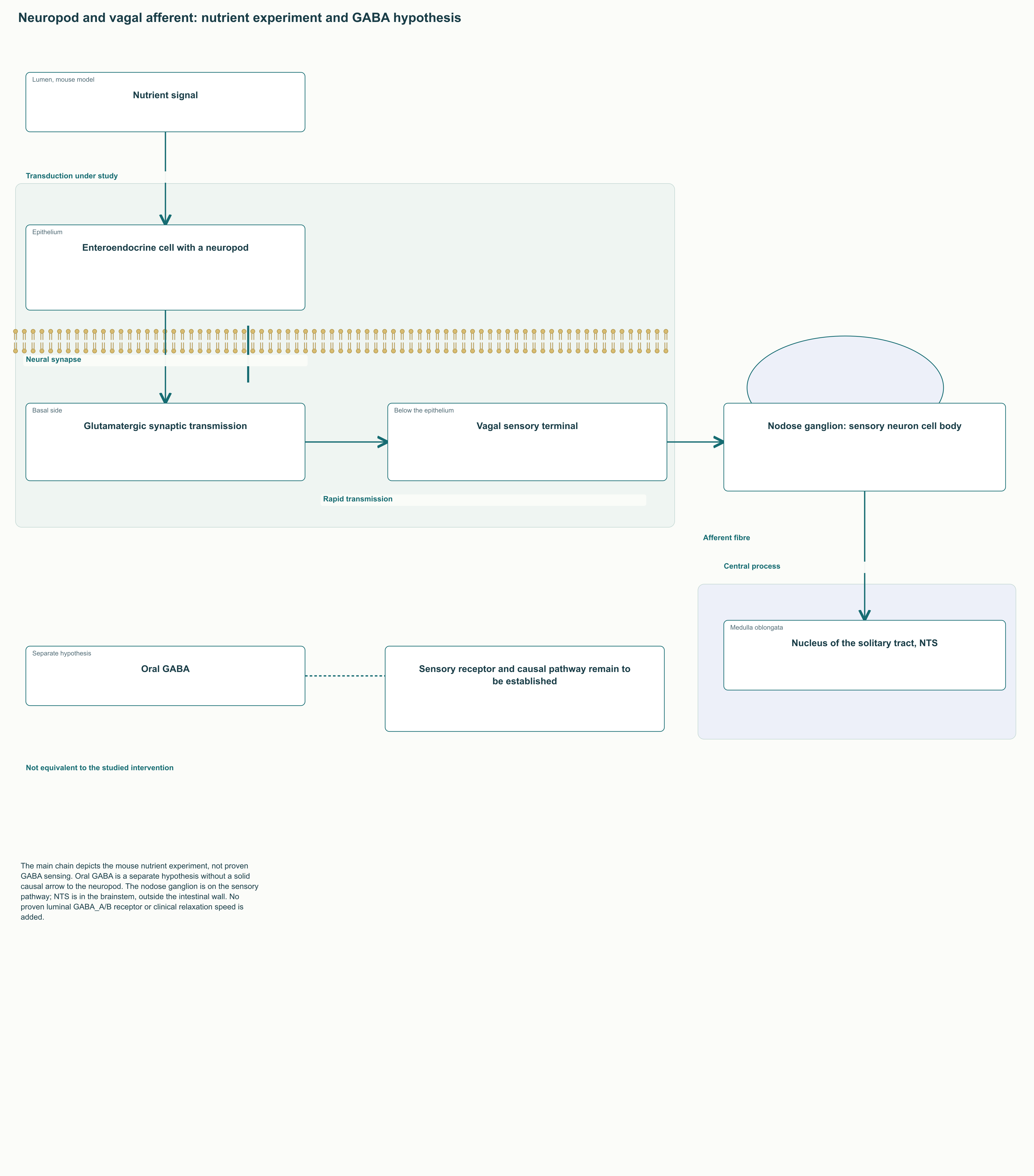
Some enteroendocrine cells possess basal processes called neuropods and can rapidly link nutrient detection to a neural signal. Kaelberer and colleagues' 2018 mouse study demonstrated a rapid intestinal sensory pathway with glutamatergic transmission to vagal afferents. This substantially broadened understanding of epithelial communication with the nervous system: it need not be exclusively slow and hormonal. However, the experiment addressed nutrient transduction, not instantaneous recognition of oral GABA.
Establishing a specifically GABA-dependent route requires identifying the sensory cell, receptor, access of the substance and neural response after intervention. Blocking the selected component must then eliminate the effect under appropriate control conditions. Finally, the relationship of that signal to anxiety or sleep needs separate study. Until these steps are completed, the arrow from luminal GABA to a neuropod should be labelled a hypothesis rather than an established result of that experiment.
The speed of an epithelial–neural synapse is not the speed of clinical relaxation after a capsule. Delivery to the intestinal region, meal composition, formulation dissolution and the person's condition all affect the overall response. Nor does the presence of sensory nerves in the mouth establish an advantage for sublingual GABA. Oral sensing and actual mucosal absorption are separate processes, while bypassing hepatic first-pass metabolism requires pharmacokinetic comparison.
From the nodose ganglion to the nucleus of the solitary tract
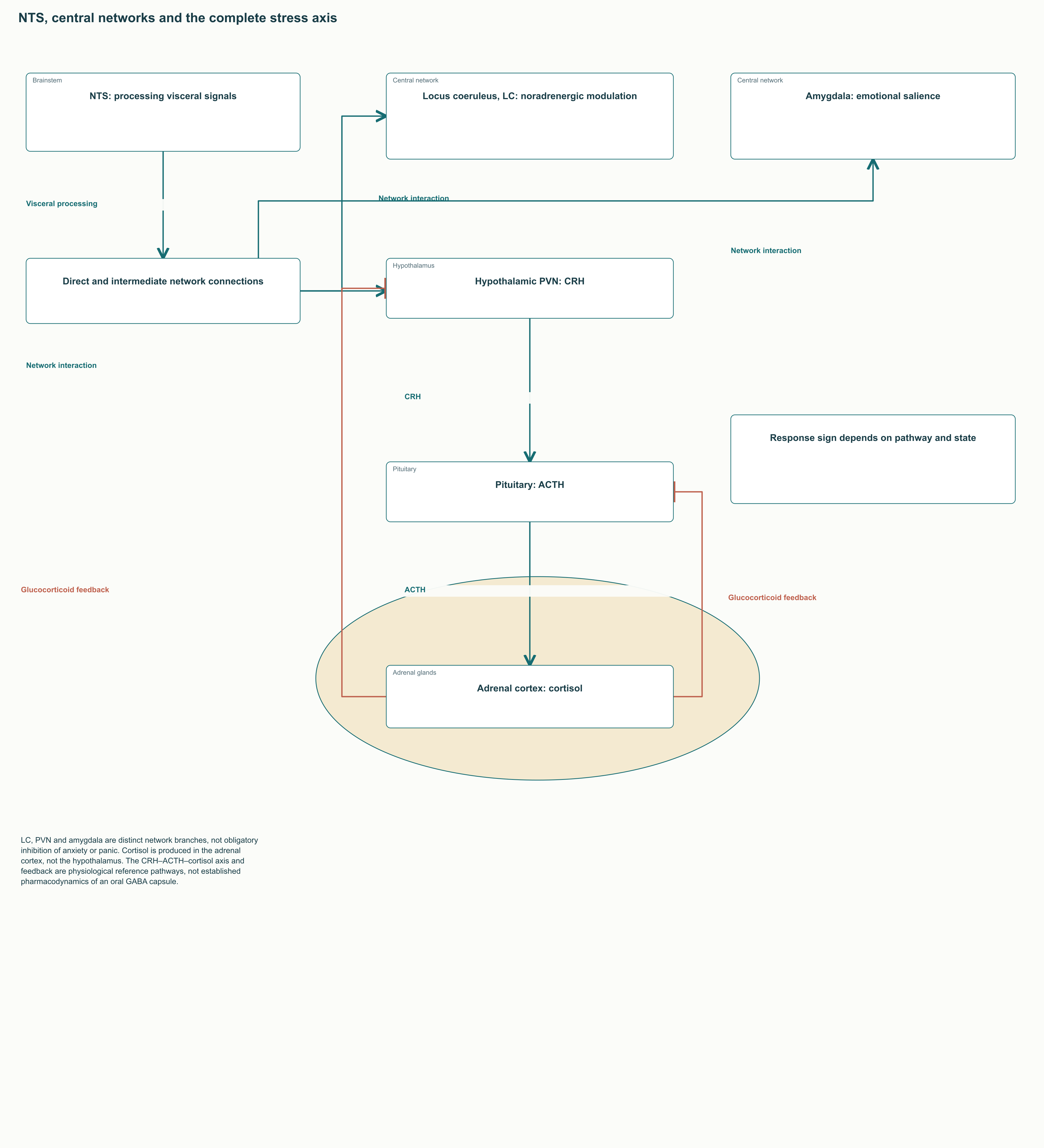
The cell bodies of many vagal visceral afferents lie in the nodose ganglion. Their central processes carry information to the nucleus of the solitary tract, NTS, in the medulla oblongata. NTS processes numerous visceral signals and interacts with autonomic, hypothalamic and other central networks. This anatomical input is nevertheless not a separate “inhibitory wire” guaranteed to switch off anxiety whenever stimulated.
The locus coeruleus, LC, is associated with noradrenergic modulation of wakefulness and attention, but its activity cannot be described solely as a source of pathological anxiety. The hypothalamic paraventricular nucleus, PVN, helps initiate the endocrine stress axis, while the amygdala processes salience and emotional learning. Connections between NTS and these structures can involve several intermediate nodes and transmission types. The final response's direction depends on network and state, not merely the incoming nerve's name.
The stress axis should remain complete in the diagram: hypothalamic CRH stimulates pituitary ACTH, which acts on the adrenal cortex where cortisol is synthesised. Cortisol is not secreted by the hypothalamus. Feedback acts at several levels and depends on time and context. Even if an intervention changes a stress hormone in a particular experiment, that does not prove direct inhibition of each component by supplemental GABA.
Why a vagotomy–probiotic experiment cannot be attributed to purified GABA
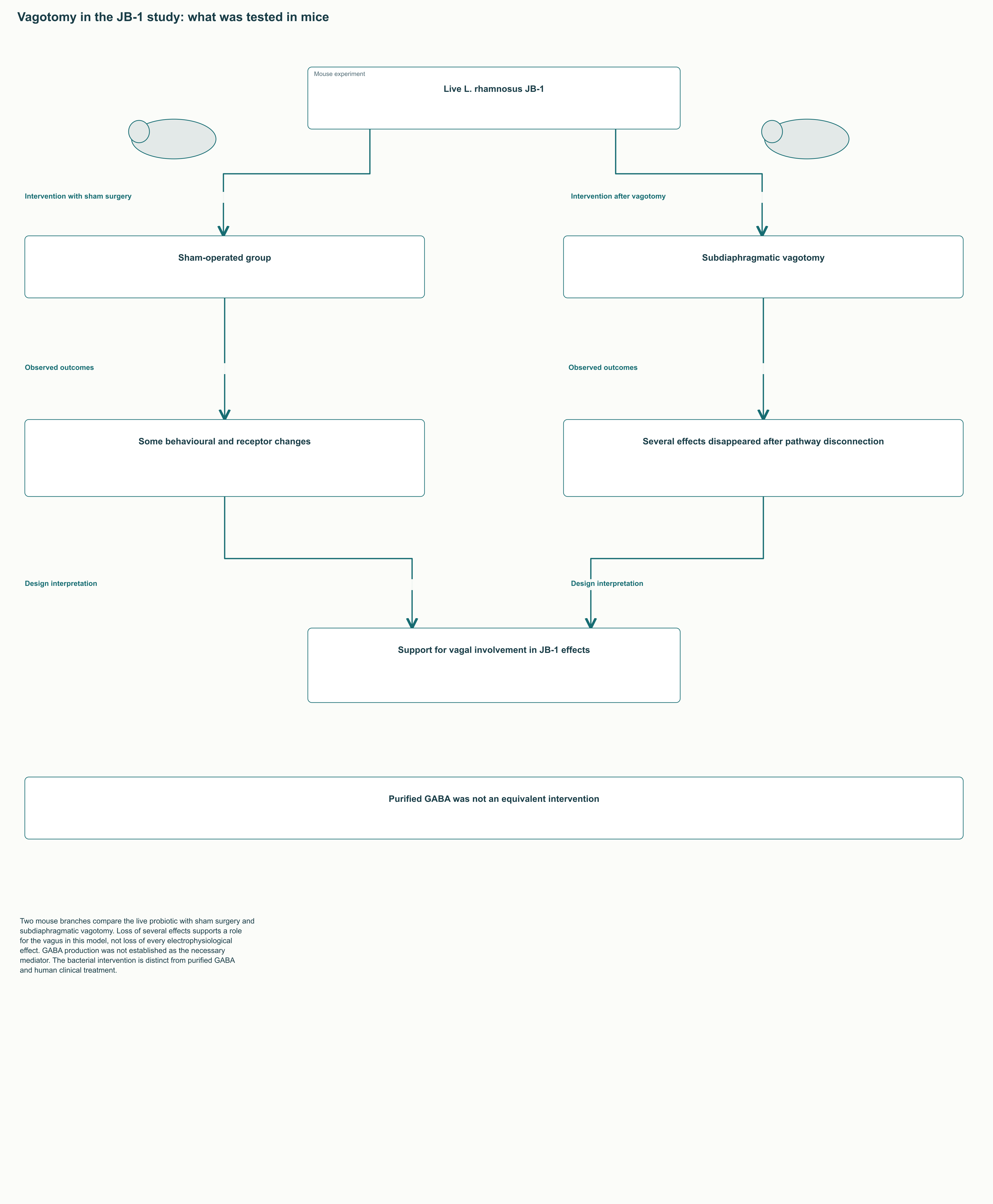
In 2011, Bravo and colleagues studied chronic administration of live Lactobacillus rhamnosus JB-1 to mice. Individual behavioural measures, stress corticosterone and regional expression of GABA-receptor components changed. Directions differed: GABA_A α2, for example, decreased in the prefrontal cortex and amygdala but increased in certain hippocampal regions. An mRNA change is also not equivalent to a measured increase in inhibitory current.
Several observed JB-1 effects disappeared after subdiaphragmatic vagotomy. This supports vagal involvement in that bacterial intervention under the experimental conditions. The study did not administer purified GABA as an equivalent exposure and did not establish bacterial GABA as the necessary mediator. It therefore cannot show that oral GABA acts exclusively through the vagus or that its human efficacy is proven.
A sham-operated control group and the consequences of surgery itself matter when interpreting vagotomy. Changes in feeding, motility and baseline physiology can affect behaviour independently of the studied substance. Such a design helps test the necessity of a neural route in a particular experiment, but does not establish one mediator's sufficiency. Distinguishing “the nerve participated” from “the only cause was identified” is fundamental to professional interpretation.
Recent human studies of other probiotics do not remove this distinction. A trial published in 2026 evaluated live Lactiplantibacillus plantarum Lp815 in adults with sleep disturbance; urinary GABA was measured only in a small subgroup. Even a symptom change accompanied by a peripheral biomarker is not a human-brain GABA measurement and does not identify a single mechanism. A particular strain's result cannot be transferred to every fermented food or purified-GABA capsule.
Fermentation and chemical synthesis: the same molecule, different product requirements
Glutamate decarboxylase and its cofactor
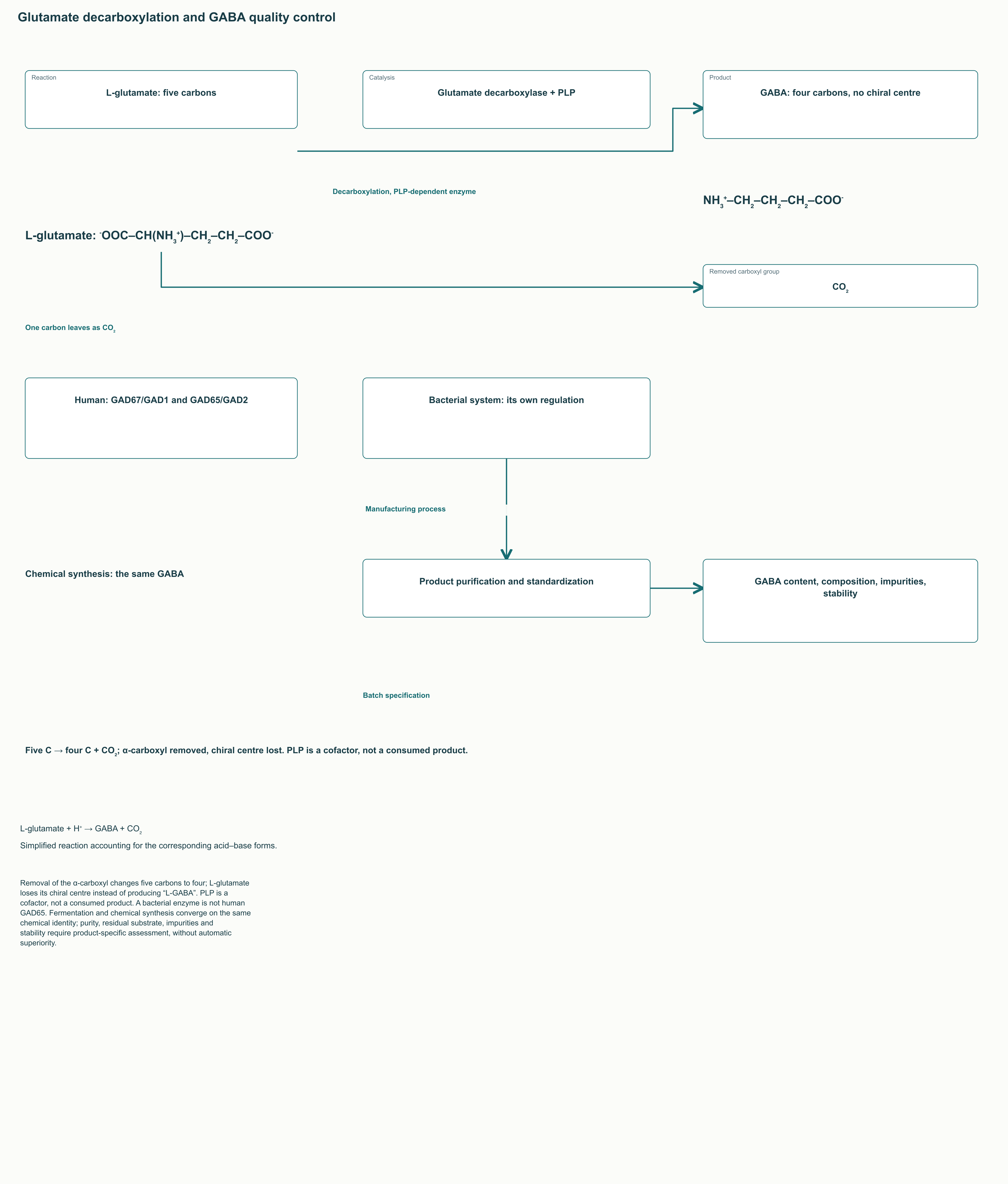
Biotechnological GABA production relies on glutamate decarboxylation. In simplified notation accounting for acid–base forms, the reaction is L-glutamate + H⁺ → GABA + CO₂. The carboxyl group attached to glutamate's former α-carbon is removed, converting a five-carbon substrate into a four-carbon product. Loss of the chiral centre explains why L-glutamate produces achiral GABA.
Glutamate decarboxylase uses pyridoxal-5-phosphate, PLP, the active coenzyme form of vitamin B6. In humans, the enzyme occurs as GAD67 and GAD65, associated with GAD1 and GAD2 respectively. Bacterial enzyme systems have their own organisation and cannot automatically be called human GAD65. A common reaction type does not imply identical regulation in a bacterium and a nerve cell.
PLP participates in catalysis but is not consumed as a disposable component for every product molecule. Cofactor availability does matter for endogenous transmitter synthesis. This does not mean a person without deficiency needs high-dose B6 alongside ready-made GABA. Supplying a reaction product and supporting its enzyme are different interventions requiring separate indications and safety assessment.
What ingredient origin tells us
Fermented ingredients can be produced using particular lactic-acid bacteria, then purified and standardised. Documentation for one product describes Lactobacillus hilgardii K-3. A live probiotic, a purified fermentation product and a fermented food are not interchangeable categories. If the manufacturer removes the microorganism, the final ingredient should not be described as live bacterial treatment.
When sufficiently purified, chemically and fermentatively produced GABA has the same molecular structure. Differences should be sought in residual substrate, accompanying amino acids, manufacturing impurities and finished-product characteristics. “Natural” does not replace active-substance quantification, microbiological control or stability data. Superiority of one manufacturing route requires a direct comparative study of comparable products.
For specialists, discussing batch specifications is more useful than contrasting a “natural” and “artificial” molecule. A label should clarify whether it gives GABA mass or mixture mass, the carrier substance and any additional active components. Allergenic starting materials and process residues require separate assessment: fermentation does not automatically imply absence of allergens. A particular preparation's clinical result transfers primarily to a comparable composition, not every item labelled GABA.
EEG, salivary markers and subjective stress: what early trials measured
Alpha and beta activity do not measure GABA content
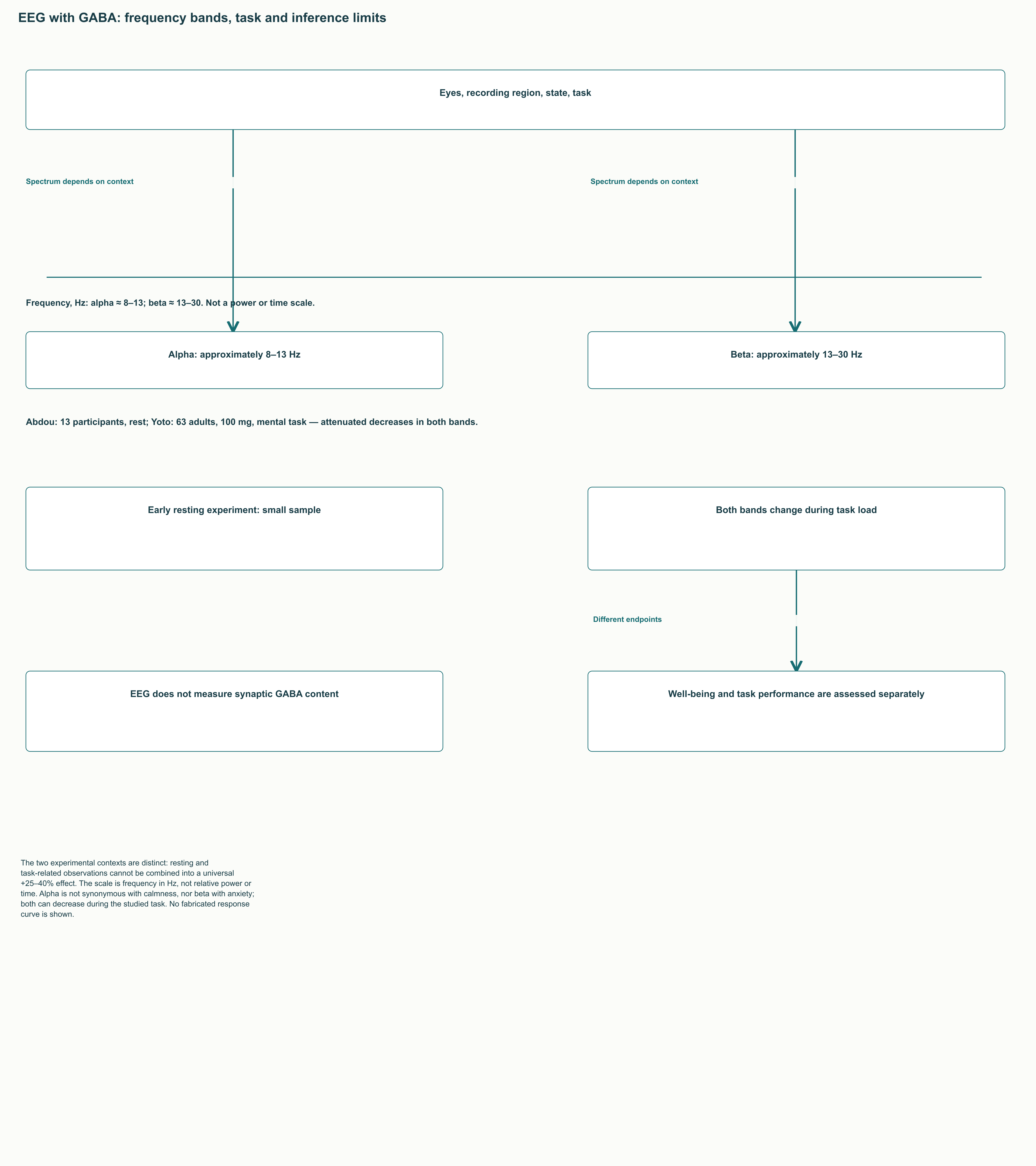
EEG records neural-network electrical activity through scalp potentials. The alpha band is usually described as approximately 8–13 Hz and beta as roughly 13–30 Hz, although boundaries depend on the analytical protocol. The meaning of a power change depends on recording region, eyes open or closed, task and normalisation. “More alpha” cannot universally be translated into “less anxiety”, nor “more beta” into pathological excitation.
The EEG part of Abdou and colleagues' 2006 study involved 13 participants and compared water, GABA and theanine. After an hour, the authors described changes in alpha and beta activity following GABA. A second small part involved eight people with fear of heights undergoing a stress test with salivary IgA measurement. These are interesting early signals, but do not establish a fixed 25–40% increase in alpha power for every user or treatment of an anxiety disorder.
Yoto and colleagues' larger study included 63 adults in a randomised single-blind crossover trial of 100 mg GABA. Alpha and beta power decreased during mental tasks; the decrease was smaller after GABA than placebo. This differs from unconditional alpha enhancement and beta suppression at rest. The observation emphasises task dependence and does not establish brain GABA concentration.
Benefit assessment requires behavioural outcomes, subjective wellbeing and functioning, not the EEG spectrum alone. If one measure changes among many, the prespecified primary outcome and multiple comparisons need consideration. Absence of deterioration in a short test does not prove absence of all cognitive risks with long-term use either. A sound diagram shows the measurement and its limits, not an invented universal relaxation curve.
Secretory IgA and chromogranin A: useful markers with narrow limits
Secretory IgA contributes to mucosal defence, but its salivary concentration depends on salivary flow, time of day, collection method and current condition. Concentration must be distinguished from secretion rate, which accounts for saliva volume per unit time. Preserved IgA in one brief stress test cannot establish fewer infections or “stronger immunity” in everyday life. That clinical outcome needs separate measurement.
Salivary chromogranin A is also studied as a physiological stress-response measure. It does not directly quantify adrenal adrenaline release or replace symptom assessment. In Kanehira and colleagues' study, 30 healthy Japanese participants received beverages containing 0, 25 or 50 mg GABA before an arithmetic task; fatigue, mood and salivary measures were assessed. The brief-task context and beverage composition limit transfer to chronic anxiety, occupational burnout or immune diseases.
Heart-rate variability: autonomic responses without an invented “balance norm”
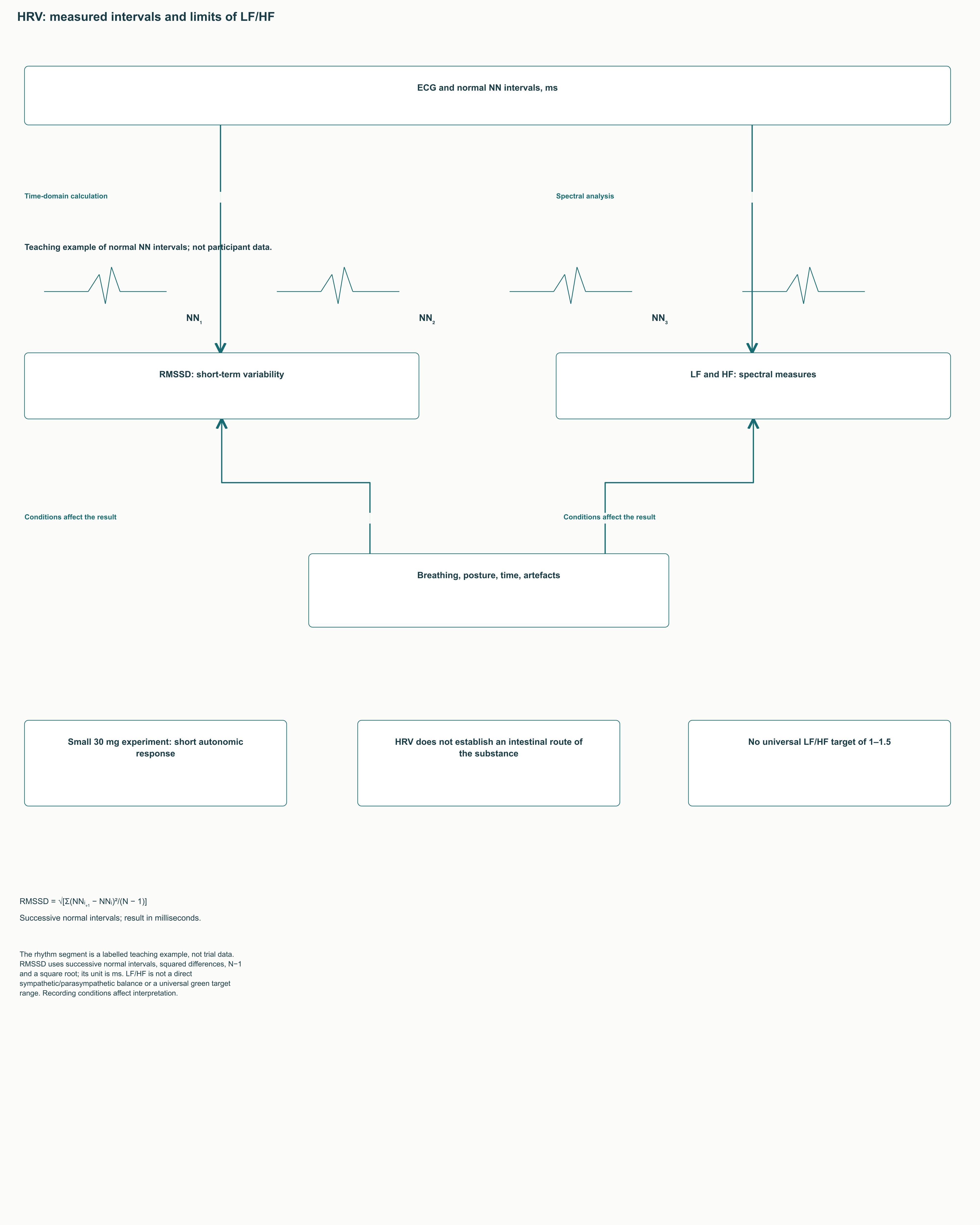
Heart-rate variability, HRV, describes changes in intervals between successive normal heartbeats. It is associated with autonomic regulation but also depends on breathing, posture, activity, age, time of day and signal quality. Artefacts and extrasystoles require separate processing; raw watch intervals are not always equivalent to high-quality ECG recordings. Pre/post-intervention comparisons require comparable conditions.
One time-domain measure is RMSSD = √[Σ(NNᵢ₊₁ − NNᵢ)²/(N − 1)], where NN denotes successive normal intervals in milliseconds. It reflects short-term variability and, under suitable conditions, is associated with cardiac vagal influence. A change in RMSSD does not prove that a GABA-specific signal travelled through the intestinal vagus to NTS. Cardiac autonomic regulation and the proposed intestinal mechanism must remain different explanatory levels.
In a small double-blind crossover study by Fujibayashi and colleagues, 12 healthy young men received 30 mg GABA or placebo. Spectral HRV was assessed after 30 and 60 minutes; the authors reported changes interpreted as increased autonomic and parasympathetic activity. The work does not establish clinical efficacy for arrhythmias, panic attacks or insomnia. Its small homogeneous sample also cannot define a universally expected response in patients of different ages or conditions.
LF/HF cannot be treated as a direct measure of “sympathetic versus parasympathetic tone”. LF has mixed origins, and breathing and other conditions alter the spectrum. A target LF/HF of 1.0–1.5 for everyone is therefore not scientifically justified as a criterion of successful GABA use. In practice, a symptom or functional goal should be defined beforehand, with HRV serving only as an additional standardised measurement.
Anxiety and GABAergic medicines: similar names do not mean identical actions
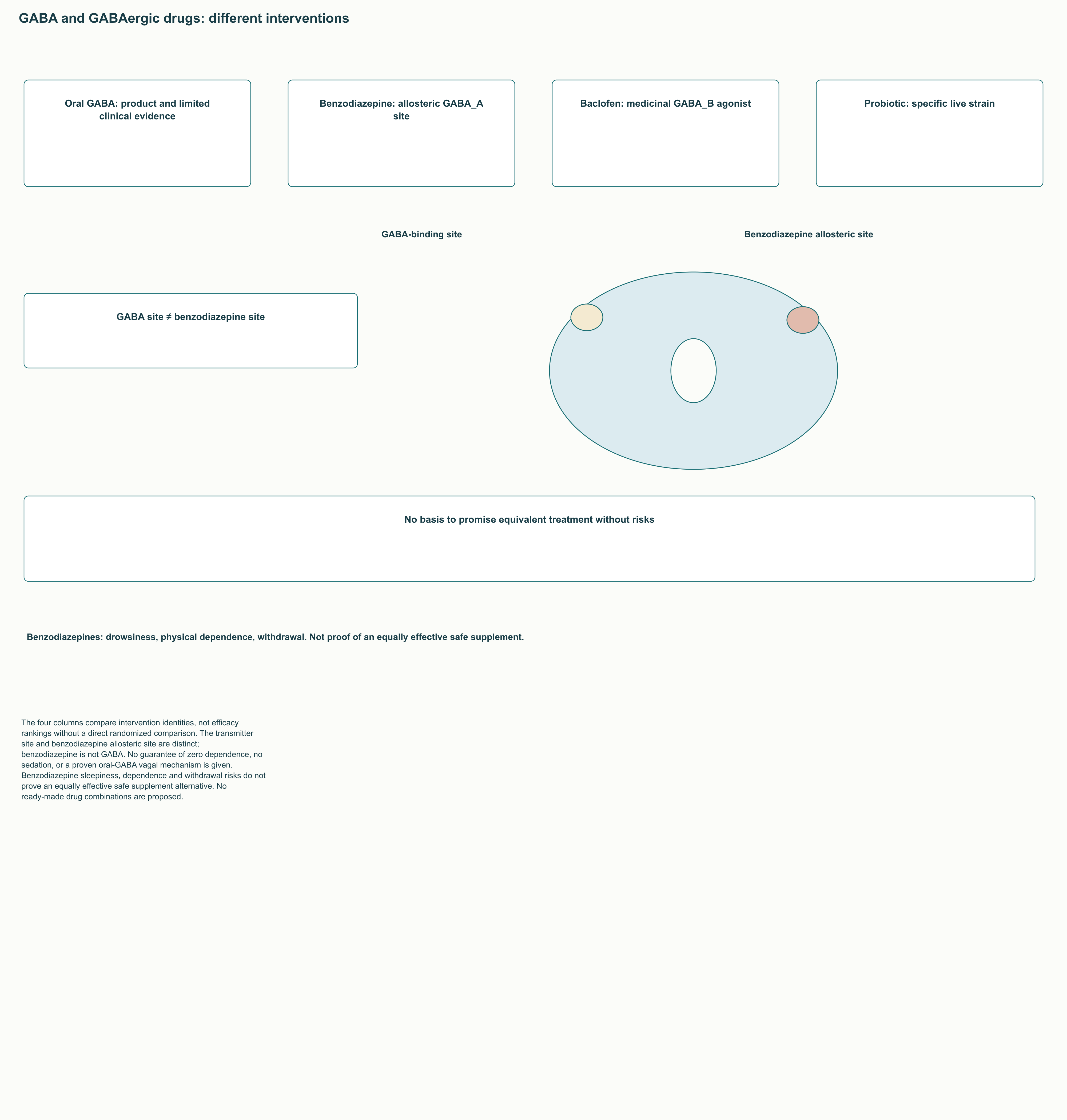
Benzodiazepines act as positive allosteric modulators of certain GABA_A receptors. They bind a site different from GABA's own binding site and enhance transmitter action when subunit composition permits. Baclofen is a pharmacological GABA_B agonist. These substances have their own distribution, dosing and clinical evidence, which cannot be assigned to dietary GABA.
Drowsiness, dizziness and weakness are known with benzodiazepines, and repeated use requires consideration of physical dependence and withdrawal. FDA specifically strengthened warnings about misuse, dependence and excessively rapid discontinuation. These risks require attention to the particular drug and patient; they do not automatically make dietary GABA an equally effective alternative. Missing long-term supplement data cannot be described as a proven zero risk either.
It is particularly important not to promise “the same anti-anxiety effect without all the risks”. This would require direct studies of comparable efficacy, tolerability and prolonged use. Small stress-task trials do not establish treatment of panic or generalised anxiety disorder. Nor do they establish zero habit-forming potential, absolute absence of drowsiness or safety of every drug combination.
Intervention
Established subject of discussion
What cannot be transferred to a GABA supplement
Benzodiazepine
A specific medicine and its allosteric action
Efficacy, indications, regimen and withdrawal profile
Baclofen
A medicinal GABA_B agonist
Effects on spasticity or guaranteed activation of the same targets by a dietary dose
Oral GABA
A specified product, dose and outcomes of small trials
A universal vagal mechanism and proven anxiety-disorder treatment
Live probiotic
A particular strain and intervention composition
Equivalence to purified GABA and properties shared by all bacteria
Somatic anxiety symptoms such as palpitations, trembling, sweating or abdominal discomfort can accompany different conditions. New breathlessness, fainting or persistent tachycardia should not automatically be called GABA deficiency. Professional work starts with clinical context and symptom causes rather than selecting a supplement for presumed neurotransmitter shortage. A screening questionnaire helps assess severity, but does not establish a molecular diagnosis.
Sleep: onset, efficiency and deep sleep are different outcomes
How to read sleep measures
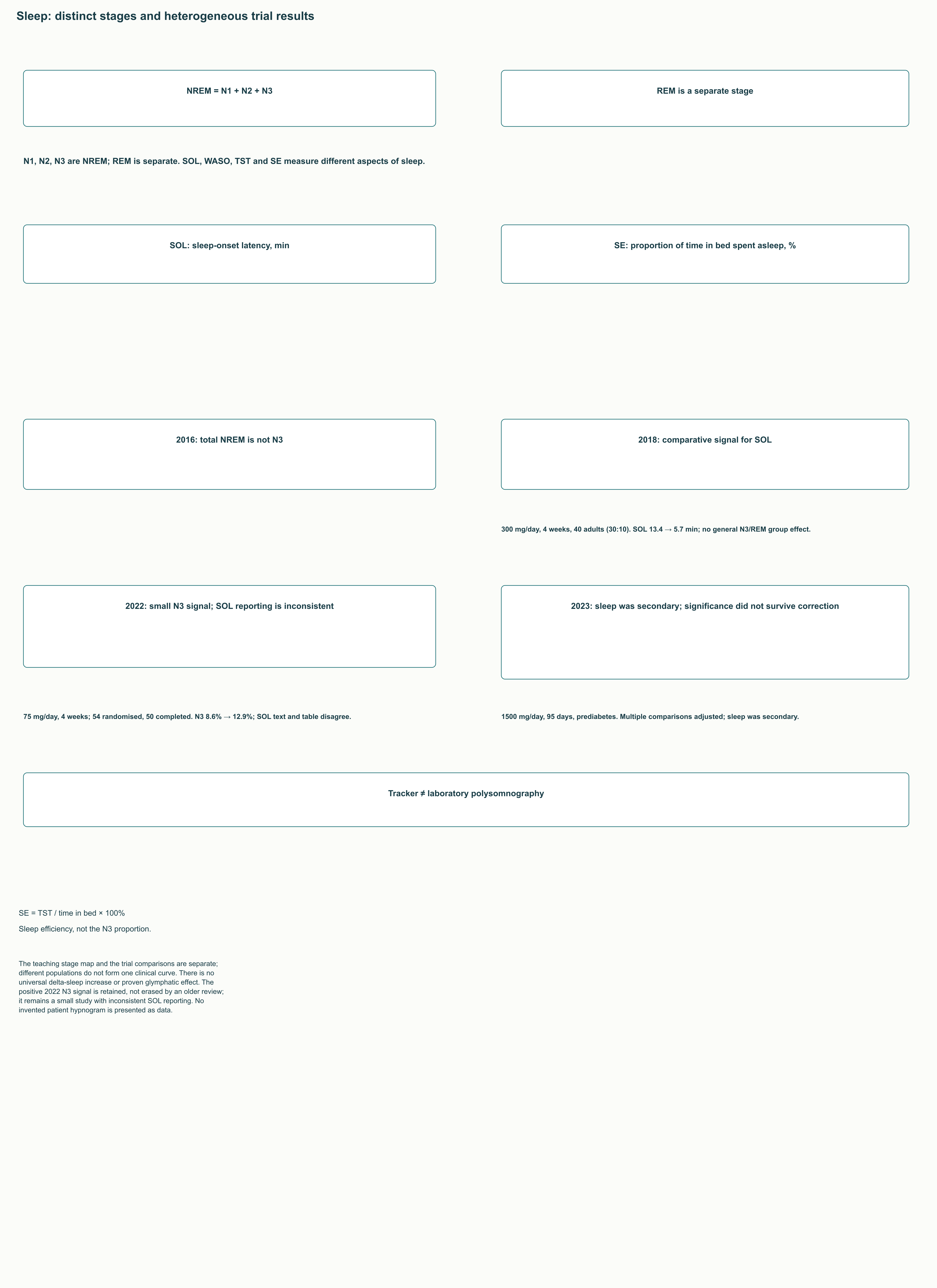
Sleep-onset latency, SOL, is the time from a defined start of a sleep attempt to the protocol's criteria for sleep onset. WASO describes wakefulness after initial sleep onset, while total sleep time, TST, sums time asleep. Sleep efficiency is generally SE = TST / time in bed × 100%. Each measure describes a different aspect of the night, so shorter SOL does not automatically mean elimination of awakenings or increased N3.
N1, N2 and N3 belong to NREM sleep, while REM is classified separately. More total NREM time does not necessarily mean more deep N3: other stages may account for the change. Polysomnography uses combined signals and scoring rules, whereas actigraphy estimates sleep mainly from movement. Consumer trackers additionally apply proprietary algorithms, so their “deep sleep” should not be considered equivalent to a laboratory outcome.
GABA trials and the distinction between within-group and comparative results
Yamatsu and colleagues conducted a small randomised single-blind crossover trial using sleep EEG. They reported shorter sleep onset and more total NREM time; a separate measurement showed blood GABA peaking 30 minutes after ingestion. This does not establish mandatory N3 increases in everyone or measure transport into the brain. A plasma peak and sleep changes are observations whose mechanistic connection requires separate testing.
Byun's 2018 trial assigned 40 adults with insomnia symptoms to 300 mg GABA daily or placebo for four weeks, in a 30-to-10 ratio. In the GABA group, SOL decreased from 13.4 to 5.7 minutes; the time-by-group interaction for this outcome was significant. No such group effect was demonstrated for sleep efficiency, total PSQI/ISI, N3 or REM. This is narrower than proven improvement of the entire sleep architecture.
Yoon and colleagues' 2022 publication studied 75 mg daily for four weeks: 54 people were randomised and 50 completed follow-up. The GABA group's N3 proportion increased from 8.6% to 12.9%; the table also shows a between-group difference in changes. However, the text and table describe the comparative SOL result differently. The N3 signal deserves further study, but a small trial and ambiguous reporting establish neither a universal effect, an optimal dose nor clinical superiority over other approaches.
Study
Intervention and duration
Most useful limitation
Yamatsu, 2016
Small crossover experiment with EEG
Total NREM is not N3
Byun, 2018
300 mg/day, 4 weeks
Comparative signal mainly for SOL
Yoon, 2022
75 mg/day, 4 weeks
N3 signal present; SOL description ambiguous
de Bie, 2023
1500 mg/day, 95 days, prediabetes
Sleep was secondary; significance did not remain after adjustment
No significant REM change does not establish proven “ideal preservation of sleep”. A small experiment may miss an effect because of limited power, and no detected difference is not an equivalence trial. Likewise, an N3 change does not establish increased glymphatic clearance, tissue repair or growth-hormone secretion. Those proposed consequences need separate measurement rather than addition to sleep findings by association.
Hepsomali's 2020 systematic review assessed human placebo-controlled studies available at its search date, describing stress evidence as limited and sleep evidence as very limited. Later trials broaden the picture but do not turn different doses, compositions and populations into a single proven protocol. Heterogeneous designs, small samples and some authors' industry links warrant consideration. The overall assessment should include positive and uncertain findings alike.
Why combination products need separate analysis
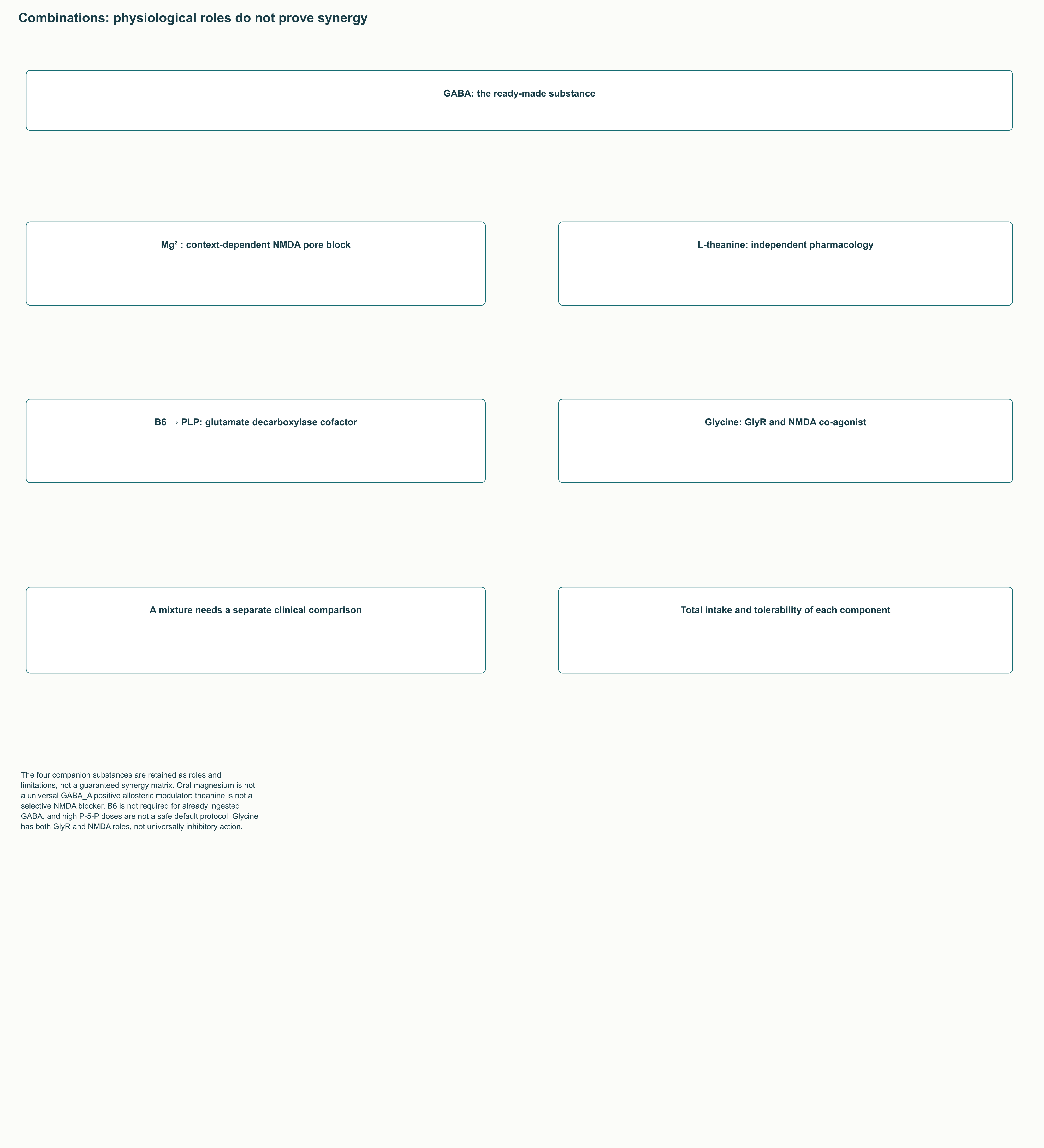
When a product contains GABA, theanine, magnesium or other substances together, the result concerns the studied combination. Even randomising that mixture against placebo does not identify each ingredient's contribution or establish synergy; that requires appropriate separate arms. A multicomponent-supplement trial in peri- and postmenopausal women published in September 2026 illustrates this problem. It is not a new trial of isolated GABA and cannot attribute the entire observed sleep effect to it.
For chronic insomnia, supplementation belongs within comprehensive care. Cognitive behavioural therapy for insomnia, CBT-I, is recommended in the AASM adult clinical guideline; it is a structured approach, not merely sleep-hygiene advice. Snoring with breathing pauses, pronounced daytime sleepiness, restless legs and persistent schedule disruption require separate consideration. Waiting for a capsule to work should not replace addressing the cause.
Professional practice: from a research dose to a clear observation goal
Why study doses do not form a universal treatment ladder
The studies considered used very different amounts: tens of milligrams for brief stress tasks, hundreds for sleep and grams for pharmacokinetics. Beverages, capsules, extracts, baseline symptoms and follow-up durations also differed. These doses cannot yield a rule that “more symptoms require more GABA”. The largest studied exposure is neither a recommended starting dose nor a proven safe limit.
Professional discussion first needs to identify the intervention and result that interest the person. Administration before a particular laboratory task does not establish optimal timing for every stressful situation. These scattered data cannot prescribe regimens for “autonomic dystonia”, circadian desynchronisation or sports recovery. If a supplement is discussed, the decision should reflect the person's condition, product composition, concomitant treatment and a measurable goal.
Powers and colleagues' 3 g GABA study in 11 trained men assessed short-term responses of individual growth-hormone forms at rest and after exercise. It did not measure sustained muscle hypertrophy, training recovery or improved sporting performance. A hormone peak therefore justifies neither 500–750 mg “for recovery” nor escalation to the studied amount. Professional recommendations should correspond to the final outcome actually investigated.
Delivery forms and product selection
An ordinary swallowed capsule, beverage and lozenge differ in food matrix and dissolution rate. A sublingual advantage requires comparative human data on systemic exposure and clinical outcomes. A promise of action through cranial nerves IX and X within 10–15 minutes cannot be substituted with a description of sensory endings. Without measurement, a lozenge also cannot be assumed to bypass hepatic metabolism or a capsule to guarantee longer action.
Product selection should record the exact GABA quantity per serving, full composition and other ingredients affecting sleep or blood pressure. This helps distinguish the proposed ingredient's effect from caffeine, melatonin, a herbal extract or a simultaneous schedule change. Fermented-raw-material mass need not equal active-substance mass. Manufacturer standardisation and batch data have greater practical value than a promised unique neurotransmitter pathway.
Combining magnesium, theanine, B6 and glycine
Magnesium participates in many cellular processes, and its voltage-dependent action in the NMDA-receptor pore is established electrophysiology. NMDA is an ionotropic glutamate receptor rather than a general-purpose “calcium channel”. This physiology does not automatically establish enhancement of GABA by every magnesium preparation. Correcting inadequate magnesium intake and demonstrating supplement synergy are different clinical questions.
Theanine is studied as a substance in its own right, with its own pharmacokinetics and mixed receptor data. It cannot be described as a universal selective NMDA blocker whose effect necessarily adds to GABA's. Mechanisms and human trials are explored further in the article on L-theanine. A combination product needs its own study rather than the sum of arrows from two separate diagrams.
Vitamin B6 is necessary for PLP-dependent enzymes, including glutamate decarboxylase. However, ready-made GABA does not require mandatory P-5-P administration, and prolonged high B6 intake has its own risks, including sensory neuropathy. Total intake from all supplements and fortified foods should be considered. Cofactor function and clinical safety are discussed in detail in the article on vitamin B6.
Glycine acts through its own receptors and is an NMDA-receptor coagonist; its role is not confined to generally “strengthening inhibition”. Studies of glycine alone do not prove an advantage for combining it with GABA or establish a universal evening matrix. Adding several substances simultaneously makes effects and adverse reactions harder to attribute. Clear intervention composition and stable conditions are more useful for observation than a multistep mixture promising molecular synergy.
Safety: what is known and which promises remain unsupported
Brief observations and uncertainty about prolonged use
The 2021 USP safety review found no serious adverse events in the short studies considered, but emphasised the limited evidence base. Transient blood-pressure reduction was among the effects discussed; combination with antihypertensive medicines needs particular attention. Pregnancy and breastfeeding data are insufficient. Absence of severe events in small studies cannot become a guarantee of safety for everyone and every duration.
Human trials have reported gastrointestinal discomfort, headache, dizziness and drowsiness in some circumstances. Small samples assess rare reactions poorly, and exclusion criteria often remove people with severe disease or concomitant treatment. Participant composition therefore matters as much as dose. Observations in healthy adults cannot automatically be transferred to children, older people with polypharmacy or those with impaired organ function.
There is no basis to guarantee safe combination with SSRIs, benzodiazepines, baclofen, alcohol or any hypnotic. For some combinations, risks may be theoretical or inadequately quantified and should be described that way. Potential drowsiness, blood-pressure changes and the combined action of all agents need assessment. These studies do not justify independently reducing or titrating a prescribed medicine to add GABA.
What a GRAS record means
GRAS concerns safety assessment of a specified food ingredient under particular US conditions of use. It is not permission to treat insomnia or registration of medicinal efficacy. Moreover, the FDA GRN 595 record for GABA states that review of the notice ceased at the applicant's request. Citing that record as “FDA approved the preparation” is therefore incorrect.
The notice documentation described manufacturing and proposed food uses, including serving quantities. It helps explain ingredient origin but does not establish a safe therapeutic dose of 3000 mg daily for everyone. Product regulatory category, batch quality and clinical evidence are separate characteristics. Each needs assessment using the relevant data rather than substitution of one for another.
Observing results without a neurotransmitter self-diagnosis
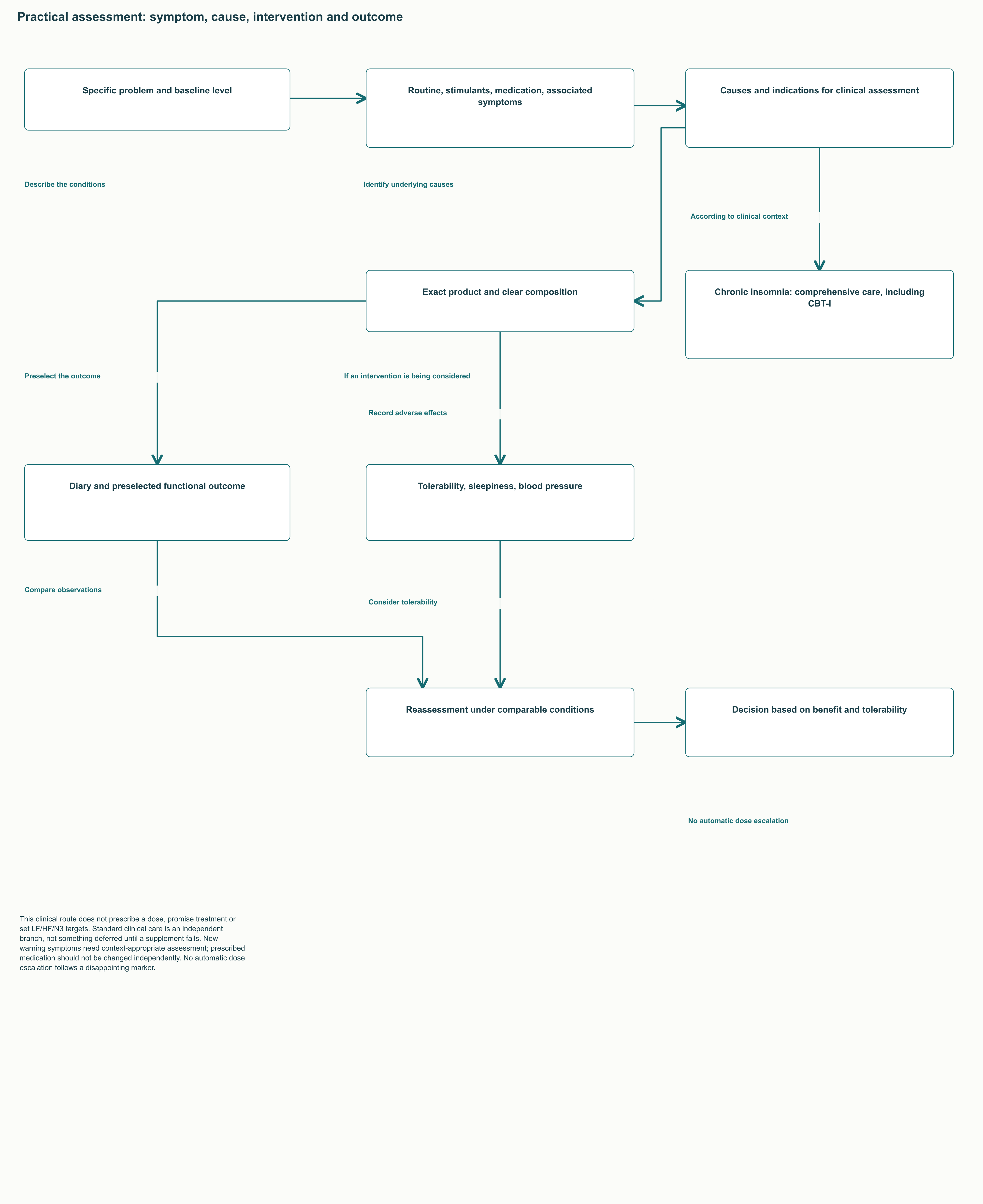
The first step is to state a specific problem: prolonged sleep onset, frequent awakenings, daytime tension or impaired functioning. Its baseline severity, duration and circumstances should then be described, including sleep schedule, caffeine, alcohol, workload and medicines. This context often explains more than presumed “GABA deficiency”. If signs suggest a particular disease, they determine the care pathway.
A sleep diary can record bedtime, estimated sleep onset, awakenings and daytime wellbeing. ISI and PSQI assess relevant aspects of the problem, while GAD-7 and STAI address different aspects of anxiety symptoms. Their results do not measure transmitter concentration or replace diagnosis. Repeated assessment should preferably use the same instrument and time window to make comparison meaningful.
Before discussing an additional intervention, select the main success criterion and reassessment time. Sleep-onset minutes matter alongside daytime functioning, drowsiness and tolerability, for example. Record the exact product, dose and other changes so that improvement after five simultaneous changes is not assigned to one substance. Consumer HRV and sleep data can supplement observation, but should not be the sole reason for continuing.
Unwanted drowsiness, dizziness, marked blood-pressure reduction or unusual new symptoms require reconsideration and clinical assessment as appropriate. Without convincing benefit, doses should not automatically be increased or more substances added to achieve a tracker graph. The specialist's goal is to help someone with an understandable problem while preserving the ability to assess results. Raising a laboratory or digital marker is not, by itself, that goal.
Conclusions for specialists
Exogenous GABA is interesting because it connects the chemistry of a small amino acid, barrier transport, enteric physiology and human stress and sleep trials. Deep mechanistic knowledge is useful when it helps set appropriate limits: separating endothelial uptake from brain entry, receptor expression from functional current, and vagal involvement in bacterial effects from the causal route of a purified substance. This sequence makes the material a professional analytical tool rather than a collection of attractive molecular promises.
Human evidence contains individual positive signals, but products, doses, outcomes and reporting quality differ. A reliable conclusion does not yet encompass universal anxiety treatment, guaranteed deeper sleep, proven exclusively vagal action or absence of all risks. Precise goals, attention to symptom causes, clear interventions and observation of functional outcomes have greater practical value. These conditions allow discussion of GABA with scientific depth while preserving clinical care rather than substituting an advertising diagram.
FAQ
Does capsule GABA enter the brain directly?
Passive transport is limited, and animal and cellular findings cannot be directly translated into human brain exposure. Increased plasma concentration does not establish enhanced synaptic transmission.
Is action through the vagus nerve proven?
Vagal involvement has been shown in certain probiotic experiments. They do not establish the sole causal route of purified oral GABA.
Is fermented GABA structurally different from synthetic GABA?
The purified molecule is identical and achiral. Composition, standardisation, impurities and evidence for the specific studied product matter.
Does an alpha-rhythm change mean anxiety is treated?
No. EEG depends on task and state; clinical symptoms and functioning are assessed separately.
Does GABA increase deep sleep?
A small 2022 trial showed an N3 signal, but other studies are heterogeneous. A universal effect and optimal dose have not been established.
Must it be combined with magnesium or B6?
No. A nutrient’s physiological role does not establish supplement synergy. Composition and total intake of each component are assessed separately.
Can a prescribed hypnotic or antidepressant be changed?
GABA studies do not justify independently changing prescribed treatment. Possible combinations and symptoms require assessment in clinical context.
How can potential benefit be assessed?
Choose a specific symptomatic or functional goal, describe baseline and reassess under comparable conditions. Do not use a single watch metric as sole evidence of benefit.