Bacopa monnieri: bacosides, memory, mechanisms, and safety — NutriFit
Bacopa monnieri: bacosides, memory, and synaptic plasticity
A detailed examination of bacoside chemistry, proposed biotransformation, serotonin and cholinergic pathways, hippocampal plasticity, and actual human trials. Doses and formulations are related to outcomes, separating cell and animal mechanisms from clinical benefit and safety.
Bacopa monnieri is often offered to people who want to remember information better and feel less fatigued by mental effort. Behind this offer lie a long Ayurvedic tradition and several decades of experiments, but a plant extract cannot be described as one molecule with one target. Its composition changes with the raw material and extraction method, and different studies measure different memory functions. Discussion of bacopa therefore begins with two questions: what exactly was in the preparation, and what change was actually observed in humans?
The name Brahmi is not always unambiguous: it is also used for Centella asiatica, a different plant with a different chemical composition. This article specifically concerns Bacopa monnieri, a creeping plant of wet habitats belonging to Plantaginaceae, formerly classified in Scrophulariaceae. The Ayurvedic term “medhya rasayana” describes a traditional area of use, but does not replace a modern diagnosis or establish a treatment mechanism. Moving into clinical practice requires botanical accuracy while relinquishing promises of universal “brain rejuvenation.”
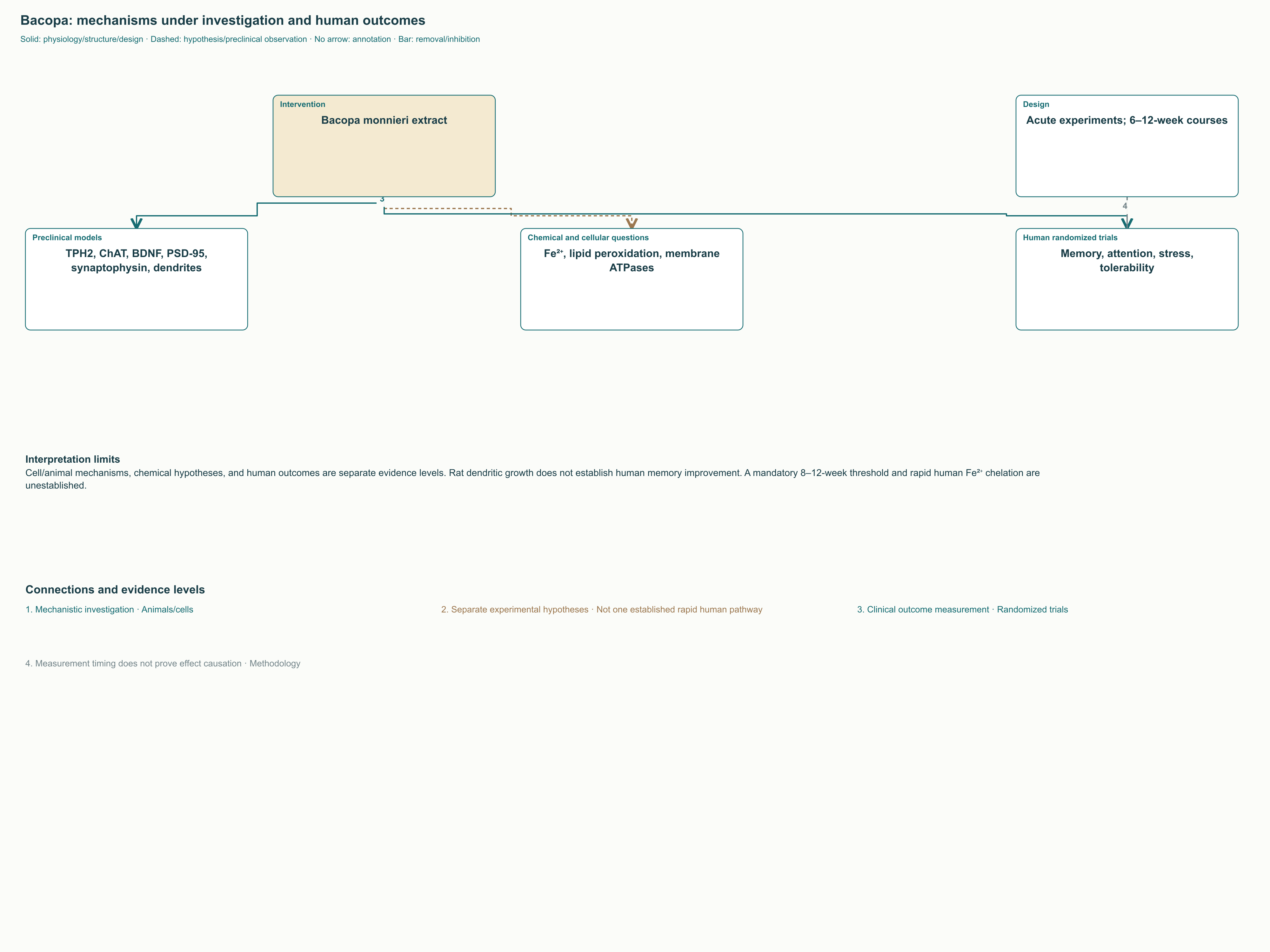
The most interesting feature of this literature is the combination of small human trials and detailed preclinical research. These studies examined serotonin metabolism, cholinergic transmission, dendritic morphology, neurotrophic signaling, and cellular responses to oxidative stress. Such directions help generate hypotheses, but protein changes in a rat hippocampus cannot be read as ready-made instructions for a healthy adult. We will follow each link separately, then compare this physiology with actual trial doses, durations, and limitations.
Phytochemistry: what lies behind the word “bacosides”
The aglycone and sugar chain
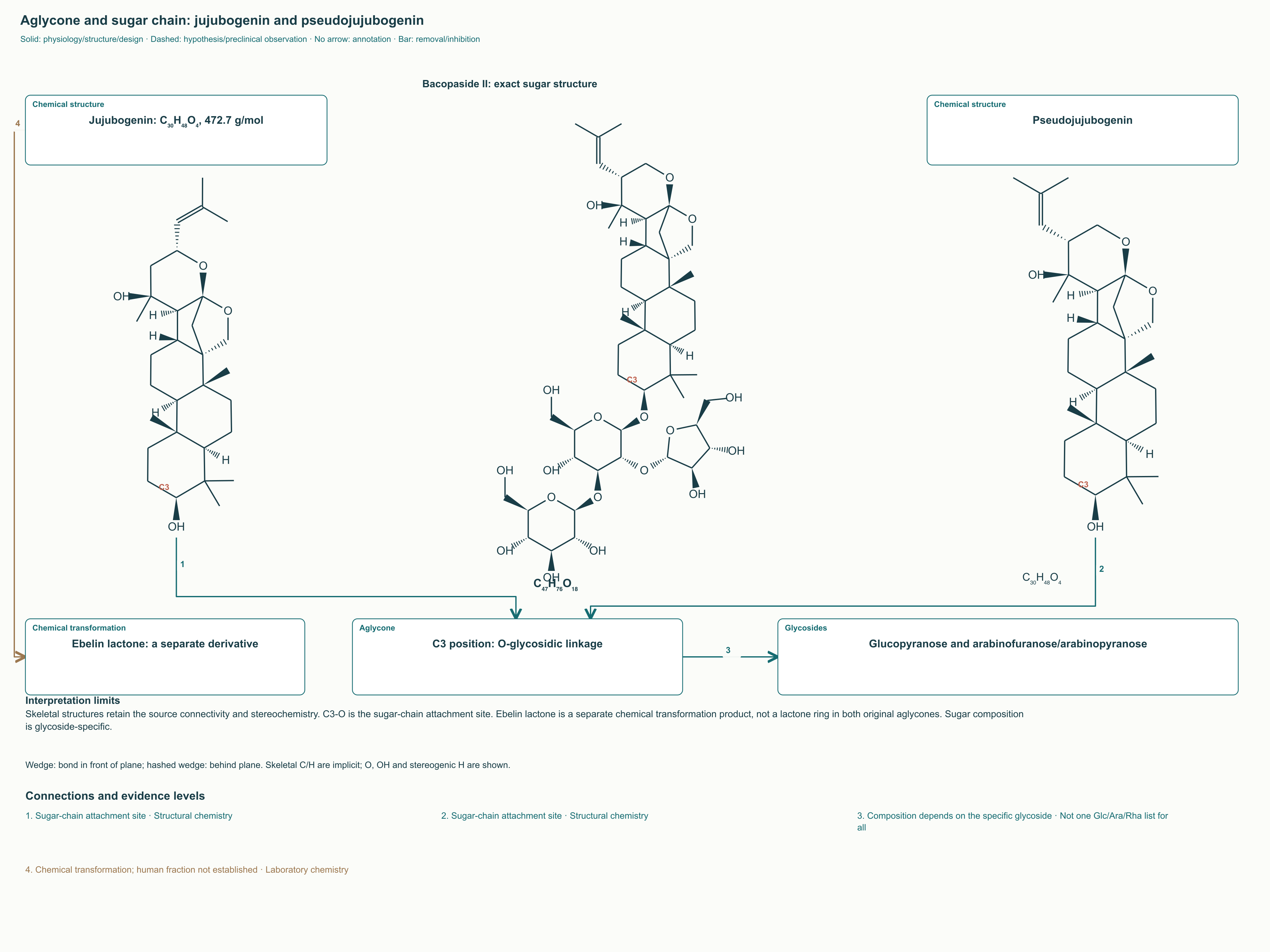
Bacopa’s main analytical markers are dammarane-type triterpenoid saponins. Their structures combine a relatively hydrophobic aglycone with a polar sugar component, so calling them simply “fat-soluble bacosides” is insufficient. Two important aglycone scaffolds are jujubogenin and pseudojujubogenin; their similarity does not mean complete spatial identity. Differences in oxygen-containing rings and stereochemistry can alter protein interactions and behavior during chemical cleavage.
Jujubogenin has the formula C₃₀H₄₈O₄ and a molar mass of approximately 472.7 g/mol. It should not be drawn with an arbitrarily added lactone ring: ebelin lactone is a separate product appearing in chemical-transformation studies. Even a correct calculated lipophilicity value is not a measurement of entry into the human brain. This requires information on the metabolite actually formed, its free concentration, and its passage across biological barriers.
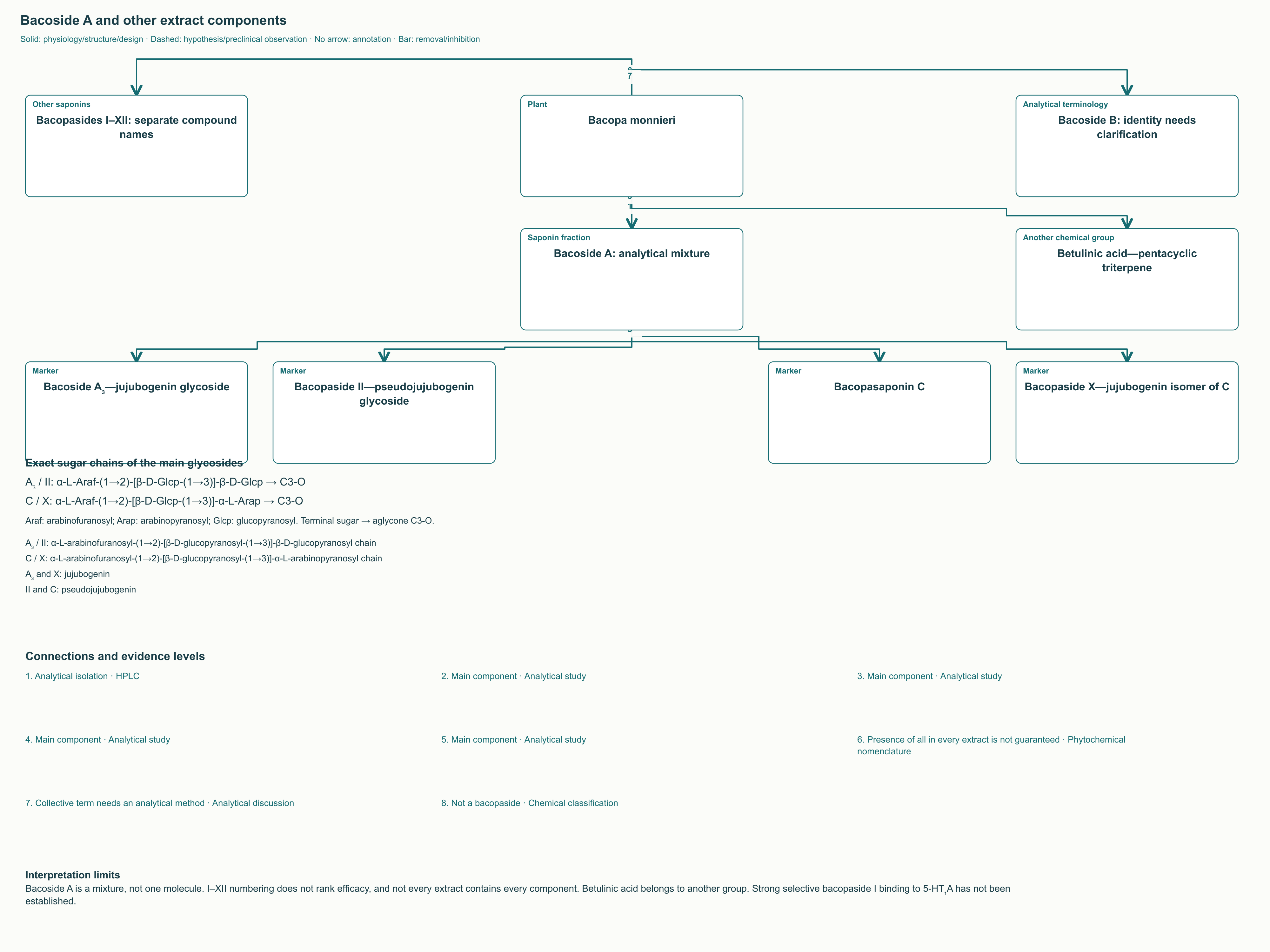
Sugars are generally attached to the aglycone through an O-glycosidic bond, and both their number and exact attachment positions matter. In bacoside A₃, the C3 position of jujubogenin carries a chain with β-D-glucopyranose, an α-L-arabinofuranose branch through a 1→2 linkage, and β-D-glucopyranose through 1→3. These are three sugar residues, not two. The designations α/β, D/L, and “furanose/pyranose” describe different structural properties: configuration at the glycosidic center, stereochemical series, and sugar-ring size.
Bacopaside II contains a similar three-sugar chain on a pseudojujubogenin scaffold, so it too cannot be described by an abbreviated two-residue formula. Bacopasaponin C and its jujubogenin isomer X have an arabinopyranose residue at the corresponding position, with glucose and arabinofuranose branches. The distinction between arabinofuranose and arabinopyranose does not mean replacing arabinose with rhamnose. Complete linkage notation is needed for reproducible identification but does not predict a ranking of these components for human memory improvement.
When reading a phytochemical study, these details identify the compound rather than create a ranking of the “best bacosides.” Equal masses of two glycosides do not guarantee equal recognition by an enzyme or transporter. Conversely, a structural difference does not itself prove different clinical effectiveness of extracts. Absorption, metabolism, and actual exposure remain between chemical analysis and a memory-test result.
Bacoside A is a mixture, not one active substance
In analytical practice, bacoside A denotes a mixture of four main saponins: bacoside A₃, bacopaside II, bacopaside X, and bacopasaponin C. Chromatographic examination of samples from different Indian regions showed substantial content variability. For example, A₃ mass fractions in the plant material ranged from 0.14 to 0.85%, and bacopaside II from 0.12 to 0.69%. These numbers characterize the studied raw material, not every modern capsule.
“Bacoside B” is more complicated than the popular description “the same bacoside A, just an optical isomer” suggests. Its identity and analytical determination were discussed in a dedicated scientific publication, so combined A+B labeling is not an exhaustive composition description. Bacopasides I–XII also appear in the literature, but the Roman-numeral sequence defines neither a single activity scale nor the presence of every substance in each extract. Comparing preparations requires the list of measured markers and their analytical method.
Beyond saponins, phenylethanoid glycosides have been isolated from bacopa, including monnierasides I–III and plantainoside B. Analytical studies also describe flavonoids, including apigenin and luteolin; discussion of quercetin concerns particular chemical profiles rather than a mandatory feature of every batch. Phytosterols such as β-sitosterol and stigmasterol form another group. Betulinic acid is a pentacyclic triterpene and should not be included among bacopasides.
Compositional diversity creates the possibility of combined effects, but “synergy” requires a specific experiment. Several components being present does not itself show that they reinforce each other in the human brain, suppress NF-κB, or provide clinical neuroprotection. Such a hypothesis is tested by comparing the mixture with individual components at comparable concentrations. Until then, a multicomponent extract with incompletely established contributions from individual substances is the more reasonable description.
Absorption, biotransformation, and the blood–brain barrier
What happens to a large saponin molecule
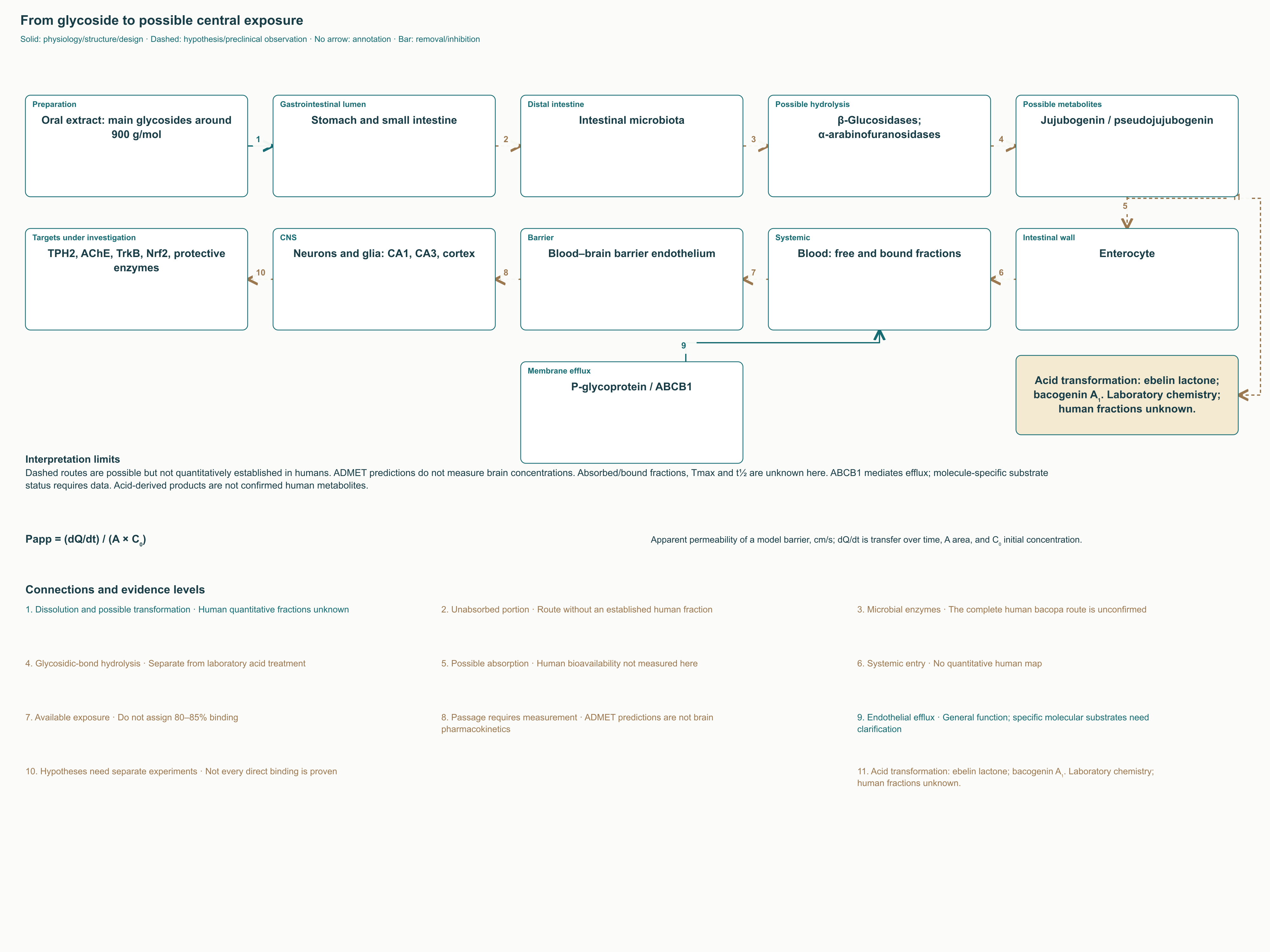
The main glycosides in the bacoside mixture are relatively large, polar molecules, with molar masses around 900 g/mol. This justifies discussing limited passive permeability, but not assigning absolute bioavailability of “less than 2–5%.” An oral extract dose is also not the dose of each glycoside it contains. Composition must first be measured, followed by concentrations of parent substances and metabolites over time.
Lipinski’s rule of five is an empirical guide to the properties of potential oral drug molecules. It considers molar mass around 500 g/mol, lipophilicity, and hydrogen-bond donors and acceptors, but is neither an absolute prohibition on absorption nor a “450 Da blood–brain barrier limit.” Crossing the blood–brain barrier additionally depends on polarity, protein binding, transporters, efflux, and metabolism. A table of calculated descriptors therefore helps select hypotheses rather than prove brain concentrations.
In the intestine, glycosides can undergo enzymatic cleavage, including by microbial glycosidases. β-Glucosidase and α-arabinofuranosidase can act on particular sugar linkages, but an enzyme name does not establish the actual rate of bacoside conversion in humans. The general ability of Bacteroides or Bifidobacterium to metabolize plant substances does not provide an individual bacopa profile. Specific products must be detected, their origins established, and systemic exposure followed.
Acid cleavage during laboratory isolation must not be confused with normal human digestion. Ebelin lactone and bacogenin A₁ were studied as aglycone derivatives, but formation in a chemical test tube does not determine their plasma amounts after a capsule. Even a plausible sequence of “glycoside → aglycone → derivative” may have several competing routes. Professional interpretation starts by distinguishing a chemically possible product from an actually measured human metabolite.
Calculated penetration does not replace human pharmacokinetics
Ramasamy’s study compared compounds using molecular docking, calculated ADMET properties, and laboratory receptor tests. Aglycones and some derivatives appeared more promising than parent glycosides on certain model parameters. However, the study did not measure human brain concentration, half-life, or distribution after ordinary ingestion. Claims of a peak at 4–6 hours, t½ of 18–24 hours, and 80–85% albumin binding lack the necessary direct support here.
The apparent permeability coefficient is written Papp = (dQ/dt) / (A × C₀). Here dQ/dt is the amount crossing a model barrier per unit time, A the area, and C₀ the initial concentration; consistent units give centimeters per second. This measure depends on cell type, monolayer integrity, medium, and experimental conditions. Unsupported Papp values for bacosides and aglycones therefore cannot be presented as measured human blood–brain barrier permeability.
ABCB1, also known as P-glycoprotein, participates in exporting various substrates from cells, including barrier endothelium. However, it is not a universal gate retaining all glycosides and freely passing all aglycones. Involvement of a particular compound requires transport measurements, while altered protein expression can affect concomitant medicines. Transport therefore matters both to proposed central effects and to safety.
Tmax describes the time of a measured concentration maximum, AUC integrated exposure, and t½ the characteristic decline time under a particular kinetic model. None can be reconstructed from a memory-test effect appearing after several weeks. Treatment duration and substance accumulation are different phenomena: effects may depend on network adaptation, behavior, or test practice without prolonged molecular retention. For bacopa, the human route from individual saponins to active central forms remains substantially less certain than advertising diagrams often suggest.
The serotonin system: TPH2, SERT, and receptor differences
Serotonin synthesis and the significance of enzyme expression
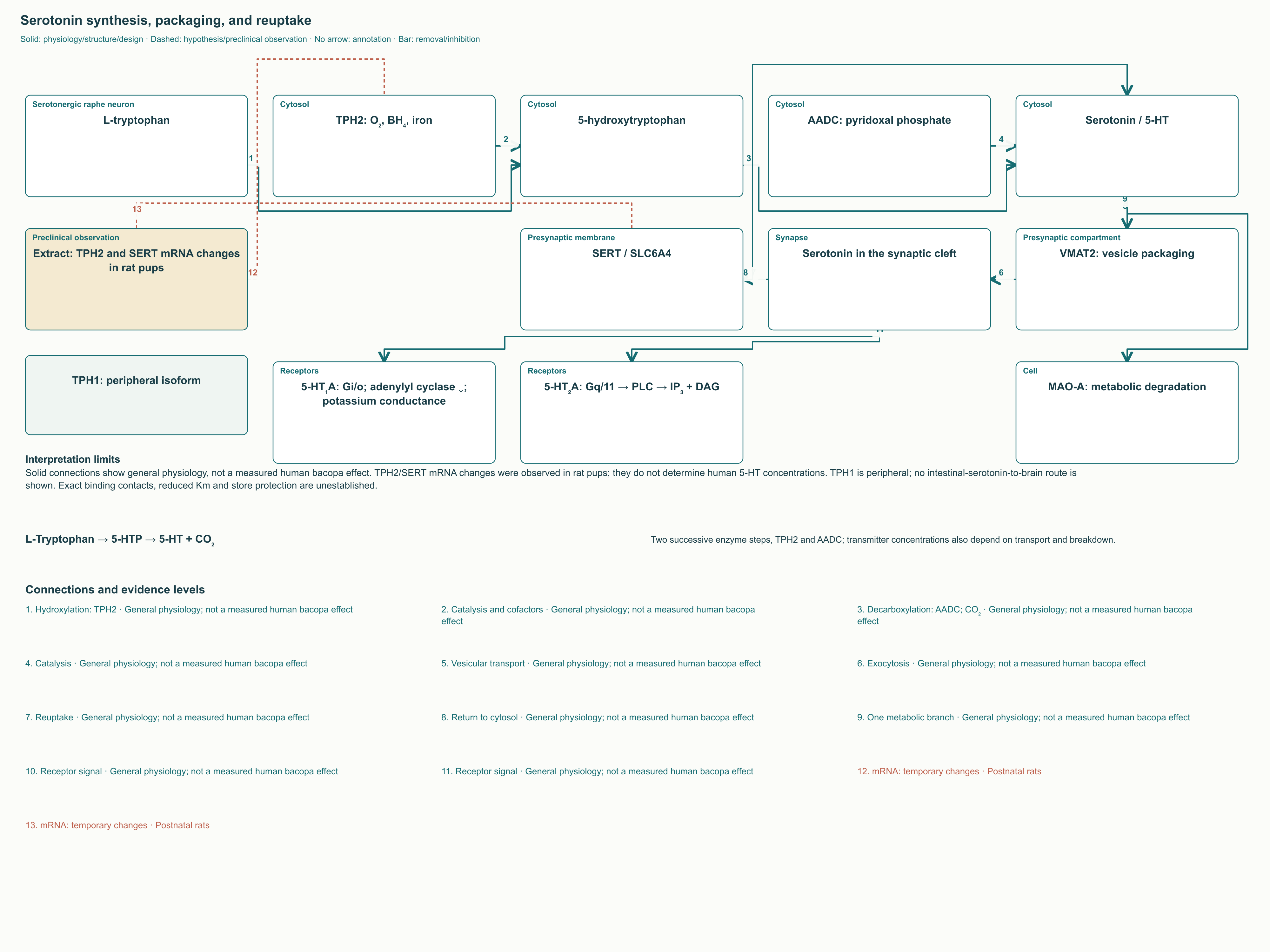
Tryptophan hydroxylase-2, TPH2, plays an important role in serotonergic neurons. It converts L-tryptophan into 5-hydroxytryptophan with oxygen, tetrahydrobiopterin, and iron; aromatic L-amino acid decarboxylase then produces serotonin, releasing CO₂. The second step requires pyridoxal phosphate, a coenzyme associated with vitamin B6. Peripheral TPH1 and neuronal TPH2 must be distinguished: intestinal serotonin is not a simple source of brain serotonin.
In the Charles study, rat pups received 40 mg/kg of extract from postnatal days 15 through 29. Serotonin and dopamine changes accompanied increased TPH2 and SERT mRNA at particular times, but these transcriptional measures returned to control levels by day 53. No significant acetylcholine or glutamate changes were detected in this study. This experiment concerns the developing brain and does not establish an analogous process in adult humans.
mRNA is an intermediate between the gene and the amount of functional protein. Its increase does not prove a lower enzyme Km, stabilization of its tetramer, or enhanced catalysis at every substrate concentration. A computational contact with an amino acid residue is likewise not a functional cellular effect. Specific residue names and claims of direct TPH2 acceleration by a bacoside should therefore be used only with an appropriate primary enzyme study.
After synthesis, serotonin is packaged into vesicles by VMAT2, released, and interacts with receptors. SERT, encoded by SLC6A4, returns some transmitter into the cell; repackaging and metabolic degradation involving MAO-A can follow. Tissue concentration changes do not identify which step became predominant. Increased SERT should not be described as equivalent to an SSRI: these medicines inhibit transport, whereas increased expression is a different intervention.
Why serotonin has no single “calming” effect
The 5-HT₁A receptor couples to Gi/o proteins and can reduce adenylyl cyclase activity while increasing potassium conductance through other components. In certain neurons this promotes hyperpolarization, with presynaptic autoreceptors and postsynaptic receptors having different network consequences. Saying it “suppresses hyperpolarizing currents and therefore calms” reverses this mechanism. Behavioral conclusions require knowing receptor location and how the whole circuit changed.
5-HT₂A and 5-HT₂C receptors belong to another signaling group associated with Gq/11. A typical sequence involves phospholipase C, PIP₂ cleavage into IP₃ and DAG, Ca²⁺ release from intracellular stores, and protein kinase C. These events are not a universal anxiety or motivation scale. 5-HT₂C influences on dopamine circuits may depend on brain region, but cannot be declared an established cause of lethargy after bacopa.
Laboratory binding of ebelin lactone to 5-HT₂A does not make the entire extract an agonist at this receptor. Similarly, docking bacopaside I does not confirm clinically meaningful positive allosteric modulation of 5-HT₁A. Predicted molecular positioning, radioligand displacement, and cellular functional responses must be separated. This sequence prevents an overly short conclusion: “the saponin binds a receptor, so human mood will improve.”
The serotonin hypothesis helps identify needed experiments, but does not yet explain individual supplement responses precisely enough. Neither depression treatment nor guaranteed absence of drug interactions can be promised from one SERT observation in rat pups. For someone taking an antidepressant, combined-use discussion rests on the medicine, dose, and clinical condition. Improved performance on one memory test does not establish the safety of every serotonergic combination.
Cholinergic transmission: synthesis, breakdown, and a measurable target
The complete acetylcholine cycle
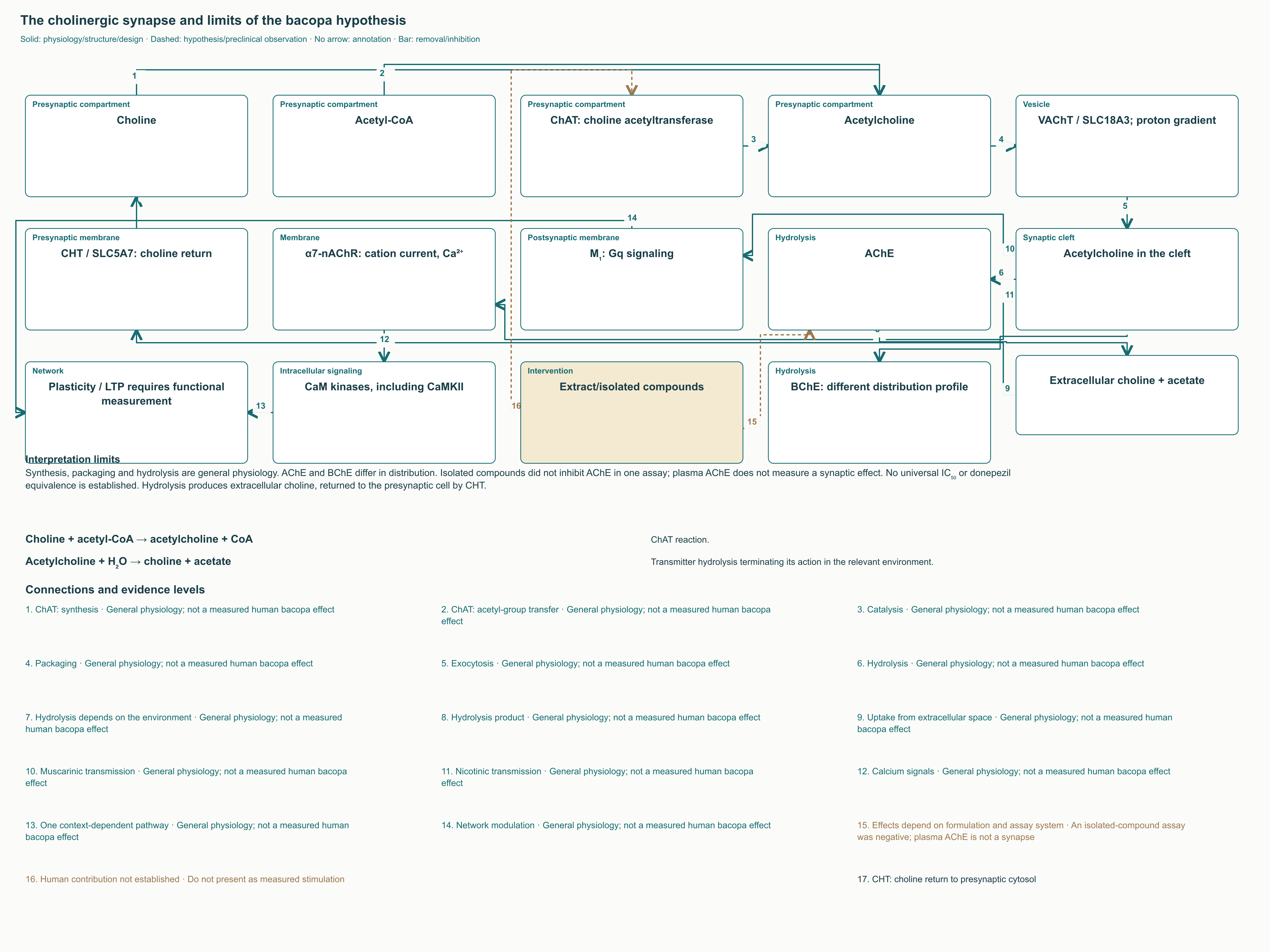
Acetylcholine is formed from choline and acetyl-CoA by choline acetyltransferase, ChAT: choline + acetyl-CoA → acetylcholine + CoA. The vesicular transporter VAChT/SLC18A3 uses a proton gradient to package the transmitter, after which exocytosis releases it. Both muscarinic and nicotinic receptors act postsynaptically. High-affinity choline transport through CHT/SLC5A7 helps resupply the presynaptic cell with substrate.
Acetylcholinesterase rapidly hydrolyzes the transmitter: acetylcholine + H₂O → choline + acetate. Butyrylcholinesterase has a different distribution and substrate-specificity profile, so they are not two identical switches for one synapse. Attention also depends on cholinergic projection locations, network state, and release timing. Simply increasing acetylcholine does not guarantee improvement in every memory function.
The muscarinic M₁ receptor is associated with Gq signaling, whereas the α7 nicotinic receptor is an ion channel. Its activation changes cation conductance, including the calcium component, and depends on cellular context. Increased receptor expression, greater sensitivity, and direct agonism are different mechanisms. They cannot all be called “sensitization” when a study measured only one process.
What is known about cholinesterase inhibition
Calling bacopa a reliable dual AChE and BChE inhibitor requires clarification of composition and methods. In Ramasamy’s study, none of the tested compounds inhibited recombinant human AChE in the assay used. This does not exclude other effects of a different extract, but directly limits the model in which main bacosides always act like a small donepezil dose. A universal IC50 range of 50–85 μg/mL for every formulation is unsupported here.
IC50 depends on substrate concentration, enzyme activity, incubation time, and mixture components. Establishing competitive, noncompetitive, or mixed inhibition requires kinetic data rather than one reduced signal. AChE catalytic residues also cannot be transferred between species using identical numbering. Professional descriptions benefit more from specifying the enzyme system actually studied than from adding unsupported active-site detail.
The Peth-Nui human trial included 60 elderly volunteers with a mean age of approximately 63. They received 300 or 600 mg of extract daily for 12 weeks; working memory, N100 and P300 evoked-potential components, and enzyme activity were examined. The authors described improvements in selected cognitive measures and reduced plasma AChE activity. However, a plasma measure does not measure enzyme occupancy within a specific brain synapse.
Animal findings of increased ChAT or VAChT should not automatically supplement this human study. Increased protein synthesis does not show transmitter release at the right location and time. Behavioral recovery after scopolamine reflects an experimental blockade model, not proven Alzheimer’s treatment. Normal aging, subjective forgetfulness, and disease-related degeneration of cholinergic projections are clinically different situations.
Comparisons with prescribed anticholinesterase medicines must retain these distinctions. Equal effectiveness, “gentleness” without risk, or absence of pronounced cholinergic responses cannot be promised simply because a product is herbal. Combined use with donepezil, rivastigmine, or galantamine requires separate assessment. A molecular hypothesis is no reason to independently intensify or replace prescribed therapy.
The hippocampus and synaptic plasticity: from morphology to function
The trisynaptic circuit and its tasks
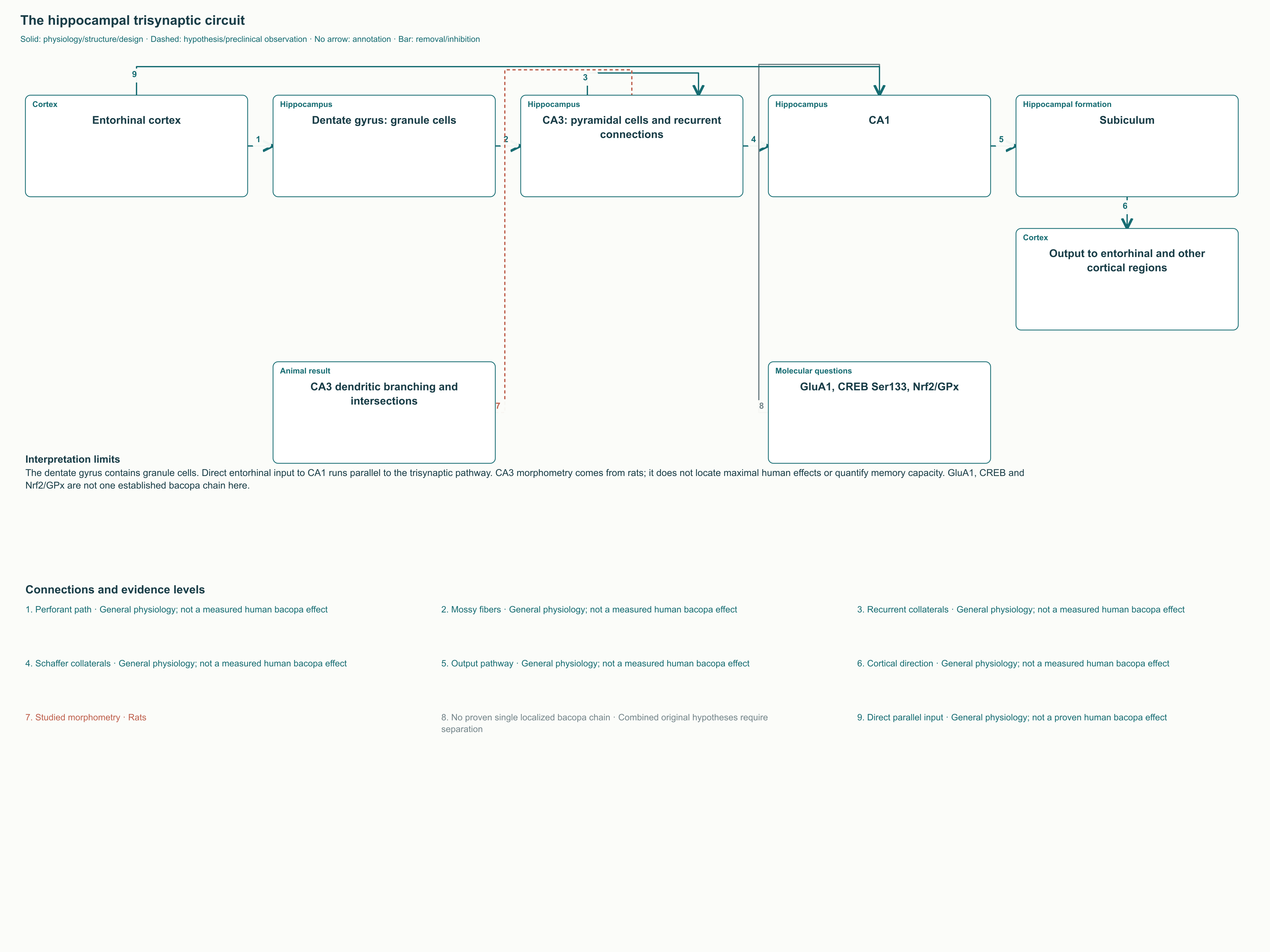
The hippocampus matters for forming and organizing episodic and spatial memory, but is not a single “information store.” In the classic trisynaptic circuit, entorhinal input travels along the perforant path to dentate-gyrus granule cells. Their axons form mossy fibers directed to CA3, while Schaffer collaterals connect CA3 with CA1. Signals then pass to the subiculum and cortical regions; parallel direct and feedback connections do not fit into one linear arrow.
Dentate-gyrus granule cells must be distinguished from entorhinal stellate neurons. Recurrent CA3 connections support discussion of reconstructing a complete representation from incomplete input, while distinguishing similar episodes involves broader dentate-gyrus interactions with other regions. However, more visible dendritic branches do not provide a direct count of “additional memories.” Structural capacity, synaptic strength, and behavioral memory relate more intricately than a comparison of two drawn trees’ density suggests.
Long-term potentiation, LTP, means sustained enhancement of transmission efficiency following particular activity. This functional phenomenon is generally assessed electrophysiologically and cannot be proved by staining alone. AMPA receptor changes, including GluA1, can participate in plasticity but depend on phosphorylation, delivery, and membrane positioning. “More dendrites,” “more receptor protein,” and “stronger LTP” must therefore remain separate results.
What dendrite experiments actually showed
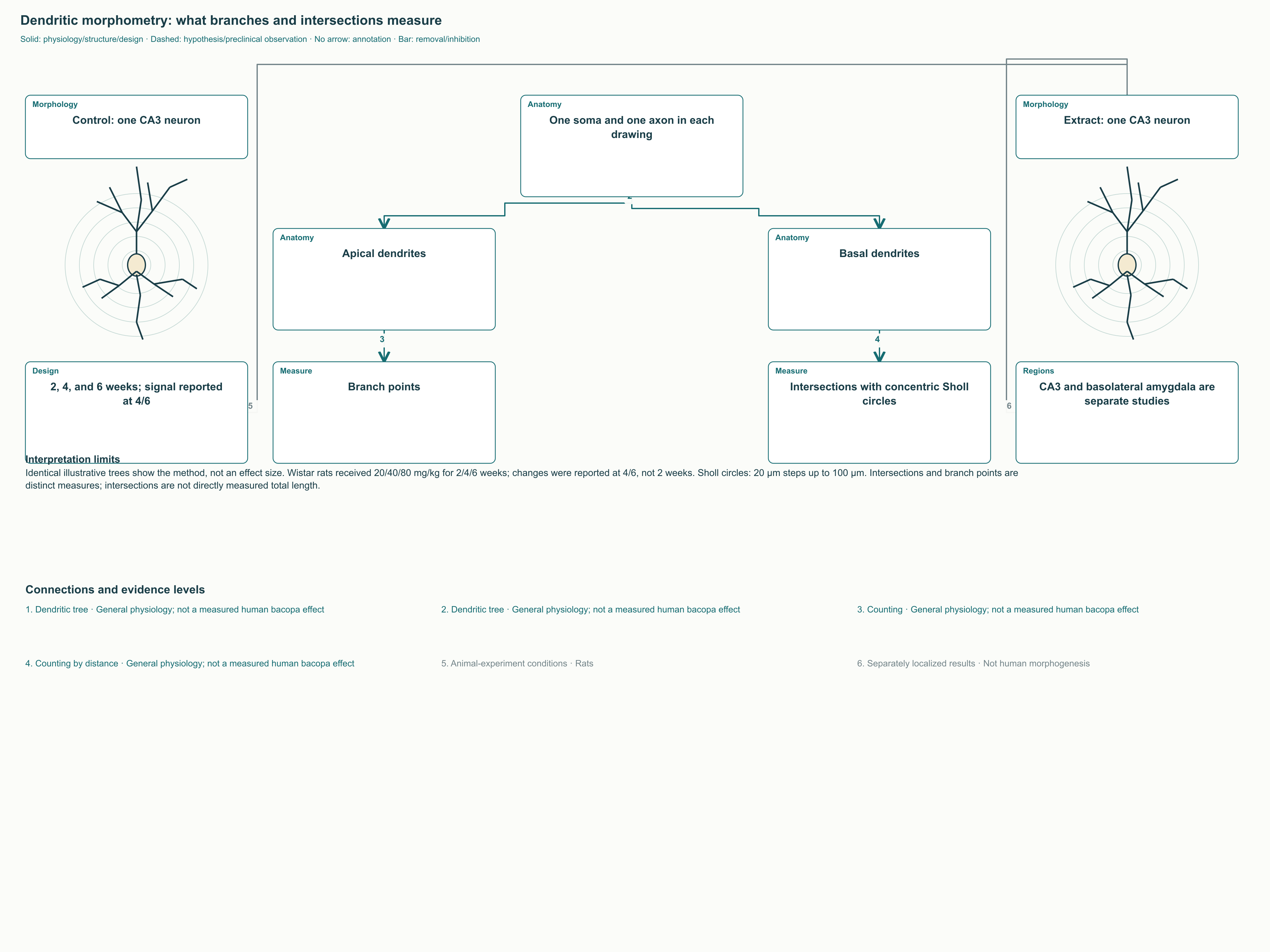
In Vollala’s study, adult Wistar rats received 20, 40, or 80 mg/kg daily for two, four, or six weeks. Individual groups contained eight animals, and CA3 morphology was examined after silver staining and neuronal reconstruction. Significant changes in dendritic branching and intersections were described after four and six weeks, but not two. This differs from an illustration suggesting a universal eight-week course and 40–60% growth.
Sholl analysis draws concentric circles around the cell body and counts dendritic intersections at different distances. Intersection counts characterize spatial complexity but do not automatically equal total dendritic length or functional-contact numbers. Branch-point counts answer another question, while selecting cells for reconstruction can influence results. Percentages from one region and interval therefore cannot be transferred to the whole hippocampus.
A separate related study examined the basolateral amygdala in adult rats, likewise comparing doses and durations. This region participates in emotional salience, learning, and threat responses, but morphological change is not equivalent to reduced human anxiety. Findings in developing animals additionally depend on developmental stage. Amygdala, CA3, and dentate gyrus must be distinguished in text and images: they are not interchangeable samples of “brain plasticity.”
These experiments provide a substantive hypothesis of gradual structural adaptation. They do not establish that the same branches formed in a supplement-taking human or prove irreversible increases in intelligence. Translation would require functional measurements, reliable human outcomes, and a clear connection between them. In practice, long-term use should be assessed through actual memory and tolerability rather than promised hidden dendritic growth.
Synaptophysin, PSD-95, and neurogenesis
Synaptophysin is a synaptic-vesicle protein of approximately 38 kDa, frequently used as a presynaptic marker. PSD-95 is a postsynaptic-density protein of the MAGUK family organizing molecular complexes on the intracellular membrane surface. It interacts with NMDA receptor complexes and participates in AMPA receptor organization through auxiliary proteins, including TARPs. Neither marker alone measures information-processing speed or the number of newly functioning synapses.
A “silent” synapse is a functional concept that cannot be established from increased PSD-95 in a homogenate. Its activation depends on receptor composition, excitation conditions, and recorded transmission. Similarly, increased synaptophysin can reflect different changes in vesicular machinery. Immunoblot findings should therefore be compared with morphology and electrophysiology rather than converted into ready-made proof of synaptogenesis.
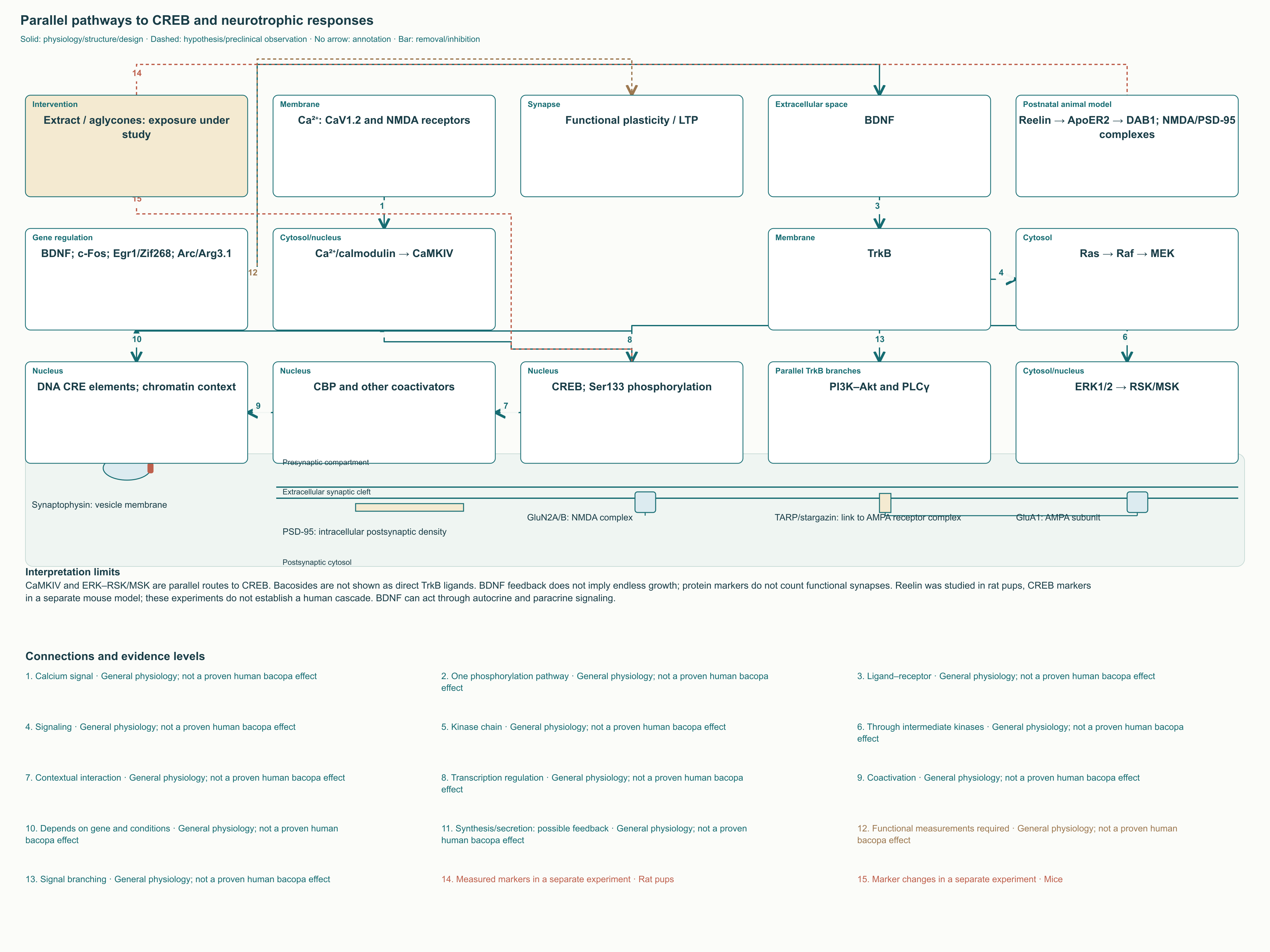
A mouse study administering 200 mg/kg of extract for four weeks examined novel-object recognition, cell proliferation, and immature-neuron markers in the dentate gyrus. The authors also assessed BDNF and CREB phosphorylation. These results concern animals and particular laboratory markers, not measured formation of new functionally integrated human neurons. “Neurogenesis” itself should not replace a description of what was actually counted.
Neurotrophic signaling and protection against oxidative injury
How BDNF, TrkB, and CREB connect
BDNF acts through TrkB and can initiate several intracellular branches, including Ras–Raf–MEK–ERK, PI3K–Akt, and PLCγ. This is a branching system, not one staircase on which every subsequent protein simply increases. ERK signals can reach transcriptional regulators through intermediate kinases such as RSK or MSK. Calcium entering through NMDA receptors and voltage-dependent channels can activate parallel CaM-kinase pathways.
CREB connects different signals with transcriptional regulation, and Ser133 phosphorylation is frequently used as one activation marker. However, this event alone cannot guarantee expression of every plasticity gene: coactivators including CBP, chromatin accessibility, and other regulators matter. BDNF, Arc, Egr1, and c-Fos have their own dynamics and functions. A cycle where BDNF promotes signaling and transcriptional responses alter BDNF does not imply endless self-sustaining “memory amplification.”
In Preethi’s postnatal study, rat pups received CDRI-08 at 80 mg/kg from days 15 through 29. Object recognition, reelin and BDNF promoter methylation, ApoER2 variants, and NMDA receptor-complex interactions with signaling proteins were examined. Changes were consistent with involvement of reelin–ApoER2–DAB1 and postsynaptic complexes. However, molecular–behavioral correlations do not confirm every arrow as an obligatory human causal sequence.
Epigenetic regulation means changing how genetic information is used without necessarily changing DNA sequence. Reduced methylation at a particular promoter site cannot be described as beneficial “reprogramming of the entire genome.” Measuring BDNF after an extract does not prove direct bacoside binding to TrkB. For specialists this distinguishes observed regulation of several markers from assigning a precise receptor target to a molecule.
Neurotrophic signals can support network adaptation, but their increase is not a universal health criterion. Region, age, baseline pathology, and time window matter. Blood analysis likewise does not replace local hippocampal BDNF measurement because sources and regulation differ. Clinical benefit therefore cannot be inferred from this factor’s name or a similar cascade in a diagram.
Oxidative stress: damage chemistry and enzymatic defense
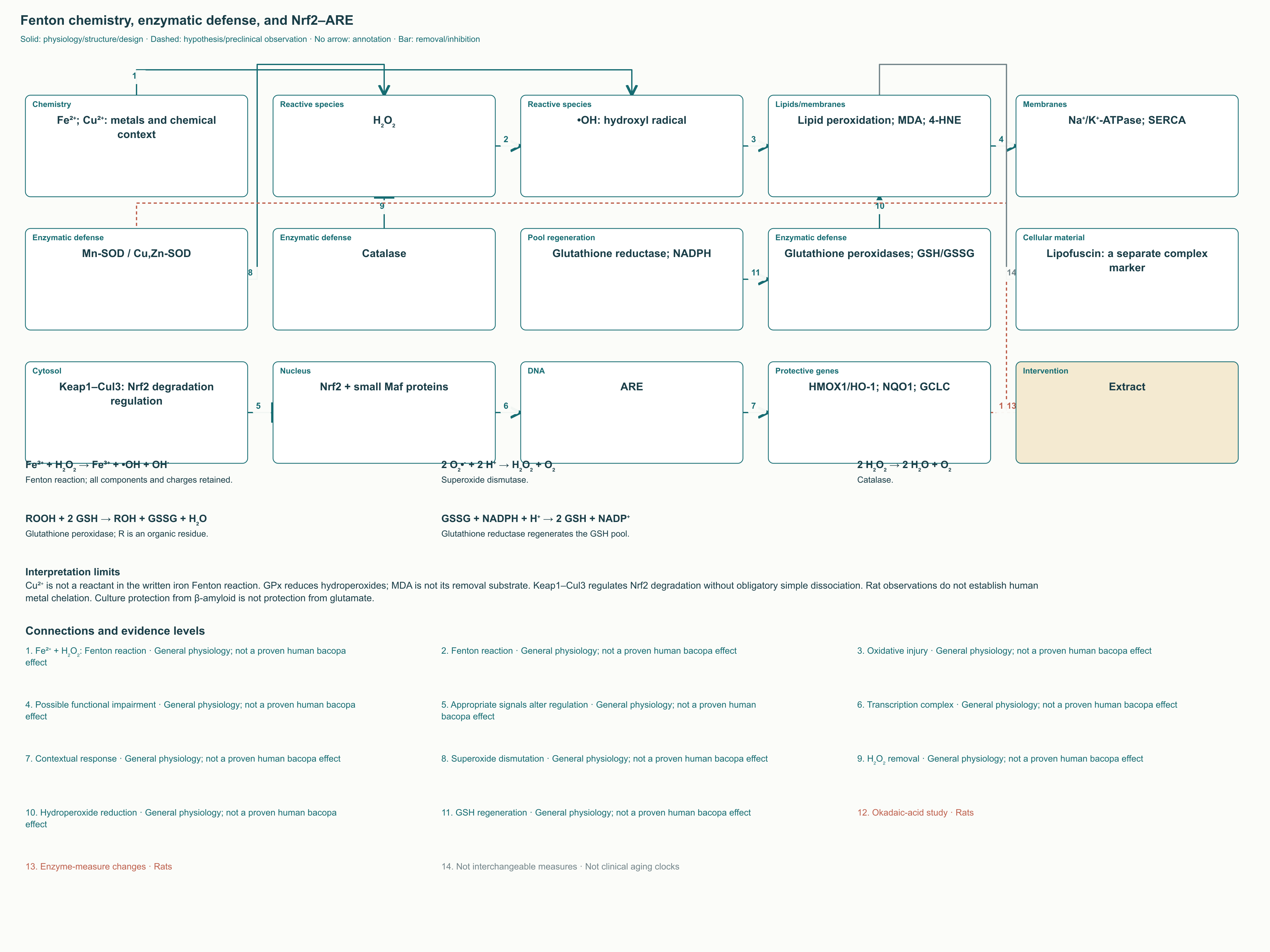
Reactive oxygen species arise in normal metabolism and participate in signaling. Oxidative stress occurs when their generation and control capacities are mismatched, with the specific cellular compartment mattering. Lipid peroxidation can produce malondialdehyde and 4-hydroxynonenal, used as markers or involved in injury. Disrupted membrane proteins, including Na⁺/K⁺-ATPase and the SERCA calcium pump, can further impair ionic homeostasis.
The Fenton reaction is Fe²⁺ + H₂O₂ → Fe³⁺ + •OH + OH⁻. It shows how hydrogen peroxide generates a highly reactive hydroxyl radical under particular chemical conditions. However, test-tube iron binding does not establish safe brain-metal chelation after a capsule. Iron and copper are also physiologically necessary, so “more metal binding is better” is incorrect clinical reasoning.
Superoxide dismutase converts superoxide through 2 O₂•⁻ + 2 H⁺ → H₂O₂ + O₂. Catalase removes hydrogen peroxide: 2 H₂O₂ → 2 H₂O + O₂. Glutathione peroxidases use reduced glutathione, for example ROOH + 2 GSH → ROH + GSSG + H₂O. Returning GSSG to the reduced pool requires glutathione reductase and NADPH; enhancing one enzyme does not mean the entire system improves without limits.
In Bhattacharya’s experiment, rats received 5 or 10 mg/kg of extract, with antioxidant enzymes assessed after 7, 14, and 21 days. Changes in SOD, catalase, and glutathione peroxidase were described after longer intervals in several brain regions. This does not prove universal 30–50% increases in every enzyme among supplement users. A specifically standardized extract and an isolated bacoside should not be considered the same intervention either.
Nrf2–ARE and the limits of neuroprotection
Under ordinary conditions, Keap1 participates in a complex promoting Nrf2 ubiquitination and degradation. Certain stress signals alter this regulation, allowing Nrf2 to accumulate in the nucleus, interact with small Maf proteins, and influence transcription through ARE. Important genes include HMOX1, NQO1, and GCLC, which participates in glutathione synthesis. This model should not be reduced to every antioxidant directly “detaching Keap1” and equally enhancing every protective enzyme.
In a study injecting okadaic acid into rat brain ventricles, bacopa was given at 40 or 80 mg/kg, beginning before the procedure and continuing through day 13. The authors assessed water-maze memory, tissue injury, and Nrf2, HO-1, and GCLC measures. Some disturbances decreased relative to the toxic-exposure group. This demonstrates effects in an experimental model, not prevention of Alzheimer’s disease or ordinary age-related human memory decline.
The injury being prevented also matters. In primary cortical cultures, the extract reduced cell death from a β-amyloid fragment but did not provide comparable protection against glutamate excitotoxicity. Different findings therefore cannot all be called “universal neuroprotection.” Lipofuscin, lipid-peroxidation markers, and stress-response proteins are not interchangeable clocks of brain aging either.
These mechanisms are interesting for hypothesis development and selecting measurements for human trials. They do not establish reduced neural oxidative injury, improved everyday function, or slower disease in a healthy person. If a clinical study did not show a selected biomarker change, this should be discussed directly. A supplement does not gain proven preventive effects from the number of protective cascades investigated in animals.
Human trials: timing, cognitive domains, and effect size
Acute administration and prolonged courses ask different questions
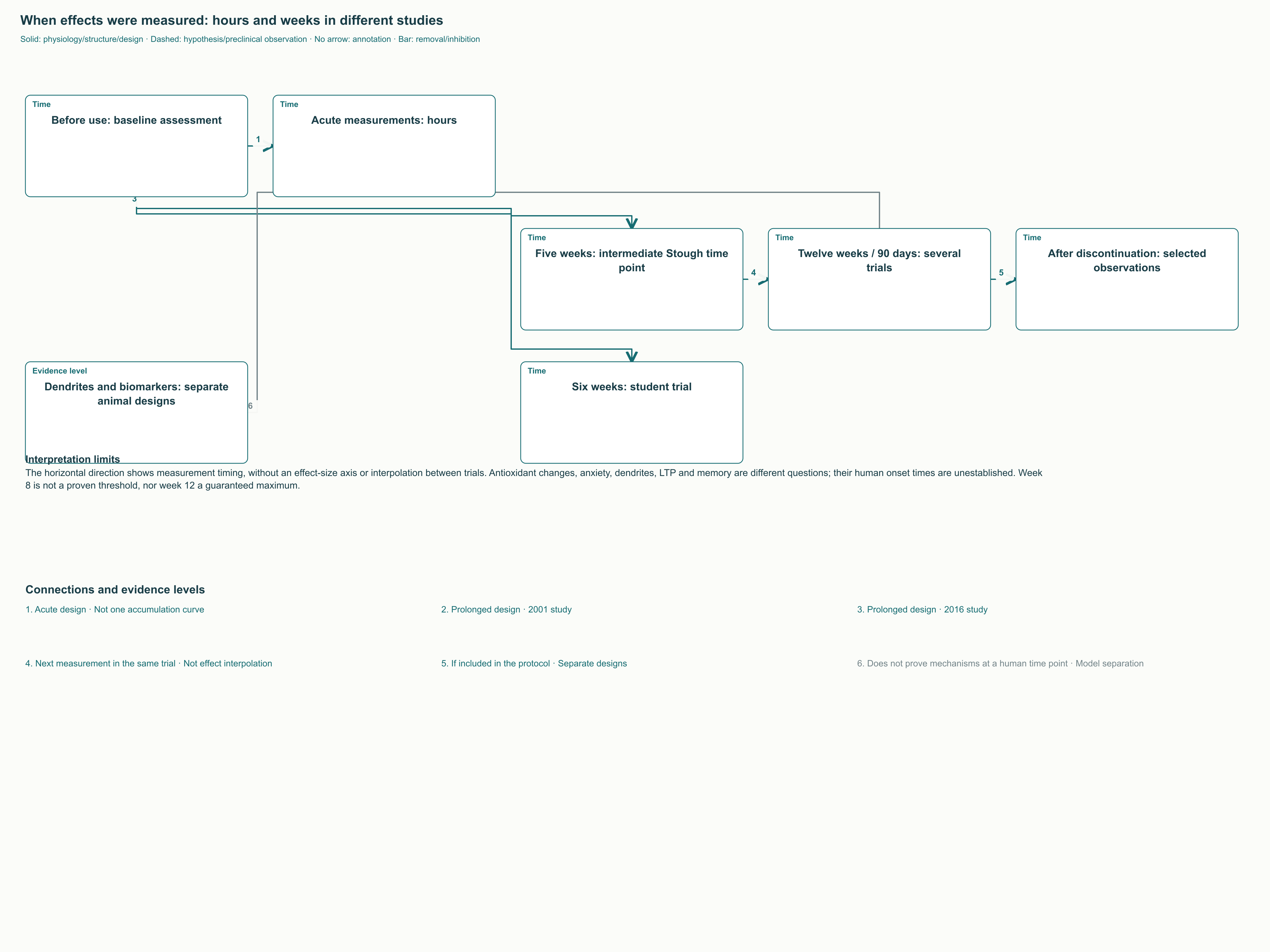
Bacopa is often contrasted with a stimulant: gradual results are expected rather than instant alertness. Most well-known cognitive trials did indeed last weeks or months. However, this does not establish an obligatory biological threshold of “effects only begin after week eight.” Researchers measure selected time points; missing intermediate measurements do not permit drawing a continuous curve of synaptic growth.
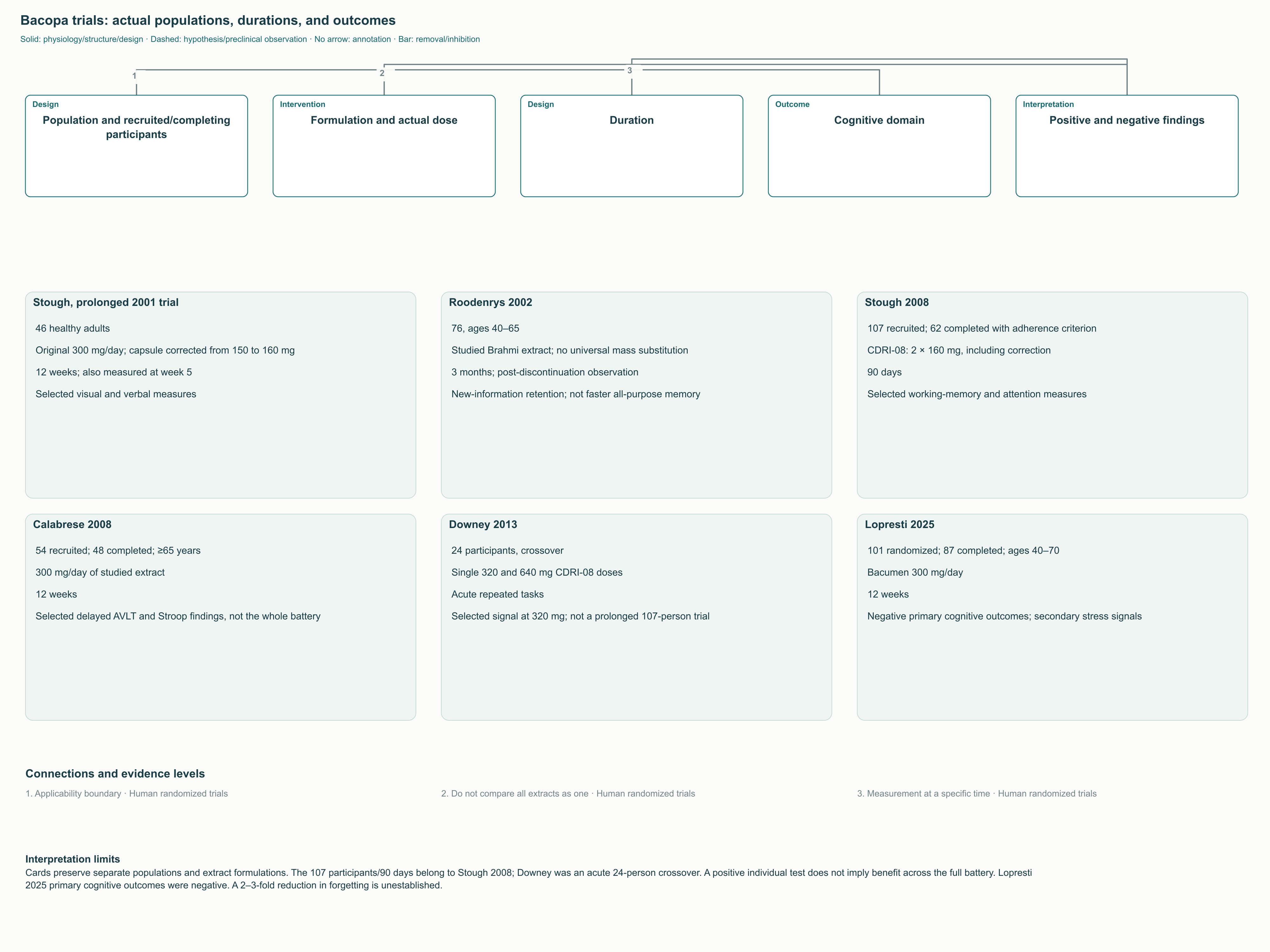
In Nathan’s acute trial, 38 healthy participants received 300 mg of extract or placebo; approximately two hours later, no advantage emerged on the cognitive measures studied. Downey’s different study was a small crossover trial of 24 people comparing single 320 and 640 mg doses. At 320 mg, selected repeated-load battery measures improved, but cardiovascular measures, stress, and fatigue did not show an overall effect. Together these findings do not provide a reliable recommendation to take bacopa before an examination.
Differences in acute results may depend on extract, tasks, timing, and statistical comparison structure. Repeated batteries create practice and fatigue contexts unlike a single memory test. Higher doses also need not produce greater effects. Claims of stimulation or its complete absence should be tied to a specific measurement rather than made absolute plant properties.
Prolonged trials and individual memory functions
Stough’s 2001 study enrolled 46 healthy adults, tested before administration and after five and twelve weeks. The authors described improvements in selected visual-processing, learning, and memory-consolidation measures, most pronounced at the final point. The initial publication stated 300 mg daily, but a subsequent author correction clarified the CDRI-08 capsule mass as 160 rather than 150 mg. Such corrections matter for reproducibility and must not disappear when older research is retold.
Roodenrys’s study of 76 participants aged 40–65 examined three months of use and an additional observation period after discontinuation. Favorable findings concerned primarily retention of new information, whereas initial learning speed did not change. Attention, short-term memory, and retrieval of previously learned material did not improve comparably. “Accelerates learning and reduces forgetting severalfold” therefore combines outcomes that differed in this trial.
Stough’s prolonged 2008 trial recruited 107 people, but 62 completed it meeting the specified adherence criterion. Over 90 days, some working-memory measures improved, including spatial accuracy, alongside selected continuous-attention-task results. An author correction changed each of the two capsules from 150 to 160 mg, so the regimen should be read as 320 mg/day. The extraction ethanol concentration was also corrected to 75%, further demonstrating the importance of precise formulation descriptions.
Calabrese recruited 54 people aged at least 65, of whom 48 completed the trial. Following a six-week lead-in, 300 mg/day was used for twelve weeks, assessing delayed word recall, interference, and other outcomes. Advantages were found on selected AVLT and Stroop measures, but not the entire battery. Absence of effects on some tests and blood pressure matters in understanding what actually changed.
Morgan’s study included 98 participants over 55 who began administration, with 81 completing twelve weeks of 300 mg/day or placebo. Several verbal-learning and delayed-recall measures improved, whereas between-group changes on various other tests were nonsignificant. Gastrointestinal symptoms primarily limited tolerability. This profile supports interest in particular memory functions, not a promise of improving the entire range of cognitive abilities.
Kumar’s six-week study enrolled 60 medical students receiving Bacognize at 150 mg twice daily or placebo. The authors reported improvements on some cognitive tests and observed participants for another 15 days after intervention. This illustrates a shorter course, but a small, specific sample does not establish universal effectiveness in students. The extract’s stated 45% saponins were determined by UV, so cannot be recorded as 45% of the same compounds by HPLC.
Negative results and quantitative interpretation
A later twelve-week Lopresti trial enrolled 101 adults aged 40–70 with subjective memory and attention complaints. With Bacumen at 300 mg/day, 87 completed; no advantages were found on primary verbal-learning, attention, or working-memory outcomes. Their p values were 0.391, 0.713, and 0.610, respectively; secondary stress-response and fatigue measures appeared more favorable. Blood BDNF, malondialdehyde, and AChE activity did not change between groups, while adverse reactions were reported more often with extract.
This does not invalidate every previous trial, since composition and populations differed. However, twelve-week administration cannot be presented as guaranteed memory improvement simultaneously confirming three molecular mechanisms. Secondary stress effects do not turn a negative primary cognitive outcome positive. Prespecified outcomes help avoid changing promises after results emerge.
Kongkeaw’s meta-analysis included nine studies with 518 participants; quantitative pooling used data from 437. The overall choice-reaction-time estimate was nonsignificant; approximately −10.6 ms with a 95% confidence interval of −12.1 to −9.2 ms came from a subgroup of two studies then described as 300 mg/day regimens. Their dose descriptions were later corrected by the authors, so the subgroup label requires historical context. Even statistically persuasive milliseconds do not measure everyday memory or dementia prevention.
Some other pooled results had high heterogeneity, and certain measures relied on only one study. Pase’s review found the most consistent signal for free recall, with positive results in nine of seventeen relevant tests. This describes the distribution of results, not the proportion of people “helped by bacopa.” Numerous tests, small samples, attrition, and manufacturer involvement in some studies remain important limitations.
Clinical question
What the reviewed evidence supports
What remains unconfirmed
Learning and retaining new information
Favorable results on individual tests in several prolonged randomized trials
Universal improvement in every memory type
Working memory and attention
Results depend on test, extract, and trial
Guaranteed effects or a linear dose relationship
Rapid performance enhancement
Several small acute experiments gave different answers
A reliable “examination” regimen
Stress and fatigue
Selected secondary signals exist
Established treatment of anxiety or depressive disorders
Alzheimer’s disease and dementia
Preclinical hypotheses require separate clinical research
Treatment replacement, disease prevention, or course modification
Specialists should relate anticipated benefit to the person’s baseline problem rather than select the most favorable p value. Forgetfulness can accompany sleep loss, anxiety, medicines, or neurological disease, requiring different decisions. Better test scores after a course do not mean the cause was eliminated. Progressive memory problems prioritize clinical assessment rather than more extract.
Extracts, food, and individual tolerability
Comparing CDRI-08, Bacognize, and other formulations
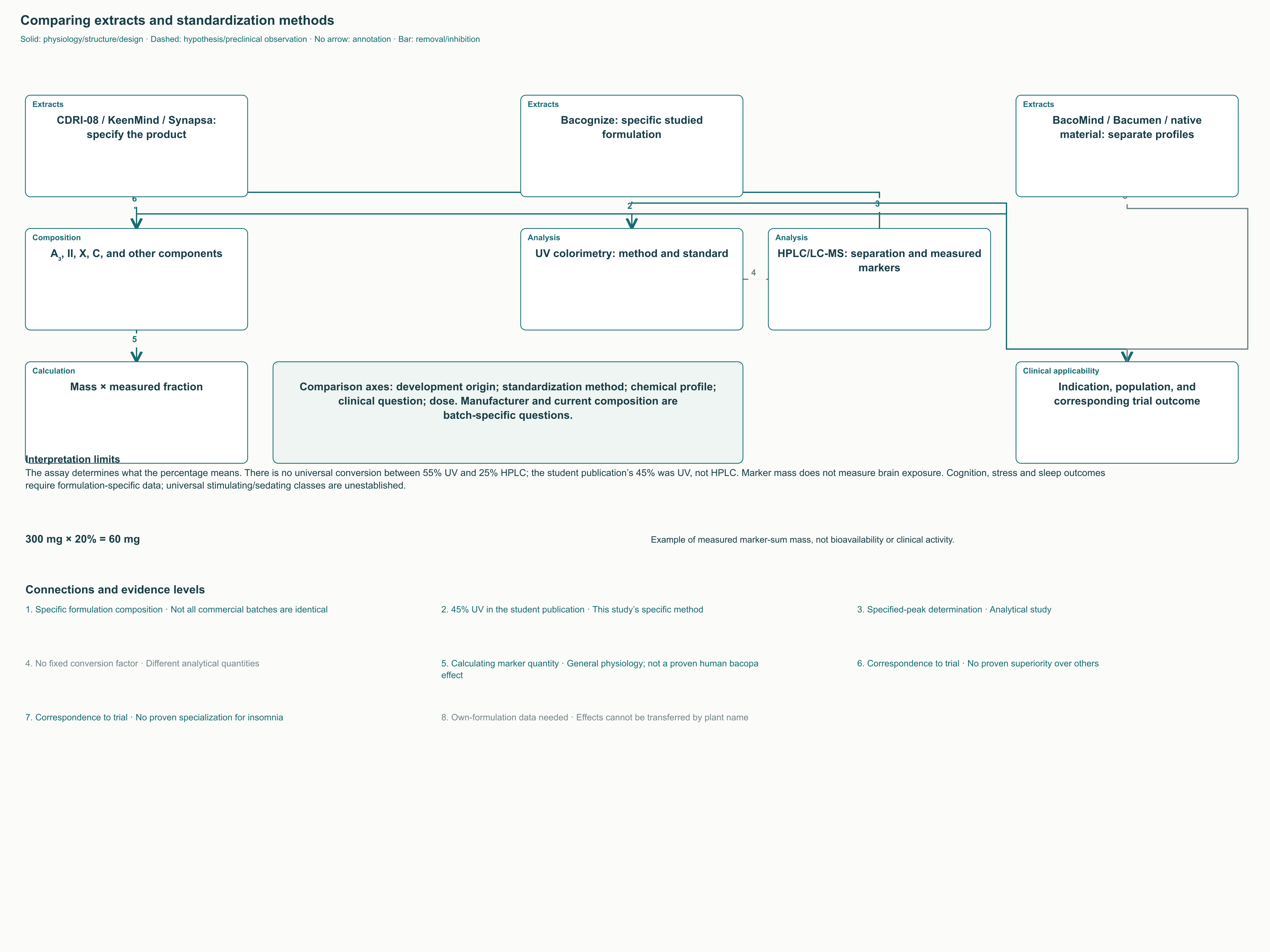
CDRI-08, KeenMind, Synapsa, Bacognize, BacoMind, and Bacumen appear in research and commercial literature. They do not denote one universal preparation with identical concentrations of all components. Even commercial names linked to a shared development still require comparison with the actual formulation studied. Clinical extract name, mass, plant part, and standardization method must be read together.
Native plant material and concentrated extract cannot substitute for each other by equal mass. An extraction ratio, such as the amount of original herb per product unit, does not indicate each saponin’s concentration or prove clinical equivalence. “Standardized” indicates a specified analytical criterion, but criteria can differ. Specialists should ask whether the product reproduces the studied chemical profile, not merely whether its label percentage looks high.
There is no reliable direct basis for dividing formulations into “stimulating for programmers” and “serotonergic for insomnia.” Attributing special 5-HT₁A affinity or established improvements in sleep architecture to Bacognize exceeds the reviewed clinical evidence. A 28-day randomized trial of 100 adults with sleep complaints used 150 mg twice daily, but the primary Bergen Insomnia Scale outcome did not improve more than placebo. Some secondary well-being measures changed, but cannot replace the negative primary result.
Formulation or description
Useful comparison information
Insufficient conclusion
CDRI-08 in prolonged trials
Specific capsule masses and author corrections; approximately 320 mg/day in corrected studies
Every similarly named product is fully equivalent
Bacognize in the student trial
150 mg twice daily for six weeks; 45% saponins by UV in that publication
45% of the same HPLC markers or proven insomnia treatment
Raw-material mass and its specific chemical profile
Replacing 300 mg extract with 300 mg herb
Why UV and HPLC percentages are not interchangeable
Colorimetric methods can measure an aggregate reaction signal expressed relative to a selected standard. Its size depends on reaction chemistry and substances producing similar responses. HPLC separates components, allowing specified peaks to be quantified with appropriate standards and conditions. LC-MS adds mass and fragmentation information but does not remove identification and quantitative-method requirements.
“55% by UV” and “20% of four markers by HPLC” may therefore describe different analytical quantities. No fixed conversion factor can be assigned across batches, nor every UV result declared evidence of poor quality. It is equally incorrect to consider every HPLC value the full sum of “true active substances”: methods measure defined peaks and calibration targets. Proven clinical activity of each marker is a separate question.
Simple arithmetic helps interpret mass, not effectiveness: 300 mg × 20% = 60 mg of the measured substance sum. This applies only to the stated composition and percentage expression. These 60 mg do not automatically equal compounds reaching the brain or allow comparison with a product whose percentage comes from another reaction. An analysis certificate is valuable when method, markers, and units are clearly defined.
Administration with food and the lipid route
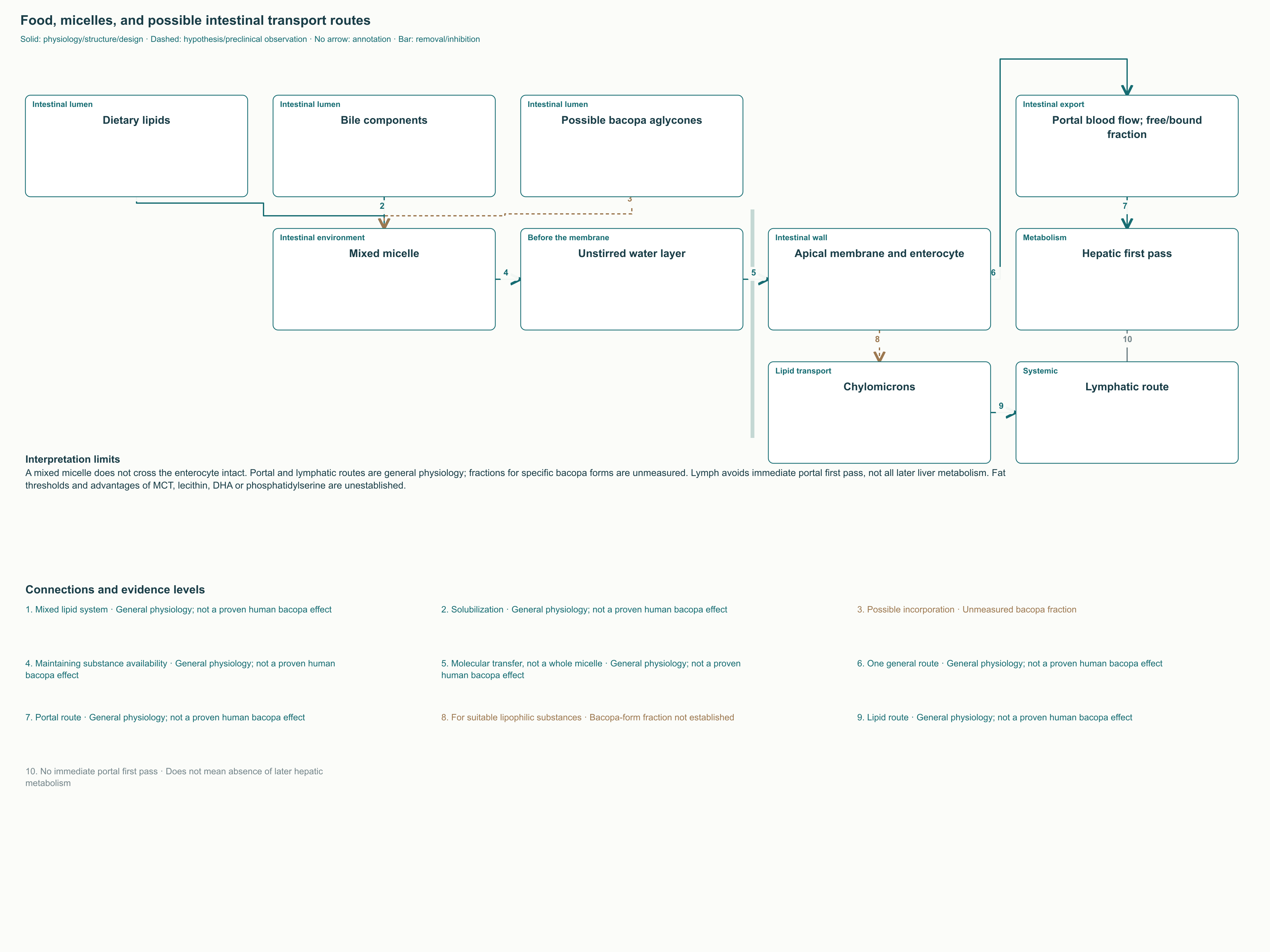
Food can alter dissolution, gastric emptying, bile-component availability, and supplement tolerability. Mixed micelles do help maintain hydrophobic-compound availability in the intestinal environment. However, saponins also have polar sugar components, and human bacopa active-form profiles remain incompletely described. Claiming fasting lowers bioavailability below 5% requires a direct comparison not available here.
Mixed micelles can deliver dissolved substances through the unstirred water layer to enterocyte surfaces but generally do not cross the whole cell as ready-made transport capsules. After membrane crossing, further metabolism and portal-blood export are possible; some lipophilic substances involve a chylomicron-associated lymphatic route. Each route’s importance for specific bacopa metabolites requires measurement. General fat physiology does not prove avoidance of hepatic first pass for every ingested molecule.
A mandatory 10–15 g fat minimum, advantages of 5 g MCT oil, or special “synergy” with lecithin, phosphatidylserine, omega-3, avocado, and egg yolk are not established. These foods and substances have their own properties, but their coexistence does not confirm greater bacopa cognitive effects. Ordinary food can be discussed for tolerability, especially with fasting nausea. A special high-fat meal solely for an unsupported absorption percentage is unnecessary.
Drowsiness, reduced initiative, and compensatory “stacks”
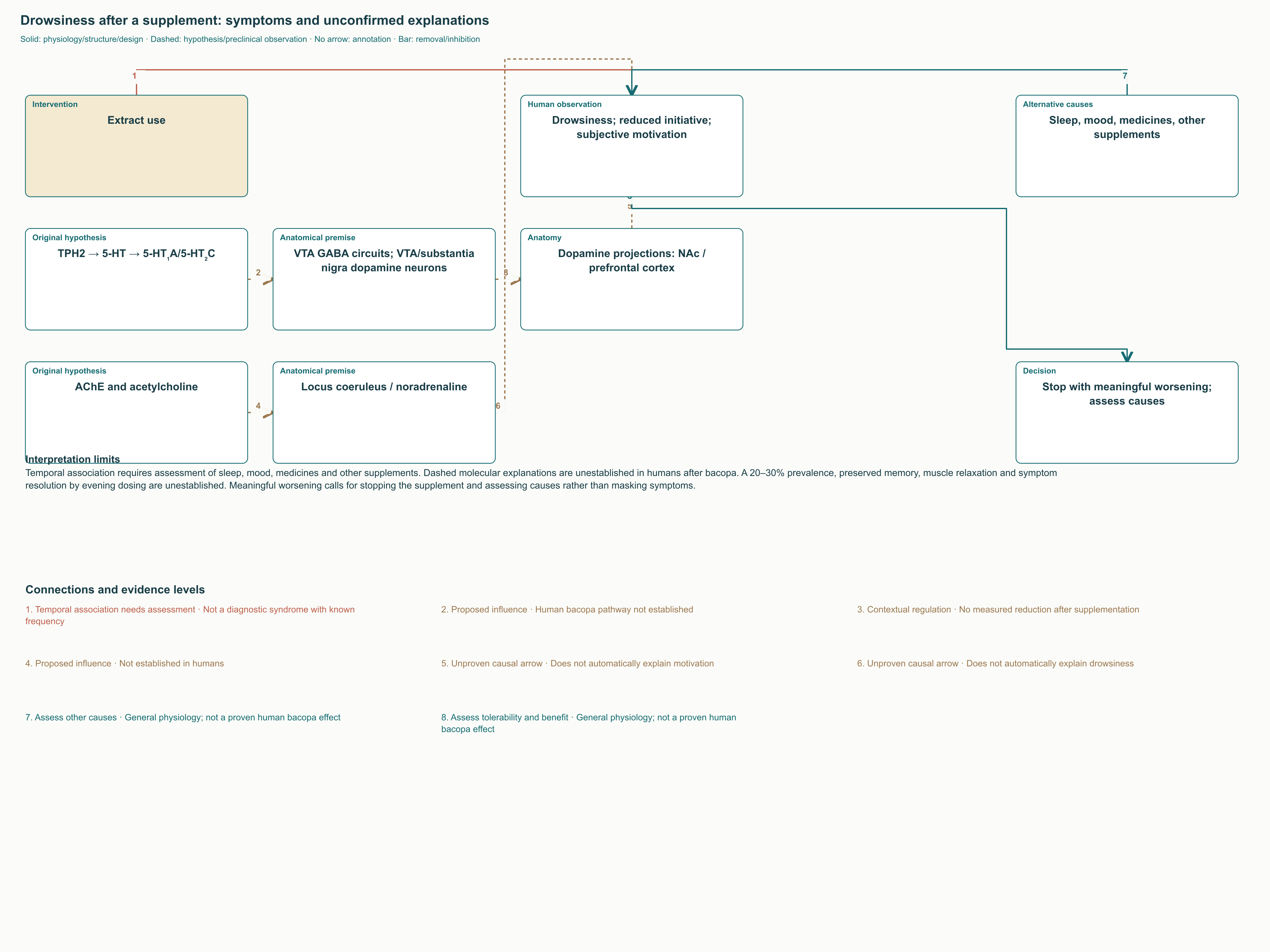
Some people associate supplement use with drowsiness or subjectively reduced initiative. However, “bacopa apathy” is not an established distinct syndrome with a confirmed 20–30% frequency. The reviewed trials provide insufficient grounds to attribute symptoms to one TPH2 → 5-HT₂C → reduced dopamine chain. Subjective experience matters, but explanations require considering sleep, mood, medicines, and other substances.
Motivational circuits include dopamine projections from the ventral tegmental area to the nucleus accumbens and prefrontal cortex. Noradrenergic locus-coeruleus projections participate in wakefulness and responses to significant events. These anatomical connections generate questions, not proof of simultaneous human suppression by bacopa. Central cholinergic transmission is likewise not whole-body “parasympathetic dominance.”
Moving administration to evening is sometimes discussed as an everyday tolerability experiment, but 60–90 minutes before sleep is not an established treatment rule. There is no proven sequence of “evening bacopa → more melatonin → more NREM → no daytime slowing.” If symptoms are noticeable or interfere with work, discontinuation and assessment are generally more informative than masking them with another supplement. Reconsidering use requires reproducible responses and weighing benefit against discomfort.
L-tyrosine, rhodiola, caffeine, and theanine have no confirmed standard compensatory role for this reaction. Tyrosine is a catecholamine precursor, but substrate availability does not guarantee bypassing hypothetical receptor inhibition. Rhodiola is not a reliable clinical MAO-B inhibitor correcting motivation after bacopa, while caffeine may temporarily reduce sleepiness without addressing its cause. Adding these agents complicates interpretation and does not establish the original regimen’s safety.
Safety: human observations and experimental signals
Tolerability and toxicological limits
Human trials most often described nausea, increased stool frequency, abdominal cramps, and other gastrointestinal complaints. Headache, dizziness, and other symptoms are also possible, but frequencies must be assessed in specific studies. In Pravina’s brief open-label study, 23 healthy volunteers received 300 mg/day for 15 days, then 450 mg/day for another 15. No substantial changes in studied laboratory or ECG measures were noted, but this design cannot establish years-long safety.
LD50 means the dose killing half the animals under a particular animal experiment’s conditions. It does not define an acceptable human dose, still less through simple multiplication by 70 kg. Species, extract, duration, and outcome matter fundamentally. A “human equivalent of 15–20 g” confuses interspecies extrapolation with arithmetic and should not support therapeutic-margin claims.
The official LiverTox reference does not associate bacopa with established clinically apparent liver-injury cases and considers it an unlikely cause. However, prospective studies with laboratory data are few. This is not a guarantee for every multicomponent product or absence of risk in liver disease. New symptoms require considering complete composition, material quality, and concomitant medicines.
Reliable evidence is insufficient in pregnancy, breastfeeding, and several vulnerable groups. An adult randomized trial does not grant general permission for children, and a postnatal animal experiment is not a pediatric clinical trial. Serious kidney or liver disease can also alter tolerability and interactions. Here the absence of an appropriate study matters more than a plant’s general “natural” reputation.
Thyroid function, pulse, and the stomach
In Kar’s experiment, male mice received 200 mg/kg of bacopa, and serum T4 increased approximately 41%. This is an animal result at a high dose relative to clinical regimens, not proven increased human free T4. It does not establish treatment of subclinical hypothyroidism. Recommending bacopa instead of thyroid therapy or adding it for that hormonal change is incorrect.
With hyperthyroidism, Graves’ disease, or levothyroxine use, this experimental signal merits discussion with the treating professional. However, claiming that an ordinary supplement is proven to cause thyroid storm also exceeds the evidence. Clinical caution and an established absolute contraindication are different categories. Uncertainty must become neither a benefit promise nor an invented severe-complication frequency.
Cholinergic regulation can affect sinoatrial and atrioventricular nodes, but one AChE diagram does not determine a specific extract’s human effect. In Calabrese’s study, pulse changes were secondary observations, not grounds for a universal 55 beats/min threshold. Sick sinus syndrome, AV block, fainting, or medicines affecting rhythm require clinical assessment of combined use. Prescribed medicines must not be independently discontinued or supplements increased based on watch readings.
Gastrointestinal complaints are better supported than a proposed single explanation through a vagovagal reflex and increased acid secretion. Saponins’ surface-active properties in a chemical system cannot diagnose every post-dose pain mechanism. With active peptic ulcer, severe pain, or bleeding, supplements do not address the main problem. Persistent diarrhea and nausea are not compulsory “adaptation” to endure for memory either.
CYP, P-glycoprotein, and medicines
Ramasamy’s laboratory study used recombinant human CYP enzymes, not patient drug-concentration observations. The extract inhibited CYP1A2, CYP2C9, CYP2C19, and CYP3A4, whereas isolated main bacosides had negligible inhibition in this system. Extract IC50 values were approximately 24–84 μg/mL for these enzymes. This supports investigating mixture interactions, not ready-made predictions of human drug-exposure increases.
Another rat study examined seven days of 31 mg/kg and changes in CYP3A and intestinal P-glycoprotein. Carbamazepine and digoxin exposure increased, by different amounts. These findings do not permit multiplying human drug concentrations by the same factors. They show why absence of direct receptor interaction does not exclude metabolic and transport influences.
Sertraline, fluoxetine, escitalopram, vortioxetine, and other antidepressants require attention to specific metabolism and pharmacodynamics. Theoretical additive serotonergic effects do not establish serotonin-syndrome frequency or justify independent prescribed-dose titration. Similarly, possible interactions with donepezil, rivastigmine, and galantamine are neither guaranteed nor automatically safe. The clinical regimen needs assessment rather than prescribing from a laboratory arrow.
Atropine and other anticholinergics act through specific receptor mechanisms. Claiming bacopa necessarily reduces their effectiveness requires direct combined-use evidence. Unknown interactions should remain identified as unknown while retaining the specific physiological premise. This particularly matters in polypharmacy, where several weak or incompletely studied influences complicate symptom explanations.
Practical decisions: goal, formulation, duration, and stopping criteria
Define the problem first
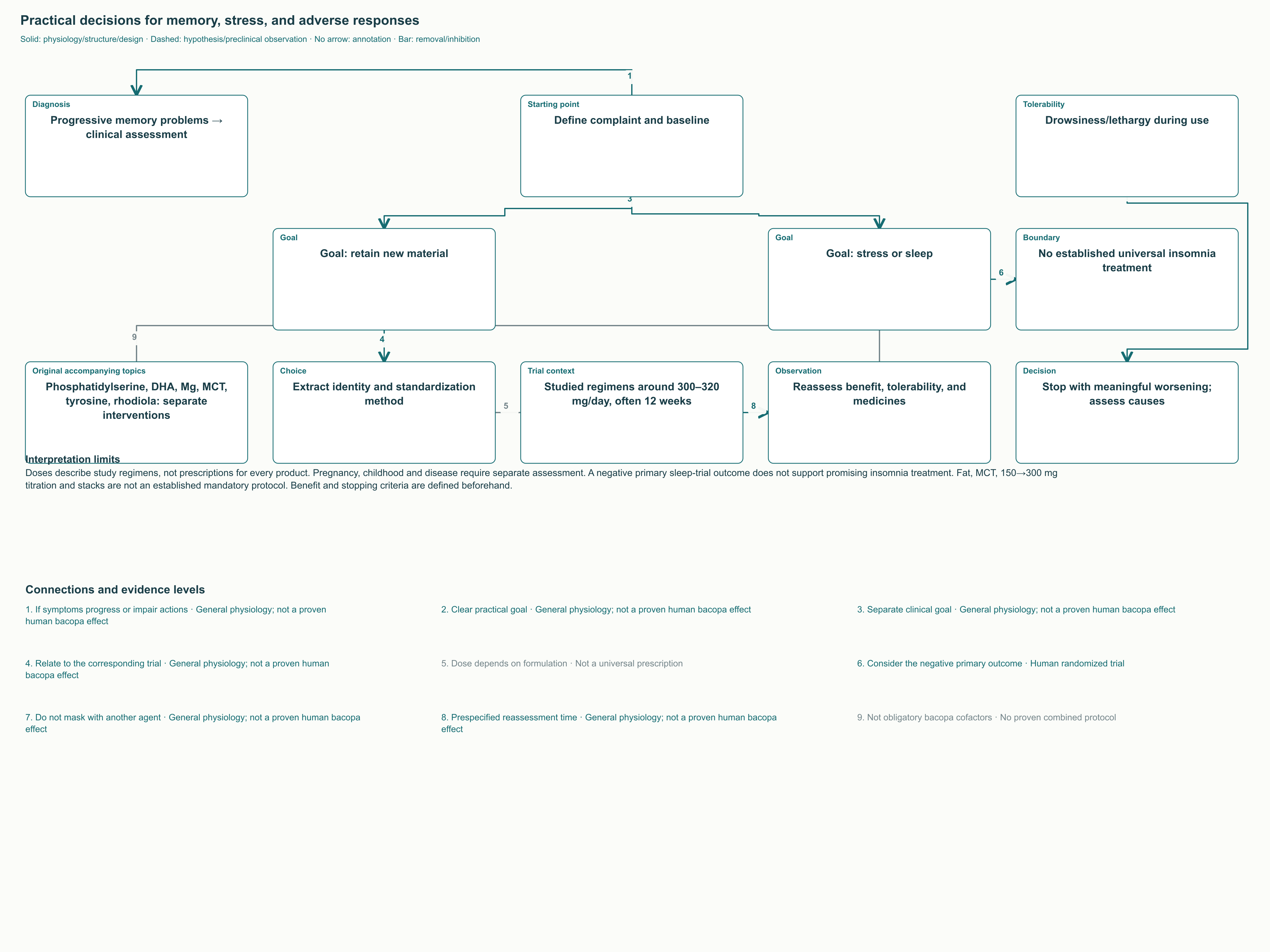
Before discussing a course, distinguish wanting better ordinary learning from a new cognitive symptom. Progressive forgetfulness, interference with daily actions, or behavioral changes require investigation of causes. Even milder complaints warrant considering sleep, mood, alcohol, medicines, and workload. Supplements must not become an explanation closing the diagnostic question in advance.
For “better retention of new material,” discussion rests on prolonged trials of particular extracts. Actual regimens often used 300–320 mg/day for approximately twelve weeks, but this is not universal across standardizations. A studied extract cannot be replaced by a “50%” product without understanding method and composition. Set reassessment timing beforehand, separating early tolerability from possible memory changes over weeks.
“Reducing stress and improving sleep” requires another assessment. A negative sleep trial and secondary stress findings do not establish bacopa as treatment for insomnia or anxiety disorders. Magnesium, phosphatidylserine, and DHA are not proven obligatory cofactors. They may have independent applications, but do not confirm a proposed multicomponent course.
For drowsiness-prone people, baseline symptoms and supplement responses matter more than an automatic “evening protocol.” Two weeks at 150 mg followed by escalation is not established specific apathy prevention. Reduced initiative, performance, or well-being should not be compensated with tyrosine, rhodiola, and stimulants before causes are understood. Meaningful adverse responses can outweigh small test gains.
Assessing benefit without self-deception
Repeating the same test usually improves familiarity, so higher home scores do not equal supplement effects. Sleep, study workload, and expectations may also change. Practical observation benefits from choosing a specific function, such as retaining learned material or counting genuinely disruptive forgotten actions. This criterion should be clear before starting rather than selected after another goal failed to change.
Discussions should consider baseline level, expected benefit size, and alternatives. A small screen-reaction change can be statistically interesting but almost imperceptible professionally. No effect does not prove the need for a higher dose or another “stack.” It may mean this intervention offers insufficient benefit in this situation.
Bacopa exemplifies a substance whose preclinical detail substantially exceeds clinical-prescribing precision. Chemical diversity and several positive trials support further investigation of particular memory functions. However, human active-metabolite routes, obligatory mechanisms, persistence of everyday effects, and long-term safety remain incompletely established. Specialists’ working decisions should retain this uncertainty and place measurable benefit above an attractive molecular story.
FAQ
After how many weeks will bacopa definitely improve memory?
There is no obligatory timing or guaranteed effect. Several trials lasted approximately 12 weeks, but findings depended on extract, population, and test; negative primary cognitive outcomes exist.
Can standardized extracts be substituted by bacoside percentage?
No; a percentage alone is insufficient. Measurement method, markers, mass, and extract profile are necessary; UV and HPLC may describe different quantities.
Must 15 g of fat accompany the capsule?
No reliable human evidence establishes this threshold. Ordinary food may help tolerability, but precise food effects on active-form exposure remain uncertain.
Does dendritic growth prove improved human memory?
No. These morphological results were obtained in animals; branching, functional transmission, and everyday human memory are different outcomes.
Should drowsiness be compensated with tyrosine or rhodiola?
No standard regimen is confirmed. Noticeably worse well-being is better addressed by stopping and assessing causes than adding substances to mask symptoms.
Can bacopa treat hypothyroidism?
Increased mouse T4 is not a human treatment. Thyroid disease or hormone use requires discussion with the treating professional.
Is it safe with an antidepressant or donepezil?
The clinical magnitude of many interactions is unknown. Laboratory and animal signals require assessment of the specific regimen, not independent prescribed-dose changes.
Does bacopa replace Alzheimer’s treatment?
No. The reviewed evidence does not establish treatment replacement, dementia prevention, or disease-course modification.
Is persistent neurogenesis proven in adult users?
No. Proliferation and immature-neuron markers in mice do not establish new functionally integrated neurons in humans.