
Phosphatidylserine: membranes, cortisol and clinical evidence
A detailed examination of membrane asymmetry, PKC, synaptic signals and the HPA axis, distinguishing cellular models from human trials. PS formulations, memory and exercise findings, doses and safety limitations.
Phosphatidylserine, or PS, connects two different areas of science: cellular membrane organisation and studies of dietary supplements for memory and the stress response. In membranes, this lipid participates in positioning signalling proteins, maintaining bilayer asymmetry and recognising cells to be removed. Some human trials have found changes in particular memory measures or the hormonal stress response, but results depended on formulation, population and task. Professional use of these findings requires tracing the entire path from molecule to measured outcome: the function of a cell’s own PS does not yet establish the action of an ingested supplement.
The PS molecule: charge, fatty acids and the membrane environment
Phosphatidylserine is a glycerophospholipid: a glycerol backbone carries two fatty acid chains and a phosphate group linked to L-serine. The terms sn-1 and sn-2 identify chain positions; 18:0 means 18 carbon atoms without double bonds, while 22:6 n-3 denotes docosahexaenoic acid, DHA. At physiological pH, phosphate and serine’s carboxyl group are negatively charged and the amino group is positive, producing an overall charge of approximately −1. A positive group does not make the entire molecule electrically neutral: the resulting negative charge helps create the electrostatic environment of the membrane’s inner surface.
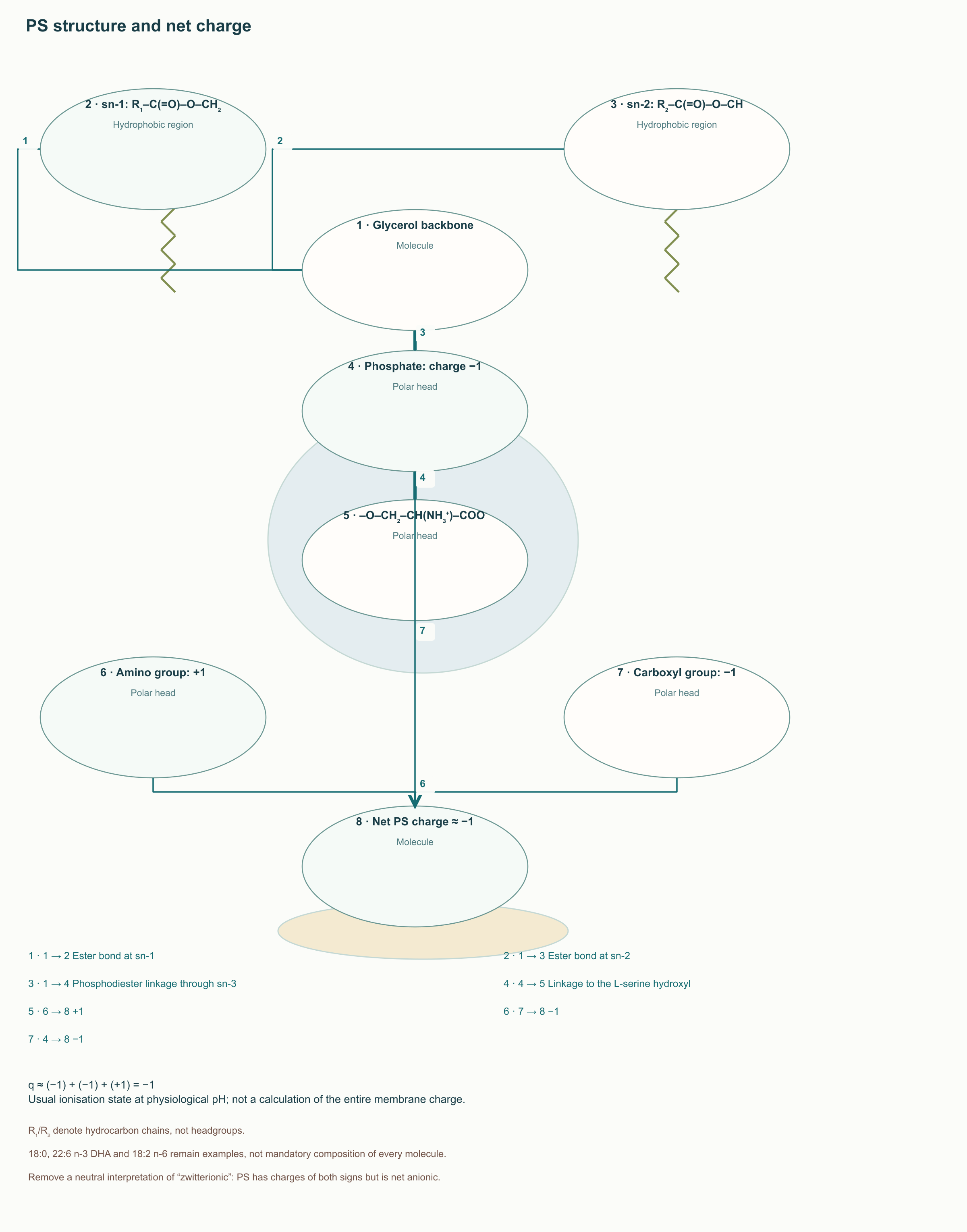
The polar head faces water, while hydrocarbon chains organise the bilayer’s hydrophobic region. Their length and unsaturation affect lipid packing and interactions with membrane proteins, so an identical PS head does not mean complete physical identity among its molecular species. In neuronal models, DHA-containing substrates favour accumulation of particular PS species, but composition depends on tissue, age, animal species and the membrane fraction studied. Frequently quoted percentages of “PS in the brain” cannot become a standard for the entire nervous system or the inner leaflet of every synapse without a specified denominator.
Cells synthesise their own PS mainly by headgroup exchange in the endoplasmic reticulum. PSS1 primarily uses phosphatidylcholine, PC, replacing choline with serine, while PSS2 mainly uses phosphatidylethanolamine, PE; purified enzymes do not have completely nonoverlapping specificity. In mitochondria, PS decarboxylase, encoded by PISD, converts PS into PE and releases CO₂. This exchange connects different organelles’ membrane pools and explains why intake of one phospholipid cannot be described as simply filling ready-made “empty spaces” in a synapse.
Bilayer asymmetry: flippases, ABC transporters and scramblases
The two plasma membrane leaflets differ in lipid composition: PC and sphingomyelin are predominantly outside, while PS and much of PE are on the cytosolic side. Transport proteins maintain this distribution, rather than spontaneous molecular arrangement alone. P4-ATPases ATP8A1 and ATP8A2, complexed with accessory CDC50A, move aminophospholipids towards the inner leaflet using ATP hydrolysis. ATP8A2 functions are particularly relevant to neural tissue, but localisation, substrate selectivity and consequences of disrupted transport depend on the individual cell.
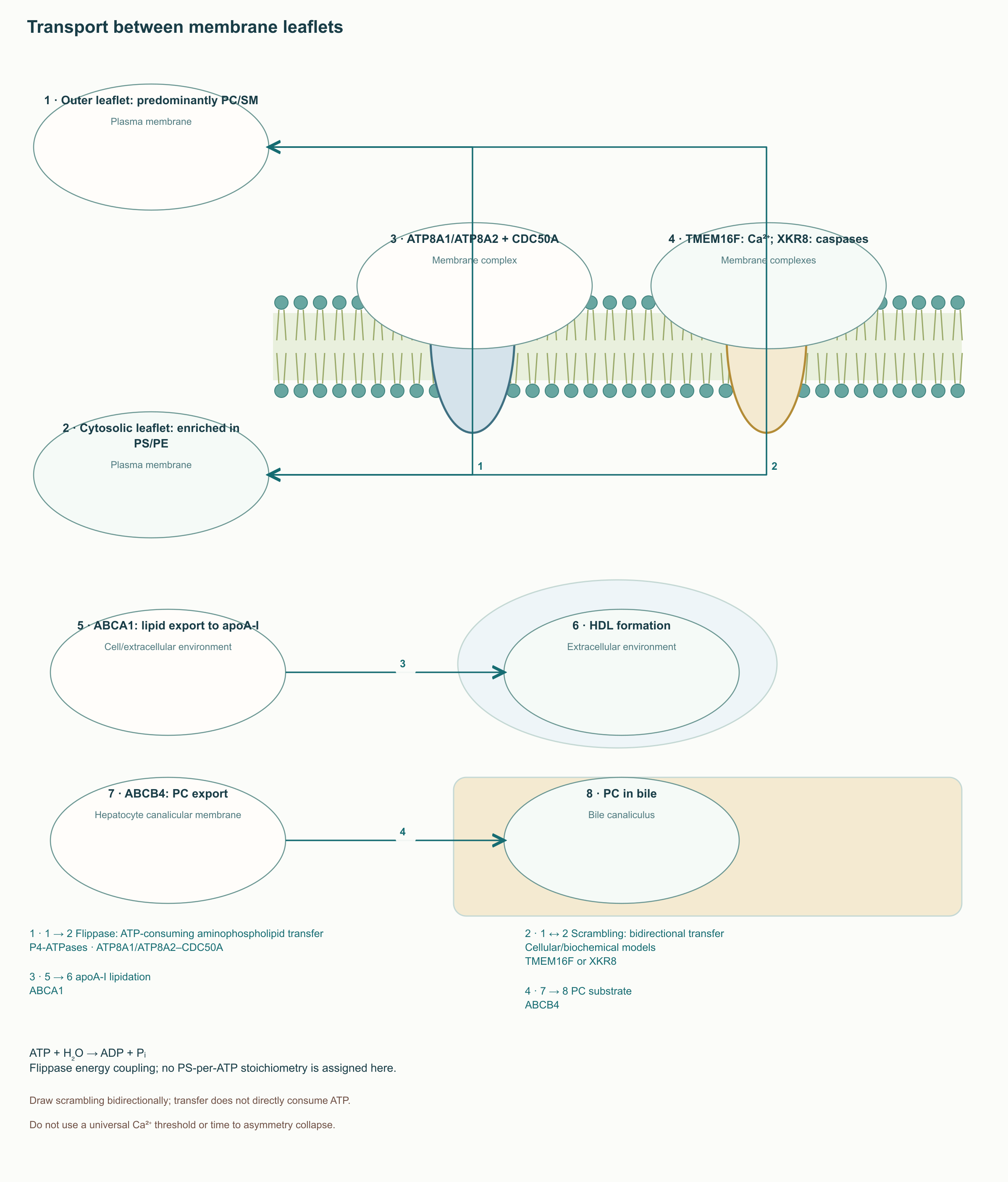
“Floppase” means transport in the opposite direction, but grouping all ABC proteins into a poorly selective PS pump is inaccurate. ABCA1 participates in lipid transfer to apolipoprotein A-I and HDL formation; its expression also changes exposure of particular phospholipids in cellular experiments. ABCB4 has another specialised task: exporting PC into bile. An arrow reading “ABC → external PS → HDL” therefore conceals differences in both substrates and cellular compartments.
Scramblases redistribute lipids bidirectionally without directly hydrolysing ATP, but respond to different signals. TMEM16F is associated with increased cytosolic Ca²⁺, whereas apoptotic activation of XKR8 depends on caspase cleavage. During apoptosis, caspases also disable ATP11A and ATP11C, well-studied flippases in this process that cannot arbitrarily be replaced by ATP8A2 in a diagram. There is no shared calcium threshold or time to complete scrambling for all cells; interpretation requires the experimental model and conditions.
PS outside the cell: recognition, phagocytosis and coagulation
Cytosolic PS creates a negatively charged surface that can recruit proteins containing positively charged regions and specific lipid-binding domains. When PS moves outside, neighbouring cells recognise the membrane differently. In apoptosis, this signal contributes to cell removal, but PS positivity alone does not demonstrate irreversible death: external PS also appears during platelet activation. In platelet membranes it promotes assembly of coagulation complexes, so the meaning of the same molecule depends on its location and the cell’s state.
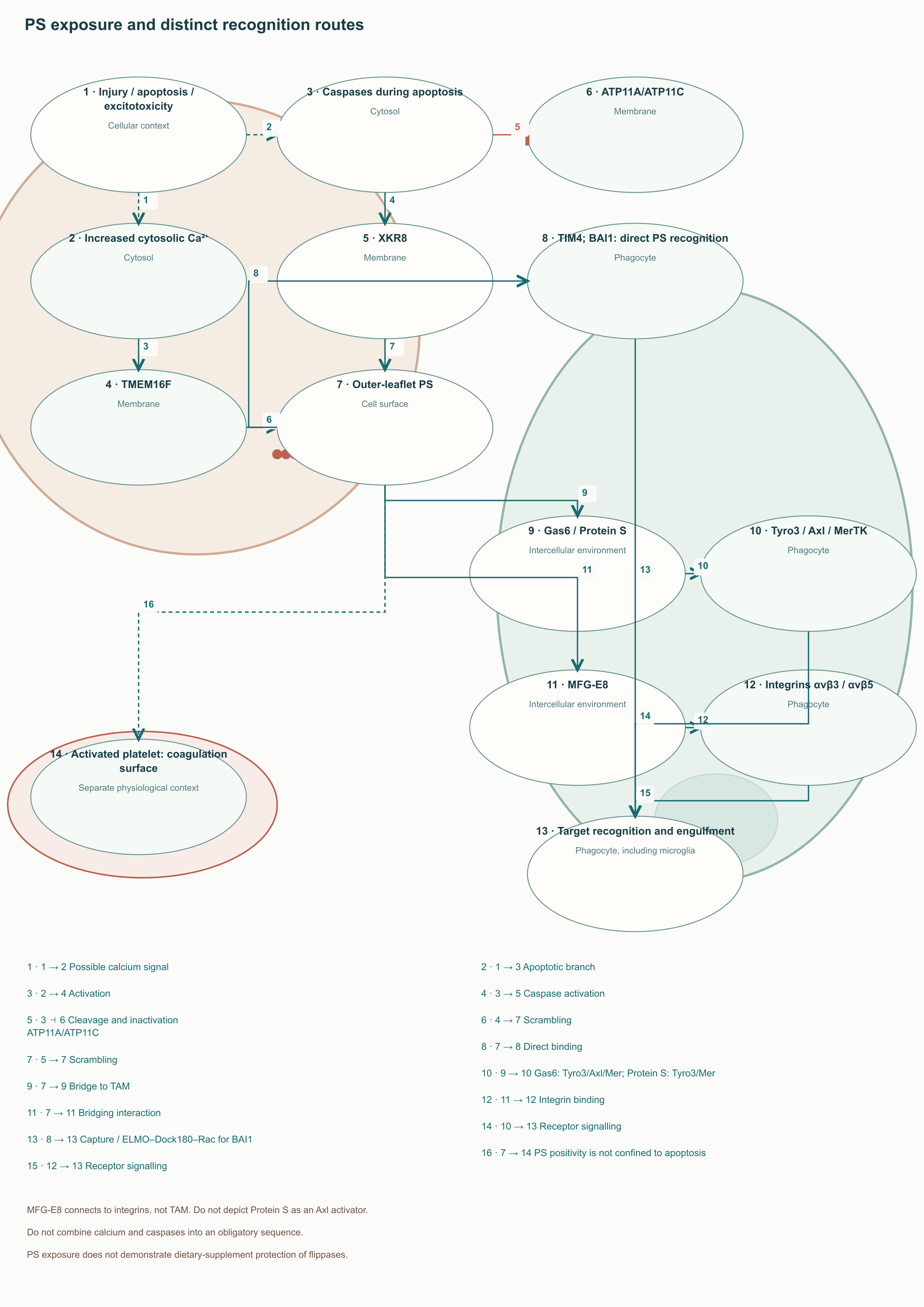
Recognition receptor pathways must be depicted separately. TIM4 binds PS directly and can tether a target; BAI1 binds PS and participates in engulfment through ELMO/Dock180/Rac. Gas6 bridges a PS-containing surface to TAM receptors, whereas Protein S activates Tyro3 and Mer, but not Axl, in the systems studied; MFG-E8 bridges to integrins αvβ3 and αvβ5. Reducing all these branches to an obligatory TAM receptor changes the diagram’s biological meaning and particularly misrepresents MFG-E8.
Removal of apoptotic cells generally limits release of their contents into tissue, but the inflammatory outcome depends on context and other signals. Recognition of membrane markers also contributes to microglial activity in the nervous system, yet every microglia–PS contact cannot be equated with pathological synapse loss. This imposes a specific clinical limitation: studies of external PS and phagocytosis do not establish that an oral supplement preserves neurons by supporting flippases. The relevant transport and receptor experiments studied cells, purified proteins or animals, rather than prevention of human neurodegeneration.
Protein kinase C: PS, calcium and DAG acting together
Conventional PKC isoforms, α, βI, βII and γ, use several membrane signals simultaneously. During autoinhibition, a pseudosubstrate segment occupies the catalytic-site region and prevents phosphorylation of protein targets. Ca²⁺ favours C2-domain interaction with a PS-containing membrane, while the C1 domain binds diacylglycerol, DAG. PIP₂ also contributes to membrane recruitment, so sufficient PS is one activation condition rather than an independent instruction to switch the kinase on.
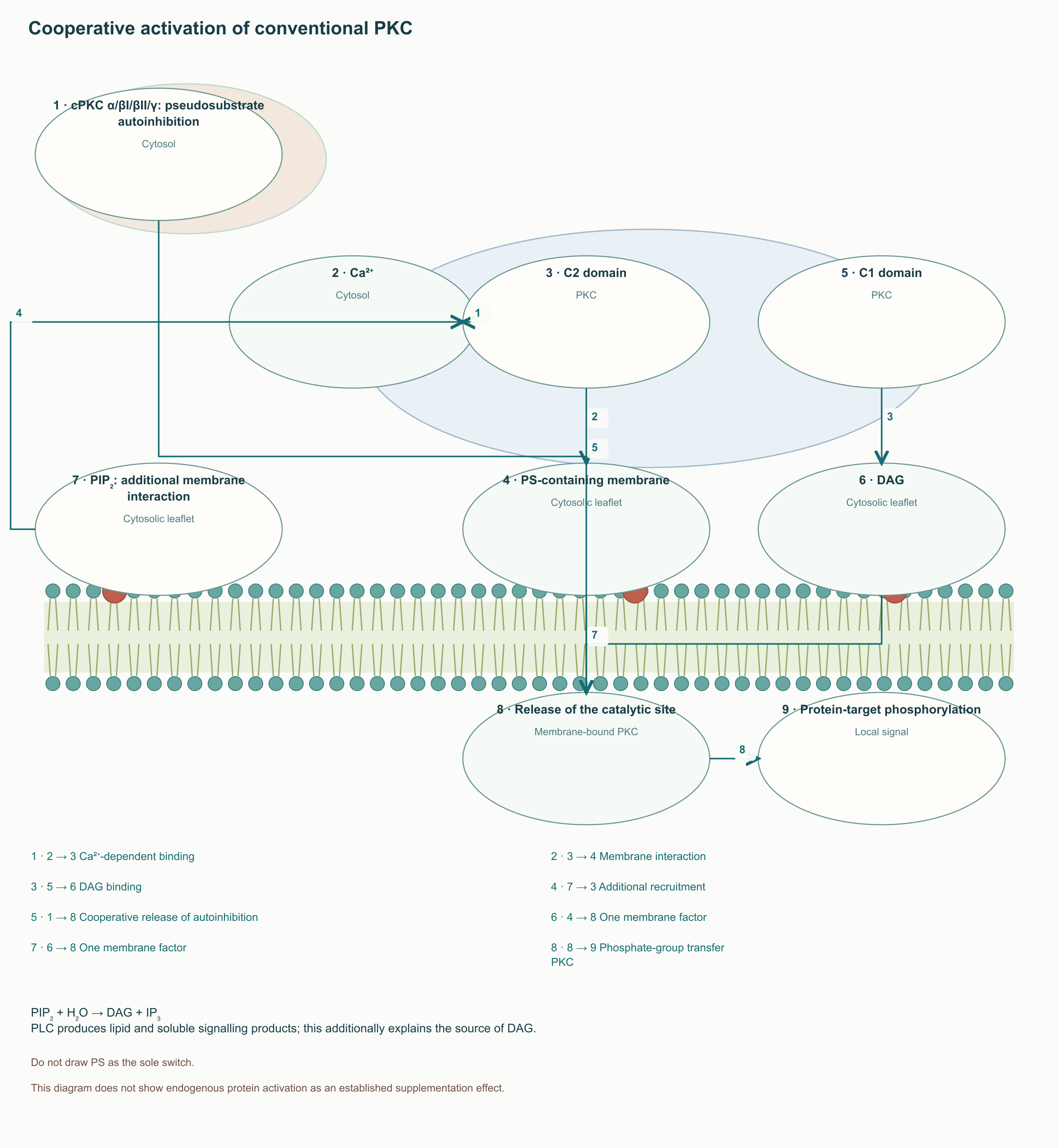
DAG forms, among other routes, when phospholipase C hydrolyses PIP₂; IP₃, which participates in calcium mobilisation, forms simultaneously. Cooperative membrane binding helps release the PKC catalytic site from its pseudosubstrate and gives access to local targets. This arrangement allows cells to match lipid composition with an incoming receptor signal and confine the response to a particular membrane region. PKC families have different regulatory requirements, so a conventional PKC diagram does not automatically apply to every isoform.
Structural experiments explain why PS matters for normal cellular signalling, but do not determine a supplement dose that activates PKCγ in the human hippocampus. That inference would require demonstrating delivery, a change in the relevant membrane pool and altered kinase activity in the appropriate tissue. Improvement in one memory test replaces none of these measurements. The mechanism provides biological plausibility that must subsequently be compared with findings from specific human trials.
AMPA, NMDA and long-term potentiation
Long-term potentiation, LTP, means a sustained increase in synaptic transmission efficacy after particular stimulation protocols. In a commonly studied model, depolarisation allows NMDA receptors to conduct Ca²⁺, triggering local signalling reactions. The AMPA receptor’s GluA1 subunit contains several regulated sites: CaMKII and PKC phosphorylate Ser831, whereas Ser845 is a PKA target. Placing both residues under a single “CaMKII/PKC” arrow assigns enzymes incorrectly and hides the separate cAMP–PKA branch.
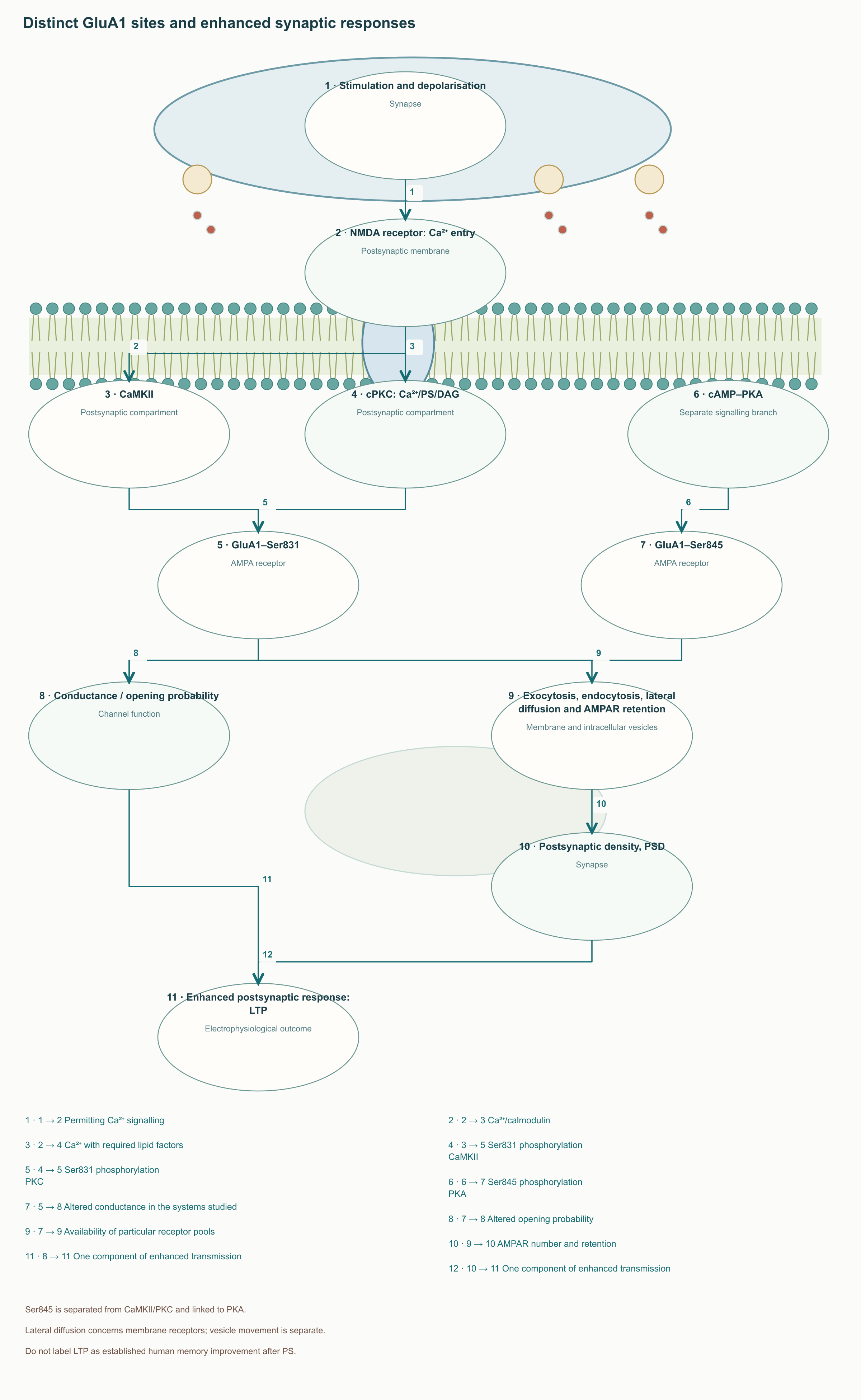
Ser831 phosphorylation can increase channel conductance, whereas Ser845 influences opening probability and availability of particular receptor pools. The number of AMPA receptors in the postsynaptic density changes through exocytosis, endocytosis, protein-mediated retention and lateral receptor movement within the membrane plane. Intracellular vesicles move differently, so “lateral vesicle diffusion” mixes distinct transport stages. Density proteins, including PSD-95, organise receptor complexes, but an established role for their lipid environment does not demonstrate prevention of NMDA receptor internalisation after taking PS.
LTP is an experimentally measurable electrophysiological phenomenon, while human memory involves many processes and distributed networks. Altered channel conductance in a cellular system cannot directly calculate improved learning or the number of synapses preserved in a patient. Likewise, a word-memory test does not identify the cascade responsible for its result. These analytical levels can usefully be connected while preserving each study’s measured outcome and avoiding substitution of a molecular pathway’s name for a clinical result.
Ion gradients and glutamate clearance
Synaptic transmission depends on restoring ion gradients and clearing neurotransmitter, not only on receptors. Per ATP-consuming cycle, Na⁺/K⁺-ATPase exports three Na⁺ and imports two K⁺; the sodium gradient it maintains powers many secondary active transporters. EAAT2, mainly associated with astrocytic glutamate clearance, imports glutamate with three Na⁺ and one H⁺ while exporting one K⁺. This system is energetically coupled: severe gradient disruption prevents neurotransmitter transport from working as it does under physiological conditions.
PS can affect membrane proteins through their lipid environment, but a universal 40–60% increase in Na⁺/K⁺-ATPase activity after supplementation has not been established. Comparisons require the tissue, membrane preparation, baseline lipid composition and measurement conditions; purified-enzyme data do not determine PS concentration inside a human brain. The transport ratios can be written as ATP + 3Na⁺ᵢ + 2K⁺ₒ → ADP + Pᵢ + 3Na⁺ₒ + 2K⁺ᵢ; glutamateₒ + 3Na⁺ₒ + H⁺ₒ + K⁺ᵢ → glutamateᵢ + 3Na⁺ᵢ + H⁺ᵢ + K⁺ₒ. Here “ᵢ” and “ₒ” mean inside and outside the membrane, not different chemical forms of an ion.
Akt, Raf and transcriptional regulation
PS also participates in cell-survival signals, but specific proteins bind membranes in different ways. In cellular and reconstituted systems, PS together with PIP₃ promotes Akt recruitment and conformational changes allowing phosphorylation at Thr308 and Ser473. The canonical cascade links these steps to PDK1 and mTORC2, respectively; PS does not replace PI3K signalling and PIP₃ formation. “PS reduces steric hindrance” is therefore insufficient: it does not identify the lipids and regulators required for the observed response.
Raf domains must also be distinguished: RBD binds activated Ras, while the cysteine-rich CRD interacts with the membrane environment, including PS. Subsequent Raf–MEK–ERK activation requires additional regulatory events and cannot be inferred solely from a negatively charged lipid head. Depending on the stimulus, ERK regulates CREB through downstream RSK or MSK kinases, rather than necessarily acting directly. CREB Ser133 phosphorylation is part of transcriptional regulation, but altering a specific gene’s expression also requires the appropriate cellular context and other regulators.
BDNF, Bcl-2, Bad and caspase-9 occupy different levels of plasticity and apoptosis regulation. Akt signals can affect proapoptotic proteins and CREB contributes to transcriptional programmes, but these do not form a guaranteed “PS → CREB → BDNF → preserved neuron” chain. In DHA models, changes in the PS pool were linked to Akt and neuronal-cell resistance to apoptosis; such experiments provide causal information within the model. Extrapolation to Alzheimer disease prevention or increased human BDNF requires separate clinical evidence.
The HPA axis: how the stress response arises and is constrained
The hypothalamic–pituitary–adrenal axis, HPA, coordinates the endocrine component of the stress response. Parvocellular neurons of the hypothalamic paraventricular nucleus, PVN, release CRH and arginine vasopressin into pituitary portal blood. CRH acts through CRHR1 and Gαs–adenylyl cyclase–cAMP, while vasopressin enhances the response through V1b receptors; corticotrophs release ACTH derived from POMC. ACTH then activates MC2R in the adrenal cortex and associated steroidogenic processes.
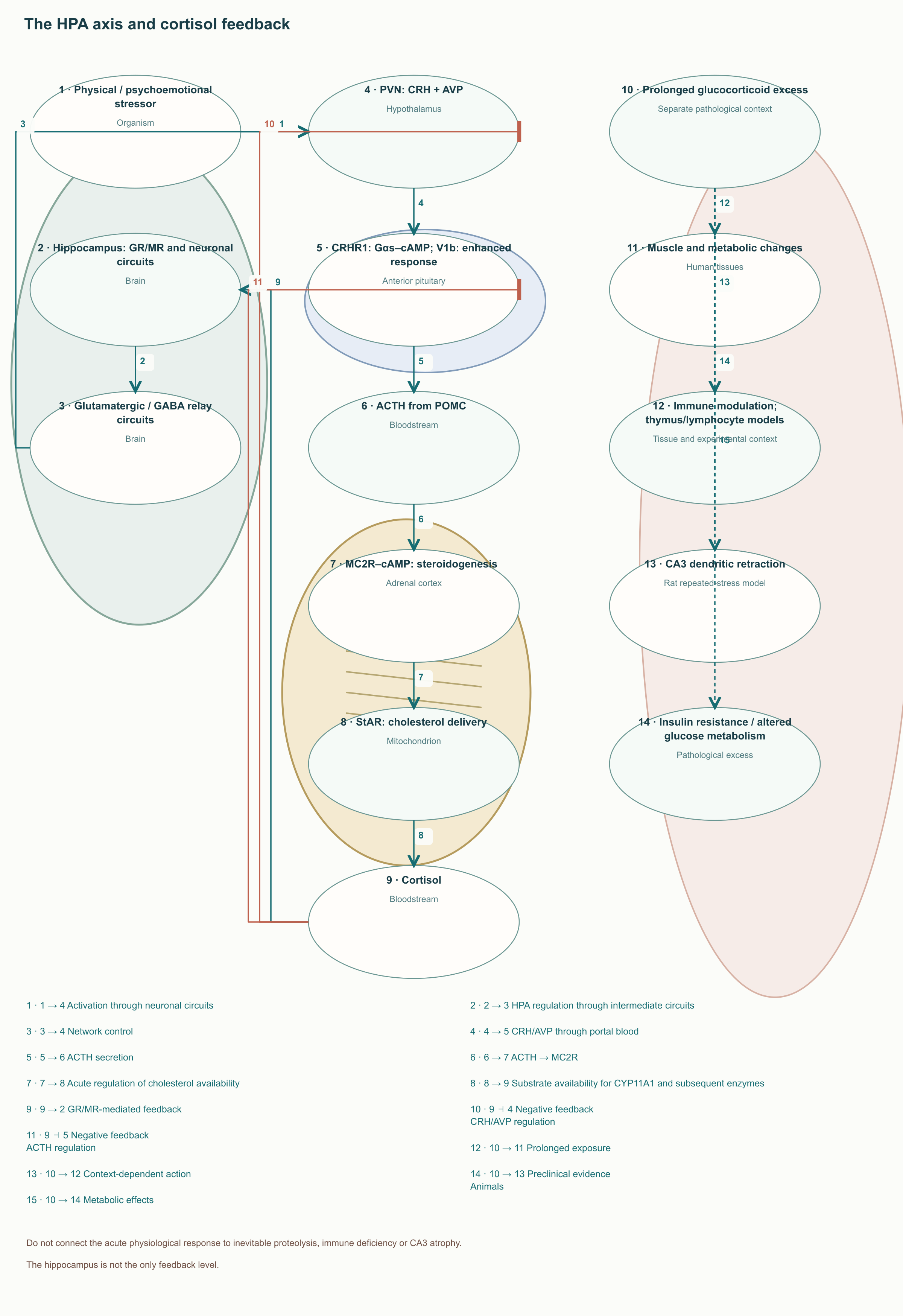
StAR makes cholesterol available for steroidogenesis by delivering it towards the inner mitochondrial membrane. It is a transport-regulatory protein, not an enzyme converting cholesterol into cortisol: the first enzymatic conversion involves CYP11A1, followed by other cascade enzymes, including CYP11B1. Cortisol contributes to feedback at several levels, including the pituitary, hypothalamus and brain structures; GR and MR have differing functions depending on tissue and conditions. The hippocampus regulates HPA through neuronal circuits and therefore cannot be shown as the PVN’s sole direct off-switch.
An acute cortisol rise helps mobilise substrates and adapt to exercise, whereas prolonged pathological glucocorticoid excess may accompany muscle weakness and metabolic and immune changes. In rat studies, repeated stress shortened CA3 neurons’ apical dendrites; this important preclinical finding does not demonstrate hippocampal death after ordinary human training. Dentate-gyrus neurogenesis and excitotoxicity findings likewise require their specific models. Overtraining syndrome is not diagnosed from one cortisol value or testosterone/cortisol ratio, and its causes cannot be reduced to one hormone.
Where a supplement might act: limits of the GR hypothesis
Some human PS or combination trials measured lower ACTH and cortisol responses to exercise. Changes in both hormones allow discussion of HPA regulation, but do not identify the site of action in the hippocampus, PVN or adrenal glands. GR itself is predominantly intracellular, and its functional maturation depends on Hsp70/Hsp90 chaperones and associated proteins. Modern structural studies reveal a complex assembly and activation cycle that cannot be explained solely by “membrane fluidity”.
The human trials cited provide no direct measurements of “oral PS → altered hippocampal membrane → Hsp90 dissociation → increased GR sensitivity → lower CRH”. Likewise, possible cholinergic or catecholaminergic modulation in animal models does not establish enhanced acetylcholine synthesis and quantal release in humans. A claim of CRH suppression during hypothalamic-slice perfusion requires a specific primary study with concentrations and conditions, not a hormonal RCT as a substitute. In practice, the accurate description is an investigated change in the stress response, leaving its molecular location an open question.
Raw material sources: what an identical PS head means
Historical clinical studies often used phosphatidylserine from bovine cerebral cortex, BC-PS. Modern soy and sunflower ingredients come from plant phospholipids; their acyl composition depends on the original lecithin and processing technology. PS materials containing omega-3 may contain DHA-linked molecular species and other lipids, so PS-DHA does not guarantee one standardised structure across products. Ingredients should be compared by actual PS content, fatty acid composition, accompanying substances and trials of that particular form.
| Parameter | BC-PS | Soy PS | Sunflower PS | PS with omega-3 |
|---|---|---|---|---|
| sn-1 acyl chains | Depend on brain fraction; saturated chains may occur | Depend on lecithin and process | Depend on lecithin and process | Depend on substrate and remodelling |
| sn-2 acyl chains | Neural tissue may be enriched in DHA and ARA | Predominantly the plant substrate’s profile | Profile of the particular sunflower substrate | DHA/EPA and molecular species require specification |
| Omega-3 | Depends on starting material | Should not be treated as a meaningful DHA dose source | Should not be treated as a meaningful DHA dose source | Quantity is stated separately from PS mass |
| Production | Extraction of animal neural tissue | Usually enzymatic transphosphatidylation | Usually enzymatic transphosphatidylation | DHA-containing phospholipids or separate modification steps |
| Allergens | Assessed for the product | Residual soy proteins matter | Absence of soy does not exclude other allergens | Origin and residual proteins matter |
| Safety | Special requirements for bovine materials | Determined by quality and use conditions | Determined by quality and use conditions | Determined by quality and use conditions |
Linoleic acid at 50–65%, oleic acid at 60–75% and DHA at no less than 20–30% cannot be assigned to every ingredient in the respective category. Such comparisons require analytical data for the particular batch and a clear denominator: all fatty acids, sn-2 chains or PS species. Sunflower origin and Non-GMO labelling likewise do not establish hypoallergenicity. A historical BC-PS result remains a BC-PS result until clinical comparability of a new formulation has been demonstrated directly.
BSE and enzymatic production
The transition from animal brain material to plant phospholipids relates partly to BSE risks and restrictions on bovine materials. BSE is linked to variant Creutzfeldt–Jakob disease in humans, vCJD: CDC identifies strong epidemiological and laboratory evidence of causality following exposure to contaminated material. Prion PrPˢᶜ is a pathological protein conformation resistant to many ordinary processing methods, but “absolute resistance to any autoclaving” is inaccurate: special procedures exist for potentially contaminated instruments. US regulation prohibits particular high-risk materials in foods and supplements, including brains of cattle in a specified age category. These are specific regulatory restrictions, not evidence of a worldwide ban on every BC-PS form since the mid-1990s.
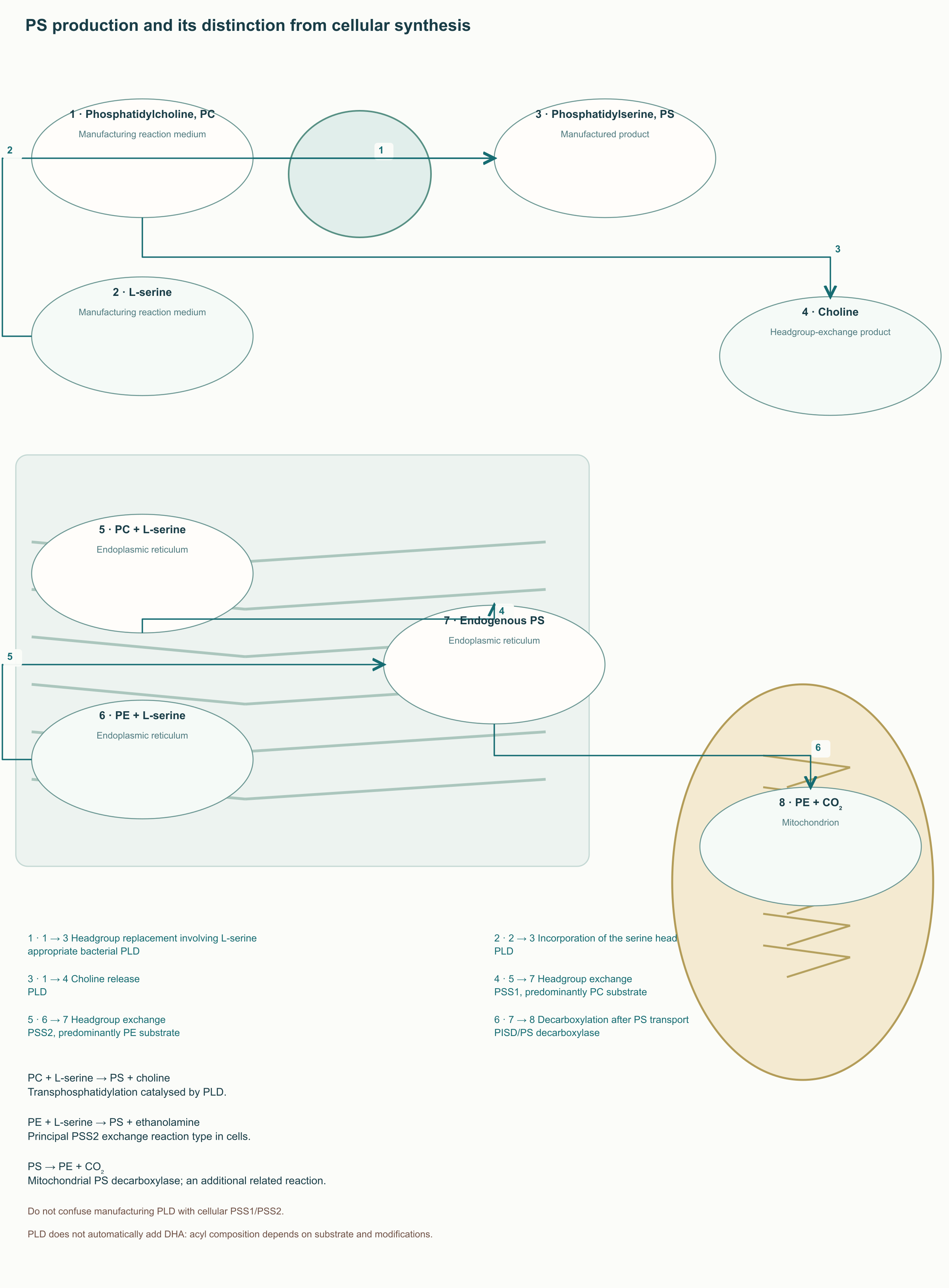
Technological transphosphatidylation replaces the PC head with serine: PC + L-serine → PS + choline, catalysed by an appropriate phospholipase D, PLD. The microbial producer, medium and substrate ratios affect target-product yield and competing hydrolysis. Different studies used different PLDs, so one Streptomyces strain cannot be declared the universal industrial enzyme source. Headgroup transfer itself preserves substrate acyl chains; producing DHA-containing PS therefore requires appropriate phospholipids or separate remodelling, not merely adding fish oil to any reaction.
Absorption, the Lands cycle and the blood–brain barrier
Following ingestion, lipids undergo intestinal digestion and metabolic conversion; PS pathways discussed include hydrolysis, lysoforms and conversion into other phospholipids. Rat experiments identified intestinal metabolism of administered lysophospholipids and, after intravenous labelled PS liposomes, decarboxylation and hydrolytic breakdown. Routes and models must remain explicit: an intravenous liposome does not reproduce capsule digestion. Radiolabel in an organ without chemical identification shows label distribution, not necessarily preservation of the original PS molecule.
The Lands cycle includes phospholipid deacylation and fatty acid reattachment by an acyltransferase, allowing membrane lipid species to remodel. Its existence, however, does not establish a complete route for plant PS from intestine through endothelium into a human neuronal membrane. MFSD2A transports long-chain fatty acids in lysophosphatidylcholine, including LPC-DHA; this cannot establish lyso-PS transport. The substrates have different headgroups, and cellular transport selectivity is not determined by similar names alone.
Neural tissue can synthesise and remodel its own PS, so lack of established transport of the unchanged molecule does not exclude every possible supplement effect. It does, however, prevent claims of complete nootropic or endocrine bioequivalence among BC-PS, soy, sunflower and PS-DHA. Even a positive result with one plant preparation does not establish equal effectiveness of other formulations. Professional selection depends on comparative clinical design and measured outcomes, not only a shared serine head and the presumed fate of acyl chains.
Physical exercise: hormones and actual measurements
Early human studies by Monteleone and colleagues helped develop the hypothesis of altered endocrine exercise responses. In 1990, eight healthy men received intravenous BC-PS before cycle ergometry; this route differs fundamentally from supplementation. In the 1992 study, nine healthy men took 800 mg BC-PS daily for ten days: ACTH and cortisol responses were lower, whereas growth hormone and prolactin rises did not change significantly. These small experiments show a hormonal signal under a specific protocol, not overtraining prevention or preservation of muscle mass.
In 1998, Fahey and Pearl studied 800 mg soy PS daily during two-week periods of intensive resistance training in 11 men using a crossover design. The published author summary described cortisol after a training session falling within the PS period from 15.6 ± 1.7 to 10.0 ± 0.9 µg/dL; that comparison cannot automatically be presented as a quantitative between-group difference. Subjective well-being and soreness were rated on ten-point scales, so attributing the POMS questionnaire to this work is incorrect. Its small sample and experimentally increased training load also prevent describing it as treatment of established clinical overtraining syndrome.
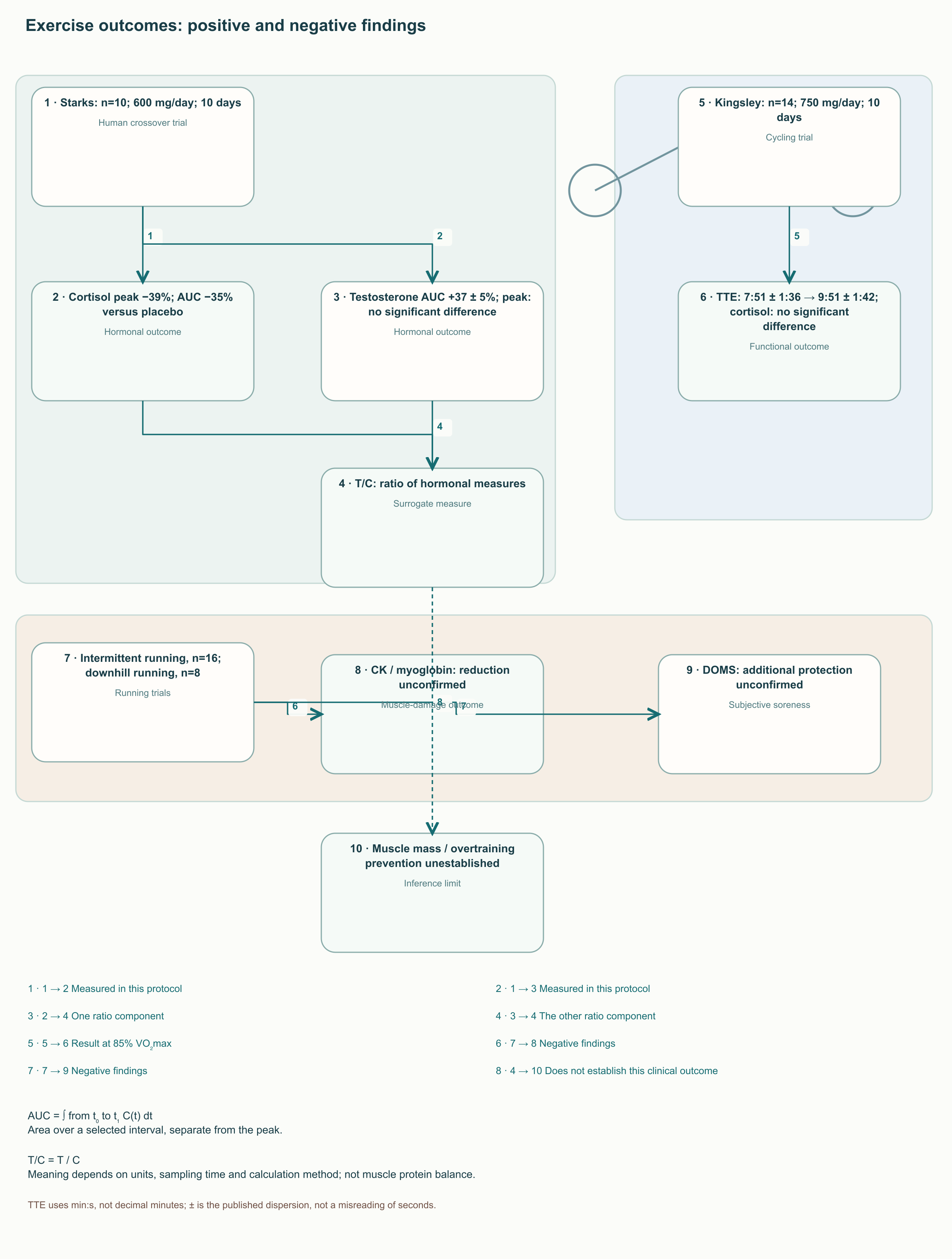
In Starks and colleagues’ 2008 crossover trial, ten healthy men took 600 mg soy PS daily for ten days before cycling. Compared with placebo, peak cortisol was 39% lower and concentration area under the curve, AUC, 35% lower; these are separate measures. Testosterone AUC increased by 37 ± 5%, but peak testosterone did not reach a statistically significant difference, and growth hormone and lactate measures did not change significantly. The study did not measure muscle protein synthesis, lean mass changes or overtraining incidence, so its endocrine result should not be called established anticatabolic treatment.
AUC represents cumulative exposure over a chosen interval: AUC = ∫ from t₀ to t₁ C(t) dt, where C(t) is hormone concentration over time. A lower peak can coexist with a different recovery time, so peak and area percentages are not interchangeable. T/C also depends on units, sampling time and changes in both hormones, rather than directly reflecting muscle protein synthesis–breakdown balance. Professional interpretation requires the exercise design, calculation method and an independent functional outcome together.
Endurance, muscle damage and movement accuracy
In Kingsley and colleagues’ 2006 trial, 14 physically active men took 750 mg soy PS or placebo for ten days. After successive ten-minute stages at 45%, 55% and 65% VO₂max, they exercised at 85% VO₂max until exhaustion. In the PS group, final-stage duration rose from 7 minutes 51 seconds ± 1 minute 36 seconds to 9 minutes 51 seconds ± 1 minute 42 seconds; placebo changed from 8:09 ± 0:54 to 8:02 ± 0:54. The group–time interaction was significant, p = 0.005, but cortisol, substrate oxidation and mood did not change significantly: the experiment did not establish a hormonal cause for improvement.
In 2005, the same researchers studied 16 footballers after intermittent running followed by an exhausting bout, using 750 mg PS daily for ten days. Cortisol, soreness, creatine kinase, myoglobin and lipid-peroxidation measures increased similarly to placebo; the difference in change in time to exhaustion remained a trend, p = 0.084. In a separate 2006 crossover trial, eight men ran downhill at −16.5% for about 51 minutes, taking 750 mg PS for seven days before and two days after exercise. No additional protection against DOMS, muscle damage, inflammatory or oxidative measures was found, so a general PS diagram showing reduced CK and faster recovery does not match this series of studies.
Jäger and colleagues examined a different task in 2007: 20 male golfers with handicaps of 15–40 received 200 mg PS daily in a food bar or placebo for 42 days. Mean good ball flights out of 20 shots changed from 8.3 ± 3.5 to 10.1 ± 3.0 in the PS group and from 7.8 ± 2.4 to 7.9 ± 3.6 with placebo. Perceived stress showed a trend, p = 0.07, while mean heart rate did not change significantly. This is a limited accuracy result for a particular task; extrapolation to everyone’s fine motor skills, final tournament scores or heart-rate stabilisation exceeds what was measured.
Age-related memory complaints and historical BC-PS studies
Age-associated memory impairment, AAMI, was a research category that cannot automatically be equated with Alzheimer disease or the modern diagnosis of mild cognitive impairment. In Crook and colleagues’ 1991 study, 149 people with AAMI received 100 mg BC-PS three times daily or placebo for 12 weeks. The authors reported improvements in particular learning and memory measures, especially among some participants with poorer baseline performance. This signal deserves preservation, but does not show reduced dementia probability or establish effectiveness of a modern sunflower ingredient.
Cenacchi and colleagues’ 1993 multicentre study included 494 people aged 65–93 with moderate or marked cognitive decline across 23 geriatric and general medical centres. BC-PS was prescribed at 300 mg daily for six months; 425 participants completed the period, and availability of individual test data differed. The Plutchik Geriatric Rating Scale and Buschke Selective Reminding Test were measured, so results concern those memory and behavioural scales. The authors found advantages in memory measures and the withdrawal/apathy factor, but the activities-of-daily-living factor, ADL, did not show a significant between-group difference.
Its size matters, but findings must be read alongside withdrawals, historical diagnostic criteria and the animal origin of the preparation. Claiming better self-care in every patient erases the negative ADL result and expands the actual measurement domain. Dementia requires distinguishing test changes, sustained daily functioning and slowing the disease itself. Neither a six-month test effect nor its molecular explanation proves modification of the neurodegenerative process.
Soy PS: positive subgroups and a negative trial
Jorissen and colleagues’ 2001 study is essential for a balanced assessment of the plant form. It enrolled 120 people over 57 with AAMI, receiving 300 mg or 600 mg soy PS or placebo daily for 12 weeks followed by a period without treatment. No substantial effect on the cognitive measures studied was found. The 100–300 mg range therefore cannot be presented as an established universal nootropic protocol, nor increasing to 600 mg as a guaranteed way to improve memory.
In 2010, Kato-Kataoka and colleagues enrolled 78 Japanese participants aged 50–69 with memory complaints; 73 completed the study. They received 100 mg or 300 mg soy PS or placebo daily for six months, then were followed for three more months. HDS-R, MMSE and the Rivermead Behavioural Memory Test were used, not the Wechsler Memory Scale; overall HDS-R analysis showed improvement in all groups without convincing overall PS superiority. In the low-baseline-performance subgroup, the authors found advantages in particular delayed-recall measures, including during follow-up.
A subgroup effect helps generate a hypothesis about possible responders but requires replication in a prospectively planned study. Repeated testing can improve results through task familiarity, making the between-group comparison more important than improvement alone. This work did not resolve all bioequivalence doubts or show increased synaptic density. Naming the exact population and test is more useful in practice than replacing them with a general promise to “restore cognitive function”.
PS with omega-3 and ADHD studies
In 2010, Vakhapova and colleagues randomised 157 older adults without dementia who reported memory complaints to PS with omega-3 or placebo for 15 weeks. The daily formulation contained 300 mg PS and 79 mg DHA/EPA; 131 completed the period, and efficacy analysis additionally depended on protocol compliance. An advantage was found for immediate word recall, p = 0.043, and in exploratory analyses of some subgroups. The finding applies to this multicomponent preparation and an individual test, not every PS form or all cognitive functions.
The 2014 publication described an open-label extension: 122 participants received 100 mg PS and 26 mg DHA/EPA daily for another 15 weeks. The placebo-controlled phase and open extension differ in dose and design; repeated testing and absence of a control group limit causal interpretation. The extension permits discussion of observed changes, not “accumulation of a neuroplastic plateau” or independent confirmation of the initial finding. It is recorded as a separate open-label-extension study rather than a second randomised 300 mg trial.
Hirayama and colleagues studied soy PS in children aged 4–14 with ADHD who had not previously received relevant drug treatment. Of 40 randomised children, 36 completed the period: 19 taking 200 mg PS daily and 17 on placebo, for two months. The publication reported advantages in some symptom measures and particular GO/NO-GO errors; working memory and mean response time did not improve significantly. A small, predominantly male sample, completer analysis and multiple outcomes limit extrapolation, while authors’ involvement in PS distribution increases the need for independent replication.
ADHD requires assessment of symptoms and impaired functioning in several settings, not only a computer-task result. NICE considers specialist diagnosis, family education and support, environmental modifications and medication where indicated. The PS trial does not make the supplement equivalent to these approaches or create a general paediatric dosing protocol. For professionals, it remains a small trial that can be discussed with families while preserving both positive and negative results.
Social stress: three trials with different formulations
The Trier Social Stress Test, TSST, combines speaking before an evaluating panel with mental arithmetic under social pressure. It standardises the challenge and permits comparison of ACTH and cortisol time responses, but does not reproduce every form of chronic stress, insomnia or anxiety disorder. Salivary and serum cortisol, pulse rate and subjective stress are separate outcomes that can change independently. The Hellhammer series from 2004, 2012 and 2014 comprises separate trials, not a meta-analysis with a pooled effect estimate.
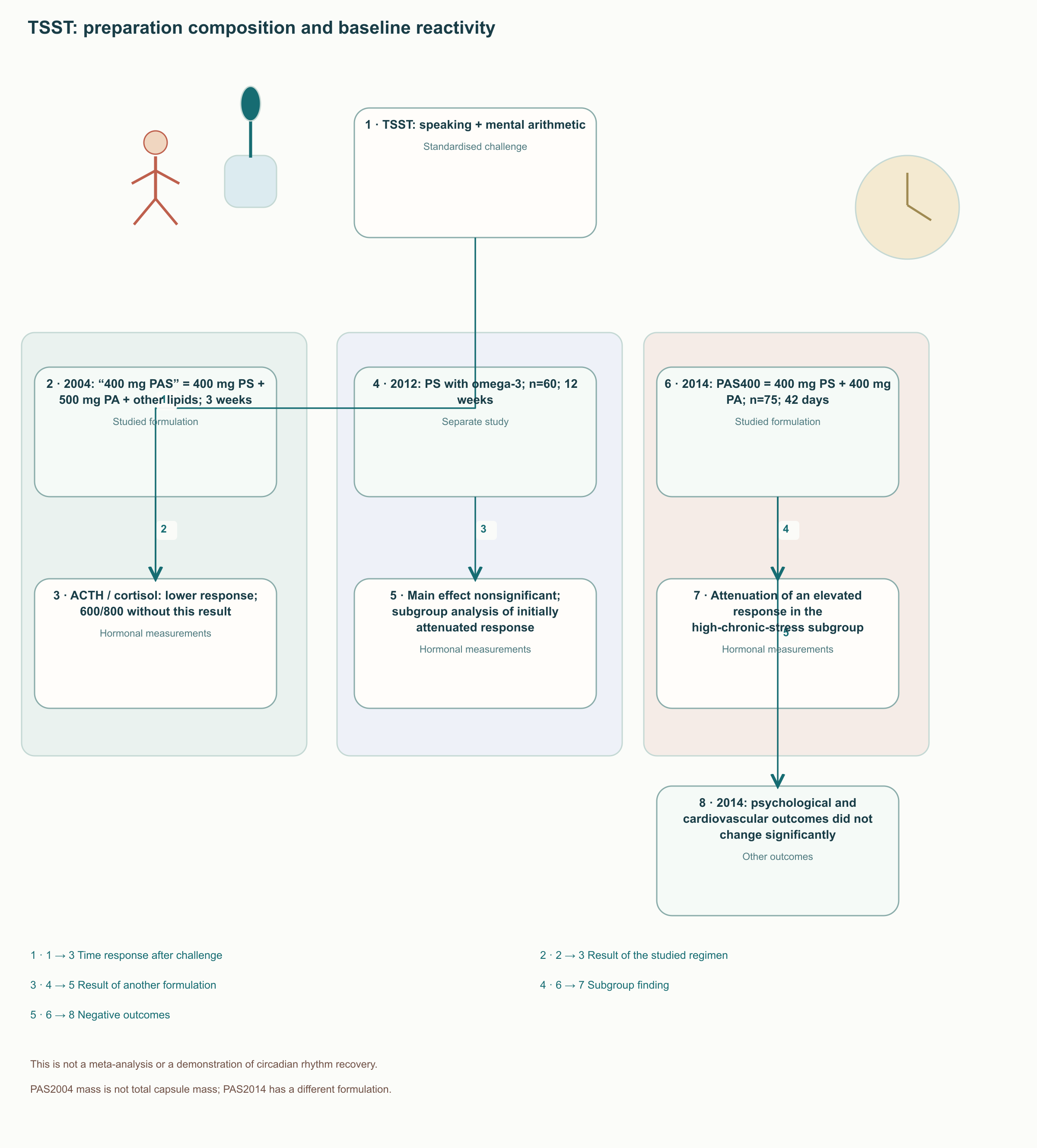
In 2004, 80 healthy adults were allocated to placebo or three PAS dose regimens before TSST after three weeks of intake. The authors’ “100 mg PAS” label corresponded to a capsule containing 100 mg PS, 125 mg PA, 270 mg other phospholipids and 5 mg silica: “400 mg PAS” therefore contained 400 mg PS and 500 mg PA, not 200 + 200 mg. The 400 mg regimen attenuated the hormonal response, whereas 600 and 800 mg did not produce that result. Absence of a monotonic dose response does not establish a universal receptor “therapeutic window” or make these doses equivalent to pure PS.
In Hellhammer’s 2014 trial, 75 healthy men took another PAS for 42 days: PAS400 contained 400 mg PS and 400 mg PA daily, PAS200 contained 200 mg of each. The higher regimen reduced ACTH and cortisol responses in the subgroup with high chronic stress and increased reactivity, but the lower regimen and low-stress subgroup showed no corresponding effect. Psychological responses and cardiovascular measures did not change significantly. “Adrenal burnout”, circadian rhythm recovery and the cortisol awakening response were not studied, so extrapolation to these conditions is unjustified.
The 2012 study of omega-3 in PS involved 60 healthy nonsmoking men aged 30–60 and lasted 12 weeks. No significant overall main effect was found; in the high-chronic-stress subgroup, the authors described changes in an initially attenuated cortisol response. This differs from hyperreactivity in the 2014 PAS trial and does not support “PS always lowers cortisol”. Similar-looking complex names cannot reconstruct all ingredient quantities from other studies: discussion requires the composition and description in that original work.
Benton and colleagues’ 2001 study provides another population-dependent example. Taking 300 mg PS daily for a month was associated with better mood and perceived stress among young adults with higher baseline neuroticism. This is a subgroup and self-report result, not evidence of identical effects on hormones or heart rate. Comparing endocrine, psychological and functional outcomes prevents different results becoming a general promise of “HPA normalisation”.
Doses and duration: from a research regimen to a decision
Cognitive studies used 100–600 mg PS daily, commonly for 12 weeks to six months. Jorissen’s negative trial and Kato-Kataoka’s mixed findings nevertheless show that belonging to this range does not guarantee a result. Pure PS mass must be distinguished from lecithin or total-complex mass: 500 mg of a mixture does not mean 500 mg PS. Divided daily doses occurred in trials but do not establish a universally superior schedule or minimum dietary fat quantity.
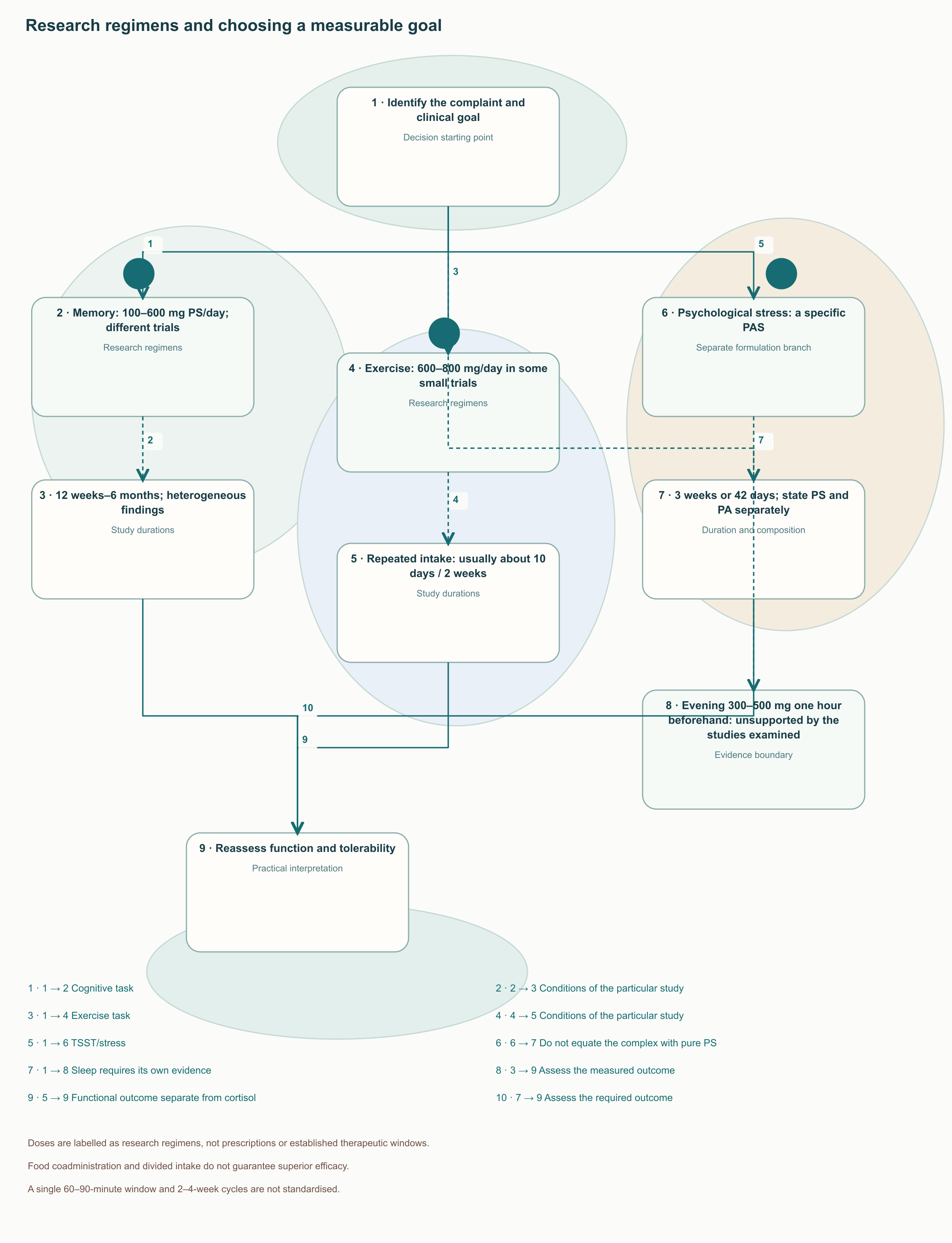
When discussing supplementation with someone reporting memory problems, first identify what is changing: event forgetting, concentration, sleep, mood or daily independence. Then select a measurable goal and agree a reassessment interval, accounting for concurrent treatment and workload changes. Serial tests themselves can produce practice effects, so findings should be compared with functioning and relatives’ observations. If complaints progress or compromise independence, investigating their cause matters more than increasing a supplement dose.
Exercise trials usually administered 600–800 mg daily for several consecutive days, rather than only once before an event. They do not provide convincing comparative justification for a universal “60–90 minutes beforehand” window or “two–four weeks followed by a break” cycles. In a small kinetic experiment published by Moré and colleagues, eight healthy volunteers took a single 500 mg PS and 400 mg PA dose; PS as a proportion of serum phospholipids peaked at about 90 minutes. This did not measure portal “lipopeptide complexes”, brain exposure or optimal timing for improved exercise performance.
Sleep, fatigue and cortisol assessment
The sources examined do not demonstrate that 300–500 mg PS one hour before bed improves deep NREM sleep or treats a disturbed circadian cortisol profile. “Tired but wired” and racing thoughts describe a person’s experience, not a hormonal diagnosis. Late sleep, shift schedules, anxiety, medication and many other conditions can influence complaints and laboratory measures. “Blocking the hypothalamic impulse” cannot be prescribed from such descriptions, and PS sleep efficacy requires trials with appropriate outcomes.
Late-evening salivary cortisol has a specific diagnostic use distinct from independently searching for a cause of any fatigue. The Endocrine Society recommends Cushing syndrome evaluation when clinical probability is appropriate using a suitable method; saliva requires repeated measurements, while random serum cortisol is not recommended diagnostically. An abnormality needs interpretation in light of methods and conditions, not a supplement chosen to lower a number. Participants in small exercise and TSST studies did not have confirmed endogenous hypercortisolism.
Combinations: biochemical links without a ready-made “stack”
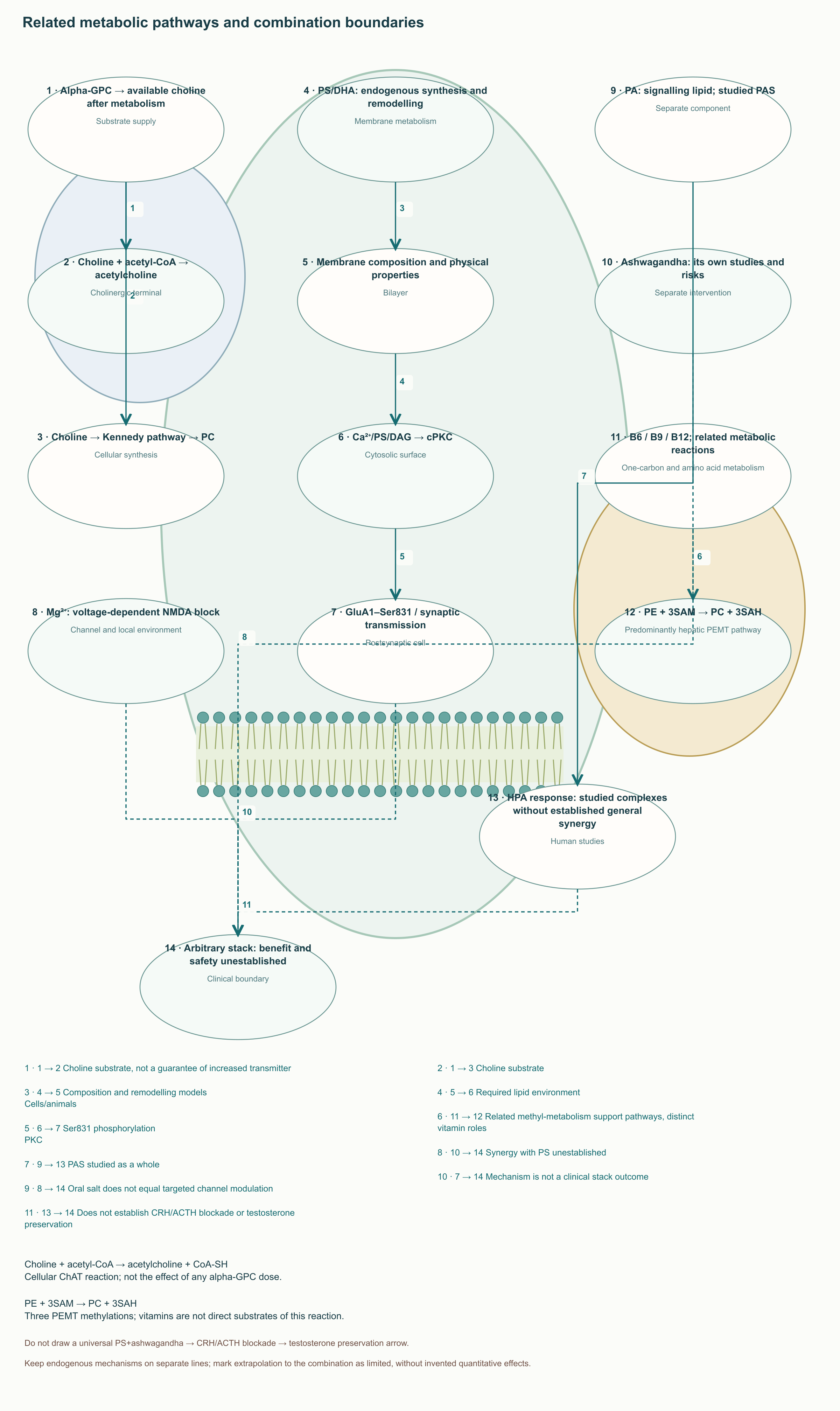
Combining PS with DHA, choline donors, PA, ashwagandha, magnesium and B vitamins brings together different metabolic subjects. They can be considered separate hypotheses, but obligatory synergy or prescribing the entire set requires a trial of the specific combination. A PS-DHA result does not establish that arbitrarily adding 1,000–2,000 mg fish oil to any PS reproduces the studied preparation. Free DHA, DHA in different lipids and actual PS mass in a product must be distinguished.
| Component from the original combination | Retained mechanism | Practical limitation |
|---|---|---|
| DHA/EPA | DHA affects PS species and accumulation in cellular and animal models | 1,000–2,000 mg omega-3 and DHA ≥500 mg are not established mandatory companions to PS |
| Alpha-GPC | Choline relates to acetylcholine and PC synthesis through corresponding cellular pathways | 300–600 mg alpha-GPC with PS is not established as a way to restore membrane balance |
| Phosphatidic acid | PA participates in signalling; PAS was studied as a multicomponent preparation | PAS findings cannot isolate PS/PA synergy or effects on mTORC1 and muscle mass |
| Ashwagandha | Individual extracts are studied for stress and sleep | 300–600 mg of different extracts and identical withanolide percentages do not make them interchangeable; combination with PS is unestablished |
| Magnesium | Mg²⁺ participates in voltage-dependent NMDA block and many enzymatic reactions | 200–400 mg elemental Mg does not imply targeted supplement control of NMDA or scramblases |
| B6, B9, B12 | Connected to amino acid and one-carbon metabolism; SAM participates in PE methylation by PEMT | No basis for high doses without indications to enhance PS; PEMT is particularly important in the liver |
Choline can be used in the Kennedy pathway for PC and in cholinergic terminals for acetylcholine, but substrate availability does not equal increased synaptic transmitter. Cellular PA signalling effects likewise do not automatically explain cortisol changes after PAS. Magnesium NMDA block depends on voltage and local surroundings; it does not mean a magnesium salt prevents PS exposure. B6, folate and B12 have different enzymatic roles, so “all are cofactors for SAM synthesis” must be replaced by descriptions of the specific related reactions.
A multicomponent mixture’s safety cannot be inferred from PS tolerability either. NCCIH notes gastrointestinal adverse effects, reports of liver injury, pregnancy restrictions and possible drug interactions for ashwagandha; a claim of direct human GABAₐ agonism does not provide a clinical basis for combining it. Excess supplemental B6 can cause sensory neuropathy; EFSA set an adult UL of 12 mg daily in 2023, whereas the US limit is 100 mg. Assessing a “stack” requires individual doses and risks rather than the general label “membrane support”.
Tolerability, regulatory status and medicines
In Jorissen and colleagues’ 2002 safety study, 300 or 600 mg soy PS daily for 12 weeks produced no significant placebo differences in the clinical and laboratory measures examined. Tolerability findings were also published for PS with omega-3 at 300 mg PS with 79 mg DHA/EPA for 15 weeks and its extension. These data are useful for the adults and durations studied but do not establish absolute safety at every dose, during pregnancy or over years. Gastrointestinal complaints and individual intolerance are possible; a threshold of “only above 1,000 mg” or exact event rarity cannot be inferred from small samples.
GRAS concerns a specific ingredient’s safety under stated use conditions, not approval of PS as a medicine. For some notifications FDA completed review without questions concerning the applicant’s conclusion; other procedures may have been discontinued, so one number or dossier does not establish every form’s status. FDA qualified claims about possible reduction of cognitive dysfunction and dementia risk include language stressing very limited, preliminary research. This labelling arrangement establishes neither proven disease prevention, a universal effective dose nor PS’s uniqueness among nutraceuticals.
Animal toxicology results contribute to ingredient assessment, but LD₅₀ is not a recommended human dose. “A lethal dose was not reached above 5 g/kg in primates and rodents” without the exact substance, model and primary protocol should not be used as a universal guarantee. Allergies depend on starting material, purification and residual proteins, not simply “soy” or “Non-GMO” logos. Pregnancy, lactation and paediatric use require separate assessment, since a small ADHD trial does not replace safety data for every age group.
Proposed interactions with anticholinergics and acetylcholinesterase inhibitors primarily rest on mechanistic reasoning. The trials examined do not establish reliable quantitative rules for reducing atropine effects or enhancing donepezil, rivastigmine and galantamine. This warrants informing a clinician about supplement composition and considering symptoms, not independently changing prescribed doses. Multiple cognitive-complaint products further complicate causal assessment of a new symptom.
External platelet PS promotes coagulation, but an oral supplement and the lipid surface of an activated platelet are different objects. The findings cited do not support a general guarantee of unchanged INR, prothrombin time and bleeding time with any PS preparation up to 800 mg daily. Lack of support does not establish a harmful interaction, but requires avoiding categorical reassurance. INR is used with warfarin and is not a universal measure of all direct oral anticoagulants; the treating clinician determines monitoring for the particular drug and situation.
Using these findings in professional practice
The mechanistic sections explain PS’s fundamental cellular role: charge and asymmetry create conditions for signalling proteins, while external exposure changes interaction with surrounding cells. The clinical sections answer narrower questions about particular ingredients and outcomes: some hormonal responses, individual memory tests or an exercise task. Delivery, changes in the relevant membrane pool and effect reproducibility remain unresolved between them. Those questions must remain visible during counselling so a professional explanation does not become a promise to affect every diagram step.
A working choice begins with the complaint and clinical context, then accounts for material source, PS mass, accompanying ingredients and the duration studied in the closest population. Monitoring can target daily functioning, a repeatable memory measure or a specific exercise task, rather than abstract “neuroplasticity activation”. Afterwards, assess outcomes, tolerability and other regimen changes, avoiding attribution of all improvement to supplementation. PS remains an interesting biochemical and clinical research subject; its professional value depends on the precision of these distinctions.
FAQ
Does PS lower cortisol in everyone?
No. Hormonal outcomes depend on the challenge, baseline reactivity and preparation composition. Some trials found no effect, while individual subgroups differed in response direction.
Does 39% refer to reduced area under the curve?
In Starks, 39% refers to peak cortisol and 35% to AUC. They describe different aspects of the time response and do not equal reduced muscle protein breakdown.
Is plant PS equivalent to bovine-brain PS?
A shared headgroup supports similarity of some biochemical properties. Complete clinical bioequivalence of different sources and acyl compositions has not been directly established.
Is PS established for deep sleep?
The studies discussed do not establish 300–500 mg one hour before bed or increased NREM sleep. Evening hyperarousal complaints likewise do not diagnose cortisol excess.
Does PS replace dementia or ADHD treatment?
No. Historical and small trials of particular tests do not establish slowed neurodegeneration or equivalence to recommended treatment. Progressive impairment requires clinical assessment.
Is a DHA and magnesium stack mandatory?
The studies examined establish no such standard. Findings for particular PS-DHA and PAS preparations cannot be extrapolated to arbitrary mixtures; every additional ingredient has its own limitations.
Sources
- Tsui, Ojcius, Hubbell, 1986. The intrinsic pKa values for phosphatidylserine and phosphatidylethanolamine in phosphatidylcholine host bilayers
- Tomohiro et al., 2009. Substrate specificity of human phosphatidylserine synthases 1 and 2
- Митохондриальный транспорт и декарбоксилирование фосфатидилсерина: экспериментальное исследование, 1992
- Kim et al., 2004. DHA-содержащие субстраты и синтез фосфатидилсерина
- Akbar et al., 2005. Docosahexaenoic acid: a positive modulator of Akt signaling in neuronal survival
- PSS2 и синтез DHA-содержащих видов PS: первичное исследование, 2012
- Coleman et al., 2009. Транспортная функция очищенной ATP8A2
- ATP8A2–CDC50A: первичное исследование комплекса, 2011
- ATP8A1–CDC50A: первичное исследование, 2013
- Segawa et al., 2014. Caspase-mediated cleavage of phospholipid flippase for apoptotic phosphatidylserine exposure
- Segawa et al., 2016. Регуляция ATP11A кальцием и каспазами
- Suzuki et al., 2010. Calcium-dependent phospholipid scrambling by TMEM16F
- Suzuki et al., 2013. Xk-related protein 8 and CED-8 promote phosphatidylserine exposure in apoptotic cells
- Headgroup-specific Exposure of Phospholipids in ABCA1-expressing Cells, 2005
- ABCB4 exports phosphatidylcholine in a sphingomyelin-dependent manner, 2015
- Miyanishi et al., 2007. Identification of Tim4 as a phosphatidylserine receptor
- Park et al., 2007. BAI1 is an engulfment receptor for apoptotic cells upstream of the ELMO/Dock180/Rac module
- Lew et al., 2014. Лигандная селективность TAM-рецепторов
- Hanayama et al., 2002. Identification of a factor that links apoptotic cells to phagocytes
- Fujii et al., 2015. TMEM16F и экспонирование PS тромбоцитами мышей
- Verdaguer et al., 1999. Структура C2-домена PKCα с PS и кальцием
- Leonard et al., 2011. Структура и аллостерическая активация PKCβII
- Roche et al., 1996. Characterization of multiple phosphorylation sites on the AMPA receptor GluR1 subunit
- Derkach et al., 1999. CaMKII и проводимость AMPA-рецепторов
- PKC, Ser831 GluA1 и проводимость AMPAR: первичное исследование, 2012
- He et al., 2009. Ser845 и перисинаптические AMPA-рецепторы
- Levy, Warr, Attwell, 1998. Stoichiometry of the glial glutamate transporter GLT-1 expressed inducibly in a Chinese hamster ovary cell line selected for low endogenous Na+-dependent glutamate uptake
- Garrahan, Glynn, 1967. The stoicheiometry of the sodium pump
- Rose et al., 2009. Glutamate Transporter Coupling to Na,K-ATPase
- Huang et al., 2011. Phosphatidylserine is a critical modulator for Akt activation
- Ghosh et al., 1994. Взаимодействие цистеин-богатого региона Raf с PS-липосомами
- Arthur et al., 2004. MSK1 и нейротрофин-индуцированное фосфорилирование CREB
- Endotext. Stress: Endocrine Physiology and Pathophysiology
- Clark et al., 1994. The purification, cloning, and expression of a novel luteinizing hormone-induced mitochondrial protein in MA-10 mouse Leydig tumor cells. Characterization of the steroidogenic acute regulatory protein (StAR)
- Steroidogenic acute regulatory protein (StAR) acts on the outside of mitochondria to stimulate steroidogenesis
- Watanabe, Gould, McEwen, 1992. Stress induces atrophy of apical dendrites of hippocampal CA3 pyramidal neurons
- Structure of Hsp90–Hsp70–Hop–GR reveals the Hsp90 client-loading mechanism, 2022
- Structure of Hsp90–p23–GR reveals the Hsp90 client-remodelling mechanism, 2022
- Bruni et al., 1992. Метаболизм лизофосфолипидов в слизистой кишечника крысы
- Palatini et al., 1991. Метаболизм меченых PS-липосом после внутривенного введения крысам
- Nguyen et al., 2014. Mfsd2a is a transporter for the essential omega-3 fatty acid docosahexaenoic acid
- Структурно-функциональное исследование человеческого MFSD2A, 2016
- Первичное исследование подбора PLD для производства PS
- FDA Announces Final Rule on Bovine Spongiform Encephalopathy
- CDC. Infection Control for CJD
- Health Canada. Summary of the assessment of phosphatidylserine from soy lecithin as a supplemental ingredient
- Monteleone et al., 1990. Effects of phosphatidylserine on the neuroendocrine response to physical stress in humans
- Monteleone et al., 1992. Blunting by chronic phosphatidylserine administration of the stress-induced activation of the hypothalamo-pituitary-adrenal axis in healthy men
- Fahey, Pearl, 1998. The hormonal and perceptive effects of phosphatidylserine administration during two weeks of resistive exercise-induced overtraining. Авторское резюме оригинальной работы
- Starks et al., 2008. The effects of phosphatidylserine on endocrine response to moderate intensity exercise
- Kingsley et al., 2006. Effects of phosphatidylserine on exercise capacity during cycling in active males
- Kingsley et al., 2005. Effects of phosphatidylserine on oxidative stress following intermittent running
- Kingsley et al., 2006. Phosphatidylserine supplementation and recovery following downhill running
- Jäger et al., 2007. The effect of phosphatidylserine on golf performance
- Crook et al., 1991. Effects of phosphatidylserine in age-associated memory impairment
- Cenacchi et al., 1993. Cognitive decline in the elderly: a double-blind, placebo-controlled multicenter study on efficacy of phosphatidylserine administration. Полный текст оригинала
- Jorissen et al., 2001. The influence of soy-derived phosphatidylserine on cognition in age-associated memory impairment
- Kato-Kataoka et al., 2010. Soybean-derived phosphatidylserine improves memory function of the elderly Japanese subjects with memory complaints
- Vakhapova et al., 2010. Phosphatidylserine containing omega-3 fatty acids may improve memory abilities in non-demented elderly with memory complaints: a double-blind placebo-controlled trial
- Vakhapova et al., 2014. Phosphatidylserine containing omega-3 fatty acids may improve memory abilities in nondemented elderly individuals with memory complaints: results from an open-label extension study
- Vakhapova et al., 2011. Safety of phosphatidylserine containing omega-3 fatty acids in non-demented elderly: a double-blind placebo-controlled trial followed by an open-label extension
- Hirayama et al., 2014. The effect of phosphatidylserine administration on memory and symptoms of attention-deficit hyperactivity disorder: a randomised, double-blind, placebo-controlled clinical trial
- NICE NG87. Attention deficit hyperactivity disorder: diagnosis and management
- Hellhammer et al., 2004. Effects of soy lecithin phosphatidic acid and phosphatidylserine complex (PAS) on the endocrine and psychological responses to mental stress
- Hellhammer et al., 2012. Omega-3 fatty acids administered in phosphatidylserine improved certain aspects of high chronic stress in men. Nutrition Research 32:241–250
- Hellhammer et al., 2014. A soy-based phosphatidylserine/phosphatidic acid complex (PAS) normalizes the stress reactivity of hypothalamus-pituitary-adrenal-axis in chronically stressed male subjects: a randomized, placebo-controlled study
- Benton et al., 2001. The Influence of Phosphatidylserine Supplementation on Mood and Heart Rate when Faced with an Acute Stressor
- Moré et al., 2014. Positive Effects of Soy Lecithin-Derived Phosphatidylserine plus Phosphatidic Acid on Memory, Cognition, Daily Functioning, and Mood in Elderly Patients with Alzheimer’s Disease and Dementia
- Endocrine Society. The Diagnosis of Cushing’s Syndrome: Clinical Practice Guideline
- NCCIH. Ashwagandha: Usefulness and Safety
- NIH ODS. Vitamin B6: Fact Sheet for Health Professionals
- NIH ODS. Choline: Fact Sheet for Health Professionals
- Jorissen et al., 2002. Safety of soy-derived phosphatidylserine in elderly people
- FDA. A Food Labeling Guide: qualified health claims, phosphatidylserine, печатная страница 108
- FDA. Qualified Health Claims: Letters of Enforcement Discretion
- FDA. GRAS Notice 186: enzymatically modified soy lecithin
- FDA. GRAS Notice 545: phosphatidylserine derived from sunflower lecithin
- FDA. GRAS Notice 643: phosphatidylserine derived from fish. Оценка прекращена по просьбе заявителя
- CDC. Clinical Overview of Variant Creutzfeldt-Jakob Disease
- Queensland Health. Anticoagulant Guideline for Hospitalised Adult Patients