Alpha-GPC vs citicoline: mechanisms, evidence and safety — NutriFit
Alpha-GPC and citicoline: acetylcholine, membranes and clinical evidence
How alpha-GPC and citicoline enter choline metabolism, membrane synthesis and synaptic transmission. A detailed account of blood–brain barrier transport, human studies, doses and duration, observational vascular signals and the limits of the TMAO hypothesis.
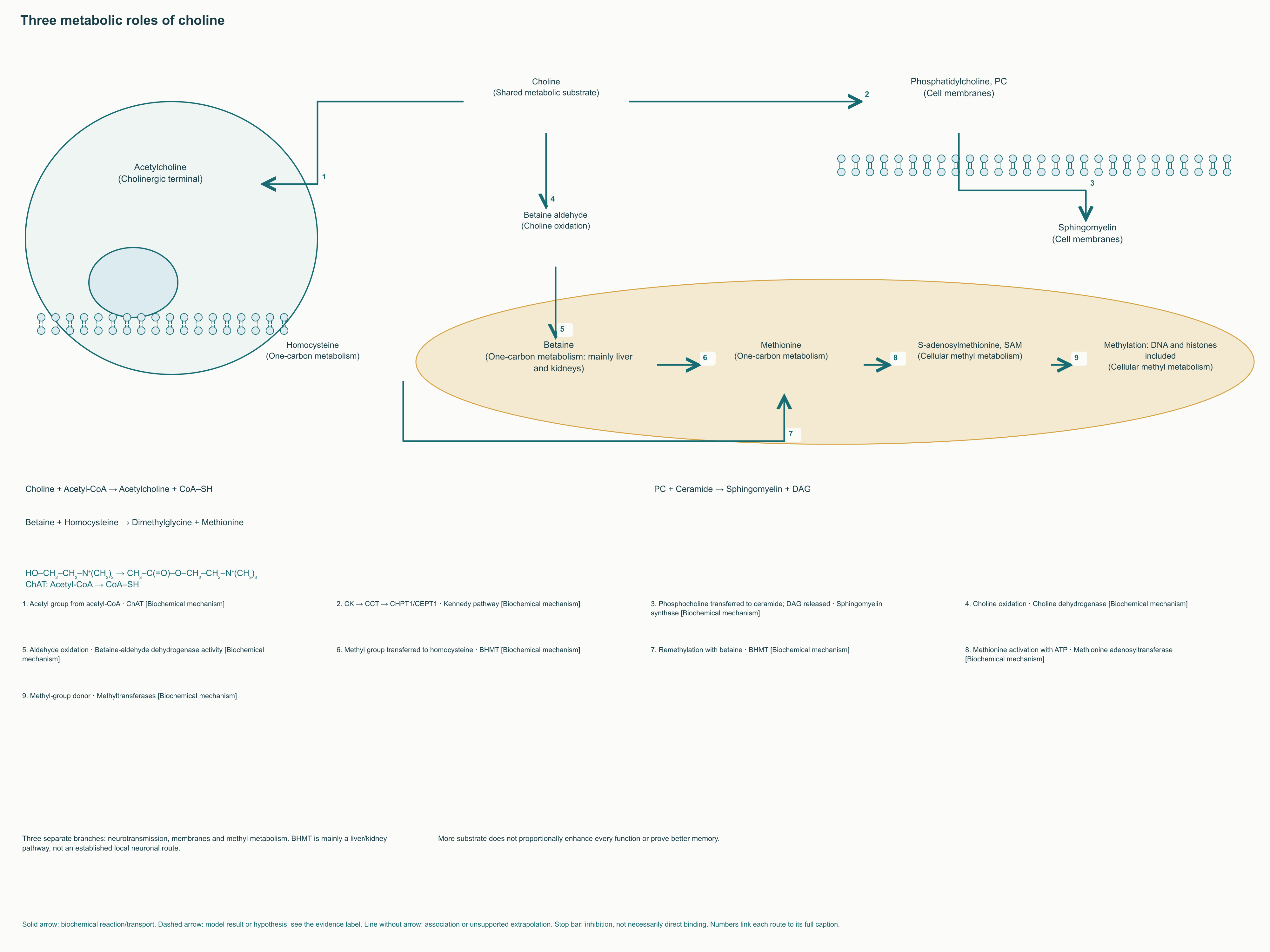
Choline is an essential nutrient and a precursor of several chemically distinct systems. It gives rise to acetylcholine, which participates in neuromuscular transmission, autonomic nervous system function, attention and memory. The choline group also forms part of phosphatidylcholine and sphingomyelin, while oxidation of choline to betaine connects its metabolism to homocysteine remethylation. These functions interact, but increasing choline intake does not mean that each of them increases simultaneously and proportionately.
Alpha-GPC, or choline alfoscerate, is glycerophosphocholine: a water-soluble compound produced by complete deacylation of phosphatidylcholine. Citicoline, or CDP-choline, is a nucleotide intermediate in phosphatidylcholine synthesis through the Kennedy pathway. After ingestion, their metabolites can enter choline metabolism, but a molecule's position in a biochemical pathway does not automatically determine the action of an oral supplement. Delivery to blood, entry into the brain, a change in neurotransmitter metabolism and a clinically meaningful improvement must be distinguished.
Choline salts, including chloride and bitartrate, cannot be dismissed as ineffective because of supposed blood–brain barrier impermeability. In a small human study, different forms of choline increased its plasma concentration, although their time profiles and formation of microbial metabolites differed. This does not establish equal cognitive effects, but it undermines a simple opposition between “poor salts” and “ideal brain donors”. For a specialist, the specific population, dose studied and outcome measured are more informative.
Phosphatidylcholine: synthesis, regulation and renewal
Phosphatidylcholine, abbreviated PC, is a major membrane phospholipid, but its proportion depends on the tissue, organelle and measurement method. A universal figure of “45–50% of neuronal membrane phospholipids” conceals this variation and is unnecessary for understanding the mechanism. PC affects bilayer properties and supplies the phosphocholine group used to synthesize sphingomyelin. The latter is formed by transferring that group to ceramide, rather than directly as the final product of the CDP-choline pathway.
Three reactions of the Kennedy pathway
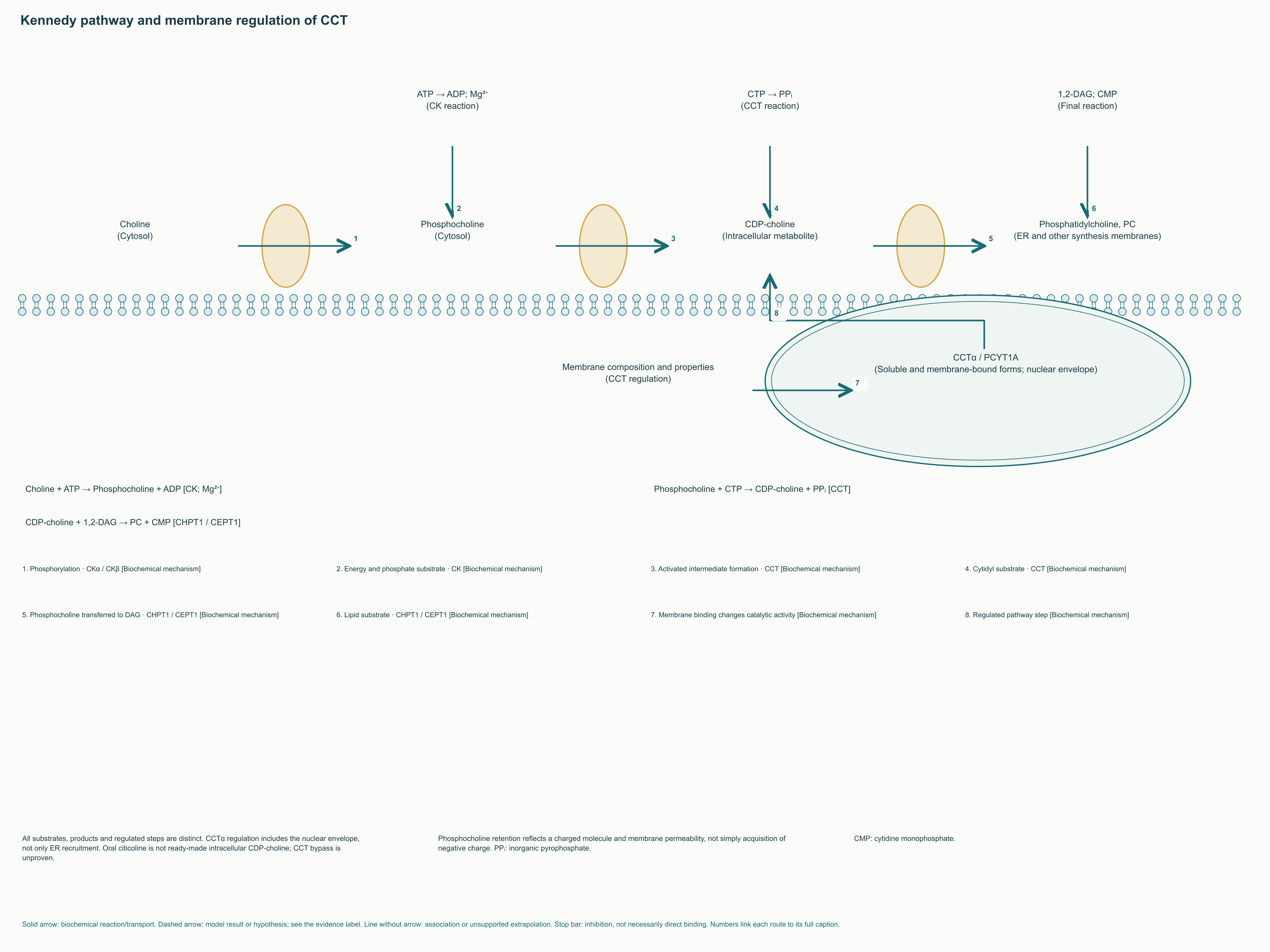
The Kennedy pathway connects choline availability to formation of an activated phosphocholine donor and then to PC synthesis. First, choline kinase, CK, uses ATP to produce phosphocholine; magnesium is needed for handling the nucleotide substrate. Next, CCT, CTP:phosphocholine cytidylyltransferase, forms CDP-choline, and a phosphotransferase transfers its phosphocholine group to diacylglycerol, DAG. Classical enzymatic studies established this sequence; its cellular regulation was investigated later.
Choline + ATP → phosphocholine + ADP is the CK reaction, involving Mg²⁺. Phosphocholine + CTP → CDP-choline + PPᵢ is the CCT reaction; PPᵢ denotes inorganic pyrophosphate. CDP-choline + 1,2-DAG → PC + CMP is the choline phosphotransferase reaction, involving CHPT1 and CEPT1. The phosphorylated metabolite is retained by the cell because of the properties of the charged molecule and its inability to diffuse freely across the lipid bilayer. This cannot be reduced to saying that it simply “acquires a negative charge”.
CCT as a membrane sensor and the limits of “bypassing” it
CCT regulates flux through the CDP-choline branch and changes its activity when binding membranes. For CCTα, encoded by PCYT1A, nuclear localization and interaction with nuclear envelope membranes are important; the cellular picture cannot be restricted to movement from the cytosol onto the endoplasmic reticulum alone. Membrane composition and physical properties affect enzyme conformation and catalytic activity. Structural and biochemical experiments support this relationship between membrane PC deficiency and regulation of its synthesis.
It does not follow that oral citicoline delivers ready-made intracellular CDP-choline directly to the final reaction and completely bypasses CCT. In humans, ingestion increases plasma choline and uridine, whose subsequent use requires cellular transport and metabolism. The model of CDP-choline resynthesis in tissue retains CCT and does not remove other constraints, including CTP and DAG availability and activity of the final enzymes. Nor can a universal contribution of “less than 5%” from the hepatic PEMT pathway be assigned to the whole brain. Relative pathway contributions depend on tissue, and PEMT is particularly important in the liver.
The Lands cycle and glycerophosphocholine formation
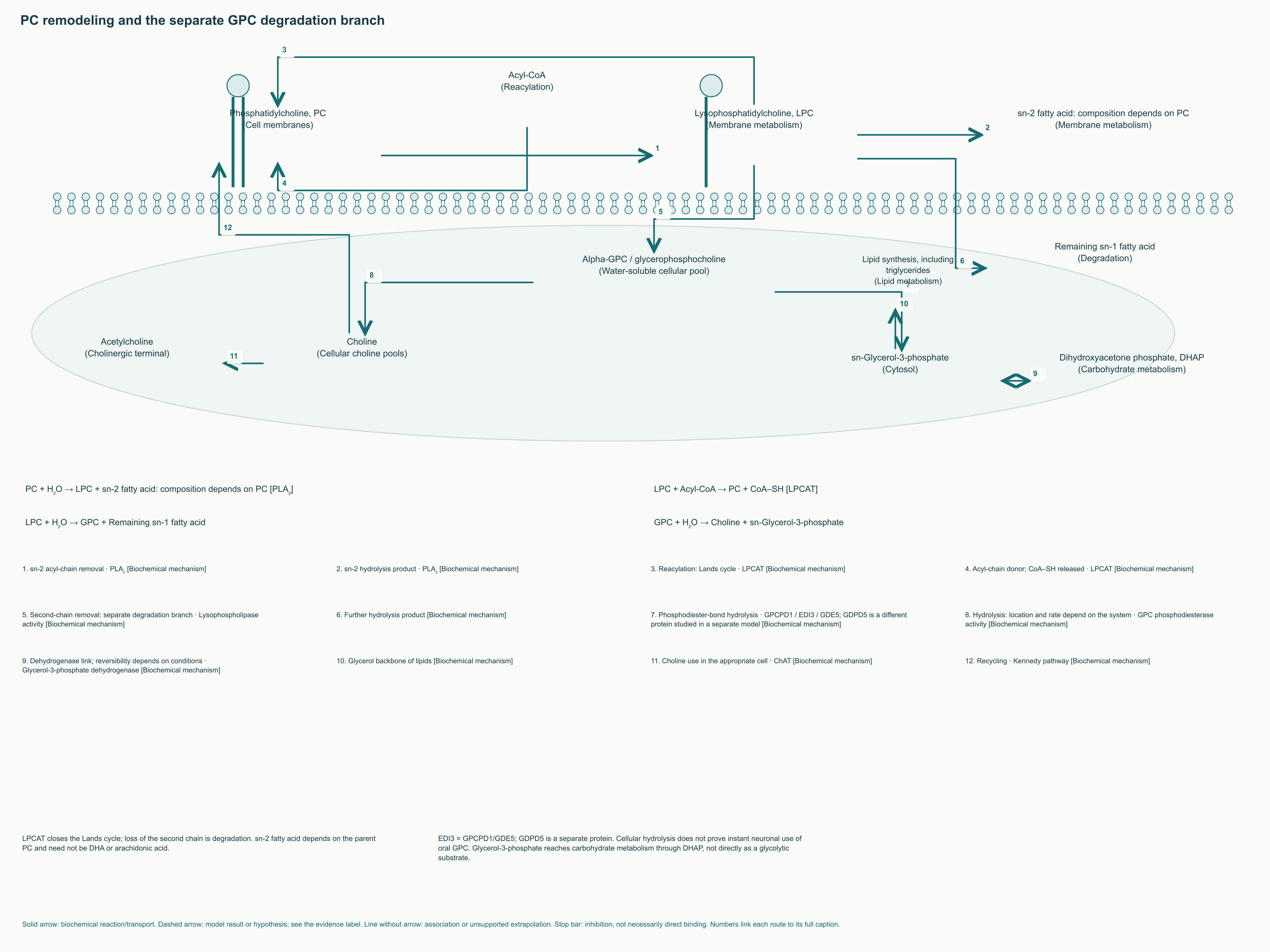
Hydrolysis of PC by phospholipase A₂ removes a fatty acid from the sn-2 position and produces lysophosphatidylcholine, LPC. Possible fatty acids include arachidonic acid, 20:4 n-6, and docosahexaenoic acid, 22:6 n-3, but the actual composition depends on the starting lipid. LPC can be reacylated by LPCAT enzymes, completing the Lands cycle, or lose its remaining acyl chain during further degradation. Fatty acid remodeling and complete molecular breakdown must therefore be shown as separate branches.
Complete deacylation yields GPC, whose subsequent hydrolysis can produce choline and glycerol-3-phosphate. GDPD5 and EDI3 are different proteins; EDI3 corresponds to GPCPD1, also called GDE5. GDPD5 activity toward GPC was investigated in a separate cellular model, whereas EDI3 was studied in other experimental systems. These findings describe possible choline recycling, but do not establish that all ingested alfoscerate is immediately cleaved by one particular enzyme in a cholinergic terminal.
Glycerol-3-phosphate participates in lipid synthesis and is connected, through dehydrogenase reactions, to dihydroxyacetone phosphate and carbohydrate metabolism. Released choline can be used for PC or acetylcholine after entering the appropriate cellular pool. GPC also has osmoregulatory functions, so its endogenous presence is not limited to being a “fast donor”. The biochemical origin of alpha-GPC explains its place in metabolism without assigning it a pharmacological route entirely separate from citicoline.
The blood–brain barrier and substrate availability
CHT1, CTL1/CTL2 and organic cation transporters
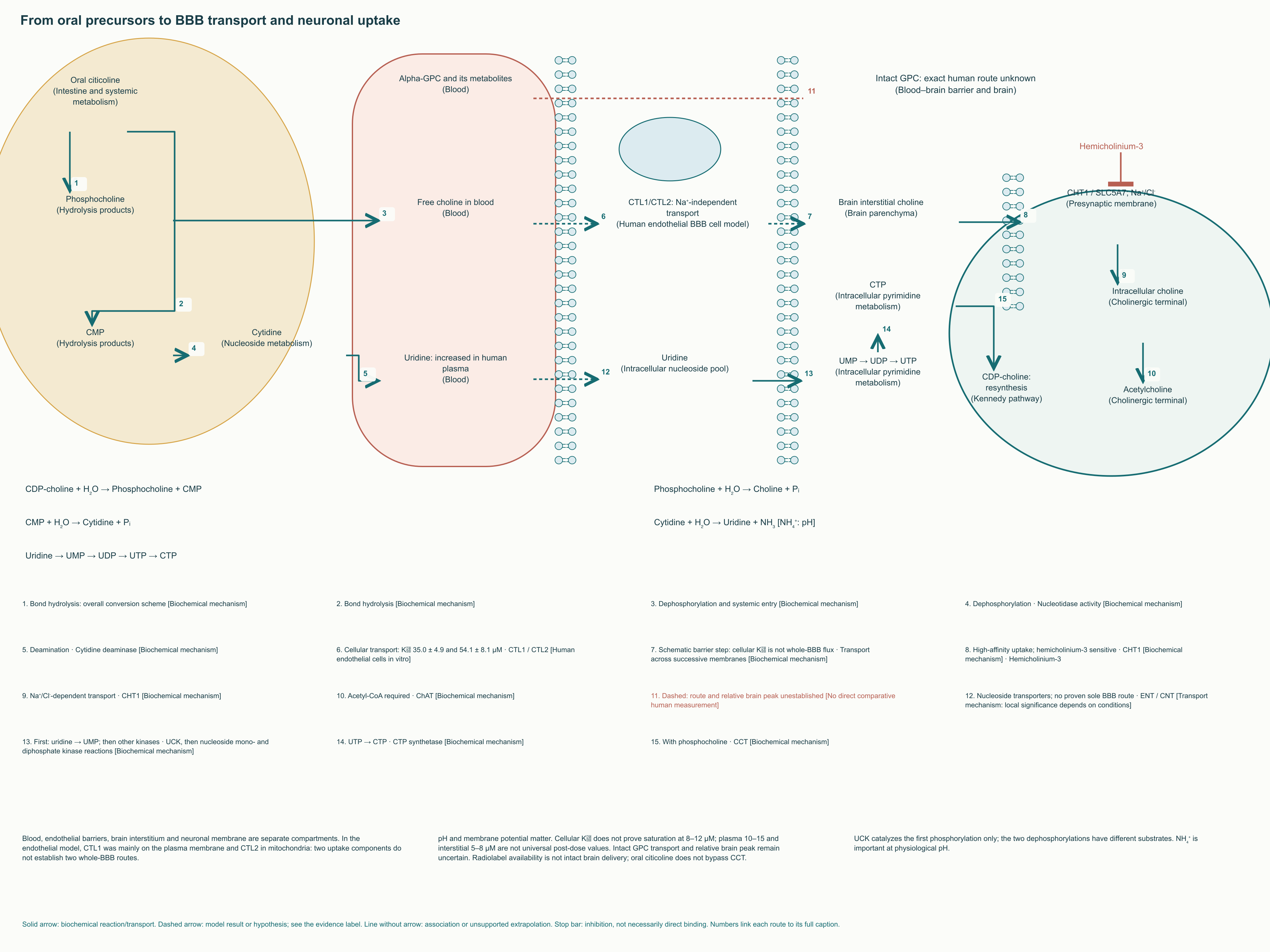
The blood–brain barrier, BBB, and presynaptic membrane are successive but distinct transport steps. CHT1, SLC5A7, provides high-affinity, Na⁺- and Cl⁻-dependent choline uptake by cholinergic neurons. In an experiment expressing the human transporter in oocytes, the half-maximal response to choline was around 2 μM. This describes a particular system rather than a universal choline concentration at all synapses. Hemicholinium-3 inhibits this transport and helps investigate the dependence of acetylcholine synthesis on substrate uptake.
System
Main role
What is established and what the table does not prove
CHT1, SLC5A7
Choline uptake by the cholinergic terminal
High affinity and Na⁺/Cl⁻ dependence; not the main endothelial route across the BBB
CTL1, SLC44A1, and CTL2, SLC44A2
Transport in endothelial and other cells
Components with Kₘ values of 35.0 ± 4.9 and 54.1 ± 8.1 μM were found in human brain microvascular endothelial cells; a cell experiment does not measure flux across the entire BBB in vivo
OCT1/OCT2, SLC22A1/SLC22A2
Organic cation transport, including in liver and kidney
One Kₘ range cannot be assigned to all tissues or used to rank supplement cognitive effects
In the human endothelial cell study, transport was Na⁺-independent and sensitive to environmental conditions, including pH. The expression “CTL1 facilitated diffusion” is therefore too coarse: the transporter, ionic conditions and membrane potential matter. In that model, CTL1 predominated at the plasma membrane and CTL2 at mitochondria; two cellular uptake components do not establish two equivalent routes through the whole barrier. Plasma choline concentrations of a few or several tens of micromoles per litre do not by themselves demonstrate near-total CTL1 saturation. In particular, a concentration below the experimental Kₘ is inconsistent with claiming that transport is “on the verge of saturation”.
Citicoline: choline, cytidine, uridine and resynthesis
For citicoline, absorption of a radiolabel must be distinguished from systemic availability of the unchanged molecule. The often repeated bioavailability of “more than 90%” does not mean that this fraction of ingested CDP-choline reaches neurons intact. Hydrolysis and dephosphorylation yield separate choline and nucleoside products; their distribution depends on the route of administration and experimental system. Claiming absolutely no penetration of intact citicoline through any barrier is therefore as categorical as promising direct delivery to the brain.
The simplified overall sequence is CDP-choline + H₂O → phosphocholine + CMP, followed by phosphocholine + H₂O → choline + Pᵢ and CMP + H₂O → cytidine + Pᵢ. Pᵢ denotes inorganic phosphate. Dephosphorylating phosphocholine and CMP requires different reactions, so the entire process cannot be assigned to one 5′-nucleotidase. Subsequently, cytidine + H₂O → uridine + NH₃, with NH₄⁺ being important at physiological pH. These equations describe chemical transformations without asserting that the whole cascade occurs exclusively in one intestinal location or finishes instantly in every person.
A study in 12 people with mild hypertension and no other major abnormalities compared single doses of 500, 2000 and 4000 mg citicoline with placebo. After 500 mg, plasma uridine rose by approximately 70–90%; after 2000 mg, by 100–120%, remaining elevated for several hours. This supports the appearance of a uridine component in human plasma and species differences from some animal models. It did not measure uridine in a human synapse or demonstrate increased dendritic spines.
Nucleoside transport includes equilibrative ENT systems and concentrative CNT systems, but ENT1/ENT2 should not be drawn as the established sole high-capacity route across the human BBB. Intracellular uridine is first converted to UMP, then UDP and UTP; UCK catalyzes the first step, not all of them. CTP synthetase forms CTP from UTP using nitrogen and energy, after which CCT can use CTP to synthesize CDP-choline. Addition of uridine or cytidine increased CDP-choline synthesis in PC12 cells, but translating this model into a clinical effect requires independent evidence.
Alpha-GPC: transport and the choline peak
Alpha-GPC is a polar zwitterion. A net neutral charge does not automatically make it lipophilic or freely membrane-permeable. Animal experiments show effects of administered alpha-GPC on brain cholinergic metabolism, including acetylcholine synthesis and release. They do not identify the exact human BBB transporter for intact alpha-GPC or establish universal “facilitated diffusion through glycerophosphate transporters”. Evidence of labelled metabolites reaching the brain also requires distinguishing the original molecule from its metabolic products.
Chen's 2024 work examined intestinal GPC cleavage in Caco-2 monolayers and mice with Gpcpd1 deleted specifically in intestinal epithelium. Added GPC was hydrolyzed to choline on the apical side of the cell model, and reducing Gpcpd1 decreased this activity. In mice, the genetic intervention partly attenuated the TMAO increase after GPC. This supports possible choline formation before intestinal transfer and adds to the account of ingested alfoscerate's fate. The study did not measure alpha-GPC transport across the human BBB or quantify human vascular risk.
There is no direct basis here for promising a higher and faster brain choline peak after equimolar alpha-GPC than after citicoline. Such a conclusion requires comparable doses, the same administration route and measurement of the relevant compartment, rather than comparison of different studies. Plasma choline is not a ready substitute for brain interstitial choline or acetylcholine release. Structural differences and choline mass fractions should therefore remain chemical characteristics, separate from a comparative claim about effects.
Acetylcholine: from substrates to the synaptic signal
ChAT and the limits of a substrate model
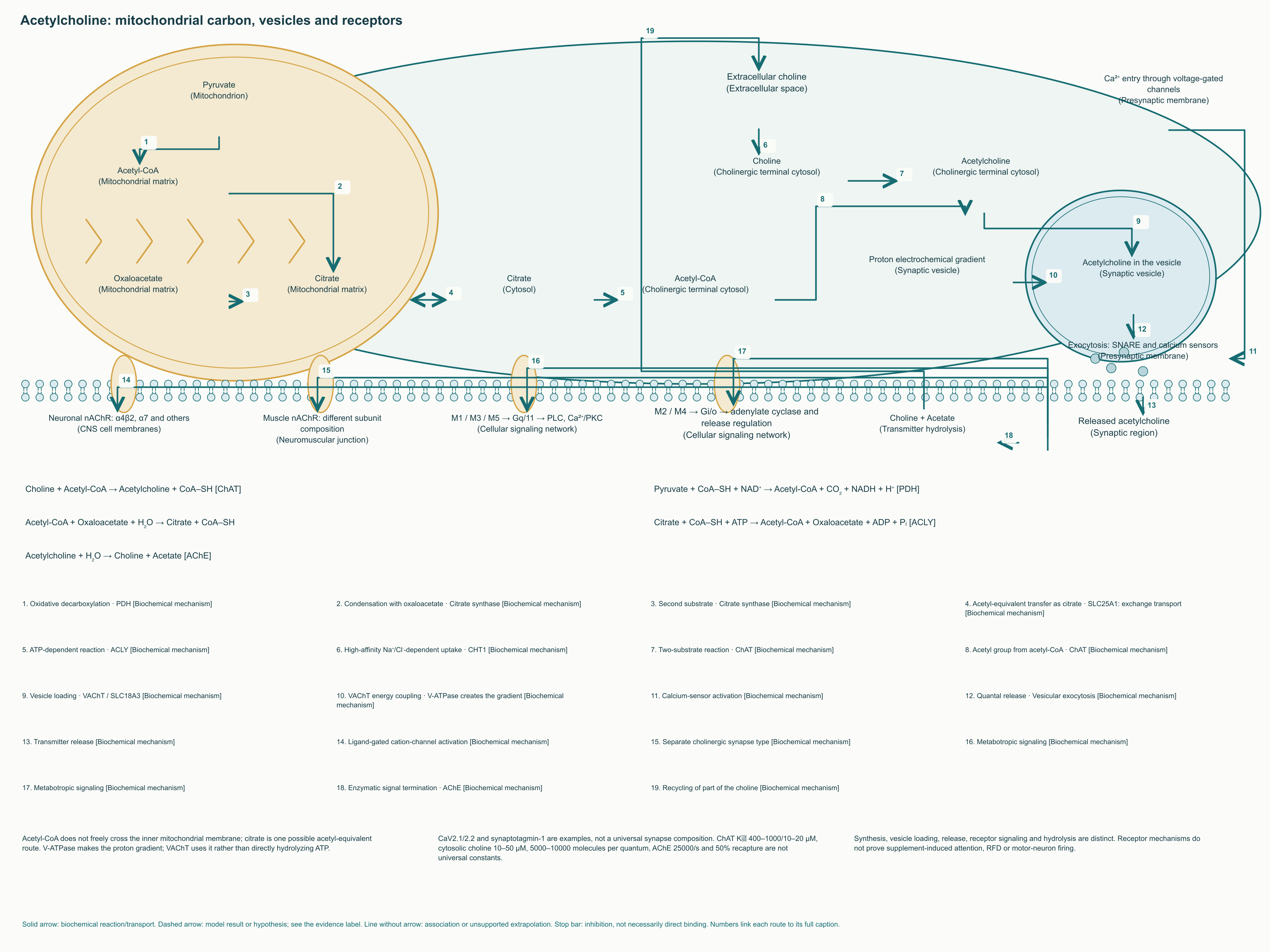
Choline acetyltransferase, ChAT, synthesizes acetylcholine in the cytosol of the cholinergic terminal. The reaction is choline + acetyl-CoA → acetylcholine + CoA-SH: an acetyl group is transferred to choline and free coenzyme A is released. Its rate depends on both substrates, enzyme amount and state, transport and terminal activity. Increasing an oral donor dose therefore does not imply a linear increase in transmitter in the synaptic cleft.
Analysis of ChAT requires kinetic parameters of the particular enzyme preparation and the intracellular substrates available to it. Frequently quoted Kₘ ranges of 400–1000 μM for choline and 10–20 μM for acetyl-CoA, or cytosolic choline of 10–50 μM, cannot be treated as universal values. Primary measurements in human brain tissue demonstrate method dependence: one study reported choline Kₘ of 2.53 ± 0.78 mM in control samples and 1.93 ± 0.72 mM in Alzheimer's disease. These values cannot be inserted directly into a calculation of intracellular rates in a living person. They support describing experimental conditions rather than declaring ChAT permanently “deeply unsaturated” in every terminal.
Acetyl-CoA, mitochondria and the citrate route
Acetyl-CoA is formed, among other routes, by oxidative decarboxylation of pyruvate through the pyruvate dehydrogenase complex. This is a mitochondrial reaction following glycolysis, not “aerobic glycolysis” itself. Because acetyl-CoA cannot cross the inner mitochondrial membrane freely, transfer of acetyl equivalents can involve citrate. Studies of brain tissue and synaptosomes support the importance of ATP citrate lyase in cholinergic endings, but the citrate route should not be treated as the only one.
The expanded reactions are pyruvate + CoA-SH + NAD⁺ → acetyl-CoA + CO₂ + NADH + H⁺, followed by acetyl-CoA + oxaloacetate + H₂O → citrate + CoA-SH. The citrate transporter SLC25A1 connects mitochondrial and cytosolic pools. In the cytosol, ACLY catalyzes citrate + CoA-SH + ATP → acetyl-CoA + oxaloacetate + ADP + Pᵢ, restoring an acetyl substrate for ChAT and other reactions. This explains the dependence of transmission on energy metabolism, but does not show that increasing choline compensates for acetyl-CoA deficiency during ischemia.
VAChT, vesicles and quantal release
Acetylcholine is loaded into vesicles by VAChT, SLC18A3. Transport is powered by the proton electrochemical gradient generated by vesicular V-ATPase, rather than direct ATP use by VAChT itself. When the terminal is excited, Ca²⁺ entry through voltage-gated channels is coupled to the SNARE complex and synaptotagmin-family calcium sensors. Channels and sensors vary between synapses; Caᵥ2.1/2.2 and synaptotagmin-1 are important examples, not the only universal combination.
A “quantum” means release of a vesicle's contents as a packet, rather than a special kind of acetylcholine synthesis. Molecule number per vesicle depends on the system, so 5000–10,000 cannot be an invariant brain parameter. After release, acetylcholine is hydrolyzed: acetylcholine + H₂O → choline + acetate, and some choline is recaptured by CHT1. Universal figures of “25,000 molecules per second” for AChE and “up to half the choline recaptured”, without identifying the enzyme preparation, synapse and conditions, do not reliably quantify human transmission.
Nicotinic and muscarinic receptors
Nicotinic receptors are ligand-gated cation channels; α4β2 and α7 are among those important in the CNS. They modulate attention, excitability and release of other transmitters, but these functions do not turn greater choline availability into selective stimulation of the desired subtype. The neuromuscular junction receptor has a different subunit composition, and findings for central α4β2/α7 cannot automatically be transferred to muscle. Experimental links between α7, calcium signaling, plasticity and inflammatory pathways also do not establish supplement neuroprotection.
Muscarinic M1, M3 and M5 receptors are predominantly coupled to Gq/11, whereas M2 and M4 couple to Gi/o. The first group can activate phospholipase C and downstream calcium and protein kinase signals; the second often decreases adenylyl cyclase activity and regulates transmitter release. Effect direction depends on the cell, receptor location and network context. “Excitatory” and “inhibitory” describe signaling mechanisms here, not a person's overall behavior. This multistep regulation limits the model of “more choline, more focus”.
Comparative pharmacodynamics without substituting mechanisms for clinical outcomes
Choline mass fraction and equimolarity
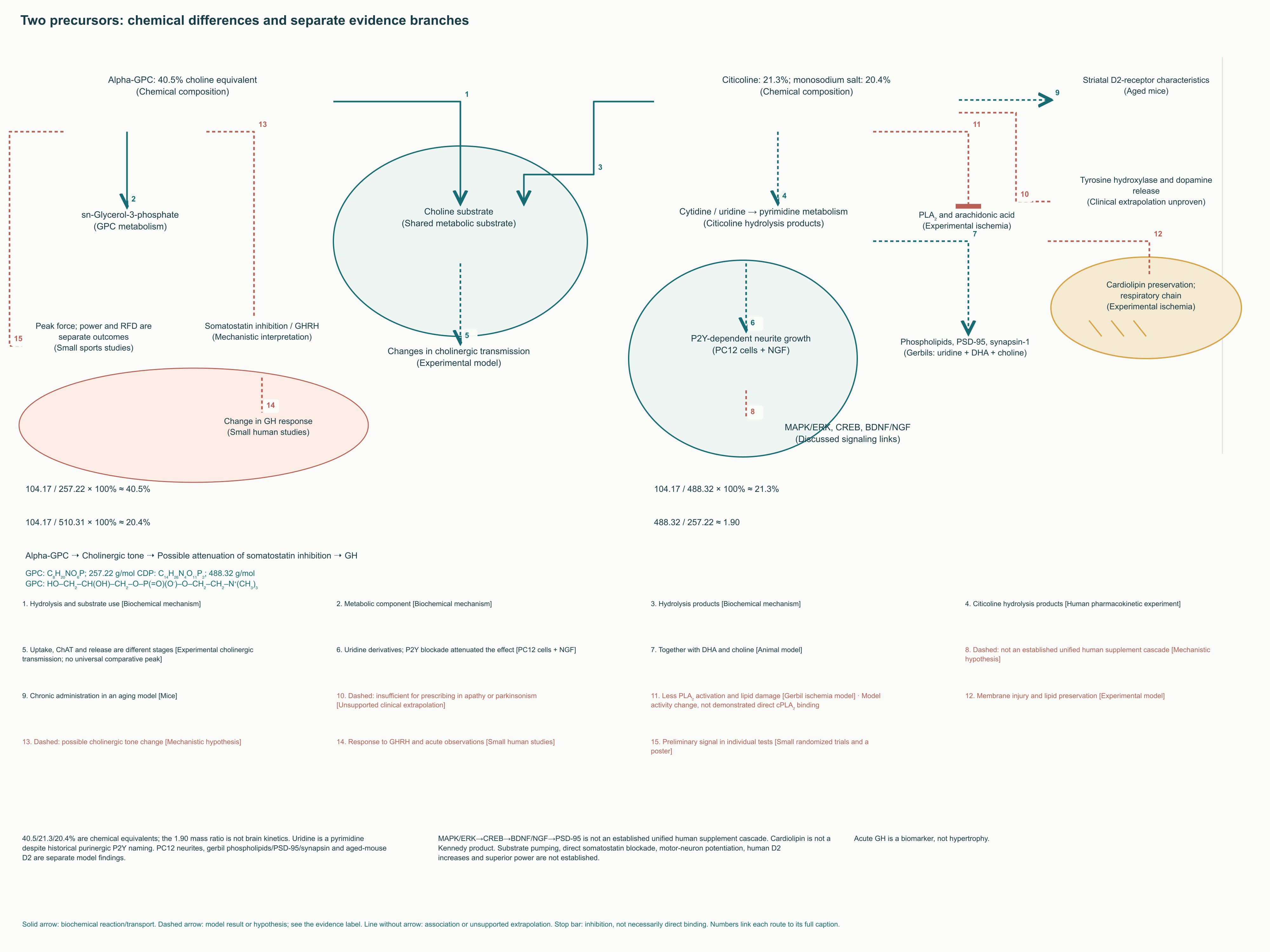
Alpha-GPC, C₈H₂₀NO₆P, has a molar mass of approximately 257.22 g/mol and one choline group. Citicoline, C₁₄H₂₆N₄O₁₁P₂, is approximately 488.32 g/mol, and its anhydrous monosodium salt approximately 510.31 g/mol. Taking the choline cation as approximately 104.17 g/mol gives 104.17 / 257.22 ≈ 40.5%, 104.17 / 488.32 ≈ 21.3% and 104.17 / 510.31 ≈ 20.4%, respectively. This is a choline equivalent, not “elemental choline”: no chemical element has that name.
Under these assumptions, 1000 mg pure alpha-GPC contains approximately 405 mg choline equivalent, 1000 mg citicoline around 213 mg, and its monosodium salt around 204 mg. The molar mass ratio 488.32 / 257.22 ≈ 1.90 means that approximately 1.9 times the mass of free citicoline is needed for the same number of choline groups. Hydration, salt form and active ingredient concentration in commercial material affect calculations for a particular product. Neither these percentages nor equimolarity determine brain delivery speed, influence on ChAT or clinical efficacy.
Uridine, P2Y and experimental synaptogenesis
Uridine and its phosphorylated derivatives connect citicoline to pyrimidine metabolism. UTP and UDP can act as extracellular signals at particular P2Y receptors, historically classified within purinergic signaling even though these ligands are pyrimidines. In PC12 cells, uridine enhanced neurite growth during differentiation with nerve growth factor, and pharmacological P2Y blockade attenuated the effect. This supports a mechanism, but does not demonstrate that ingested citicoline directly acts as a P2Y agonist in the human brain.
MAPK/ERK and CREB cascades, BDNF/NGF neurotrophins and the synaptic proteins PSD-95 and synapsin-1 belong to the plasticity pathways under discussion. Changing one signal does not establish that the entire chain inevitably activates at a clinical dose. In gerbils, combined uridine, DHA and dietary choline increased brain phospholipids and particular synaptic proteins: PC increased by 45%, synapsin-1 by 41% and PSD-95 by 38%. These are animal brain measurements after experimental feeding, not percentages of human memory or spine improvement from a commercial “stack”.
Dopamine, phospholipase A₂ and cardiolipin
Citicoline's dopaminergic effects have mainly been studied experimentally. Chronic CDP-choline administration in aging mice partly restored characteristics of striatal dopamine and acetylcholine receptors. This cannot be described as an established direct increase in human D2 receptor density or as proven treatment for apathy or parkinsonism. Hypotheses about changes in tyrosine hydroxylase and dopamine release likewise require separate support for each clinical outcome.
In ischemia models, citicoline attenuated increased PLA₂ activity, arachidonic acid release, oxidative injury and loss of certain membrane lipids. Preservation of cardiolipin in the inner mitochondrial membrane is relevant to respiratory chain stability and apoptotic processes. However, cardiolipin is not a CDP-choline pathway product, and reducing its loss does not demonstrate directly accelerated biosynthesis. Links with cytochrome c release and caspase-3 should be presented as experimental neuroprotective hypotheses, separate from recovery of a stroke patient.
The growth hormone axis and neuromuscular transmission
Growth hormone release depends on the interplay of growth hormone-releasing hormone, GHRH, and somatostatin, and cholinergic signaling can alter that balance. Ceda compared young and older volunteers' responses to administered GHRH with and without alpha-GPC; the combination enhanced the hormonal response. This differs from taking an oral supplement alone before exercise. The sequence alpha-GPC → altered cholinergic tone → possible attenuation of somatostatin inhibition → enhanced GH response remains a mechanistic interpretation, since all those intermediate steps were not directly measured together in humans.
In Kawamura's small crossover study, eight healthy men received a single 1000 mg GPC dose or placebo. GH increased 60 minutes after GPC, with later changes in free fatty acids and ketone bodies. This does not establish a universal two- to fourfold GH increase after 600–1000 mg, sustained body composition improvement or a necessary effect at 45 minutes. The absence of a comparable citicoline study also does not justify categorically excluding any endocrine action.
Acetylcholine is necessary for excitation of a muscle fibre at the neuromuscular junction. Yet claims that alpha-GPC “maximizes quantal release”, selectively recruits IIx fibres or raises motor neuron firing frequency are unsupported by measurement of those steps in the cited sports studies. Force, power and rate of force development, RFD, are different measures; a positive result for one does not establish improvement in the others. A brief GH peak also does not prove hypertrophy or a lasting training advantage.
Comparative matrix: properties, hypotheses and evidence
Parameter
Alpha-GPC
Citicoline
Chemical position
PC deacylation product; participates in choline recycling
Endogenous CDP-choline intermediate
Choline equivalent
Approximately 40.5% for pure material
Approximately 21.3%; 20.4% for the monosodium salt
Additional metabolic component
Glycerol-3-phosphate after GPC hydrolysis
Cytidine/uridine component
Brain peak and BBB
Insufficient basis for universal superiority over citicoline
Plasma metabolites established; direct CCT bypass unproven
D2, P2Y and membranes
Cholinergic effects in experimental models
Pyrimidine signaling and membrane effects mainly in models
GH and physical force
Small, short studies with some positive outcomes
No basis for declaring established sports superiority or absolutely no effect
Dementia and vascular impairment
Positive older RCT and small ASCOMALVA publications
Limited positive studies; IDEALE was nonrandomized
Acute stroke and TBI
Uncontrolled series after ischemic events
Large ICTUS and COBRIT trials did not confirm the proposed benefit
Glaucoma and ADHD
Not established indications arising from the discussed mechanisms
Visual pathway data exist; healthy adolescent study does not establish ADHD treatment
TMAO and long-term safety
TMAO may rise; observational vascular signal
Direct comparative TMAO superiority unproven
Human studies: population, dose, duration and outcome
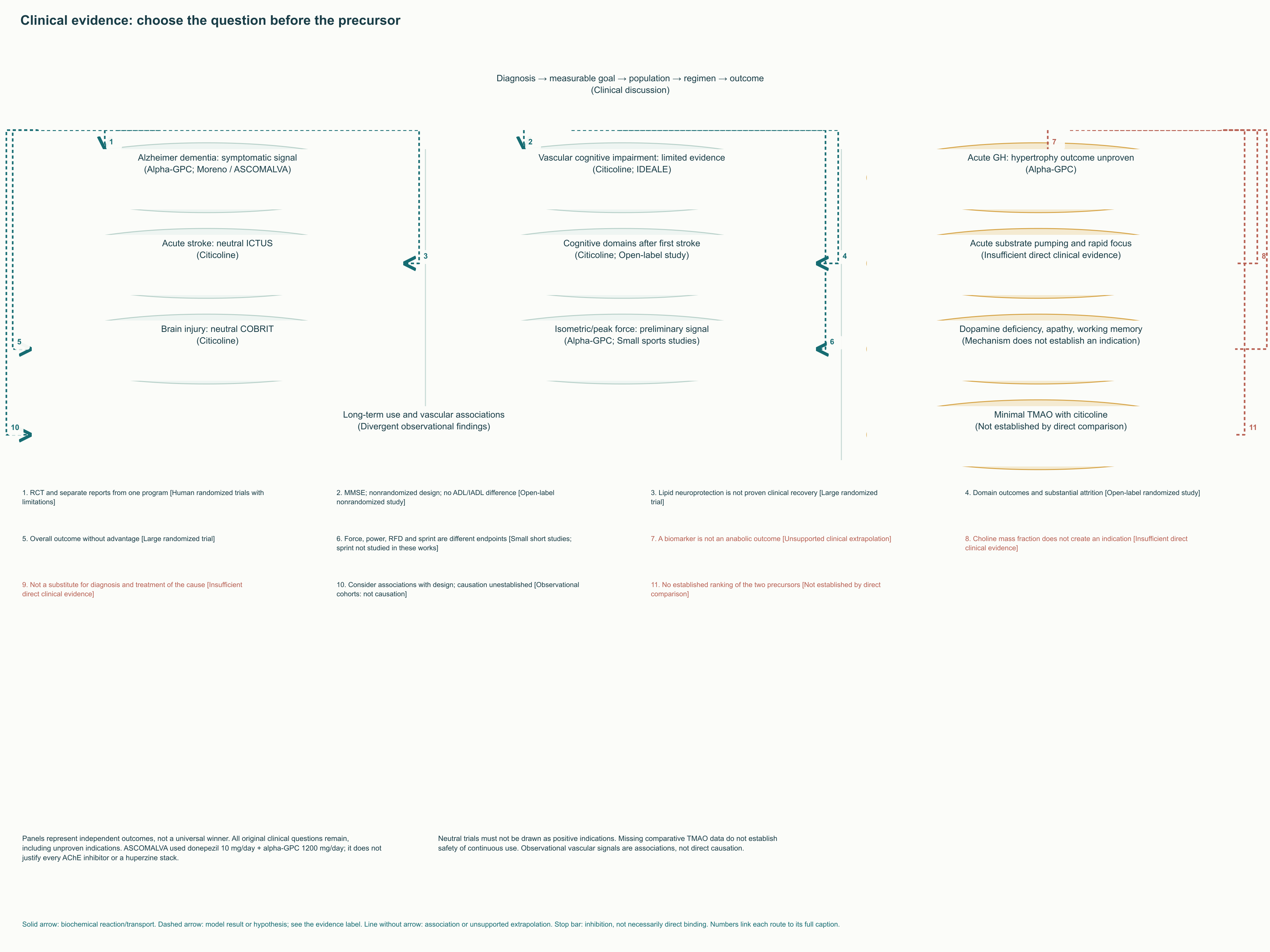
Alzheimer's disease: Moreno and ASCOMALVA
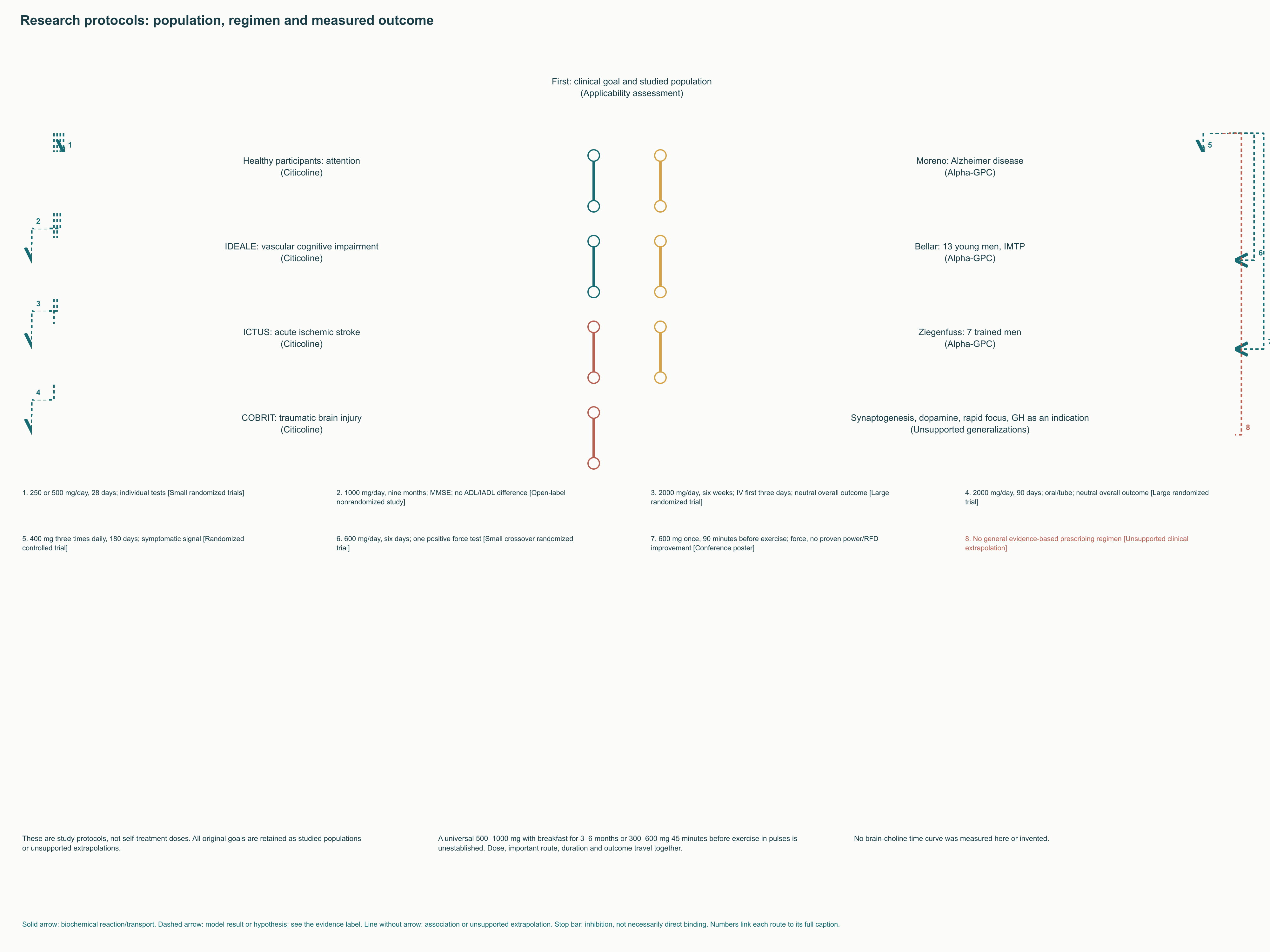
Moreno's double-blind placebo-controlled trial enrolled 261 patients with mild or moderate Alzheimer's disease. Alpha-GPC was given as 400 mg three times daily, totaling 1200 mg/day, for 180 days; 132 patients received active treatment and 129 placebo. ADAS-Cog decreased by an average of 3.20 points from baseline in the active group and increased by 2.90 points with placebo; lower scores indicate less impairment. This supports a symptomatic signal but does not prove slowed biological neurodegeneration or replace a modern comparison with accepted therapy.
ASCOMALVA investigated adding alpha-GPC to donepezil in Alzheimer's disease with cerebrovascular injury. The 2012 paper reported interim results for 91 patients after 12 months; 210 was the planned enrollment. Later reports used different analytical samples: a three-year publication described 113 patients, and MRI analysis involved 56 participants, 27 receiving donepezil with placebo and 29 the combination. These reports cannot be merged into one “large RCT of 210 people followed for 24–48 months” with a single MMSE or ADAS-Cog difference.
The combination comprised donepezil 10 mg/day and alpha-GPC 1200 mg/day. Authors reported more favorable changes in several cognitive, functional and behavioral measures than with donepezil and placebo, but separate publications from the program are not independent replications. Effect size requires the particular scale, time point and analytical sample: “improvement” can describe different changes. Less atrophy in several regions was reported in the MRI subgroup, but its small size and interim analysis limit conclusions about disease course.
IDEALE: vascular cognitive impairment without randomization
IDEALE was an open-label, multicentre, nonrandomized study of 349 older people with mild vascular cognitive impairment. Citicoline 500 mg twice daily was received by 265 participants; 84 untreated controls did not receive citicoline, and follow-up lasted nine months. MMSE in the active group was 22.4 ± 4 at baseline and 22.9 ± 4 at month nine, compared with 21.5 ± 6.9 and 19.6 ± 6.3 in controls. The difference at the final assessment was statistically significant, but baseline differences, treatment selection and lack of blinding limit causal interpretation.
Cognitive change in IDEALE must be considered separately from daily functioning. Authors found no between-group differences in ADL or IADL, measures of everyday activities. Stability of a cognitive screening score cannot therefore be described as proven preservation of independence or prevention of dementia. The positive signal needs controlled confirmation, particularly for long-term prescribing to older patients with vascular risk factors.
Cognitive recovery after a first stroke
An open-label randomized study after first ischemic stroke allocated 347 patients to citicoline 1000 mg/day plus usual care or usual care alone. There were 172 patients in the active group and 175 controls, with treatment for 12 months. Investigators reported more favorable attention and executive function and temporal orientation outcomes. These concern specific neuropsychological measures, not established universal recovery of all cognitive functions.
At one year, 199 participants underwent neuropsychological assessment, making attrition important to interpretation and robustness. An open design without placebo differs from large trials of acute neuroprotective treatment. Comparison must distinguish the acute phase from year-long follow-up of cognitive domains after the event. Clinically, the results support discussion of a domain-specific cognitive hypothesis, but cannot replace rehabilitation or prevention of recurrent stroke.
ICTUS: a neutral acute ischemic stroke result
ICTUS randomized 2298 patients with moderate or severe acute ischemic stroke. Citicoline or placebo began within the first day: 1000 mg every 12 hours intravenously for three days, then orally, for six weeks in total. The primary combined recovery outcome was assessed at day 90 using NIHSS, modified Rankin Scale and Barthel Index. Benefit was not demonstrated: OR 1.03, 95% confidence interval 0.86–1.25, p = 0.364.
The trial stopped for futility, and its overall result remains neutral. Thrombolysis describes the care context but does not prove why citicoline lacked effect. Subgroup signals require interaction testing and independent confirmation; selecting older patients or those not given rtPA does not establish benefit for them. Similarly, claiming an “improvement of 28–38%” conflates relative effects with recovery probability and does not reproduce ICTUS.
Before ICTUS, an individual patient data analysis of four trials included 1372 eligible patients from 1652 randomized participants and reported OR 1.33 for complete recovery. This historical positive signal must be considered alongside the later large neutral trial, rather than used to override it. An odds ratio of 1.33 also does not mean a 33-percentage-point increase in absolute recovery probability. Pooling selected patients from early trials differs from prospective randomization in a later care setting.
Alpha-GPC after ischemic events: an uncontrolled series
An Italian multicentre study in 1994 followed 2044 patients after stroke or transient ischemic attack. Alpha-GPC was given intramuscularly at 1000 mg/day for 28 days, then orally at 400 mg three times daily for five months. Mean Mathew scores rose from 58.7 to 74.6 over the first 28 days, and MMST from 21 to 24.3 by the end of follow-up. These changes describe a treated group's trajectory, because there was no parallel randomized control group.
After stroke, natural recovery, rehabilitation and concurrent care can produce improvement. Without a control, the contribution of alpha-GPC cannot be determined. Large enrollment does not remove this design limitation or make the series equivalent to an RCT. It retains historical and descriptive value, but does not justify choosing the drug for acute stroke.
COBRIT: no confirmed benefit in traumatic brain injury
COBRIT enrolled 1213 patients with complicated mild, moderate or severe traumatic brain injury. The double-blind study compared citicoline 2000 mg/day orally or by feeding tube with placebo for 90 days. A combined cognitive and functional assessment at day 90 showed no advantage: overall OR 0.98, 95% confidence interval 0.83–1.15. A positive overall effect was also not confirmed at day 180.
This finding is essential when discussing citicoline for neural repair and TBI. Adherence limitations or injury heterogeneity may inform future studies, but do not transform a negative trial into efficacy evidence. Experimental membrane preservation did not translate into clinical recovery here. For the studied population, clinical outcomes define applicability despite plausible membrane mechanisms.
MR spectroscopy and attention in healthy people
Silveri and colleagues studied 16 healthy middle-aged men and women receiving 500 or 2000 mg/day citicoline for six weeks. ³¹P-MR spectroscopy showed increases in anterior cingulate phosphocreatine of approximately 7%, β-nucleoside triphosphates of 14%, and the phosphocreatine/inorganic phosphate ratio of 32%. Brain β-NTP largely reflects ATP, but this is a regional spectroscopic measure, not an increase in all “frontal lobe energy”. A small experiment with two active doses does not establish that these changes prevent cognitive decline.
A trial in 60 healthy women aged 40–60 compared 250 mg/day, 500 mg/day and placebo for 28 days. The 250 mg group made fewer CPT-II omission and commission errors, whereas the 500 mg group made fewer commission errors. This is not identical improvement of every measure at both doses. The findings concern particular attention and response control measures, not Alzheimer's disease, ADHD or long-term use in other ages.
Another study gave 75 healthy adolescent boys 250 or 500 mg citicoline or placebo for 28 days. Authors reported improvement in certain attention and psychomotor speed measures. This small, brief study of healthy participants was not treatment of diagnosed ADHD. Clinical significance requires replication and durability assessment, rather than a statistically different test score alone.
A separate citicoline research direction concerns glaucoma and visual pathways. Small patient studies measured retinal and visual pathway electrophysiology, including oral 1600 mg/day or intramuscular 1000 mg/day. These specific measures differ from memory, and repeated-course studies with follow-up do not establish general neuroprotective efficacy. They do not support treatment of any “dopamine deficiency” or replacement of intraocular pressure control.
Physical force: Bellar and the Ziegenfuss poster
Bellar's double-blind crossover study involved 13 young men receiving alpha-GPC 600 mg/day for six days. It assessed isometric mid-thigh pull, IMTP, and a separate upper-body isometric test, rather than conventional leg press or bench press. IMTP peak force change was 98.8 ± 236.9 N with alpha-GPC versus −39.0 ± 170.9 N with placebo, p = 0.044. The upper-body result was not significant, p = 0.127. Wide variation and small enrollment matter when interpreting one positive outcome. Acute assessment one hour after the first dose found no advantage in either force test.
Ziegenfuss's poster included only seven trained men, taking 600 mg alpha-GPC 90 minutes before resistance exercise. Peak bench-throw force was 14% higher, 933 ± 89 versus 818 ± 77 N, but peak power and RFD did not improve significantly. The reported 44-fold GH rise was relative to a very low baseline within the active condition, not a 44-fold advantage over placebo. A poster of this size provides a preliminary signal, not a sports prescribing standard or evidence of muscle anabolism.
Doses and combinations: reading study protocols
Dose, route and duration do not form a universal regimen
A research regimen must be described with diagnosis, route, comparator and outcome. Citicoline regimens here include 250–500 mg/day for 28 days in attention studies, 1000 mg/day for nine months in IDEALE and 2000 mg/day for six weeks in neutral ICTUS. Alpha-GPC regimens include 1200 mg/day for 180 days in Alzheimer's disease and 600 mg/day for six days in a small sports experiment. These doses are not interchangeable self-treatment advice and do not establish “citicoline for long courses, alpha-GPC for a fast peak”.
These studies did not establish strict morning administration, an obligatory breakfast or universal breaks. Bellar split daily dosing between morning and evening, whereas Ziegenfuss used a single dose 90 minutes before exercise. Combining them into an obligatory 300–600 mg dose 45 minutes beforehand and promising the same outcome is unwarranted. Professional application means matching use to the studied setting and local product instructions, not constructing a convenient general schedule from different experiments.
“Stacks”: plausible biochemistry and unproven prescribing
Combining choline, uridine and DHA has an experimental basis in animal phospholipid and synaptic protein studies. But a “Mr. Happy Stack” of citicoline, uridine monophosphate and B6/B9/B12 is not the gerbil diet studied. There is no basis for promising 30–40% more human dendritic spines or treating citicoline 250–500 mg, DHA 500–1000 mg and UMP 150–250 mg as a clinical standard. Vitamin functions in metabolism do not prove benefit from supplementation without a relevant need.
Alpha-GPC combined with huperzine A and caffeine likewise does not acquire efficacy evidence merely because three mechanisms exist. Huperzine A inhibits acetylcholinesterase, caffeine blocks adenosine receptors and alpha-GPC participates in choline metabolism. This does not establish improved motor unit recruitment or safety alongside other cholinergic treatments. The original amounts of 100–200 μg huperzine and 100–200 mg caffeine remain in the editorial coverage map as an unconfirmed protocol, rather than a treatment or training regimen for readers.
TMAO and vascular safety
CutC, CutD and hepatic FMO3
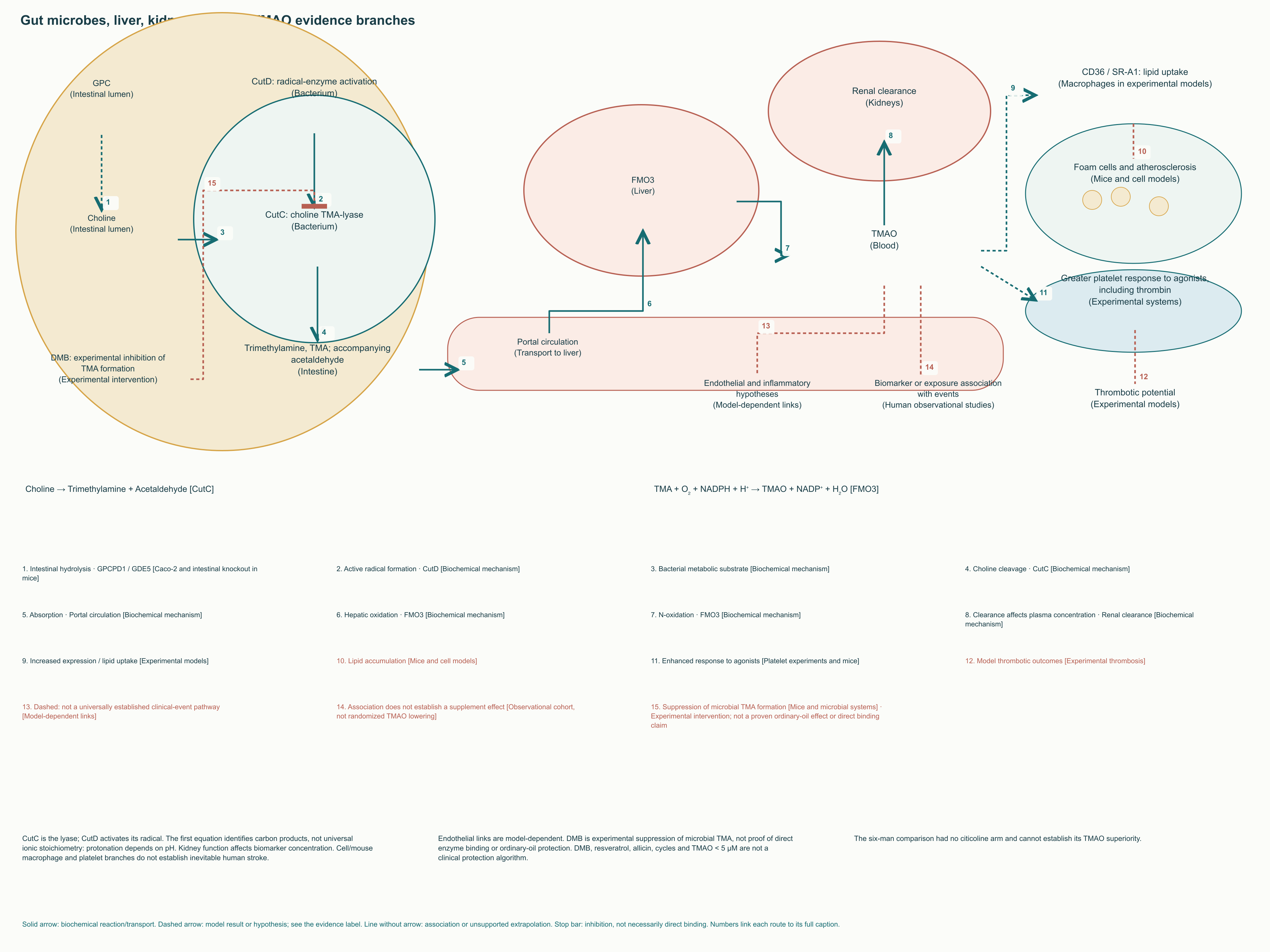
Some anaerobic gut bacteria cleave choline into trimethylamine, TMA, and acetaldehyde. The glycyl radical enzyme CutC catalyzes the reaction, while CutD activates it by generating the radical; these are not two separate choline lyases. Absorbed TMA travels through portal blood and is oxidized in the liver by FMO3 to trimethylamine N-oxide, TMAO. Flux depends on microbiota, substrate and liver and kidney function, not just a supplement's choline percentage.
In Wang's mouse experiments, choline and TMAO increased macrophage scavenger receptor CD36 and SR-A1 expression, cholesterol accumulation and foam cell formation. Germ-free animals and suppression of gut flora supported the microbial component. Platelet and mouse experiments showed enhanced agonist responses and thrombotic potential. These arrows have experimental support, but cannot be portrayed as an inevitable “supplement → atherosclerosis → stroke” chain in humans. Endothelial and inflammatory mechanisms also require specifying model, concentration and exposure duration.
Tang demonstrated microbiota-dependent TMAO production after a phosphatidylcholine challenge in humans, and an association between TMAO and cardiovascular events in a separate cohort. The observational component does not establish that lowering laboratory TMAO with a particular intervention reduces stroke. Levels also depend on renal clearance, diet and patient characteristics. Interpretation must therefore use clinical context rather than one “safe” threshold. Choline remains an essential nutrient, and discussion of supplement metabolites does not itself justify banning eggs, fish or other choline sources.
Lee's cohort: alpha-GPC and stroke association
Lee's South Korean cohort included 12,008,977 people aged at least 50, including 108,877 alpha-GPC users. People with recorded baseline stroke, Alzheimer's disease or cerebrovascular disease were excluded; it is therefore incorrect to say every recipient already had cerebrovascular insufficiency. In the fully adjusted cohort, the HR for any stroke was 1.46, 95% confidence interval 1.43–1.48. After covariate matching, HR was 1.43, 95% confidence interval 1.41–1.46.
This is a relative event hazard, not an individual's absolute stroke probability. Residual confounding, prescribing patterns, unrecorded symptoms, surveillance differences and claims-based classification errors remain possible. These limitations do not prove that the entire signal is explained by confounding by indication: adjustment and matching were performed, and the association persisted. Nor did the study directly measure TMAO, so it cannot be identified as an established mediator of this particular association.
The cohort does not establish causality or the safety of an occasional dose in a young athlete. It cannot prove that alpha-GPC necessarily causes stroke or justify ignoring the long-term vascular signal. Considering the association alongside design and limitations avoids a one-sided explanation. For a specialist, it argues for weighing demonstrated benefit, duration and baseline vascular risk when discussing use.
Kim's later 2025 cohort included 508,107 patients with newly recorded mild cognitive impairment, using time-dependent Cox modeling of prescription exposure. Alpha-GPC use was associated with lower conversion to Alzheimer's dementia, HR 0.899, 95% confidence interval 0.882–0.918, and vascular dementia, HR 0.832, interval 0.801–0.865. Lower stroke risk was observed in patients who did not progress to dementia, not those who did. This different starting population and analytical question cannot directly refute Lee or prove preventive action. Differing observational signals increase the importance of high-quality randomized long-term outcome data.
Is citicoline safer with respect to TMAO?
A crossover study in six healthy men compared single doses equivalent to 550 mg choline as chloride, bitartrate, alpha-GPC and egg PC. Water-soluble forms, including alpha-GPC, increased TMAO, whereas egg PC did not produce that rise in this experiment. Citicoline was not compared, so this does not establish superiority over alpha-GPC. Neither can absence of an increase after one PC form in a small experiment be generalized to every dietary challenge or long-term outcome.
“Citicoline produces virtually no TMAO” needs direct evidence and is not supported here. Its phosphorylated structure does not guarantee that choline products never become available to microbes. No universal alpha-GPC risk threshold “only above 1200 mg/day” or “moderate risk” category follows from choline mass fraction. Without comparable human studies, chemical differences cannot provide a quantitative vascular safety ranking.
DMB, dietary interventions and monitoring limits
3,3-Dimethyl-1-butanol, DMB, was studied as a nonbactericidal inhibitor of microbial TMA formation in experimental systems. Wang's intervention reduced TMAO formation and atherosclerotic changes in mice on particular diets. This was not prevention of human vascular events, and does not show that ordinary olive oil intake reproduces the concentration and effect. Finding DMB in some foods does not turn them into standardized CutC-blocking treatments.
Resveratrol and allicin likewise cannot be recommended as proven antidotes to choline supplements without trials of the specific combination. Preventive “four to eight weeks on, four weeks off” cycles and a universal target TMAO < 5 μM are unconfirmed. hs-CRP reflects inflammatory context, but is not a specific alpha-GPC safety measure or a substitute for ordinary vascular risk assessment. TMAO measurement may be a research tool, yet these studies do not yield an obligatory monitoring algorithm for every user.
NIH notes that excessive choline can cause fishy body odor, sweating, lowered blood pressure and other adverse effects; the adult tolerable upper intake level is 3500 mg/day total choline. This is not a recommended alpha-GPC or citicoline dose, nor assurance of long-term safety below that boundary. The open alpha-GPC series after ischemic events reported heartburn, nausea, insomnia, agitation and headache, among other complaints; frequencies depend on product and population. Absence of severe events in a small, brief sample does not exclude rare or delayed risks.
Product assessment should distinguish raw material mass, active alpha-GPC or citicoline content and total choline equivalent from all products used. A donor in a multicomponent mixture complicates tolerability and efficacy attribution: a stimulant or another ingredient may explain changes. For a patient already taking an AChE inhibitor, another cholinergic agent requires assessment of the complete medication regimen; combining mechanisms does not establish a safe schedule. Medicinal formulations, injections and dementia therapy should follow a clinician's prescription and current local product information.
Conclusion: begin with the outcome, not the donor
Alpha-GPC and citicoline differ in chemical structure and additional metabolic components. Alpha-GPC supplies more choline equivalent per unit mass, while citicoline connects to pyrimidine metabolism, but this does not establish an overall winner for BBB transport, acetylcholine, attention or safety. Signals in Alzheimer's disease, vascular cognitive impairment and particular healthy-person tests require interpretation by design and evidence size. Neutral ICTUS and COBRIT findings are essential in acute stroke and TBI; the observational stroke association must remain part of long-term alpha-GPC discussion.
Clinical discussion starts with diagnosis and goal: a symptomatic test change, daily independence, recovery from injury or a sports measure. Next consider whether the same population, dose, route and duration were studied and whether the result is reproducible. A mechanistic diagram explains plausibility, but does not cancel a negative RCT or create an indication on its own. This preserves the practical value of biochemistry without promises of “fast focus”, “minimal TMAO” or a standard stack.
FAQ
Does more choline in alpha-GPC mean a stronger effect?
Mass fraction describes chemical composition and allows a choline-equivalent calculation. Even equimolar doses may differ in absorption, metabolism and availability to a particular cell. Clinical comparison requires direct studies of the same outcomes in comparable participants.
Does citicoline help after every stroke or brain injury?
That general conclusion is unsupported. ICTUS showed no advantage in moderate or severe acute ischemic stroke, and COBRIT showed none in the studied brain injury categories. Smaller studies of specific cognitive domains after stroke concern another period and do not replace those results.
Has alpha-GPC been proven to cause stroke?
The Lee cohort found an association without establishing causation. It persisted after adjustment, so it cannot simply be declared fully explained by prescribing to high-risk people. Later observations in another population gave different signals; long-term decisions need expected-benefit assessment and good clinical evidence.
Can oil, DMB or breaks protect against TMAO?
There is no clinically established protective regimen. DMB effects have mostly been experimental, and ordinary oil does not reproduce the standardized mouse intervention. A universal TMAO target below 5 µM and protective dosing cycles are unestablished.
Can choline donors be combined with huperzine A?
Huperzine A inhibits acetylcholinesterase, making it a pharmacologically active addition. Different action sites do not establish combination benefit or safety. Existing medicines and clinical reasons need assessment; an experimental sports stack is not a prescribing standard.
What dose is appropriate for memory or sport?
No single regimen is proven for every purpose. Studies used different doses and durations, such as alpha-GPC 1200 mg/day in Alzheimer disease and 600 mg/day in a short sports experiment, and citicoline 250–500 mg/day in healthy-participant attention tests. Each protocol belongs to its population, formulation and outcome and is not a personal recommendation.