Vitamin K: Blood Clotting, Bones, Blood Vessels, and Drug Interactions
Практическое руководство по формам витамина K, питанию, анализам и лекарственной безопасности.
Vitamin K: Blood Clotting, Bones, Blood Vessels, and Drug Interactions
Vitamin K rarely receives much attention. Vitamin D is usually discussed in relation to immunity and bone health, magnesium in connection with sleep and the nervous system, and calcium in the context of osteoporosis. Vitamin K, by contrast, is often mentioned only when blood clotting or warfarin comes up. Yet its biology is much broader: vitamin K is required to activate an entire family of proteins involved not only in hemostasis, but also in bone tissue and the vascular wall.
This is where the modern interest in vitamin K2 comes from. It is often marketed as a nutrient that supposedly “directs calcium into the bones and keeps it out of the arteries.” There is a real biochemical basis behind this idea, but the claim goes considerably further than the clinical evidence. Vitamin K does indeed activate osteocalcin in bone and Matrix Gla Protein in blood vessels, but that does not automatically mean that taking K2 prevents osteoporosis, heart attacks, or vascular calcification.
The interaction between vitamin K and warfarin and other vitamin K antagonists is particularly important: in this setting, even a sudden change in a person’s usual diet can alter the effect of the medication.
To understand where established physiology ends and marketing begins, it helps to first clarify what we actually mean by “vitamin K.”
One Vitamin, Several Forms
Vitamin K is not a single substance but a family of fat-soluble compounds. The main naturally occurring forms are vitamin K1, or phylloquinone, and vitamin K2, which includes several menaquinones such as MK-4, MK-7, MK-9, and others.
The name comes from the German word Koagulation, meaning “coagulation” or “clotting.” That is appropriate: vitamin K was originally identified because of its essential role in hemostasis.
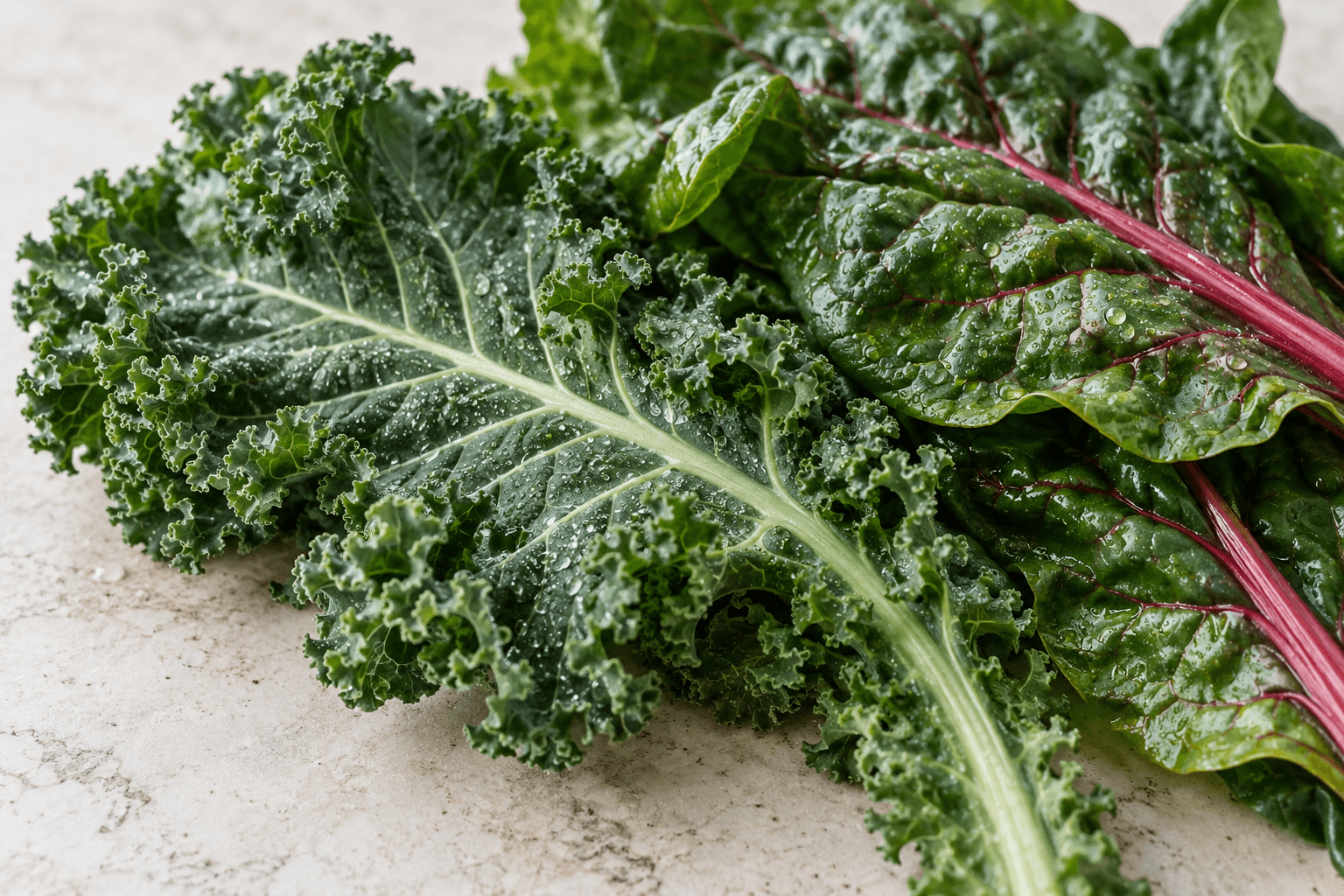
K1 comes primarily from plant foods. It is especially abundant in spinach, kale, collard greens, broccoli, lettuce, and other leafy vegetables. Certain vegetable oils, including soybean and canola oil, also contain meaningful amounts.
K2 is found more often in fermented foods and some animal products. The best-known example is the Japanese food natto, fermented soybeans that contain very high amounts of MK-7. Menaquinones are also found in aged cheeses, eggs, meat, and organ meats. Some K2 is produced by intestinal bacteria, although it is difficult to determine how much this contributes to the body’s overall needs.
A common simplified explanation says that “K1 works in the liver and controls clotting, while K2 works in bones and blood vessels.” This is useful as a rough overview, but biologically it is too rigid.
The different forms do differ in absorption, transport, and how long they circulate in the bloodstream. MK-7, for example, remains in circulation much longer than K1. But both K1 and K2 participate in the same fundamental vitamin-K-dependent protein carboxylation system.
That reaction explains most of vitamin K’s known physiology.
How Vitamin K Activates Proteins
Vitamin K serves as a cofactor for the enzyme gamma-glutamyl carboxylase.
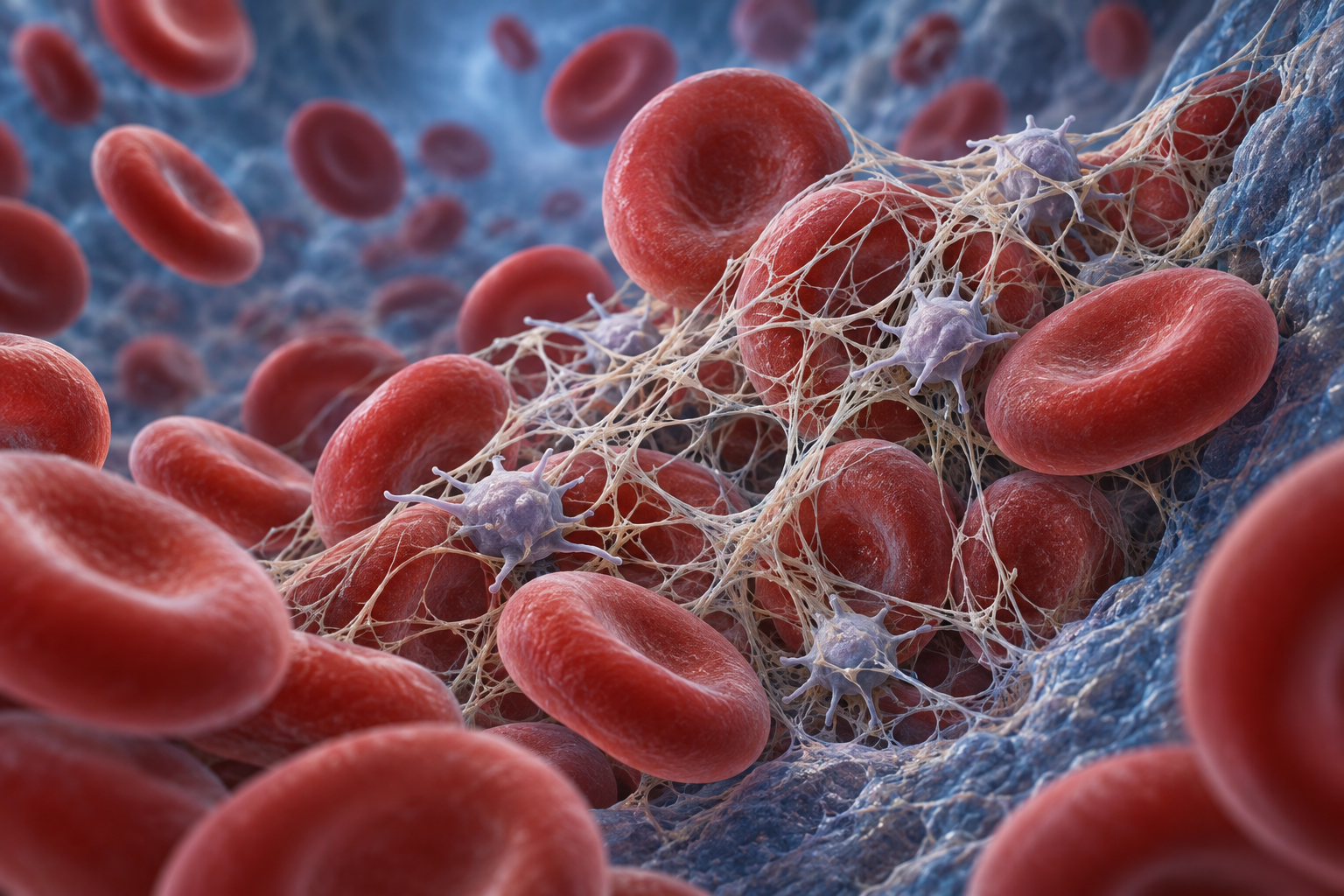
This enzyme modifies specific glutamate residues within certain proteins, converting them into gamma-carboxyglutamate, or Gla residues.
At first glance, this seems like a small chemical modification. But it is precisely this step that enables these proteins to bind calcium efficiently and perform their biological functions.
In the liver, this process activates clotting factors II, VII, IX, and X. At the same time, vitamin K is also required for proteins C and S, natural anticoagulant regulators that help prevent excessive clotting.
For this reason, it is inaccurate to say that vitamin K simply “increases clotting.” It is part of a tightly regulated hemostatic system in which procoagulant and anticoagulant mechanisms must function together.
When vitamin K deficiency becomes severe, the activity of factors II, VII, IX, and X falls. Blood takes longer to clot, prothrombin time increases, and the risk of bleeding rises. This is the best-established and most clinically important function of vitamin K.
But the same biochemical mechanism also operates outside the liver.
Bones: Osteocalcin Really Does Depend on Vitamin K
One of the best-known vitamin-K-dependent proteins in bone is osteocalcin.
It is produced by osteoblasts, the cells involved in building new bone. After vitamin-K-dependent carboxylation, osteocalcin gains a greater ability to bind calcium and interact with the mineral component of bone.
This naturally led to an important question: if vitamin K is necessary for normal osteocalcin function, could increasing vitamin K intake strengthen bones?
Biologically, the hypothesis makes sense. Clinically, the picture is more complicated.
Studies do show that vitamin K supplementation can reduce levels of undercarboxylated osteocalcin, improving a laboratory marker of vitamin-K-dependent protein activation. Some studies, particularly in postmenopausal women, have also reported changes in certain measures of bone mineral density.
But the ultimate goal of osteoporosis prevention is not to improve a biochemical marker. It is to prevent fractures. Here, the evidence is much less consistent.
The more accurate conclusion is therefore that vitamin K participates in normal bone metabolism, but K2 should not be viewed as a stand-alone or guaranteed method of preventing osteoporosis. It does not replace adequate protein intake, calcium, vitamin D, strength and weight-bearing exercise, bone-density assessment when indicated, or specific osteoporosis treatment when needed.
Blood Vessels and Calcium: Interesting Biology, but Not “Cleaning the Arteries”
K2 has attracted even more attention because of another protein: Matrix Gla Protein, or MGP.
MGP is produced in several tissues, including the vascular wall, and helps regulate pathological mineralization of soft tissues. Like osteocalcin, it requires vitamin-K-dependent carboxylation to function properly.
This gave rise to an extremely appealing concept: vitamin D increases calcium availability, while K2 supposedly “redirects” calcium from arteries into bones.
As a metaphor, this is convenient. As a description of human physiology, it is far too simplistic.
Calcium does not move around the body according to instructions from a single vitamin. Its metabolism is regulated by a complex system involving parathyroid hormone, vitamin D, the kidneys, intestines, bone tissue, phosphate concentrations, and numerous local signaling mechanisms. Vitamin K is one part of that system, but it is not a traffic controller that sends calcium to one organ instead of another.
Still, K2 and vascular calcification are active areas of research. Systematic reviews of randomized trials have produced mixed results. K2 supplementation can fairly consistently alter biochemical markers related to MGP activity, but this does not always translate into meaningful changes in calcification on imaging studies or into clear clinical benefits.
In 2026, particularly interesting data emerged. A randomized trial published in JAMA Cardiology included 180 patients with symptomatic coronary artery disease. Participants received either 360 mcg of MK-7 per day or placebo for two years. Progression of coronary artery calcification was statistically lower in the MK-7 group.
That is an important finding because it moves beyond a purely biochemical marker. But even this study does not yet prove that K2 prevents heart attacks or prolongs life. Larger trials are needed to determine whether changes in calcification lead to fewer cardiovascular events or lower mortality.
The most accurate interpretation today is that vitamin K participates in natural mechanisms that limit pathological calcification, and K2 is being investigated as a potential way to influence that process. But prescribing it routinely to everyone to “remove calcium from the arteries” is premature.
How Much Vitamin K Do We Actually Need?
In the United States, vitamin K has an Adequate Intake, or AI, rather than an RDA. This is because available data are not sufficient to establish a precise average physiological requirement.
For adults, the intake targets are:
- men — 120 mcg per day;
- women — 90 mcg per day;
- pregnancy — 90 mcg per day;
- breastfeeding — 90 mcg per day.
These numbers refer to total vitamin K intake from food and supplements, not to the dose that everyone should obtain from a capsule.
In practice, getting these amounts from food is not difficult. One cup of raw spinach may contain around 145 mcg of K1, while half a cup of cooked broccoli can provide roughly 110 mcg. A diet that regularly includes green vegetables can therefore supply substantial amounts of vitamin K without any supplement.
There is no separate official daily requirement for K2. There is also no established requirement to consume a specific amount of MK-7 or MK-4 every day.
This is an important distinction between physiology and the supplement market: the existence of multiple forms of vitamin K does not mean that a healthy person must purchase K1 and K2 separately.
Absorption Depends on Fat
Vitamin K is fat-soluble. Its absorption depends on normal bile flow, pancreatic function, intestinal absorption, and dietary fat.
K1 in leafy vegetables is embedded within plant cell structures and is not absorbed completely. Adding some fat to the meal improves its bioavailability. This is one reason why a salad with a modest amount of olive oil makes physiological sense in addition to tasting good.
But there is no need to turn this into a ritual. Vitamin K does not require an especially high-fat meal; an ordinary mixed diet is generally sufficient.
This dependence on fat absorption also helps explain why clinically significant vitamin K deficiency is uncommon in healthy adults but becomes much more likely in certain gastrointestinal and biliary disorders.
When True Deficiency Develops
In adults, significant deficiency is usually not caused by simply skipping spinach for a few days. It is more often related to malabsorption, severe illness, or medications.
Risk increases in conditions that interfere with fat digestion and absorption, including cystic fibrosis, celiac disease, short bowel syndrome, some inflammatory bowel disorders, severe cholestasis, and other conditions that reduce bile delivery into the intestine. Similar problems can arise after certain gastrointestinal surgeries.
Liver disease makes interpretation even more complicated. The liver produces many clotting factors, so an elevated INR in someone with severe liver disease does not automatically mean they are simply deficient in vitamin K. The problem may be impaired synthetic function of the liver itself.
In some situations, the response of prothrombin time to vitamin K administration can help clinicians determine how much of the abnormality is due to true deficiency. But this must be interpreted in clinical context.
Antibiotics: A Real Risk, but Often Overstated
Another common claim is that antibiotics destroy the gut microbiome and therefore everyone should take K2 after a course of antibiotics.
That reasoning is too simplistic.
Gut bacteria do produce menaquinones, and prolonged antibiotic use can reduce this production. But in a healthy person with an adequate diet, a short course of antibiotics usually does not lead to clinically significant vitamin K deficiency.
The risk rises when several factors occur together: prolonged antibiotic therapy, severe illness, poor nutritional intake, or malabsorption. Certain antibiotics, particularly some cephalosporins, can also interfere more directly with vitamin-K-dependent processes.
But there is no universal recommendation that everyone should take K2 after antibiotics.
What Significant Deficiency Looks Like
The main clinical feature of severe vitamin K deficiency is bleeding.
A person may bruise more easily, develop recurrent nosebleeds or other mucosal bleeding, notice blood in the urine or stool, or experience prolonged bleeding after cuts or procedures.
In severe cases, internal hemorrhage can occur.
But one bruise on the leg is not a diagnostic test for vitamin K deficiency. Increased bleeding tendency has many possible causes, including liver disease, low platelet counts, anticoagulant use, platelet dysfunction, and inherited bleeding disorders.
So when unexplained bleeding occurs, the correct approach is not to buy vitamin K but to investigate the cause.
Why Newborns Are a Completely Different Situation
Newborns are fundamentally different from adults.
A baby is born with relatively low vitamin K stores because placental transfer is poor. The gut microbiome has not yet developed, breast milk contains relatively little vitamin K, and the infant’s own reserves are limited.
This creates a risk of vitamin K deficiency bleeding, or VKDB.
The late form is particularly dangerous because it can develop several weeks after birth in an infant who previously appeared completely healthy. According to the CDC, a substantial proportion of late VKDB cases involve intracranial hemorrhage.
This is why newborns routinely receive an intramuscular injection of vitamin K1 after birth. It is not treatment for an abnormal lab result; it is prevention of a rare but potentially fatal bleeding disorder.
How Vitamin K Status Is Assessed
There is no universal test in routine clinical practice that can show the body’s “total vitamin K reserve.”
If clinically significant deficiency is suspected, clinicians usually begin by assessing blood clotting function. When vitamin-K-dependent clotting factors become insufficient, prothrombin time increases and INR rises.
But a normal INR does not prove that every vitamin-K-dependent protein in bone and vascular tissue is maximally carboxylated. Standard coagulation tests mainly reflect clinically important effects on hemostasis.
Plasma phylloquinone can be measured directly, but concentrations are strongly influenced by recent food intake and do not fully represent menaquinones or tissue status.
More specialized markers also exist, including PIVKA-II, undercarboxylated osteocalcin, and dp-ucMGP. These can provide information about specific vitamin-K-dependent pathways and are useful in research, but they are not a universal “vitamin K panel” that everyone needs.
Warfarin: Where Vitamin K Becomes Especially Important
The most clinically important vitamin K interaction involves warfarin.
Warfarin blocks vitamin K epoxide reductase, an enzyme required to recycle vitamin K into its active form. As a result, production of functional clotting factors II, VII, IX, and X decreases, and blood takes longer to clot.
This is why dietary vitamin K intake influences the effect of warfarin.
A common misunderstanding follows: people taking warfarin are sometimes told they should avoid leafy greens completely.
In reality, the goal is the opposite — the diet should be consistent.
If someone has always eaten salads and green vegetables every day and their warfarin dose was adjusted while following that diet, there is no reason to suddenly eliminate those foods.
The problem is abrupt change. Someone who eats very little vitamin K for weeks and then suddenly starts consuming large amounts of spinach, broccoli, or kale every day can alter the anticoagulant effect. The same is true in the opposite direction.
A sudden increase in vitamin K intake can weaken the effect of warfarin and lower INR. A sudden reduction in usual intake can enhance the anticoagulant effect and increase bleeding risk.
So the key principle for someone taking warfarin is not “consume as little vitamin K as possible,” but keep intake reasonably stable from day to day.
For the same reason, starting K1 or K2 supplements on your own while taking warfarin or acenocoumarol is particularly risky.
Not All Anticoagulants Depend on Vitamin K
Dietary rules associated with vitamin K should not automatically be applied to every medication described as a “blood thinner.”
Apixaban, rivaroxaban, edoxaban, and dabigatran are not vitamin K antagonists. They act on different parts of the coagulation cascade.
Therefore, the requirement to keep intake of leafy greens especially consistent applies primarily to warfarin and other vitamin K antagonists, not to all modern oral anticoagulants.
These medications have their own drug interactions, of course, so supplements should still be discussed with a clinician or pharmacist.
Orlistat, Bile Acid Sequestrants, and Vitamin E
Orlistat reduces the absorption of dietary fat. Along with fat, it can reduce absorption of fat-soluble vitamins, including vitamin K. Particular caution is needed when orlistat is combined with warfarin, because a change in vitamin K status can alter anticoagulant response.
A similar problem can occur with long-term use of bile acid sequestrants such as cholestyramine and colestipol. These drugs bind bile acids in the intestine and can therefore impair absorption of fat-soluble vitamins.
Vitamin E deserves separate mention. High doses of vitamin E can reduce platelet aggregation and interfere with vitamin-K-dependent processes, potentially increasing bleeding tendency, especially in people taking anticoagulants.
But it would be misleading to define a rigid universal threshold such as “dangerous above 800–1,000 IU.” The exact dose at which the interaction becomes clinically significant varies and has not been firmly established. NIH guidance notes that the issue becomes more relevant with high-dose supplementation, particularly at doses around 400 IU per day and above.
Can You Get Too Much Vitamin K?
For the naturally occurring forms K1 and K2, the United States has not established a tolerable upper intake level.
This is because the known toxicity of natural vitamin K forms is low and available evidence is insufficient to define a specific upper limit.
But the absence of an upper limit should not be interpreted as “the more, the better.”
If a person needs roughly 90–120 mcg per day as part of a normal diet, a supplement containing several thousand micrograms does not automatically provide additional benefit. And high-dose vitamin K can substantially interfere with vitamin K antagonist therapy.
It is also important to distinguish K1 and K2 from the synthetic compound menadione, sometimes called vitamin K3. Because of its unfavorable safety profile, it is not used as a standard dietary vitamin K supplement for humans.
Does K2 Need to Be Taken With Vitamin D?
The combination D3 + K2 has become a major supplement category.
The biological relationship is understandable. Vitamin D regulates calcium metabolism and increases intestinal calcium absorption, while vitamin K is required to activate osteocalcin and MGP.
From this, a very attractive slogan has emerged: vitamin D “puts calcium into the blood,” while K2 “sends it into the bones and keeps it out of the arteries.”
Human physiology is not that linear.
There is no good evidence that every healthy person taking a standard dose of vitamin D must automatically add K2 to prevent vascular calcification.
This does not mean the combination is pointless. It simply means that the decision to use K2 should depend on the clinical goal, diet, medications, and health status rather than on a universal marketing formula.
A Practical Approach
For most healthy people, the first step is much simpler than any supplement protocol: regularly eating green vegetables, maintaining a varied diet, and having normal gastrointestinal function will usually provide adequate vitamin K.
Unexplained bleeding or large spontaneous bruises should not be self-diagnosed as vitamin K deficiency. They require proper assessment of hemostasis and other possible causes.
People with disorders that impair fat absorption, biliary disease, or certain gastrointestinal surgeries are at higher risk, and vitamin K can become clinically relevant in those settings.
Anyone taking warfarin should aim for a stable intake of leafy vegetables and should not start K1, K2, or multivitamin products containing vitamin K without discussing it with their clinician.
Claims that K2 “cleans calcium out of the arteries,” “reverses calcification,” or guarantees protection from osteoporosis should be treated cautiously. The biology is interesting and the research is promising, but the evidence remains much more complex than the advertising.
When Urgent Medical Care Is Needed
Large unexplained bruises and recurrent bleeding require medical assessment, but some situations should not be delayed.
Urgent care is needed for bleeding that cannot be stopped with ordinary measures, vomiting blood, black tarry stools, large amounts of blood in the stool, sudden profound weakness, or loss of consciousness.
People taking anticoagulants deserve particular attention. A sudden severe headache, speech disturbance, weakness in an arm or leg, confusion, or other acute neurological symptoms can indicate intracranial bleeding and require immediate medical evaluation.
What Counts as a Good Outcome
Good vitamin K status is not about maximizing blood levels or trying to push every possible carboxylation marker to an “ideal” value.
For most people, the goal is much more practical: adequate and consistent vitamin K intake from food, normal hemostatic function, absence of clinical deficiency, and timely identification of disorders that interfere with absorption.
For bone health, vitamin K is one part of a much larger system that also includes protein, calcium, vitamin D, physical activity, and normal hormonal regulation. In the vascular system, vitamin-K-dependent proteins do represent an interesting protective mechanism, but that does not yet justify promising that a K2 capsule will prevent a heart attack or “remove calcium from the arteries.”
And for people taking warfarin, the goal is not to eliminate vitamin K from the diet, but to make its intake predictable.
The central conclusion is simple: vitamin K is essential for normal blood clotting and participates in the function of proteins in bone and vascular tissue. Severe deficiency can cause dangerous bleeding, but the existence of these physiological roles does not mean that high-dose K2 supplements are necessary for everyone.
This material is provided for educational purposes only and does not replace medical consultation, diagnosis, or individualized treatment.
Sources
- NIH ODS — Vitamin K Fact Sheet
- Centers for Disease Control and Prevention (CDC). Vitamin K Deficiency Bleeding
- Merck Manual Professional Edition. Vitamin K Deficiency
- National Institutes of Health, Office of Dietary Supplements. Vitamin E — Fact Sheet for Health Professionals
- Li T, Wang Y, Tu W-P. Vitamin K supplementation and vascular calcification: a systematic review and meta-analysis of randomized controlled trials. Frontiers in Nutrition, 2023
- Vossen LM et al. Two Years of Menaquinone-7 Supplementation and Coronary Artery Calcification: A Randomized Clinical Trial. JAMA Cardiology, 2026
- Mott A et al. Effect of vitamin K on bone mineral density and fractures in adults: an updated systematic review and meta-analysis of randomised controlled trials (2019)
- NHS. Anticoagulant medicines — Considerations
- Cockayne S et al. Vitamin K and the prevention of fractures: systematic review and meta-analysis of randomized controlled trials (2006)