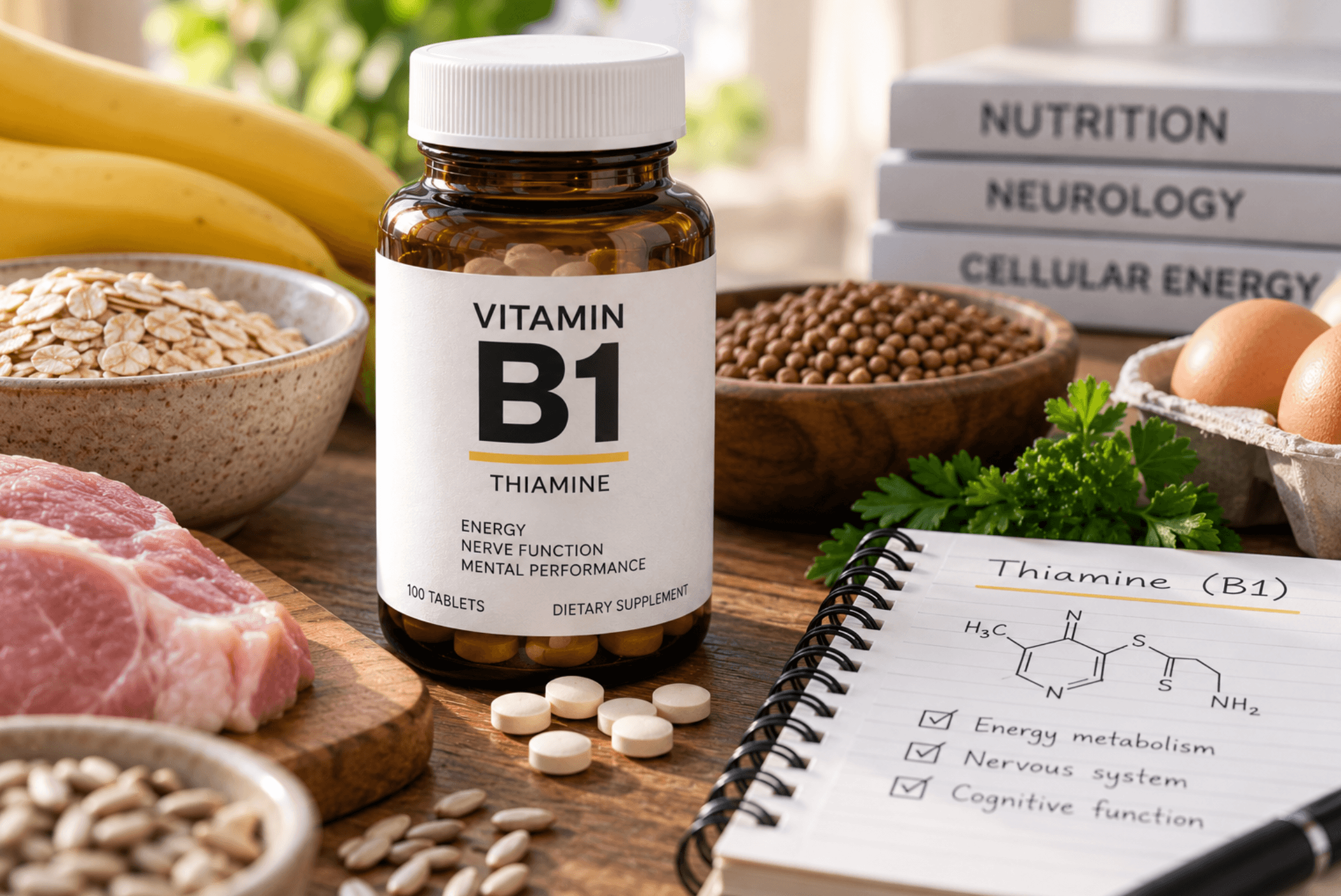
Vitamin B1 in the Human Body: Cellular Energy, the Nervous System, Hidden Deficiency, and the Limits of Supplementation
Evidence-based guide to vitamin B1: TPP coenzyme, carbohydrate metabolism, nervous system health, beriberi, Wernicke syndrome, benfotiamine bioavailability, and safe dosages.
Updated: . An update is not evidence of expert review.
Vitamin B1 in the Human Body: Cellular Energy, the Nervous System, Hidden Deficiency, and the Limits of Supplementation
Vitamin B1, or thiamine, occupies a distinctive place among micronutrients: the body requires only a small amount of it, yet without it several reactions essential for obtaining energy from food begin to fail. Humans are essentially unable to synthesize thiamine in meaningful quantities and therefore must obtain it regularly from external sources. At the same time, the body does not maintain a large reserve comparable, for example, with vitamin B12 stores. The total thiamine pool in an adult is estimated at roughly 30 mg, much of it located intracellularly, particularly in skeletal muscle and internal organs. Thiamine turnover is relatively rapid, so if intake becomes severely restricted, body stores can decline substantially within only a few weeks. Experimental deprivation studies and modern reviews commonly refer to a period of around two to three weeks, although the speed at which clinical deficiency develops depends strongly on baseline nutrition, disease, and metabolic demand.
This limited reserve explains one of the most important features of thiamine: severe deficiency can develop much faster than deficiencies of many other vitamins. This is particularly evident in people with prolonged vomiting, severe malnutrition, alcohol use disorder, or after bariatric surgery. A person may have had a relatively acceptable nutritional status only recently and, within several weeks, reach a state in which impaired thiamine-dependent metabolism begins to affect the brain, peripheral nerves, and cardiovascular system.
However, the popular description of B1 as an “energy vitamin” is too superficial. Thiamine is not itself a source of energy and does not “charge” mitochondria. Its importance lies elsewhere: after entering cells, it is converted into phosphorylated derivatives, the most important of which is thiamine diphosphate (TDP), traditionally also called thiamine pyrophosphate, or TPP. This form serves as an essential cofactor for several enzyme complexes that connect carbohydrate and amino acid metabolism with mitochondrial energy production.
For this reason, B1 deficiency is not simply a shortage of one more vitamin. It is a disturbance in the cell’s ability to process available energy substrates properly.
How Thiamine Connects Glucose to Cellular Energy Production
After carbohydrates are broken down, glucose passes through glycolysis and is converted into pyruvate. But pyruvate itself is not yet a fully usable substrate for the citric acid cycle. For carbon from glucose to enter mitochondrial energy metabolism, pyruvate must undergo oxidative decarboxylation to form acetyl-CoA. This reaction is carried out by the pyruvate dehydrogenase complex, and TDP is one of its essential cofactors.
In marked thiamine deficiency, pyruvate dehydrogenase activity declines. Less pyruvate is directed toward acetyl-CoA and more is converted into lactate. At the same time, other thiamine-dependent reactions are impaired, including the α-ketoglutarate dehydrogenase complex within the citric acid cycle. As a result, energy metabolism becomes less efficient, and in severe deficiency significant hyperlactatemia and even lactic acidosis may develop. Tissues with a high continuous demand for energy, particularly the nervous system and myocardium, are especially vulnerable.
Still, the common statement that in B1 deficiency “the Krebs cycle stops and ATP production becomes paralyzed” is overly dramatic. Cellular metabolism does not function like a single on-off switch. The body can use fatty acids, ketone bodies, and other substrates, and different tissues vary in their metabolic flexibility. The real problem is that severe thiamine deficiency impairs several important metabolic junctions simultaneously, and in certain tissues this is enough to produce dysfunction relatively quickly.
Another important thiamine-dependent enzyme is transketolase, which functions in the non-oxidative branch of the pentose phosphate pathway. This pathway helps redistribute carbon skeletons between sugars and is linked to the production of ribose-5-phosphate, which is required for nucleotide synthesis. The pentose phosphate pathway as a whole also generates NADPH, an essential reducing equivalent used in antioxidant defense and biosynthetic reactions.
There is, however, an important biochemical distinction. It is sometimes stated that “thiamine-dependent transketolase produces NADPH.” This is inaccurate: NADPH is generated primarily in the oxidative branch of the pentose phosphate pathway, whereas transketolase operates in the non-oxidative branch. Nevertheless, normal function of the entire pathway is interconnected, so severe thiamine deficiency can disrupt the broader metabolic balance required for cellular antioxidant defense.
Thiamine diphosphate is also required by the branched-chain α-ketoacid dehydrogenase complex, which is involved in the metabolism of leucine, isoleucine, and valine. The role of vitamin B1 therefore extends well beyond glucose alone: it lies at the center of several pathways linking dietary nutrients to cellular energy production.
Why the Nervous System Is Especially Sensitive to Deficiency
The brain continuously consumes large amounts of energy and has relatively little capacity to tolerate prolonged disruption of energy metabolism. This is why severe thiamine deficiency can affect the central nervous system comparatively quickly. Reduced activity of thiamine-dependent enzymes is associated not only with impaired energy production but also with lactate accumulation, altered glutamate metabolism, increased oxidative stress, disruption of blood-brain barrier function, and, in severe cases, neuronal injury.
Thiamine is also important for peripheral nerves. With prolonged deficiency, a symmetrical sensorimotor polyneuropathy can develop. It often begins with paresthesias, burning, numbness, and altered sensation in the feet, followed by reduced tendon reflexes, weakness, and eventually muscle atrophy.
Some popular explanations of thiamine’s neurological role are nevertheless too direct. For example, thiamine is often described as being required for the “synthesis of acetylcholine.” The connection is more indirect and metabolic: acetyl-CoA, whose formation partly depends on pyruvate dehydrogenase activity, is indeed needed for acetylcholine synthesis, so severe thiamine deficiency can secondarily affect cholinergic neurotransmission. But B1 should not be described as a direct cofactor of choline acetyltransferase.
Other phosphorylated forms of thiamine also exist, including thiamine triphosphate. Experimental evidence suggests that these compounds may participate in membrane excitability and cellular signaling, but these functions are far less well established than the classical coenzyme role of TDP. Building confident clinical claims around thiamine triphosphate and sodium channel regulation would therefore be premature.
The Heart and Beriberi: When Deficiency Becomes Systemic
The myocardium is one of the most energy-demanding tissues in the body. In severe B1 deficiency, impaired energy metabolism is accompanied by changes in peripheral vascular resistance and fluid balance. The classic cardiovascular manifestation is known as wet beriberi.
It may present with tachycardia, peripheral vasodilation, edema, increased cardiac output, and signs of heart failure. In the most severe form, known as Shoshin beriberi, hemodynamic deterioration can develop rapidly, with marked lactic acidosis, hypotension, and cardiovascular collapse.
This is a useful reminder of how misleading the phrase “vitamin deficiency” can sometimes be. In the early stages, the issue may indeed be inadequate intake of a micronutrient. In the late stages, the physician may be facing a potentially life-threatening metabolic and cardiovascular syndrome.
How Much Thiamine Does a Person Need?
Recommended daily intake is small. In the U.S. Dietary Reference Intake system, the RDA is 1.2 mg per day for adult men, 1.1 mg per day for adult women, and 1.4 mg during pregnancy and lactation. Requirements in children rise gradually with age.
Thiamine has historically been closely associated with total energy intake and carbohydrate consumption because many of its functions are directly involved in carbohydrate metabolism. However, the statement that B1 requirements are “strictly proportional to the amount of carbohydrate eaten” is too categorical. Modern recommendations for adults are expressed as fixed daily amounts, not calculated each day according to grams of sugar consumed.
The popular idea that a serving of sweets literally “burns through” intracellular thiamine is also overly simplistic. In a healthy person with adequate nutrition, metabolism does not work in such a linear way. The situation is different in someone whose stores are already depleted: a sudden increase in carbohydrate load really can increase demand on thiamine-dependent pathways and expose an existing deficiency. This is particularly important during refeeding after prolonged starvation, severe malnutrition, or persistent vomiting.
Where the Body Gets Vitamin B1
Thiamine is present in many foods, which is why severe dietary deficiency is uncommon in healthy people eating a varied diet. Good sources include pork, whole and enriched grains, legumes, seeds, nuts, and certain types of fish. In countries where flour and cereal products are fortified with B vitamins, a substantial proportion of population intake may come from fortified foods.
The vitamin is sensitive to food processing. Its content can decrease with prolonged heating, and because thiamine is water-soluble, some may leach into cooking water. The degree of loss depends on the specific food, temperature, cooking time, amount of liquid used, and whether the cooking liquid is consumed. For this reason, a universal statement such as “boiling destroys 30–50% of thiamine” should not be treated as a rule that applies to every dish.
Once released from food, free thiamine is absorbed mainly in the small intestine. Specialized transport systems are involved, particularly those encoded by SLC19A2 and SLC19A3. At physiological concentrations, much of thiamine uptake depends on saturable transport; at higher concentrations, passive movement contributes to some extent. After entering cells, thiamine is phosphorylated into TDP and other derivatives.
This transport saturation explains an important pharmacokinetic feature: increasing the oral dose of ordinary thiamine by dozens of times does not produce a proportional increase in the amount delivered to tissues. But this does not mean that high doses are entirely useless either—the absolute amount absorbed can still increase.
Who Is Actually at Risk of Deficiency?
In industrialized countries, classic dietary beriberi is rare. But B1 deficiency has not disappeared; the reasons for it have simply changed.
The best-known high-risk group is people with chronic alcohol use disorder. Several mechanisms operate simultaneously: nutrition is often inadequate, intestinal absorption of thiamine may decline, hepatic stores become depleted, and phosphorylation into active derivatives can be impaired. Chronic alcohol misuse remains one of the most important causes of severe thiamine deficiency in developed countries.
A second important context is bariatric surgery, particularly when prolonged vomiting develops after surgery or the patient does not adhere to prescribed vitamin supplementation. The problem is not only altered gastrointestinal anatomy. Because body reserves of B1 are small, several weeks of poor intake combined with recurrent vomiting can be sufficient to produce serious neurological complications.
For similar reasons, hyperemesis gravidarum, or severe persistent vomiting during pregnancy, is a well-recognized non-alcohol-related cause of Wernicke encephalopathy.
Risk also increases with prolonged starvation, severe malnutrition, certain oncological and gastrointestinal diseases, prolonged parenteral nutrition without adequate vitamin supplementation, and conditions associated with sharply increased metabolic demand. Refeeding syndrome deserves particular attention: after a period of severe depletion, sudden carbohydrate intake rapidly activates glucose metabolism.
People with type 1 or type 2 diabetes also often show lower plasma thiamine concentrations, and some studies have found increased renal clearance of the vitamin. However, this does not mean that every person with diabetes has clinically relevant thiamine deficiency or automatically requires high-dose B1 supplementation. The clinical significance of reduced thiamine concentrations in diabetes remains incompletely defined.
The situation with loop diuretics is similarly nuanced. Furosemide can increase urinary losses of water-soluble compounds, and the relationship between chronic diuretic therapy and thiamine status has been studied particularly in patients with heart failure. But this should not be turned into a rule that every patient taking furosemide needs thiamine supplements. Current heart failure management does not include universal B1 supplementation for all patients receiving loop diuretics.
From Fatigue to Beriberi: How Deficiency Presents
One reason mild thiamine deficiency is easy to miss is that its early symptoms are nonspecific. Poor appetite, fatigue, irritability, muscle weakness, impaired concentration, and reduced performance occur in dozens of other conditions. These complaints alone are not enough to diagnose B1 deficiency.
As deficiency progresses, the clinical pattern becomes more characteristic. Classic dry beriberi predominantly affects the peripheral nervous system. It typically produces a symmetrical polyneuropathy of the lower limbs, with numbness, burning, paresthesias, reduced sensation, and diminished tendon reflexes. In advanced cases, muscle weakness and atrophy become prominent.
Wet beriberi predominantly manifests through cardiovascular dysfunction, including tachycardia, fluid retention, peripheral edema, and heart failure. The boundary between “dry” and “wet” forms is not absolute: neurological and cardiovascular manifestations can coexist in the same patient.
The most dangerous central nervous system complication is Wernicke encephalopathy.
Wernicke Encephalopathy: Why the Famous Classic Triad Can Be Misleading
Medical textbooks traditionally describe Wernicke encephalopathy as a triad of altered mental status, ataxia, and ocular motor abnormalities. The problem is that the full triad appears in only a minority of patients. Modern reviews generally estimate that all three features are present in roughly 10–16%. Waiting for confusion, an unsteady gait, and ophthalmoplegia to appear simultaneously can therefore lead to missed diagnoses.
Altered mental status may present not only as obvious confusion but also as apathy, drowsiness, impaired attention, disorientation, or memory problems. Ocular findings can include nystagmus, gaze palsies, and diplopia. Cerebellar dysfunction may manifest as gait instability and impaired coordination.
In clinical practice, suspicion should arise primarily from the combination of symptoms and context: malnutrition, alcohol use disorder, persistent vomiting, bariatric surgery, severe illness, or rapid weight loss.
This matters because treatment is relatively straightforward, while the cost of delay can be extremely high. Without timely therapy, some patients die, while others develop persistent Korsakoff amnestic syndrome, characterized by profound impairment in forming new memories and by confabulation. But it would also be wrong to say that Wernicke encephalopathy inevitably progresses to Korsakoff syndrome. Outcome depends on the duration and severity of deficiency, speed of treatment, and coexisting neurological damage.
When clinical suspicion is high, thiamine treatment should not be delayed while waiting for laboratory confirmation.
Why Testing for B1 Is More Complicated Than It Looks
There is no laboratory algorithm for thiamine as simple as, for example, ferritin testing.
Free thiamine can be measured in plasma or serum, but this fraction reflects recent intake more than long-term tissue status and represents only a small proportion of total circulating vitamin B1. A normal serum concentration therefore does not necessarily exclude functional deficiency.
More informative is measurement of thiamine diphosphate in whole blood, because most intracellular circulating B1 is found in erythrocytes as TDP. Modern high-performance liquid chromatography methods allow this fraction to be measured directly.
Another approach is a functional assay of erythrocyte transketolase activity, assessing how much enzyme activity increases after TDP is added in vitro. The greater the increase after adding the cofactor, the stronger the suggestion that the enzyme was initially undersaturated with thiamine.
Historically, the transketolase assay has often been called the gold standard, but that description now requires qualification. It is a useful functional test, yet it is sensitive to assay conditions, intrinsic enzyme activity, magnesium status, and other factors. Direct whole-blood TDP measurement is easier to standardize as a quantitative biomarker. Modern reviews increasingly view these methods as complementary rather than as a rigid hierarchy of “good” and “bad” tests.
And when Wernicke encephalopathy is suspected, laboratory testing should not delay treatment at all. Thiamine is inexpensive and generally safe, whereas neurological injury from delayed therapy may become irreversible.
Ordinary Thiamine and Benfotiamine: Where Marketing Has Outpaced Clinical Evidence
Most multivitamins contain thiamine hydrochloride or thiamine mononitrate. These are well-studied forms that effectively cover normal nutritional requirements.
A separate category is benfotiamine, a synthetic S-acyl derivative of thiamine. It is often marketed as a “fat-soluble form of vitamin B1” that supposedly passes freely through lipid membranes and is therefore several times more effective than ordinary thiamine.
That explanation is convenient, but biochemically inaccurate.
Benfotiamine does produce substantially higher systemic exposure to thiamine metabolites after oral administration. However, the benfotiamine molecule itself does not simply behave like a classic lipophilic substance that freely diffuses through all cell membranes. Its metabolism and transport are more complex, and higher blood thiamine concentrations do not necessarily translate into proportionally higher concentrations in every tissue, including the brain.
It is especially important to distinguish pharmacokinetics from clinical efficacy.
Benfotiamine has long been studied in diabetic polyneuropathy. Small earlier trials reported improvements in certain symptoms. However, the 2026 double-blind, placebo-controlled BOND trial, which followed patients with diabetic polyneuropathy for 12 months, produced a far more restrained picture: blood concentrations of thiamine metabolites increased substantially, but there was no significant advantage over placebo in the primary morphometric outcome, nerve conduction measures, or most clinical endpoints.
Calling benfotiamine the “treatment of choice for diabetic polyneuropathy” is therefore too strong. It can effectively increase thiamine status and remains under investigation as adjunctive therapy, but it does not replace glycemic control, management of neuropathic pain, correction of cardiovascular risk factors, or other standard care.
Sulbutiamine is another synthetic thiamine derivative developed to alter tissue penetration and pharmacokinetics. It may enter some tissues more effectively in experimental models, but the evidence supporting its use for fatigue or cognitive symptoms is much more limited. There is no strong basis for regarding it as a standard method of preventing or treating ordinary vitamin B1 deficiency.
Magnesium Really Matters — but That Does Not Mean Everyone Needs to Supplement It
The relationship between thiamine and magnesium is real.
Mg²⁺ is required for the normal functioning of several thiamine-dependent enzyme systems and participates in processes involved in converting thiamine into active forms. In marked hypomagnesemia, the response to thiamine therapy may be inadequate. This is particularly relevant in severe malnutrition, alcohol use disorder, refeeding syndrome, and other situations in which multiple electrolytes and micronutrients are depleted simultaneously.
Clinical reports describe patients whose neurological symptoms persisted despite thiamine therapy and improved after coexisting magnesium deficiency was corrected.
But the statement that “thiamine deficiency cannot be corrected until magnesium deficiency is treated” is too absolute. B1 deficiency responds perfectly well to thiamine in people with normal magnesium status. The problem arises when concurrent hypomagnesemia is present. The practical principle is therefore not to give magnesium automatically with every B1 supplement, but to consider magnesium status in high-risk patients and correct deficiency when it is confirmed or strongly suspected.
Glucose and Thiamine: An Important Rule That Is Often Misunderstood
One of the most familiar emergency medicine statements is: “In a patient with alcohol dependence, give thiamine before glucose.”
There is a sound physiological basis for this rule. If thiamine stores are already critically depleted, a large carbohydrate load increases flux through thiamine-dependent pathways and can theoretically worsen the metabolic deficit. Prolonged carbohydrate infusion or aggressive refeeding in a severely malnourished person without thiamine replacement is particularly concerning.
But the rule should not be treated as absolute.
Reviews of the clinical evidence have not found strong evidence that a single emergency dose of glucose by itself causes Wernicke encephalopathy. Therefore, in severe hypoglycemia, glucose treatment should not be delayed while waiting for thiamine.
The more accurate rule is this: in a patient at high risk of thiamine deficiency, thiamine should be given as early as possible—preferably before or at the same time as a substantial carbohydrate load—but never at the cost of delaying treatment of dangerous hypoglycemia. If prolonged glucose infusion or nutritional rehabilitation after severe depletion is planned, preventive thiamine administration becomes much more important.
How Safe Is Vitamin B1?
Thiamine has a very wide safety margin. No tolerable upper intake level, or UL, has been established for it. However, the reason is not simply that “any excess is immediately flushed out by the kidneys.” More importantly, there is insufficient evidence of adverse effects from high oral intakes of thiamine from food and supplements.
High oral doses are generally well tolerated in clinical studies, but this does not mean they are automatically useful. The absence of an established toxic upper limit and the existence of proven benefit from megadoses are two completely different things.
Parenteral administration is a separate situation. Intravenous thiamine can rarely cause hypersensitivity reactions, including severe anaphylactic reactions. This is one reason why therapeutic parenteral regimens belong to medical treatment rather than routine nutritional supplementation.
Does a Healthy Person Need Extra Vitamin B1?
For most people eating a normal varied diet, separate high-dose thiamine supplementation is unnecessary. Foods and fortified grains generally provide enough to meet the small daily requirement without difficulty.
The idea of taking 50, 100, or 300 mg of B1 “for energy” in the absence of deficiency does not follow well from the underlying biochemistry. Thiamine is essential for energy metabolism, but that does not mean supplying far more of a cofactor will accelerate metabolism beyond normal physiological limits. This is the same reasoning error seen with many nutrients: if a molecule participates in a vital process, it is tempting to assume that more of it will make the process work better. Enzyme systems do not function that way.
The situation is entirely different in confirmed or strongly suspected deficiency. In that setting, doses may be many times higher than normal dietary requirements because the goal is no longer nutrition but treatment. This is especially true in Wernicke encephalopathy, severe malabsorption, and other conditions in which parenteral regimens may be required. These situations cannot be reduced to one universal home dosing schedule; recommended regimens vary between medical organizations and depend on the clinical context.
What Matters Most in Practice
The central danger of vitamin B1 deficiency lies in the combination of limited body stores and nonspecific early symptoms. A person may complain for weeks of weakness, poor appetite, or impaired concentration, yet these signs alone reveal almost nothing about the underlying cause. Thiamine deficiency should therefore be considered primarily when the clinical context makes it plausible: persistent vomiting, severe dietary restriction, alcohol use disorder, bariatric surgery, major weight loss, refeeding syndrome, or other conditions that impair intake or utilization of the vitamin.
Particular vigilance is required for Wernicke encephalopathy. The full classic triad should not be expected—most patients will not have it. New confusion, gait disturbance, or ocular motor abnormalities in a person at high risk of deficiency require urgent medical assessment. When suspicion is substantial, treatment is started before laboratory confirmation.
It is equally important to separate physiology from the supplement market. Ordinary thiamine effectively fulfills its nutritional role. Benfotiamine does produce higher circulating concentrations of thiamine metabolites, but greater bioavailability does not automatically mean a better clinical outcome in neuropathy. Magnesium is required for normal thiamine-dependent metabolism, but this does not mean every person taking B1 requires a magnesium supplement. And participation of thiamine in cellular energy metabolism does not turn high-dose B1 into a universal stimulant for physical or mental performance.
In this respect, thiamine illustrates a broader principle of nutrition science: the biological indispensability of a nutrient and the benefit of taking more of it are not the same thing.
Vitamin B1 is genuinely essential for converting nutrients into usable cellular energy. Severe deficiency can cause polyneuropathy, heart failure, lactic acidosis, and irreversible brain injury. But in a healthy person with adequate intake, none of this implies a need for high preventive doses.
The value of thiamine lies not in taking as much as possible, but in recognizing that the body cannot function normally when too little is available.
Vitamin B1 is one of the central cofactors of cellular energy metabolism, and the body’s limited reserves make severe deficiency a condition that can develop surprisingly quickly. The greatest clinical value lies not in routine megadose supplementation for healthy people, but in recognizing high-risk situations early and treating deficiency before impaired energy metabolism progresses to irreversible damage of the nervous or cardiovascular system.
This material is for educational purposes only and does not replace medical diagnosis, treatment, or individualized advice from a healthcare professional.
FAQ
What is the advantage of benfotiamine over thiamine hydrochloride?
Benfotiamine is fat-soluble and bypasses saturable intestinal transporters, achieving significantly higher intracellular concentrations in nerves and blood vessels.
Why should magnesium status be checked alongside thiamine?
The enzyme thiamine pyrophosphokinase, which converts thiamine to active TPP, requires magnesium as an essential cofactor. In hypomagnesemia, thiamine supplementation remains ineffective.
Can thiamine supplements cause toxicity or overdose?
Oral thiamine has no established UL because the kidneys rapidly excrete excess amounts in urine. High oral doses are considered exceptionally safe.
Sources
- NIH Office of Dietary Supplements. Thiamin — Fact Sheet for Health Professionals
- Thiamin (Vitamin B1) — A Scoping Review for Nordic Nutrition Recommendations 2023
- Wernicke’s encephalopathy — from basic science to clinical practice. Part 1: Understanding the role of thiamine
- Reassessing Transketolase Assays: Methodological Considerations for Detecting Functional Thiamine Deficiency. Annals of the New York Academy of Sciences, 2026
- Wernicke encephalopathy: a mini review of the clinical spectrum, atypical manifestations, and diagnostic challenges, 2025
- Wernicke Encephalopathy: An Updated Narrative Review, 2023
- Ziegler D. et al. Effects of benfotiamine treatment over 12 months on morphometric, neurophysiological and clinical measures in type 2 diabetes patients with symptomatic polyneuropathy: BOND study, 2026
- Benfotiamine, a synthetic S-acyl thiamine derivative, has different mechanisms of action and a different pharmacological profile than lipid-soluble thiamine disulfide derivatives
- Thiamine deficiency disorders: a clinical perspective
- Glucose before thiamine for Wernicke encephalopathy: a literature review. Journal of Emergency Medicine
- Prevalence of Wernicke's Encephalopathy When Receiving Dextrose Before Thiamine: A National Study of Veterans, 2025
- A Clinician’s View of Wernicke-Korsakoff Syndrome